
Skip to content
JoruJoru
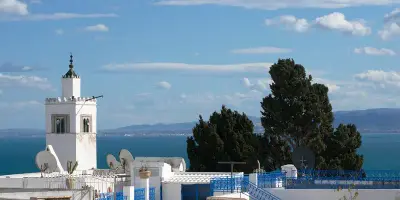
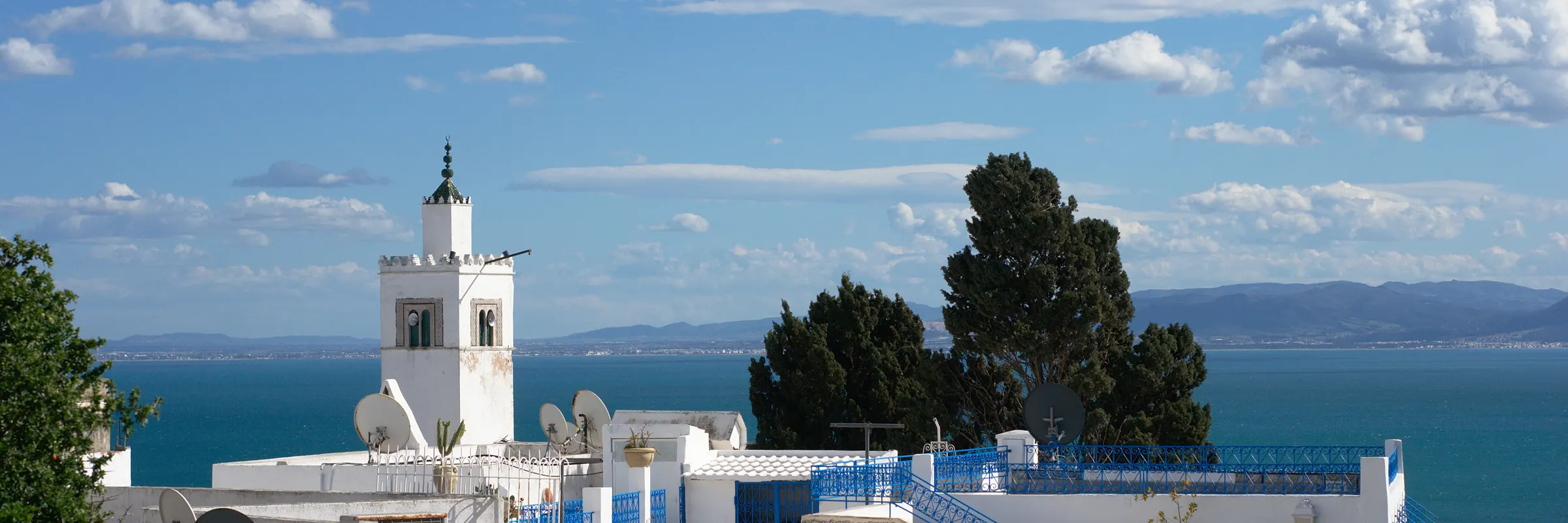
Tunis: the blue and white streets of Sidi Bou Said
Photo: Habib M'henni · CC BY 4.0
Tunis, Tunisia

Tunis: how many days you need and the best months to go

Tunis is three cities stacked on one bay: a medina founded in the seventh century and still lived in, a French colonial grid built after 1881, and the remains of Carthage scattered through the seaside suburbs to the north-east. A single light rail line connects the last of these to the first two, which is why this is the easiest capital in the Maghreb to do properly in a short trip. Two days is enough. A third buys a Roman city inland.

Short answers

What people ask before booking

How many days do you need in Tunis?

Tunis needs two days — one for the medina and the colonial avenue below it, one for Carthage and Sidi Bou Said on the same rail line — and a third only if you leave the capital.

What is the best month to visit Tunis?

April and May — The best walking weather of the year. September and October — Summer heat gone, sea still warm.

Which months are worth avoiding in Tunis?

July and August — The peak of the heat, and no shade at Carthage. December, January and February — Mild, grey and the wettest months.

How many days Tunis needs

Two days is the honest figure. One goes to the medina and the colonial avenue below it, which sit directly against each other and are best walked in that order. The second goes north-east on the light rail: the ruins of Carthage and the blue-and-white village above them, both on the same line, in one outing.

A third day earns its place only if you leave the capital. Dougga, a Roman town in the hills two hours west, is the most complete one in North Africa, and Kairouan, the fourth holiest city in Islam, is a similar drive south. Either is a full day and neither works as an afternoon.

How the city is arranged

The layout records the history exactly. The medina was founded in the late seventh century and grew inland from the lagoon; the French built their new town between it and the water after the protectorate began in 1881, on ground that had been marsh. So the old city sits uphill and the colonial one downhill, and the gate between them is the hinge of the whole visit.

Everything else is a suburb on the bay. The northern ones — Carthage, Sidi Bou Said, La Marsa — are where the ruins, the views and the money are, and a single rail line strings them together from the port.

  • The medina — World Heritage, founded around 698, and still a working quarter rather than a museum. Souks organised by trade, and the great mosque at the centre.
  • The ville nouvelle — the French grid below the medina, built around a broad tree-lined avenue with a cathedral and a theatre facing each other.
  • Carthage — fifteen kilometres north-east, and not one site but eight or nine scattered across a residential suburb. The single most misunderstood thing about visiting Tunis.
  • Sidi Bou Said — the blue-and-white village on the cliff above Carthage, two stops further along the same line, and the picture everyone brings home.
  • La Marsa — the end of the line: a beach suburb where the city goes on summer evenings, and the least touristed of the northern stops.

Where to stay, and what each area costs you

The real choice is between sleeping inside the medina and sleeping at its foot. A restored house inside the walls is the more memorable stay and the harder one — cars cannot reach most doors, and the lanes are genuinely confusing in the dark. The colonial town below has the ordinary hotels and the transport.

The other option is to base yourself out at the coast, which trades all sightseeing convenience for sea air and quiet. On a two-day trip that is the wrong trade; on a longer one it is reasonable.

AreaWho it suitsThe catch
Inside the medinaRestored courtyard houses, waking up inside the World Heritage site.No vehicle access to most doors, and finding the door at night takes practice.
Ville nouvelleFirst visit. Ordinary hotels, the rail terminus and the medina gate a walk away.Traffic, noise and no atmosphere of its own after the shops close.
Around the portLarger modern hotels, easy parking and the fastest run to the airport.Charmless and cut off; you will take transport for everything.
Sidi Bou SaidThe view, the quiet after the day visitors leave, and the coastal light.Twenty-five minutes from the medina, and the priciest beds in greater Tunis.
La MarsaBeach, restaurants used by residents, and a genuine local evening.The end of the line; every sightseeing day starts with a half-hour ride.

Carthage, and how not to waste a day on it

This is where most short trips go wrong. Carthage is not an archaeological park with a gate — it is eight or nine separate sites spread across several kilometres of an ordinary residential suburb, with modern villas between them. Arriving without a plan means walking a long way in the sun between things that take fifteen minutes each.

The history is worth the effort: a Phoenician city traditionally founded in 814 BC, destroyed by Rome in 146 BC after three wars, and then rebuilt by Rome as the capital of its African province and one of the largest cities of the empire. What survives is mostly the second city, not the first. The Antonine Baths on the shore are the piece that gives you the scale.

  • Pick two or three sites, not all of them. The baths, the hilltop with the museum and the harbours are the coherent set.
  • One ticket covers the sites, so keep it — you will be asked for it at each gate.
  • Combine it with Sidi Bou Said in one outing. Same rail line, two stops apart, and the village is where you eat afterwards.
  • The best Roman mosaics are not here. They are in the national museum in the city, which holds one of the largest collections anywhere.

The medina, and how to walk it

Founded within a few decades of the Arab conquest, the medina is among the oldest in the Maghreb and was for centuries one of the richest cities in the Islamic world. The souks are still organised by trade — one lane for perfumers, one for the makers of the red felt caps, one for fabric — and that arrangement is the map. The Zitouna mosque sits at the centre with the souks wrapped around it, which is the standard plan of a North African old city rather than an accident.

The one thing to know before you go in: friendly strangers offering to show you a viewpoint or a festival are running a version of the same routine, and it ends in a carpet showroom with tea and pressure. The rooftop views over the medina are genuinely good and they are also the hook. Go up if you want the photograph, and be clear that you are not buying.

  • Non-Muslims can enter the great mosque's courtyard but not the prayer hall, and access closes around prayer times, particularly on Fridays.
  • Nobody who approaches you unprompted is doing you a favour. A firm, friendly no works; explanations do not.
  • Prices in the souk are negotiated, and the first number is not the price. Walking away is a normal part of the conversation.
  • Go in the morning. The medina shuts progressively through the afternoon and is largely closed by early evening.

Money, language and other practicalities

The dinar is a closed currency. You cannot legally bring it in or take it out, so you change money on arrival and you keep the receipts — you need them to change what is left back at the airport, and there is a limit on how much. Plan to arrive with euros or dollars and to leave with none of the local currency.

Language is easier than most people expect. Arabic is the language of the country, but French is the practical second one after seventy-five years of protectorate, and it works in hotels, restaurants, museums and taxis. English is thinner outside the tourist trade.

  • Keep every exchange receipt. Without them you cannot convert dinars back when you leave.
  • Cash is still the default in the medina, in taxis and in small restaurants. Cards work in hotels and larger places.
  • Agree the taxi meter is running before you move. Metered fares are cheap; unmetered ones are a negotiation you will lose.
  • Friday is the main prayer day, and the rhythm of the medina changes around midday. Plan the mosque visit for another morning.

What to eat in Tunis, and where

Tunisian food is the spiciest in the Maghreb, and the reason sits in a tube: the chilli paste that goes into almost everything. Two of the things on this list are recognised by UNESCO as intangible heritage, which is unusual for a country this size, and both are eaten daily rather than ceremonially.

  • Brik

    What to order

    The first thing to order, and the hardest to eat

    A whole egg and a filling of tuna, capers and parsley wrapped in a paper-thin pastry sheet and deep-fried, so the white sets and the yolk does not. Eating it without losing the yolk down your shirt is the actual skill, and there is a technique: start at a corner, tilt it away from you and keep going. Served as a starter everywhere.

    Check it on Wikidata
  • Couscous

    What to order

    The national dish, and a shared inheritance

    Steamed semolina under a stew of lamb, fish or vegetables, cooked in a two-tier pot so the grain takes the steam of what is below it. UNESCO listed it as intangible heritage in 2020 — jointly for Tunisia, Algeria, Morocco and Mauritania, which is the diplomatic way of settling an argument nobody was going to win. The Tunisian version leans on fish and on heat.

    Check it on Wikidata
  • Harissa

    What to order

    The paste that makes the food Tunisian

    Dried red chillies pounded with garlic, caraway, coriander and olive oil. It got its own UNESCO listing in 2022, for Tunisia specifically, and it is the country's basic seasoning rather than a condiment on the side — it goes into the stew, the sandwich and the soup. It arrives at the table with bread and olive oil before anything else.

    Check it on Wikidata
  • Lablabi

    What to order

    The breakfast that costs nothing and fills a morning

    Chickpeas in a garlic and cumin broth, poured over torn stale bread in a bowl, then finished with olive oil, harissa, capers, tuna or a soft egg to taste. It is workers' food, eaten early and standing, and it is the single cheapest good meal in the city. You assemble your own bowl at the counter.

    Check it on Wikidata
  • Makroudh

    What to order

    The pastry to buy on the way out

    A diamond of semolina dough filled with date paste, fried and soaked in honey. It comes from Kairouan, the holy city inland, and the versions sold there and in the Tunis souks are the standard ones. Dense, sticky and durable — it travels home better than anything else on this list.

    Check it on Wikidata
  • Medina of Tunis

    Where to look

    Where to eat all of it

    The old city, and specifically the small counter restaurants inside the souks rather than the terraces with menus in four languages. The medina eats at lunchtime and closes early, so traditional food is a midday activity here. The colonial avenue below has the evening restaurants.

    Check it on Wikidata

When to go, and what each month costs you

This is a Mediterranean climate with a desert behind it, so the year splits cleanly: a hot, rainless summer and a mild, wet winter, with two short and very good shoulders between them. The thing that decides the trip is that the medina and Carthage are both walked outdoors, and one of those seasons makes that unpleasant.

  • April and May

    Go now

    The best walking weather of the year

    Warm days, cool evenings, everything green from the winter rain and the ruins comfortable to cross on foot. This is the best window for Carthage in particular, where there is no shade. Ramadan moves about eleven days earlier each year, so check whether it falls here before booking — daytime eating options thin out considerably.

  • September and October

    Go now

    Summer heat gone, sea still warm

    The rain has not started, the heat has broken, and the coastal suburbs are at their best. Fewer visitors than spring and slightly lower prices. October is the more reliable of the two for walking the medina at midday.

  • March and November

    Worth it, but

    Cheap, green and occasionally wet

    Mild days with real rain in them, and everything open. The ruins are muddy rather than dusty, the medina is unaffected, and prices are noticeably below the shoulder months either side. Bring something waterproof and plan an indoor half-day.

  • June

    Worth it, but

    Hot, dry and still manageable

    The summer has arrived but not settled: hot in the middle of the day, fine in the mornings and evenings, and not yet at the peak of either temperature or crowds. Start early, take the middle of the day indoors, and it works.

  • July and August

    Think twice

    The peak of the heat, and no shade at Carthage

    The hottest and busiest stretch, with the coastal resorts full and the inland sites hard work. The sirocco can push desert air over the city for days at a time, which raises the temperature sharply and drops the visibility. The beaches are excellent; the sightseeing is not.

  • December, January and February

    Think twice

    Mild, grey and the wettest months

    Not cold by European standards, but this is when the year's rain falls, and it falls in long grey stretches rather than showers. Prices are the lowest of the year and the museums are empty. What you lose is the outdoor half of the trip, which here is most of it.

Things that change the trip

  • Change money on arrival and keep the receipts. The dinar cannot legally leave the country, and you need the paperwork to convert back.
  • Do Carthage and Sidi Bou Said as one outing on the same rail line. Treating them as two days wastes one.
  • Pick two or three Carthage sites rather than all of them. They are spread over kilometres of suburb with no shade between.
  • Walk the medina in the morning. It closes progressively from mid-afternoon and is largely shut by the evening.
  • Ramadan moves eleven days earlier each year. If it falls during your trip, daytime restaurants are scarce and evenings are wonderful.
  • French will get you further than English almost everywhere, including in taxis and museums.

Plan Tunis and what lies beyond it

A trip that adds Dougga, Kairouan, the Sahel coast or the desert south, with the driving and the timing between them, is exactly what Premium is for. The free version covers one destination of up to three days.

Destinations