


Skip to content
JoruJoru
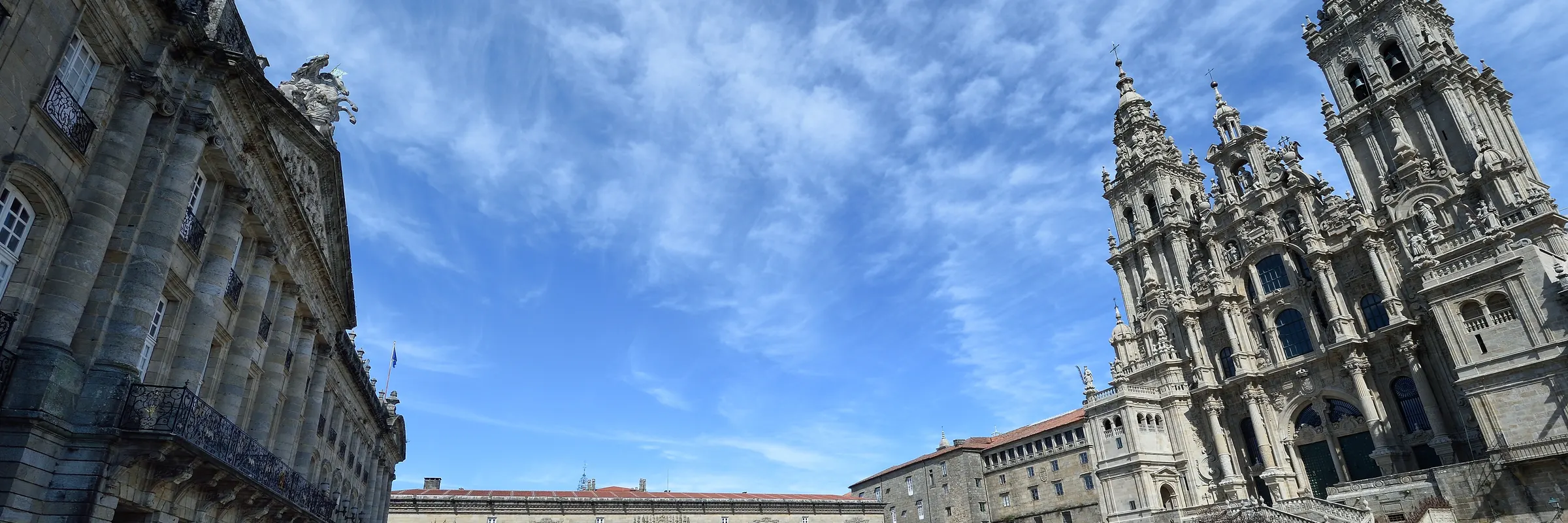
Santiago de Compostela: The Baroque façade of the cathedral over the Obradoiro square

Galicia, Spain

Santiago de Compostela: how many days you need and when to go

Photo: Tim Adams · CC BY 3.0

For more than a thousand years people have walked across Europe to Santiago de Compostela, to the tomb of the apostle St James under its cathedral, and they still arrive every day, hundreds at a time in summer, limping into the great square with their packs. The old town they arrive in is one of the most beautiful in Spain: streets and arcades of grey granite, convents and colleges, the Baroque façade of the cathedral rising over all of it. It is small, walkable in a morning, and it rains here more than almost anywhere in Spain, which the locals say makes the stone shine. The planning problem is the pilgrims' calendar: the summer months, the feast of St James in July and above all the Holy Years, when that feast falls on a Sunday, fill the city far beyond its size.

Short answers

What people ask before booking

How many days do you need in Santiago de Compostela?

Santiago de Compostela needs two days: one for the cathedral, its Portico of Glory and the squares around it, and one for the old town, the market and the park with the classic view. A third day is for Cape Finisterre or the coast. Check whether your dates fall in a Holy Year — the next is 2027 — or the week of the twenty-fifth of July.

What is the best month to visit Santiago de Compostela?

May and June — Green, mild and before the summer pilgrims. September — Warm, settled and quieter.

Work out how many hours you will have in Santiago de Compostela on your dates
When to go, and what each month costs you

Santiago has a mild, wet Atlantic climate: cool summers that are the driest time of the year, and long, rainy autumns and winters. It is one of the rainiest cities in Spain, and the old town is beautiful in the rain. The pilgrims' calendar decides the crowds.

  1. January: Worth it, but
  2. February: Worth it, but
  3. March: Worth it, but
  4. April: Worth it, but
  5. May: Go now
  6. June: Go now
  7. July: Worth it, but
  8. August: Worth it, but
  9. September: Go now
  10. October: Worth it, but
  11. November: Worth it, but
  12. December: Worth it, but
  • May and June

    Go now

    Green, mild and before the summer pilgrims

    Mild days, long evenings and less rain, with the countryside at its greenest. The pilgrims' routes are busy but the city is not yet full. Holy Week, whose dates move between March and April, comes before.

  • September

    Go now

    Warm, settled and quieter

    Still warm and often dry, with the summer crowds gone and the grape harvest in the wine country to the south. One of the best months to walk the last stretch of the Camino.

  • July and August

    Worth it, but

    The driest months, and the busiest

    The warmest and driest weather of the year, and the peak of the pilgrimage. The feast of St James on the twenty-fifth of July, with fireworks on the cathedral square the night before, fills the city; in Holy Years, when that day falls on a Sunday — the next is 2027 — the crowds are far larger. Book well ahead.

  • October to April

    Worth it, but

    Rain, granite and quiet

    The wet season, with rain on many days and mild temperatures. The old town is quiet, local and shining in the rain, hotels are cheaper, and the cathedral is easier to visit. Bring waterproofs, and check the coast's forecast before a day trip.

What to pack for Santiago de Compostela, month by month

How many days Santiago de Compostela needs

Two days cover the city. One for the cathedral — the façade, the carved Portico of Glory, the tomb of the apostle, the roof tour — and the squares around it. One for the old town's streets, the market, the convents and the park with the classic view of the cathedral, ending with octopus and white wine in the evening.

The third day is for the coast. Cape Finisterre, which pilgrims once took for the end of the world, and the wild Coast of Death north of it are a long day by car or bus; the wine country and the fishing villages of the southern estuaries, or the city of A Coruña half an hour away by train, are easier.

How the city is arranged

Santiago's old town is a compact oval of granite on a low hill, with the cathedral in the middle and four great squares around it. The pilgrims' routes converge on it from the north and east; the nineteenth-century city and the station spread to the south, and green parks and the university surround the whole.

  • The cathedral squares — the Obradoiro in front of the Baroque façade, and the squares on the other three sides, each of a different century.
  • The old town — arcaded streets of granite running down from the cathedral, full of bars, convents, colleges and shops.
  • The market — the food market at the eastern edge of the old town, where the region's fish, cheese and vegetables are sold.
  • The Alameda — the park on the western side, with the postcard view of the cathedral above the rooftops.
  • The Ensanche — the modern centre to the south, with the shops and the walk down to the railway station.

Where to stay, and what each area costs you

The old town is small, and staying in it is worth it: the cathedral at night, empty and lit, is one of the sights of the trip. The modern city is cheaper and five or ten minutes' walk away.

Hotels fill in summer, in the week of the feast of St James around the twenty-fifth of July, in Holy Week and, above all, in Holy Years. The city adds a small per-night tourist tax to hotel bills; the public pilgrims' hostels are exempt.

AreaWho it suitsThe catch
The old townThe cathedral, the squares and the bars at the door, and the city at its most beautiful at night.Steep granite lanes, no cars at the door, and the dearest rooms in summer.
San Pedro and the arrival of the CaminoThe last street of the main pilgrim route, a few minutes from the cathedral, with small hotels and pilgrims' bars.Busy with arriving walkers by day, and a slope up to the old town.
The EnsancheCheaper hotels, local restaurants and shops, five to ten minutes' walk from the old town.A plain modern district without the charm of the granite streets.
Around the railway stationEarly trains and late arrivals, with the airport bus nearby.Fifteen minutes uphill to the cathedral, in a district with little to do.

Compare these areas against your priorities

Getting there, and getting around

Santiago's airport is a short bus ride from the city, with flights from around Spain and several European cities. High-speed trains reach Madrid in a little over three hours, and regional trains run to A Coruña and Vigo; buses connect the coast and the villages of the Camino.

The old town is for walking, and much of it is closed to cars. The city buses link the station, the bus station and the modern districts, and stop at the edge of the old town.

  • Bring an umbrella and shoes with grip: the granite is smooth and slippery when wet, which is often.
  • To walk the last part of the Camino, the classic minimum for the pilgrims' certificate is the last hundred kilometres on foot, from Sarria on the main route.
  • For Finisterre and the coast, a car or an organised tour is the practical way; buses are slow and infrequent.
  • Taxis wait at the station and around the old town's edge.

The cathedral, the pilgrims and the end of the world

The cathedral is Romanesque inside and Baroque outside, built over the tomb of St James from the eleventh century and wrapped in its great granite façade in the eighteenth. Its masterpiece is the Portico of Glory, a doorway of some two hundred carved figures from the twelfth century, restored to its original colours and now seen by timed visit. The giant censer, the botafumeiro, swings across the transept only on great feast days and at certain services, not every day; check the cathedral's calendar if you want to see it.

  • The cathedral rooftops — a guided climb over the granite roofs, with the city and the hills below.
  • The Obradoiro square — where the pilgrims arrive, lie down and look up at the façade; at any hour it tells the story of the city.
  • The pilgrims' office — where walkers who have completed at least the last hundred kilometres collect their certificate, the compostela.
  • The Hostal of the Catholic Monarchs — a royal hospital for pilgrims founded around 1500 on the cathedral square, now a hotel.
  • The market — granite halls full of Galician produce, with small bars for a glass and a bite between the stalls.
  • Cape Finisterre and the Coast of Death — the lighthouse on the cape where many pilgrims continue to the sea, and a coast of cliffs and wrecks north of it.

How eating works here

Galicia eats from the sea and from its green farms, and Santiago is where the region's food comes to town. Octopus boiled in copper pots, sliced with scissors onto wooden plates and dressed with olive oil, salt and paprika is the dish everyone orders; shellfish, savoury pies, small green peppers and the almond cake marked with the cross of St James are the rest.

Spanish hours apply, a little earlier than in the south. The bars of the old town's two parallel streets serve a tapa with many drinks, and the white wines of the southern estuaries are the house drink.

  • Shellfish is sold by weight; check the price on the board before ordering.
  • The menu of the day at lunch is the bargain of any Galician town.
  • Galicia's cheeses are soft and mild; the cone-shaped one is the classic.
  • Tipping is optional: rounding up is enough.

Where to eat in Santiago de Compostela, and what to order

Santiago's food is Galicia's: octopus with paprika, savoury pies, small fried peppers, a mild cone-shaped cheese and an almond cake, with the white wines of the coast. The market and the bars around it are where to eat them.

  • Polbo á feira

    What to order

    Octopus on a wooden plate

    Octopus boiled in a copper pot until tender, cut with scissors onto a wooden plate and dressed with olive oil, coarse salt and paprika. It is the dish of Galician fairs, and the bars of Santiago serve it all day. Order it with bread and a glass of white wine.

    Check it on Wikidata
  • Tarta de Santiago

    What to order

    The almond cake of St James

    A moist cake of ground almonds, sugar and eggs, with no flour, dusted with icing sugar around the shape of the cross of St James. It has been made in Galicia for centuries and is the city's dessert and its souvenir; buy one boxed from a bakery of the old town.

    Check it on Wikidata
  • Pimientos de Padrón

    What to order

    Small green peppers, mostly mild

    Small green peppers fried in olive oil and sprinkled with coarse salt, from the town of Padrón, a short ride south. Most are mild and a few are fiercely hot, which is the game. A summer dish, best from late spring into autumn.

    Check it on Wikidata
  • Queso tetilla

    What to order

    The cone-shaped cheese

    A soft, mild cow's-milk cheese shaped like a cone, with a thin pale rind. It is the most typical cheese of Galicia, eaten on its own or with quince paste, and sold in the market and every grocer's.

    Check it on Wikidata
  • Albariño

    What to order

    The white wine of the estuaries

    A fresh, aromatic white wine from the coastal valleys of southern Galicia, made from the Albariño grape. It is the natural partner of octopus and shellfish; order it by the glass in the bars of the old town.

    Check it on Wikidata

Things that change the trip

  1. Check whether your dates fall in a Holy Year — the next is 2027 — or the week of the twenty-fifth of July, and book early if they do.
  2. Book the Portico of Glory and the rooftop tour ahead.
  3. Do not count on seeing the giant censer: it swings only on great feast days and certain services.
  4. Stay in the old town and walk to the cathedral square at night.
  5. Pack an umbrella and shoes with grip in every season.
  6. Give a day to Finisterre or the coast, by car or tour.

Plan Santiago de Compostela with Galicia

A trip of more than three days, or one that joins Santiago, A Coruña, the southern estuaries or the last stages of the Camino with the trains and roads between them, is what Premium is for. The free version covers one destination of up to three days.

Destinations