Skip to content
JoruJoru
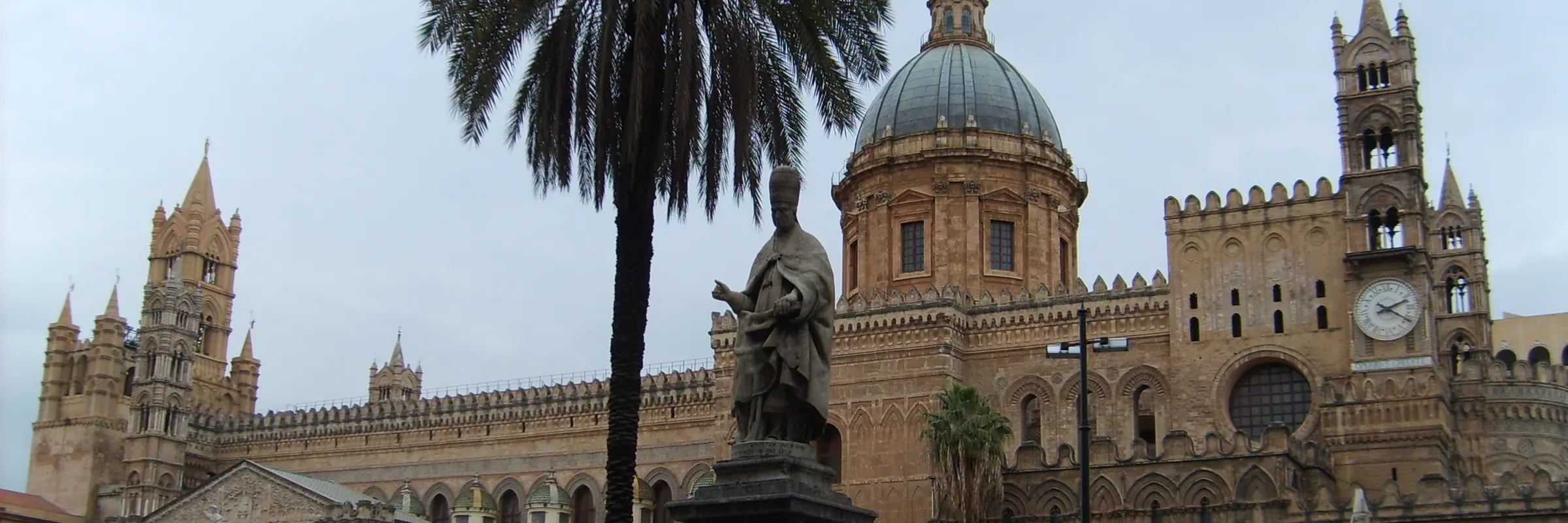
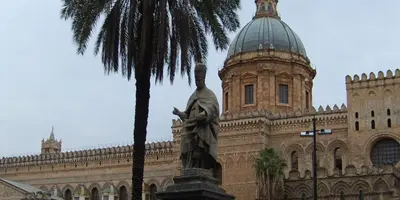
Palermo: The cathedral of Palermo, with its dome and Norman towers

Sicily, Italy

Palermo: how many days you need and the best months to go

Photo: Pava · Public domain

Palermo has been Phoenician, Roman, Byzantine, Arab, Norman, Spanish and Bourbon, and it shows all of them at once. Under its Arab emirs and Norman kings it was one of the richest cities in Europe, and their churches and palaces, where Byzantine gold mosaics, Arab domes and Norman stone meet, are a World Heritage Site. Around them is a city of peeling Baroque palaces, street markets that still feel like souks, and some of the best street food anywhere, eaten standing at stalls that have fried the same thing for generations. It is also loud, chaotic and in places run-down, and that is the planning problem. Driving in Palermo is an ordeal and parking worse; its treasures hide behind plain doors and inside crowded streets; and the city is the natural base for western Sicily, from the cathedral of Monreale on the hill above it to the beaches, temples and hill towns further out. Walk the old town, take buses and trains for the rest, and keep the car for the countryside.

Short answers

What people ask before booking

How many days do you need in Palermo?

Palermo needs two days: one for the Arab-Norman monuments — the Palatine Chapel, the cathedral and the Martorana — and the Ballarò market, one for the Kalsa, the opera house and the street food. A third day is for the mosaics of Monreale, the cathedral of Cefalù or the beach at Mondello.

What is the best month to visit Palermo?

April to June — Warm, green and the sea warming. September and October — A warm sea and softer days.

Work out how many hours you will have in Palermo on your dates
When to go, and what each month costs you

Palermo has a Mediterranean climate: long, hot and dry summers, mild winters with some rain, and warm springs and autumns. Hot winds from Africa can bring days of fierce heat. Spring and autumn are the best seasons for the city.

  1. January: Worth it, but
  2. February: Worth it, but
  3. March: Worth it, but
  4. April: Go now
  5. May: Go now
  6. June: Go now
  7. July: Worth it, but
  8. August: Worth it, but
  9. September: Go now
  10. October: Go now
  11. November: Worth it, but
  12. December: Worth it, but
  • April to June

    Go now

    Warm, green and the sea warming

    Warm, sunny days, the countryside green and the sea warm enough by June. Easter, whose date moves every year, brings processions and fills the hotels. The best time for the city and the excursions.

  • September and October

    Go now

    A warm sea and softer days

    The sea still warm after the summer, the heat easing and the crowds thinning. October can bring the first heavy rains, usually in short storms.

  • July and August

    Worth it, but

    Hot, and the feast of the patron saint

    Hot, dry days and warm nights; the city empties towards the beaches, and some restaurants close in August. On the night of the fourteenth of July, the feast of Santa Rosalia fills the old town with a procession, music and fireworks. Sightseeing is for the morning and the evening.

  • November to March

    Worth it, but

    Mild, quiet and some rain

    Mild days with rain on some of them, cool nights, and the city at its most local. The best season for the monuments without queues, and too cool for most people to swim.

What to pack for Palermo, month by month

How many days Palermo needs

Two days cover the city. One for the Arab-Norman heart: the Norman Palace and its Palatine Chapel, the cathedral, the red domes of San Giovanni degli Eremiti and the mosaics of the Martorana, with the Ballarò market in between. One for the rest: the Quattro Canti and the old streets of the Kalsa, the opera house, the Capuchin catacombs, and the evening on Via Maqueda.

The third day is for Monreale and the coast. The cathedral of Monreale, its walls covered in golden mosaics, is a short bus ride up the hill; Cefalù, a seaside town with its own Norman cathedral, is about an hour by train; and Mondello, the city's beach, is half an hour by bus. Further out, the Greek temple of Segesta and the hill town of Erice make a full day by car or tour.

How the city is arranged, around a crossroads

The old town is a square cut into four quarters by two long streets, Via Maqueda and the Cassaro, which cross at the Baroque crossroads of the Quattro Canti. The cathedral and the Norman Palace are at the inland end of the Cassaro; the sea and the old port at the other. North of the old town, the nineteenth-century city of Via Libertà runs towards the hills and the beach of Mondello.

  • The Albergheria — the south-western quarter, with the Norman Palace, San Giovanni degli Eremiti and the market of Ballarò.
  • The Kalsa — the old Arab quarter by the sea, with palaces, churches, squares and much of the nightlife.
  • The Capo and the cathedral — the north-western quarter, with the cathedral and the market of the Capo.
  • The Vucciria and La Loggia — the north-eastern quarter, with the old market square and the lanes around the old port.
  • Via Libertà and the new city — the elegant avenues north of the Teatro Massimo and the Politeama, with shops and cafés.

Where to stay, and what each area costs you

Staying in the old town puts the sights, the markets and the street food on foot, and is the way to feel the city. The new city around the Politeama is calmer and more elegant, a short walk north, and Mondello is for a beach stay in summer.

Prices rise in summer, at Easter and around the feast of Santa Rosalia in mid-July, but Palermo is cheaper than the big cities of the north. The city charges a tourist tax per person and per night.

AreaWho it suitsThe catch
Around the Quattro Canti and the cathedralFirst visits: the Norman monuments, the markets and the street food on the doorstep.Noisy, scruffy in places, and full of traffic and scooters.
The KalsaOld palaces, quiet squares by day and the city's liveliest nights, near the sea front.Loud on weekend nights, and still rough on some streets.
Around the Teatro Massimo and Via MaquedaA central base on the pedestrian street, with restaurants and the opera house.Crowded and noisy in the evenings.
Politeama and Via LibertàThe calmer nineteenth-century city: elegant streets, shops, cafés and the airport bus.Less atmosphere, and fifteen minutes' walk from the old town.
MondelloA beach stay in summer, in the old seaside resort below the mountain.Half an hour from the city by bus, and crowded on summer weekends.

Compare these areas against your priorities

Getting there, and getting around

Palermo's airport is on the coast west of the city, under an hour away by train or bus. Trains run along the coast to Cefalù and inland to Agrigento; ferries sail overnight to Naples and Sardinia, and boats by day to the islands off the coast.

The old town is for walking, and much of it is closed to traffic. Buses run to Monreale, Mondello and the new city; for the rest of western Sicily, a car, trains or tours.

  • Do not drive into the old town: it is a restricted zone with cameras, and the traffic is chaotic.
  • Watch your bag in the markets and on crowded buses.
  • Dress for the churches: covered shoulders and knees are expected, and some close in the middle of the day.
  • Hire a car to leave the city, not to stay in it: collect it on the way out.

Gold mosaics, markets and catacombs

The Palatine Chapel, in the Norman Palace, is the masterpiece of Arab-Norman Palermo: a small royal chapel of the twelfth century whose walls glitter with Byzantine gold mosaics under a wooden ceiling carved and painted by Arab craftsmen. Go early, when the light is best and the queues shortest, and combine it with the cathedral and the red domes of San Giovanni degli Eremiti nearby.

  • Monreale — the cathedral on the hill above the city, its interior covered in golden mosaics, with a cloister of carved twin columns.
  • The Martorana — a church of the twelfth century with mosaics as fine as the Palatine Chapel's, on a square shared with the red domes of San Cataldo.
  • The markets — Ballarò, the Capo and the Vucciria: stalls of fish, fruit and spices, shouting vendors and street food.
  • The Teatro Massimo — the largest opera house in Italy, open for guided visits when there is no performance.
  • The Capuchin catacombs — corridors lined with the clothed, mummified dead of past centuries; not for everyone.
  • Mondello and Monte Pellegrino — the city's beach, and the mountain above it with the sanctuary of Santa Rosalia, the patron saint.

How eating works here

Palermo is one of the street-food capitals of the world. Fried rice balls, chickpea fritters in a bun, a thick spongy pizza with onions and breadcrumbs, and, for the brave, a sandwich of boiled spleen, are sold from stalls in the markets and on the street corners, mostly in the morning and at midday. The sit-down food is Sicilian: pasta with sardines and wild fennel, swordfish, caponata, and sweets of ricotta and almond.

Italian hours apply, later in summer: lunch from one, dinner from half past eight. The markets are best in the morning, when the stalls are full and the frying begins.

  • Here the rice balls are feminine: ask for an «arancina», as Palermo does.
  • Pasta with sardines is the city's dish: fresh sardines, wild fennel, raisins and pine nuts.
  • In summer, granita with a brioche is breakfast.
  • A cover charge is often added per person; tipping beyond it is optional.

Where to eat in Palermo, and what to order

Palermo eats in the street: rice balls, chickpea fritters, a thick onion pizza and the ricotta-filled pastry tubes of Sicily, from stalls that have fried them for generations. Go to a market in the morning and graze.

  • Arancina

    What to order

    The fried rice ball

    A ball of saffron rice around a filling of meat sauce and peas, or ham and cheese, breaded and fried. In Palermo it is round and feminine, «arancina», while in the east of the island it is cone-shaped and masculine; the debate is serious. Eat it hot, from a bar or a stall.

    Check it on Wikidata
  • Panelle

    What to order

    Chickpea fritters in a bun

    Thin squares of chickpea flour fried until crisp, often with potato croquettes, stuffed into a sesame bun with a squeeze of lemon. It is the cheapest and most typical snack of the markets, a legacy of the city's Arab past.

    Check it on Wikidata
  • Sfincione

    What to order

    The thick onion pizza

    A thick, soft pizza topped with tomato, onion, anchovies, oregano and breadcrumbs, with a little cheese. It is sold by the slice from bakeries and from carts that tour the streets, and it is the street food of Christmas in Palermo.

    Check it on Wikidata
  • Cannolo

    What to order

    The ricotta-filled pastry tube

    A crisp tube of fried pastry filled with sweet sheep's-milk ricotta, sometimes with candied fruit or chocolate. Ask for one filled on the spot, so the shell stays crisp; the pastry shops of the city fill them to order.

    Check it on Wikidata
  • Ballarò

    Market

    The oldest street market

    A long market street through the Albergheria, with stalls of fish, vegetables, spices and fried food, and vendors calling out in Sicilian. It is the oldest and liveliest of the city's markets; come in the morning, and eat as you go.

    Check it on Wikidata

Things that change the trip

  1. Go to the Palatine Chapel early, and check its opening days before you plan around it.
  2. Eat street food in a market in the morning.
  3. Do not drive in the city; collect a hire car only when you leave it.
  4. Take the bus up to Monreale for its mosaics.
  5. Dress for the churches: shoulders and knees covered.
  6. Plan the mid-July feast or avoid it: it fills the old town for days.

Plan Palermo with western Sicily

A trip of more than three days, or one that joins Palermo with Cefalù, Segesta, Trapani, Agrigento or Taormina and the trains and roads between them, is what Premium is for. The free version covers one destination of up to three days.

Destinations