Skip to content
JoruJoru
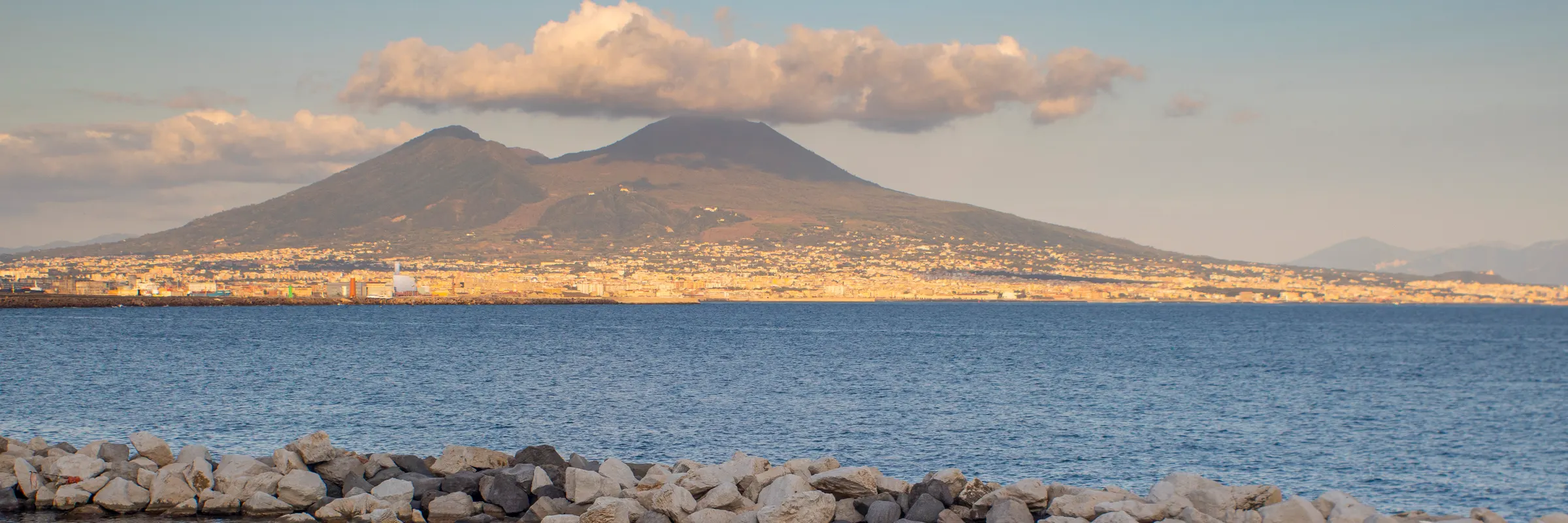
Naples: Vesuvius across the bay, seen from the seafront
Photo: Purnawibawa · CC BY 4.0
Campania, Italy

Naples: how many days you need and the best months to go

Naples is treated as a railway station with a volcano behind it: a place to change trains for Pompeii, Capri or the Amalfi Coast. That is the first mistake, because the city is the most intense in Italy and the old centre alone fills two days. The second mistake is the opposite one, cramming the ruins, the volcano and an island into the days that are left. The sites around the bay are each half a day or more, they are reached by a slow commuter railway, and the boats to the islands answer to the sea and not to your timetable.

Short answers

What people ask before booking

How many days do you need in Naples?

Naples needs three days: two for the city — the old centre, the archaeological museum and the seafront — and one for Pompeii or Herculaneum, which are not the same visit. Add a fourth for an island, and keep that day flexible, because the boats stop when the sea is rough.

What is the best month to visit Naples?

May and June — Warm, long days and everything running. September and October — Summer's sea without summer's crowd.

Which months are worth avoiding in Naples?

August — Peak heat, peak prices and a half-closed city.

Work out how many hours you will have in Naples on your dates

How many days Naples needs

Two days for the city itself: the old Greek and Roman centre, the archaeological museum, the seafront with its castles, and one evening on the hill of Vomero for the view. A third day goes to the ruins. That is the honest minimum, and it is the trip most people shorten to one night and regret.

The fourth day is for the water: Capri, Procida or Ischia by boat, or the royal palace at Caserta if the sea is rough. Pompeii, Vesuvius and Herculaneum do not fit in one day, whatever the tours promise. Pompeii alone is a town of more than sixty hectares with almost no shade.

How the city is arranged, and the grid underneath it

Naples wraps around a bay with the volcano on one side and a ridge of hills on the other. The old centre sits low, behind the port; the station is on its eastern edge; the smart seafront runs west; and a residential district looks down on all of it from the hill.

The street plan of the old centre is still the Greek one. Three long parallel streets cross it from east to west, laid out when the city was a Greek colony, with narrow lanes running between them. The southern one is so straight that from above it looks like a cut through the roofs, which is what its nickname, Spaccanapoli, means. Once you see the grid, the centre stops being a maze.

  • The old centre — the three ancient streets and everything between them: churches, pizzerias, workshops, the underground city and the chapel with the Veiled Christ.
  • Via Toledo and the Spanish Quarter — the main shopping street, and climbing the slope beside it a tight grid of lanes laid out in the sixteenth century to house Spanish troops.
  • Chiaia and the seafront — the elegant west: boutiques, bars, a long promenade closed to traffic, and the castle on its islet.
  • Vomero — the hilltop above the centre, residential and calm, with a fortress, a monastery museum and the view. Three funiculars connect it to the city below.
  • The station and the port — Piazza Garibaldi to the east, where every train arrives, and the quays below the castle where the boats leave for the islands.

Where to stay, and what each area costs you

The choice is between sleeping inside the noise and sleeping above or beside it. The old centre and the Spanish Quarter are the Naples people come for, and they are loud until late, with scooters in lanes that look too narrow for them. Ask for a room on an inner courtyard, and check the floor: many small hotels occupy one storey of an old palace, sometimes without a lift.

If the plan is mostly day trips, the station area is the practical answer and the least pleasant one. Everything leaves from there, and nobody stays for the atmosphere.

AreaWho it suitsThe catch
The old centreA first visit. The churches, the museum and the best pizzerias are on foot, and the streets are the sight.Loud until late, scooters in the lanes, and dark side streets at night. Rooms vary wildly.
The Spanish Quarter and Via ToledoGood value, a metro station, and street life at the door, halfway between the old centre and the sea.Steep, dense and noisy at every hour; taxis do not like the lanes.
Chiaia and the seafrontCalmer, elegant streets, sea views, good restaurants and bars, and a flat walk along the bay.The most expensive part of the city, and a metro ride or a long walk from the old centre.
VomeroQuiet nights, the view and a neighbourhood's own shops and restaurants, with the funiculars down to the centre.You go down and up every day, and the funiculars do not run all night.
Around the central stationCheap rooms and the best connections: the trains to Pompeii, the airport bus and the metro are at the door.Scruffy, charmless and uncomfortable after dark. A base, not a neighbourhood.

Compare these areas against your priorities

The airport, two railways and the boats

The airport is close to the city. A dedicated bus runs to the central station and on to the port where the island boats leave, and nowhere else. A metro station at the airport has been under construction for years: if it is open when you travel, it is on the line that serves both. High-speed trains from Rome take a little over an hour and arrive at the same station, which is why many visitors never see the airport.

The thing to understand at that station is that it holds two railways. The national trains leave from upstairs; the commuter line to Herculaneum, Pompeii and Sorrento is a separate network with its own station under the same roof, its own tickets and its own standards. It is old, crowded and slow, and it is the only train that stops at the gate of the ruins.

  • For Pompeii, the stop is the one named for the excavations, on the Sorrento line. The national railway has a station called Pompei too, in the modern town, a long walk from the main entrance.
  • The fast boats leave from the quay below the castle; the slow ferries leave from another quay further along. The ticket says which, and they are not next to each other.
  • Hydrofoils are cancelled when the sea is rough, mostly in winter. Keep the island day movable and decide it the evening before.
  • The metro stations on the main line are worth seeing in themselves. Several were given to artists and architects, and the one at Toledo is the reason people ride a stop further than they need.

The ruins, the volcano and the islands

Everything on this list is within about an hour, and each one is a different kind of day. The decision that matters is Pompeii or Herculaneum. Pompeii is a whole city and needs at least half a day of walking in the open. Herculaneum is a fraction of the size, better preserved, and can be seen properly in two hours.

  • Pompeii — streets, houses, baths, bakeries and an amphitheatre, buried in the year 79. Go at opening, carry water and a hat, and accept that you will not see all of it.
  • Herculaneum — a smaller, richer town buried by the same eruption in a different way, which preserved wood: doors, beds, roof beams and upper floors. The better choice in summer, or with half a day.
  • Vesuvius — a bus up from either site, then a steep walk on cinders to the rim of the crater. Tickets are sold in advance for a time slot. It has not erupted since 1944.
  • Capri, Ischia and Procida — Capri is the famous one and is overwhelmed at midday in season; Procida is the small, quiet one; Ischia is the large one with thermal springs. Take the first boat.
  • The Royal Palace of Caserta — one of the largest royal residences in the world, north of the city by regional train, with a park that runs to a waterfall. The day for when the sea is rough.

How eating works here

Pizza in Naples is not what the word means elsewhere. It is soft, wet in the middle, blistered at the edge and cooked in about a minute, and the classic list is two pizzas long: marinara and margherita. The famous pizzerias do not take bookings. You give a name at the door, wait in the street, and eat fast.

The rest of the cooking is slower and happens at lunch. Sunday belongs to ragù, a meat sauce simmered for hours, and most trattorie close one day a week and for part of August.

  • Coffee is short, strong and drunk standing at the bar, with a glass of water that is meant to be drunk first. Sitting at a table costs more, and that is posted.
  • A cover charge on the bill is normal, and it is not a tip. Tipping is rounding up.
  • The folded pizza sold through a window is a different thing: a small one, folded in four in paper and eaten walking. It is the cheapest lunch in the city.
  • Fried food is a category of its own here, sold in paper cones from shops that do nothing else.

Where to eat in Naples, and what to order

Naples is one of the few big cities in Europe where the best food is also the cheapest, and where the dish the city is known for is eaten daily by the people who live there. The rule is not to look for the best pizzeria: the gap between the famous ones and a good one in any neighbourhood is smaller than the queue suggests.

  • Pizza napoletana

    What to order

    The dish the trip is partly for

    A soft disc with a high, charred rim, tomato, and either garlic and oregano or mozzarella and basil. The art of making it is on the UNESCO heritage list, and the story that the margherita was invented for a queen in 1889 is a legend the city is happy to keep. Order one each, eat it with a knife and fork from the middle outwards, and do not ask for extra toppings.

    Check it on Wikidata
  • Pizza fritta

    What to order

    The pizza the neighbourhood eats instead

    Dough stuffed with ricotta, pork crackling and a little tomato, sealed and dropped in hot oil until it puffs. It began as the poor relation of the baked one and is now sold from its own shops. It arrives too hot to hold, wrapped in paper, and one is a meal.

    Check it on Wikidata
  • Genovese

    What to order

    The local pasta sauce with the misleading name

    Onions cooked down for hours with a piece of beef until they turn into a sweet, brown sauce, served on thick tubes of pasta. It is called Genoese and it is made in Naples and almost nowhere else; nobody is sure why. It is a lunch dish, in a trattoria, and it does not travel.

    Check it on Wikidata
  • Sfogliatella

    What to order

    Breakfast, standing, with the coffee

    A shell of pastry around ricotta, semolina and candied peel, eaten warm. It comes in two forms: the ridged one, crisp and layered like a fan, and the smooth one, in soft shortcrust. Locals have a side. Try the ridged one first, hot from the oven, and watch the powdered sugar.

    Check it on Wikidata
  • Gran Caffè Gambrinus

    Institution

    One coffee somewhere with a ceiling worth looking at

    The grand café on the corner of the main square, open since 1860, with painted rooms from the turn of the last century. Drink at the bar, which costs what coffee costs anywhere else in the city; the tables are another price. Naples is also where the custom of paying for a second coffee to be claimed later by a stranger comes from.

    Check it on Wikidata
  • Via dei Tribunali

    Where to look

    A street to eat your way along

    The middle of the three ancient streets, about a kilometre of pizzerias, fried-food windows, pastry shops and churches. Several of the city's best-known pizzerias are on it or just off it, which is why the queues are here too. Come early for lunch or late for dinner, and eat standing between two sit-down stops.

    Check it on Wikidata

What a trip to Naples costs, and how to pay there

When to go, and what each month costs you

Naples has a long, dry summer and a mild winter that is wetter than people expect: from November to March it rains on about one day in two. The two questions are the heat at the ruins and the state of the sea. Pompeii has almost no shade, and the boats to the islands run when the water lets them.

  • May and June

    Go now

    Warm, long days and everything running

    The sea is calm, the islands are open and not yet full, and the ruins can still be walked at midday. May brings showers; by June they have almost stopped and the days are properly warm. The city opens monuments that are usually closed during May, as part of a month of cultural events.

  • September and October

    Go now

    Summer's sea without summer's crowd

    The water is at its warmest, the heat has dropped, and the islands empty once the Italian holidays end. The city's patron saint is celebrated on 19 September, a fixed date, with the cathedral full from early morning. October turns showery but stays warm enough to sit outside.

  • April

    Worth it, but

    Spring, showers and Easter

    Mild days, green hills and the sites without the heat, with rain on a good number of days. Easter moves between March and April and fills the city and the coast for a long weekend, when prices jump and the ruins are at their busiest outside summer.

  • July

    Worth it, but

    Hot, dry and full

    Reliable sun and a calm sea, which is the point if the islands are the trip. The ruins become an early-morning visit only, the boats and the island buses are packed, and the old centre holds the heat into the night.

  • November to March

    Worth it, but

    Mild, wet and cheap, with the islands half shut

    The city itself works well: museums, churches and pizzerias are unaffected and the ruins are nearly empty. What does not work is the bay. Hydrofoils are cancelled in rough weather and many island hotels close. In December the street of the nativity-figure workshops is packed shoulder to shoulder, which is either the reason to come or the thing to avoid.

  • August

    Think twice

    Peak heat, peak prices and a half-closed city

    The hottest month, on a coast where the whole country is on holiday at once. The islands and the Amalfi Coast are at their most crowded and most expensive, and around the middle of the month many family restaurants and shops in the city close for their own holidays. Pompeii at midday is a serious undertaking.

What to pack for Naples, month by month

Things that change the trip

  • See the archaeological museum as well as the ruins. The best mosaics, frescoes and objects from Pompeii and Herculaneum are in the city, not at the sites.
  • Choose between Pompeii and Herculaneum before the day, and do not add Vesuvius to Pompeii unless you start at opening.
  • Book the chapel with the Veiled Christ ahead. It is small, entry is by time slot and it sells out days in advance.
  • Keep the island day flexible. Check the sea the evening before, take the first boat out, and know when the last one comes back.
  • Carry bags on the side away from the road in the old centre and the Spanish Quarter. The risk here is a snatch from a passing scooter, not anything worse.
  • Do not judge the city by the streets around the station. They are the worst introduction to a place in Italy, and ten minutes away is another city.

Plan Naples around the bay

A trip of more than three days, or one that adds the islands, the Amalfi Coast or Rome and the trains and boats between them, is what Premium is for. The free version covers one destination of up to three days.

Destinations