
Skip to content
JoruJoru
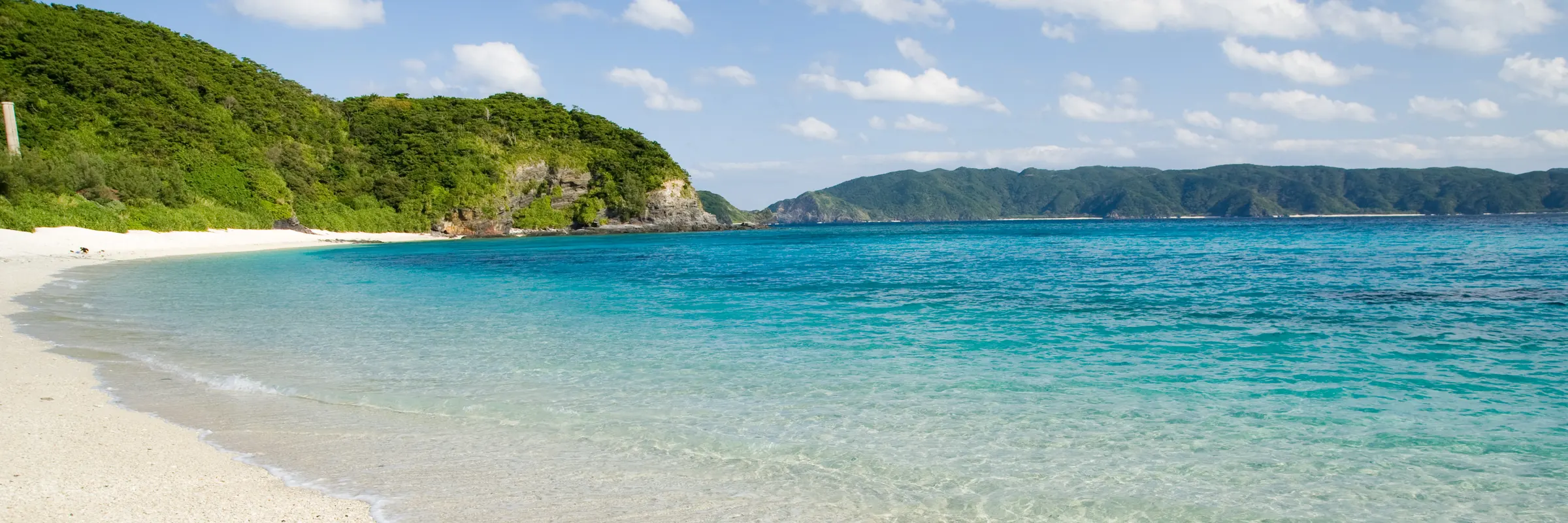
Okinawa: Furuzamami Beach on Zamami, in the Kerama Islands

Okinawa, Japan

Okinawa: how many days you need and the best months to go

Photo: Hashi photo · CC BY 3.0

Okinawa was the seat of its own kingdom, Ryūkyū, for more than four centuries before Japan annexed it in 1879, and it still does not feel like the rest of the country. The food is different, the music is different, the architecture is low and walled against typhoons, and the sea around it is the clearest and warmest in Japan. It was also the site of one of the bloodiest battles of the Pacific war, and the American bases that followed still cover a large part of the island. The planning problem is geography: the capital, Naha, is at the southern end, the best beaches and the great aquarium are two hours north, the small islands are a ferry ride west, and the bus network does not join them up. A trip here is a road trip, or a choice of bases.

Short answers

What people ask before booking

How many days do you need in Okinawa?

Okinawa needs four days on the main island — Naha and Shuri, the south and its war memorials, the north with the aquarium and the bridged islands, and a day at sea — and six to add a night on the Kerama Islands. Hire a car, and avoid the typhoon months from July to October if your dates are fixed.

What is the best month to visit Okinawa?

April — Warm, fresh and before the rains. October and November — The sea still warm, the heat gone.

Work out how many hours you will have in Okinawa on your dates
When to go, and what each month costs you

Okinawa is subtropical: warm all year, hot and humid from June to September, and mild and windy in winter. The rainy season comes earlier than on the mainland, from about May into June, and typhoons pass between July and October. The sea is warm enough to swim from spring to autumn.

  1. January: Worth it, but
  2. February: Worth it, but
  3. March: Worth it, but
  4. April: Go now
  5. May: Worth it, but
  6. June: Worth it, but
  7. July: Worth it, but
  8. August: Worth it, but
  9. September: Worth it, but
  10. October: Go now
  11. November: Go now
  12. December: Worth it, but
  • April

    Go now

    Warm, fresh and before the rains

    Warm days and warm enough sea to swim for many, with clear water and the beaches not yet crowded. The long holidays at the start of May fill flights and hotels; April before them is the sweet spot.

  • October and November

    Go now

    The sea still warm, the heat gone

    The heat of summer eases, the humidity drops and the sea stays warm into November. October can still bring a late typhoon, so leave a margin at the end of the trip. November is calm and quieter.

  • May and June

    Worth it, but

    The rainy season, then the start of summer

    The rainy season usually runs from mid-May to late June, with heavy showers between bright spells rather than constant rain. The twenty-third of June is the island's day of remembrance for the battle of 1945. Prices are lower after the May holidays.

  • July to September

    Worth it, but

    High summer and the typhoons

    Hot, humid and the peak of the beach season, with the sea at its warmest. This is also the heart of the typhoon season: a typhoon can close the sea, cancel flights and ferries for a day or more, and keep everyone indoors. The summer school holidays bring the highest prices.

  • December to March

    Worth it, but

    Mild, windy and the whales

    Mild for Japan, but grey and windy, with a cold north wind that makes it too cool for most people to swim. Humpback whales gather around the Kerama Islands from January to March, and cherry trees bloom in the north in January and February, the earliest in Japan. Quiet and cheaper, except over New Year.

What to pack for Okinawa, month by month

How many days Okinawa needs

Four days is the honest minimum for the main island. One for Naha: the old castle of the kings at Shuri, the market and the main street. One for the south: the war memorials and the coast. One or two for the north: the aquarium on the Motobu peninsula, the bridged islands and the cliffs of the west coast. One for the sea, which is what most people come for.

Six days lets you add the small islands. The Kerama Islands, a ferry ride west of Naha, have some of the clearest water in Japan and make a day trip or, better, a night. The far islands of Miyako and Ishigaki are a separate trip by plane, not a day out from here.

How the island is arranged

The main island is long and narrow, more than a hundred kilometres from end to end. The south is built up and busy, the middle is dominated by American bases, and the north is forest, mountains and quiet bays. An expressway runs up the middle, and the coast roads are slower and prettier.

  • Naha — the capital and the airport, with the castle of Shuri on its hill, the covered markets and the main shopping street.
  • The south — the Peace Memorial Park and the other sites of the battle of 1945, sacred groves of the old kingdom and a rocky coast.
  • The middle — Chatan and its American-style seafront, the bases, and the cliffs and resort hotels of the west coast.
  • The Motobu peninsula and the north — the great aquarium, the ruins of a castle wall, small islands joined by long bridges, and the forested north beyond.
  • The Kerama Islands — a cluster of small islands west of Naha, reached by ferry: white beaches, coral and, in winter, whales offshore.

Where to stay, and what each area costs you

The choice is between one base and two. Naha has the most hotels, the best food and the airport, but everything beautiful is an hour or two away by car. The resort hotels of the west coast and the north are on the beaches but far from everything else. Many trips split the nights: two in Naha, two or three up the coast.

Prices rise sharply for the Golden Week holidays in early May, in the school summer holidays of late July and August, and over New Year; in summer a typhoon can also strand guests for a day or two, which is worth allowing for at the end of a trip.

AreaWho it suitsThe catch
NahaThe first and last nights, and anyone without a car: the airport, the monorail, the markets and the best choice of restaurants.A city, not a beach: the good sea is an hour away or more, and the main street is busy and commercial.
Chatan and the middle west coastSunsets over the sea, a lively seafront of shops and restaurants, and a central position for day trips north and south.Traffic around the bases at rush hour, and the beaches here are man-made rather than wild.
The resort coast (Onna)Beach hotels on the clearest stretch of the west coast, with snorkelling and diving at the door.Large resorts with little around them; you eat at the hotel or drive.
The Motobu peninsulaThe aquarium, the bridged islands and quieter beaches, for a slower stay in the north.Two hours from the airport, and few restaurants open in the evening.

Compare these areas against your priorities

Getting there, and getting around

Naha's airport has flights from all over Japan and from several cities in East Asia, and it is a short ride from the centre. The monorail runs from the airport through Naha to Shuri and beyond, and it is the only railway on the island.

Beyond Naha, hire a car. Buses reach most of the island but slowly and infrequently, and the beaches, viewpoints and small islands are spread far apart. Book the car early for the holidays, allow for queues at the rental offices near the airport, and avoid driving through Naha and along the main road north at rush hour, when the traffic is among the worst in Japan.

  • Foreign drivers need an international driving permit of the right kind, or an official translation of certain national licences; check before you travel.
  • Driving is on the left, speed limits are low and enforced, and the expressway is the fast way north.
  • Ferries to the Kerama Islands leave from Naha's Tomari port, fast boats and slower ones; they are cancelled in rough seas, which matters most in the typhoon season.
  • Contactless transit cards work on the monorail, which is the easy way between the airport, the centre and Shuri.

The kingdom, the battle and the sea

Shuri Castle was the palace of the kings of Ryūkyū, and it has burned and been rebuilt several times, most recently after a fire in 2019 that destroyed the main hall. The reconstruction has been the island's great project since; check what can be visited, because parts of the site have been under restoration for years.

  • The aquarium on the Motobu peninsula — one of the largest in the world, with a tank of whale sharks and manta rays. Go early or late in the day to avoid the school groups.
  • The Peace Memorial Park — on the cliffs of the south coast where the battle of 1945 ended, with the names of everyone who died in it, of every nationality, carved on stone walls. A morning that stays with you.
  • The bridged islands — Kouri and the islands of the north-west are joined to the main island by long bridges over turquoise water, and their beaches are among the easiest to reach.
  • Snorkelling and diving — the reefs of the west coast and the Kerama Islands; the clearest water is from late spring to autumn.
  • The sacred grove of Sēfa-utaki — the holiest place of the old kingdom, in the forest of the south-east, and part of the island's World Heritage listing.
  • The Kerama Islands — a day trip, or a night, by ferry: white sand, sea turtles near the shore, and whale-watching boats from January to March.

How eating works here

Okinawan cooking owes as much to China, South-East Asia and post-war America as to Japan. Pork is the centre of it, used from head to trotter; bitter melon, tofu and seaweed are everyday; and the island's own noodles, its spirit and its beer are found nowhere else. A long life expectancy made the traditional diet famous, though modern Okinawa eats a great deal of fast food.

The rhythm is relaxed. Restaurants open later than on the mainland and many izakaya have live music of the island's three-stringed lute, especially in Naha.

  • The covered market in Naha sells fish on the ground floor and cooks it upstairs: choose it, and a restaurant above prepares it for a fee.
  • The local spirit is distilled from rice and aged in jars, sometimes for decades; it is strong, and it is drunk with water and ice.
  • American food is part of the local cooking: taco rice, steak houses and a root-beer drive-in chain that has been on the island since the 1960s.
  • Tipping is not done.

Where to eat in Okinawa, and what to order

Okinawa has its own cuisine, and it is worth eating nothing else while you are here. The island's noodles, its stir-fry of bitter melon and its slow-braised pork belly are the three dishes to try first, with the island's rice spirit and, on a hot day, a bowl of the post-war invention that put taco filling on rice.

  • Okinawa soba

    What to order

    The island's noodles

    Thick wheat noodles, not buckwheat despite the name, in a clear broth of pork bones and bonito, topped with slices of braised pork belly or pork ribs. Every village has its own version, and the shops that make their noodles by hand are the ones to look for. Add a few drops of the chilli-infused spirit that stands on every table.

    Check it on Wikidata
  • Chanpurū

    What to order

    The everyday stir-fry

    A stir-fry of bitter melon, firm tofu, egg and pork or canned luncheon meat. The bitterness of the melon is the point, and it is the dish that every home and every cheap restaurant on the island makes. Order it with rice and miso soup as a set lunch.

    Check it on Wikidata
  • Rafute

    What to order

    Pork belly braised for hours

    Squares of pork belly simmered for hours in the island's rice spirit, soy and brown sugar until they fall apart under the chopsticks. It was a dish of the royal court, and it is the richest thing on any menu here; a small portion is enough.

    Check it on Wikidata
  • Taco rice

    What to order

    The post-war invention

    Spiced minced beef, cheese, lettuce and tomato on a plate of rice, with salsa. It was invented near an American base in the 1980s and is now on menus across Okinawa and beyond, and the town where it was born still serves it in huge portions. Cheap, filling and very much of the island.

    Check it on Wikidata
  • Awamori

    What to order

    The island's rice spirit

    A spirit distilled from long-grain rice with black koji mould, made on the islands for some six hundred years. Aged in clay jars it becomes mellow and rich, and the old bottlings are prized. It is strong; order it diluted with water and ice, as the locals do, and try it in an izakaya with live music.

    Check it on Wikidata
  • Makishi Public Market

    Market

    Fish from the market, cooked upstairs

    Naha's covered public market, in the shopping arcades off the main street, sells fish, pork, fruit and island foods. Buy fish or shellfish at a stall below and the restaurants upstairs will cook it for you, which is the classic Naha meal. The market was rebuilt and reopened in a new building in recent years.

    Check it on Wikidata

Things that change the trip

  1. Book a hire car early, and check that your driving licence is accepted in Japan before you travel.
  2. Split the trip between Naha and the coast rather than driving north and back every day.
  3. Leave a free day at the end of a summer or autumn trip in case a typhoon cancels your flight.
  4. Go to the aquarium early in the morning or after the school groups have gone.
  5. Spend a night on the Kerama Islands rather than rushing a day trip.
  6. Give a morning to the south and the Peace Memorial Park: it explains the island.

Plan Okinawa as a road trip

A trip of more than three days, or one that joins Naha, the coast, the north and the Kerama Islands with the roads and ferries between them, is what Premium is for. The free version covers one destination of up to three days.

Destinations