
Skip to content
JoruJoru
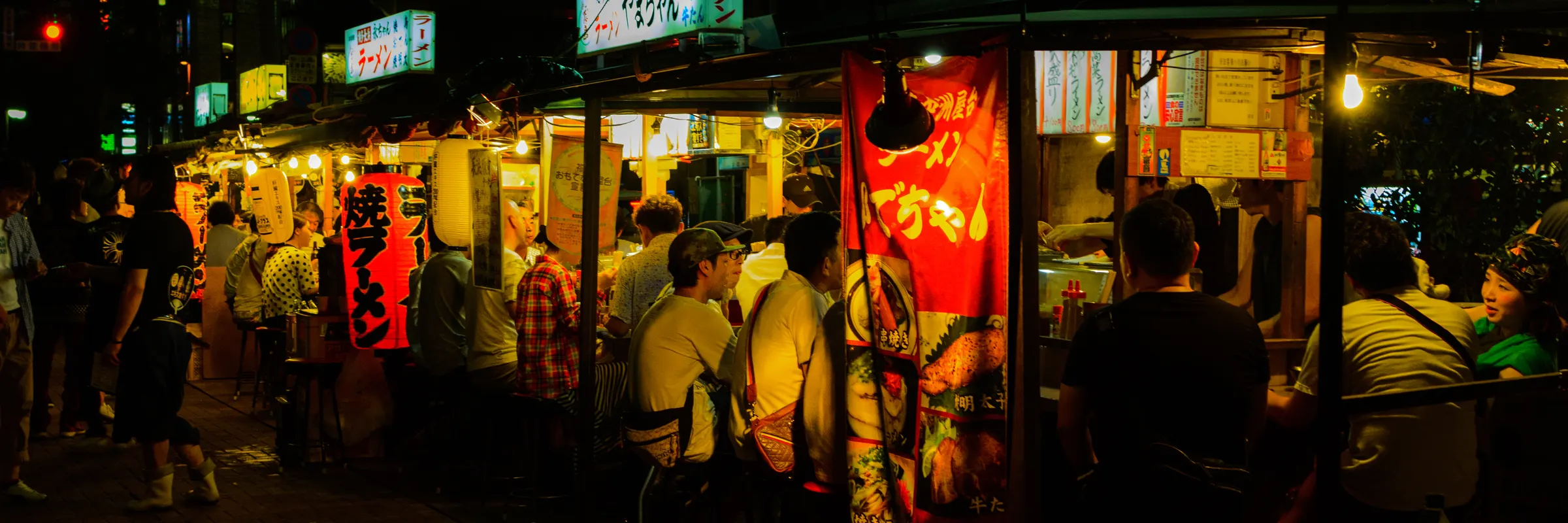
Fukuoka: Food stalls at Nakasu in the evening

Kyūshū, Japan

Fukuoka: how many days you need and the best months to go

Photo: Yoshikazu TAKADA from Tokyo, Japan · CC BY 2.0

Fukuoka is the Japanese city that people who live in Japan move to. It is big enough to have everything and small enough to cross in twenty minutes; the airport is two subway stops from the main station; and in the evening the riverbanks fill with open-air food stalls that no other Japanese city still has in any number. What it lacks is a single sight that justifies the journey, which is why most visitors pass through it on the way to somewhere else. That is a mistake in one direction and a reasonable plan in the other: two days here are a pleasure, and the rest of Kyūshū is the reason to stay longer.

Short answers

What people ask before booking

How many days do you need in Fukuoka?

Fukuoka needs two days — the old merchant quarter of Hakata, the castle park and the food stalls by the river — and a third for the shrine town of Dazaifu or the Itoshima coast. Come in October and November or in March and April; the first half of July is the summer festival, when hotels sell out.

What is the best month to visit Fukuoka?

October and November — Clear, mild days and the evening stalls at their best. March and April — Cherry blossom and spring warmth.

Work out how many hours you will have in Fukuoka on your dates
When to go, and what each month costs you

Fukuoka has mild winters and long, humid summers. The rainy season runs from early June into mid-July, and late summer brings typhoons. Autumn is the most reliable season, spring the prettiest, and the July festival is the one week that fills the city.

  1. January: Worth it, but
  2. February: Worth it, but
  3. March: Go now
  4. April: Go now
  5. May: Worth it, but
  6. June: Worth it, but
  7. July: Worth it, but
  8. August: Worth it, but
  9. September: Worth it, but
  10. October: Go now
  11. November: Go now
  12. December: Worth it, but
  • October and November

    Go now

    Clear, mild days and the evening stalls at their best

    The heat breaks in October, the air clears and the rain falls on fewer days than at any other time of year. Evenings at the food stalls are comfortable again. In November the national sumo tournament comes to Fukuoka for two weeks, which is worth seeing and fills hotels near the arena.

  • March and April

    Go now

    Cherry blossom and spring warmth

    Mild days and cool evenings, with cherry blossom in the castle ruins and around the pond. The bloom usually comes in late March or early April and lasts about a week; the exact dates move every year. On some spring days the sky is hazy with dust blown in from the continent.

  • May

    Worth it, but

    Warm, green and a holiday parade

    Pleasant weather before the rains. The first days of the month are Japan's Golden Week holidays and Fukuoka's own two-day parade on the third and fourth, when the centre is closed to traffic, crowded and fun. After that the city is easy again.

  • June and July

    Worth it, but

    The rainy season, and the summer festival

    Heavy rain on many days from early June until the rainy season ends in mid-July, then heat. The Hakata Gion Yamakasa runs from the first to the fifteenth of July, fixed dates every year, and ends with teams of men racing huge floats through the streets of the old town before dawn. It is the city's great event, and hotels sell out for its last days.

  • August and September

    Worth it, but

    The hottest weeks, and typhoon season

    Hot, humid days and warm nights, with typhoons possible from August through September; a direct hit stops trains and flights for a day. The mid-August Obon holiday fills trains across Japan. September cools slowly, and the week-long autumn fair at Hakozaki Shrine brings hundreds of stalls in the middle of the month.

  • December to February

    Worth it, but

    Mild, grey and the season for hot pot

    Mild for Japan, with frost rare, but grey, with light rain or drizzle on many days and a cold wind off the sea. Crowds are thin and hotel prices low. It is the right season for the city's hot pots, and a bowl of ramen at a steaming stall on a cold night is the city at its most itself.

What to pack for Fukuoka, month by month

How many days Fukuoka needs

Two days cover the city. One for the old merchant quarter of Hakata — its shrine, its temples and the river island of Nakasu — ending at the food stalls; one for the castle ruins, the park around the great pond, the shopping streets of Tenjin and the waterfront. The centre is compact and flat, and almost everything is a short walk or a few subway stops from everything else.

The third day belongs to Dazaifu, the shrine town half an hour away, or to the beaches and cafés of the Itoshima coast. Beyond that, Fukuoka stops being the destination and becomes the base: Nagasaki, Kumamoto and the hot-spring towns of Beppu and Yufuin are each an hour or two away, and each is a trip of its own rather than a day out.

Two towns that became one city

Fukuoka was two places for most of its history. Hakata, east of the Naka River, was the merchants' port, trading with China and Korea for a thousand years; Fukuoka, on the west bank, was the castle town built for the local lord at the start of the seventeenth century. They became one city in 1889, and the argument over the name went on after it. The city kept Fukuoka's; the main station, the festivals and the local dialect kept Hakata's.

The division still explains the map. The old temples, the shrine and the festival are on the Hakata side; the department stores, the castle ruins and the young districts are on the Fukuoka side; and between them, on an island in the river, lies Nakasu, the evening district.

  • Hakata — the main station and the old merchant town behind it: Kushida Shrine, the temples of the Gion quarter and the first Zen temple in Japan.
  • Nakasu — the island between two rivers: food stalls along the water, and behind them the largest nightlife district in Kyūshū.
  • Tenjin — the commercial centre: department stores, an underground shopping street and the terminal of the private railway to Dazaifu.
  • Daimyō and Yakuin — just west and south of Tenjin: small streets of independent cafés, bars, clothes shops and restaurants.
  • Ōhori Park and the waterfront — the castle ruins, a large lake with a path around it, and further west the beach, the tower and the baseball dome at Momochi.

Where to stay, and what each area costs you

The choice is between the station, which is where the trains are, and Tenjin, which is where the city is. They are three subway stops apart, so neither is a mistake; what changes is what is outside the door in the evening.

Hotels fill and prices jump for the big events: the summer festival in the first half of July, the May holiday parade, the sumo tournament every November, and the stadium concerts at the dome. On those dates book early or stay a few stops out.

AreaWho it suitsThe catch
Around Hakata StationAnyone moving on by train: the bullet trains, the airport subway and the buses all leave from here.An office district that goes quiet at night; the evening means a walk or a ride to the river.
Nakasu and KawabataThe food stalls at the door, the old shopping arcade and Hakata's temples within walking distance.Nakasu is the city's red-light and bar district: touts at night, and noise on the streets behind the river.
TenjinThe most central base: shops, restaurants, three ways out by subway and the train to Dazaifu.Busy and commercial, and the most expensive rooms in the city at weekends.
Daimyō and YakuinIndependent cafés, bars and restaurants, on quieter streets a short walk from Tenjin.Few large hotels and more small, plain ones; you walk to the subway.

Compare these areas against your priorities

The airport five minutes away, and the trains out

Fukuoka's airport is the most central of any large Japanese city: the subway reaches Hakata Station in two stops and Tenjin in a few more. The international terminal is on the other side of the runways and is linked to the domestic one by a shuttle bus, so allow for the transfer if your flight lands there.

Hakata Station is where the bullet trains from Tokyo, Osaka and Hiroshima end and where the line south to Kumamoto and Kagoshima begins. Nagasaki is reached by a separate high-speed line with a change of train on the way, so check the connection rather than assuming one train. For several days of travel in the island, the regional rail passes of JR Kyūshū are worth pricing against single tickets.

  • The subway has three lines and covers the centre, the airport and the station. Contactless transit cards from other Japanese cities work here.
  • Buses do the rest, including the waterfront and Fukuoka Tower. Get on at the back, pay at the front when you leave.
  • Korea is closer than Tokyo. Busan is a short flight away, and ferries cross from the port; the fast boat that once made the crossing in a few hours has stopped running, so check what is operating before you plan a sea crossing.
  • Cars are rarely worth it in the city, but they make sense for Itoshima and for touring the mountains and hot springs inland.

The shrine at Dazaifu, and the rest of Kyūshū

Fukuoka's great sights are mostly outside it. Dazaifu is the essential half-day: a private railway from Tenjin reaches the town in about half an hour, and a street of shops selling grilled rice cakes leads to Dazaifu Tenmangū, the shrine of the patron god of scholarship, where students come to pray before exams. The national museum of Kyūshū sits in the hill behind it, reached through a tunnel with a moving walkway.

  • Kushida Shrine and the Gion temples — in the city itself: the shrine of the summer festival, where a decorated float stands all year, and nearby the first Zen temple in Japan and a temple with a large wooden Buddha.
  • Ōhori Park and the castle ruins — a lake with an island path, and above it the stone walls of the castle, the city's best place for cherry blossom.
  • Itoshima — the coast west of the city, under an hour by train: beaches, surf, cafés and a white shrine gate standing in the sea in front of two rocks tied with rope. Easier with a car.
  • Nokonoshima — a small island in the bay, ten minutes by ferry, with a flower park on its hill. A gentle afternoon.
  • Further: Nagasaki, Kumamoto, Beppu and Yufuin — each a train ride of an hour or two, and each better as an overnight stop than as a rushed day out. This is where planning several destinations together changes the trip.

How eating works here

Fukuoka eats out more, and more cheaply, than most of Japan, and its food has a character of its own: pork-bone ramen, salted pollock roe, offal hot pot, chicken simmered in clear broth. The city's most famous dish is also its fastest: a bowl of ramen at a counter, eaten in ten minutes.

The food stalls are the part that exists nowhere else. Yatai are small mobile kitchens that are set up on the pavement every evening and packed away before morning, each with a counter and a handful of stools. Around a hundred still operate under a city ordinance, mostly along the river at Nakasu, in Tenjin and near the fish market at Nagahama.

  • At a yatai, order food and a drink each, and do not stay all night. The seats are few, the queue is behind you, and an hour is the custom. Many stalls do not open on rainy or very windy evenings.
  • Ramen is ordered by noodle firmness, from soft to almost raw, and finished with a second portion of noodles dropped into the same broth. The words to learn are the ones on the shop's own ticket machine or menu.
  • Lunch sets are the bargain of the day. Restaurants that are expensive at night serve a fixed lunch for a fraction of the price.
  • Tipping is not done. Pay what the bill says.

Where to eat in Fukuoka, and what to order

Fukuoka has a stronger food identity than almost any Japanese city of its size, and most of it is cheap. The pork-bone ramen that the world now knows as Japanese ramen comes from here, and so do two of the chains that took it abroad. Eat it once at a counter and once at a stall by the river, then move on to the dishes that never left Kyūshū.

  • Hakata ramen

    What to order

    The bowl the city gave the world

    A milky, rich broth of pork bones boiled for hours, very thin straight noodles and little else. The noodles are thin so they cook in seconds, and that is why you can order a second helping into the same bowl, which is the local habit. The firmness is asked for when you order: the locals go firmer than visitors expect.

    Check it on Wikidata
  • Yatai

    Market

    Dinner on a stool by the river

    Small kitchens on wheels, with a counter, a curtain and eight or ten seats, set up every evening on the pavement. Each one has its own menu: ramen at most, but also grilled skewers, oden, gyoza and dishes the owner is known for. Go before eight to sit down without queuing, and choose by the menu posted outside rather than by the crowd.

    Check it on Wikidata
  • Mentaiko

    What to order

    The souvenir every visitor carries home

    Pollock roe cured in salt and chilli, pink to deep red, eaten with rice, in rice balls, on pasta or grilled. It arrived from Korea, where the original is still eaten, and a Hakata shopkeeper made the version that Japan now buys in the mid-twentieth century. Every station shop sells it; a restaurant will serve it lightly grilled, which is the best way to try it first.

    Check it on Wikidata
  • Motsunabe

    What to order

    A winter pot for the table

    Offal, usually beef, simmered at the table in soy or miso broth with cabbage, garlic chives, garlic and chilli, finished with noodles in what is left. It is the dish locals eat in groups on a cold evening, and it is less challenging than the word offal suggests: the pieces are soft and the broth does most of the work.

    Check it on Wikidata
  • Yanagibashi Rengo Ichiba

    Market

    A breakfast of fish where the cooks shop

    A short covered lane of fishmongers, greengrocers and small eateries by the Naka River, known locally as the city's kitchen. Come in the morning, when the chefs are buying, and eat a bowl of rice with the day's fish at one of the counters inside. It is a working market, not an attraction, and it is at its liveliest early in the day.

    Check it on Wikidata
  • Hakata udon

    What to order

    The soft noodle that came first

    Thick wheat noodles in a light broth, cooked so soft that they would horrify the rest of Japan, often topped with burdock tempura. A stone at a Hakata temple claims the city as the place where wheat noodles first arrived from China, centuries before ramen. It is what locals eat for a quick lunch, and it is the gentlest meal in the city.

    Check it on Wikidata

Things that change the trip

  1. Use the airport. It is five minutes from the centre, so an evening flight leaves you a full last day.
  2. Book well ahead for the first half of July and the November sumo, and check the dome's concert calendar before choosing dates.
  3. Go to the food stalls early in the evening, and on a dry night: many do not open in rain.
  4. Give a morning to Dazaifu and go early, before the school groups and the tour buses arrive.
  5. Plan Kyūshū as a loop, not as day trips. Nagasaki, Kumamoto and Beppu each deserve a night, and Fukuoka is where the loop starts and ends.
  6. Check the Nagasaki connection before you book: the fast line needs a change of train on the way.

Plan Fukuoka as the start of Kyūshū

A trip of more than three days, or one that adds Nagasaki, Kumamoto or the hot springs of Beppu and the trains between them, is what Premium is for. The free version covers one destination of up to three days.

Destinations