



Skip to content
JoruJoru
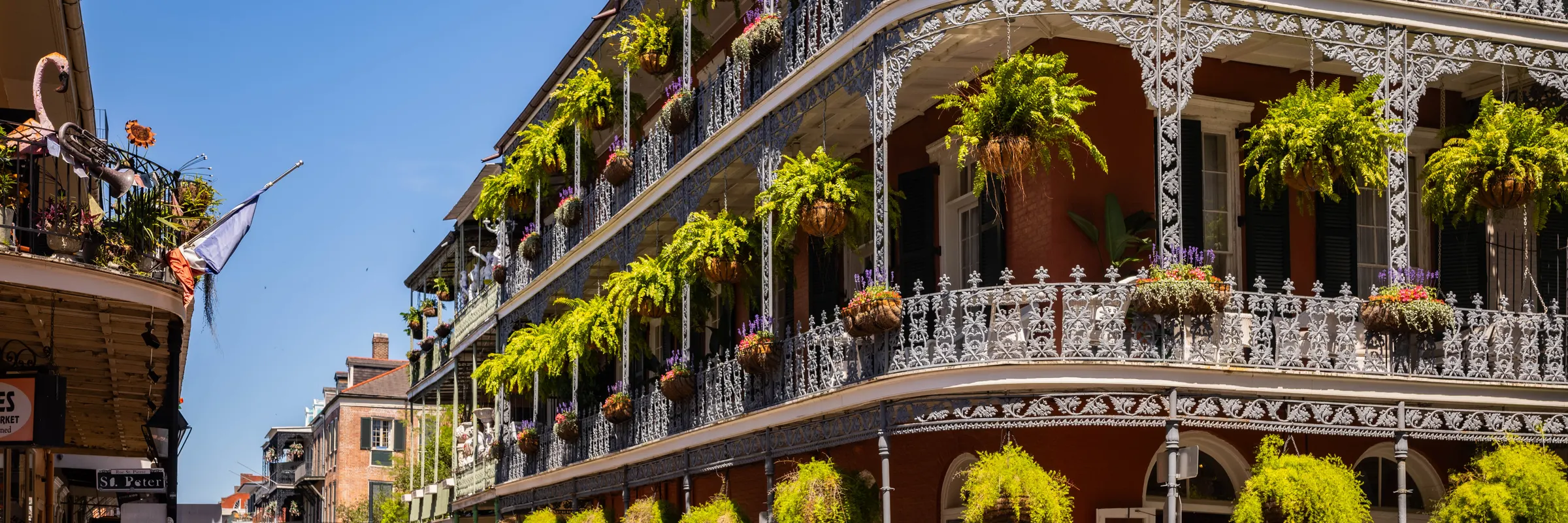
New Orleans: the iron balconies of the French Quarter
Photo: rboed* · CC BY 2.0
Louisiana, United States

New Orleans: how many days you need and when to go

New Orleans spent its first eighty-five years under French and Spanish rule, and it never fully converted. The result is a city with its own food, its own music, its own funeral customs and its own legal traditions, sitting in a bowl below sea level between a river and a lake. Three days is enough to eat well and hear real music. Four is enough to leave the Quarter, which is where the city actually lives.

Short answers

What people ask before booking

How many days do you need in New Orleans?

New Orleans needs three days for the French Quarter, a night of live music and the Garden District, and a fourth for Tremé, the Marigny or the swamps outside town.

What is the best month to visit New Orleans?

March and April — The best weather of the year, and the festivals. October and November — After the heat, before the crowds.

Which months are worth avoiding in New Orleans?

June and July — Heat, humidity and an afternoon storm most days. August and September — The peak of hurricane season.

How many days New Orleans needs

Three days is the working minimum: the French Quarter and its museums, an evening of live music, the Garden District and the streetcar, and one meal that justifies the flight. That covers the city as most people meet it.

The fourth day is where it stops being a French Quarter trip. It goes to Tremé, the Marigny, a second-line parade if the season is right, or the swamps and plantation-museum sites outside town — and the last of those is a full day, not an afternoon. Beyond four, you are choosing to stay rather than needing to.

Why the French Quarter is Spanish

The city was founded by the French in 1718 and handed to Spain in 1763. Then it burned — twice, in 1788 and 1794 — and the Spanish rebuilt it in brick with courtyards, arcades and wrought-iron galleries. So the quarter everyone photographs as the most French place in America is architecturally Spanish colonial, and the two surviving French-era buildings are the exception rather than the rule.

France briefly took it back in 1800 and sold it to the United States in 1803 with the rest of Louisiana. The Americans, unwelcome in the old city, built their own across Canal Street — which is why the wide street downtown is called a *neutral ground* to this day, and why the grand houses are Uptown rather than in the Quarter.

  • French Quarter (Vieux Carré) — the Spanish-built old city, the cathedral, the river and almost every visitor. Beautiful early in the morning and a different animal at night.
  • Faubourg Marigny and Bywater — just downriver, Creole cottages in bright colours, and the street where locals go to hear music. The best-value evening in the city.
  • Tremé — one of the oldest African American neighbourhoods in the country, and the ground where jazz and the brass-band tradition took shape.
  • Garden District and Uptown — the American city: oak-lined avenues, antebellum mansions, above-ground cemeteries and the oldest streetcar line.
  • Central Business District and Warehouse District — the museums, including the national war museum, and most of the modern hotels.

Where to stay, and what each area costs you

The trade-off here is unusually sharp: the French Quarter puts you inside the thing you came for, and parts of it are loud in a way that no window fixes. Bourbon Street runs late and does not run quietly, so the useful question is how many blocks away you want to be.

The other consideration is distance. This city is not walkable end to end — the Garden District is a streetcar ride from the Quarter, and the areas in between are not a pleasant walk after dark.

AreaWho it suitsThe catch
French Quarter, lower halfFirst visit. The cathedral, the river and the restaurants on foot, with quieter streets.Still the busiest part of the city, and priced accordingly.
Around Bourbon StreetPeople who want the noise and want it downstairs.It is genuinely loud until dawn, and it is the least representative street in the city.
Faubourg MarignyLive music, Creole cottages and a neighbourhood that residents still live in.A ten-minute walk from the Quarter, and quieter to the point of dark at the edges.
Garden DistrictOak avenues, mansions, the streetcar at the door and calm evenings.Twenty minutes from the Quarter each way; nightlife means going out and coming back.
Warehouse DistrictMuseums, larger modern rooms and good value a short walk from the Quarter.The least atmospheric part of the trip; it is a business district that empties.

The music, and where locals actually go

Two streets carry the city's live-music reputation and only one of them deserves it. Bourbon Street is a drinking street with cover bands; Frenchmen Street, three blocks downriver in the Marigny, is where the working musicians play — several clubs on one block, mostly small, and the music starts earlier in the evening than visitors expect.

The other institution is the brass band, and it is not a stage act: it comes out of the funeral tradition, where a band leads a slow procession to the cemetery and a fast one back. The Sunday afternoon second-line parade — organised by neighbourhood clubs, running for hours through the streets — is the living version, and it happens across most of the year but not in the deepest heat of summer.

  • Go to Frenchmen Street, not Bourbon Street, and go early enough to catch a first set.
  • Traditional jazz has a dedicated hall in the Quarter where the sets are short, acoustic and seated on the floor. Queue, or reserve.
  • A second line is a parade you can join, not a show you watch. Follow the band, stay behind the club members, and buy something from the vendors.
  • Live music happens on weeknights. The city's musical calendar does not wait for the weekend, and midweek rooms are far easier.

Below sea level, and what that means on the ground

Much of the city sits below sea level, in a bowl between the Mississippi and Lake Pontchartrain, kept dry by levees and pumps. In 2005 that system failed during Hurricane Katrina and most of the city flooded — not from the storm hitting directly, but from the levees giving way. The neighbourhoods that flooded worst are not the ones visitors see, and the recovery is uneven twenty years on.

The same high water table explains the cemeteries. Burials are above ground in stone vaults because a grave dug here fills with water, and the result is the row of small tombs that everyone photographs. Several of the historic cemeteries now require a licensed guide to enter, so check before planning a morning around one.

Practical things that catch visitors

The rule people are most surprised by is that you may carry an open drink on the street in the French Quarter, as long as it is in a plastic cup — glass is not allowed outside. Bars will hand you a *go cup* on request, and this is normal rather than a loophole.

The second is geography of a strange kind: the river bends so sharply here that compass directions are useless. Locals navigate by *upriver*, *downriver*, *lakeside* and *riverside*, and a street can run in what feels like the wrong direction for a mile.

  • Ask for a go cup if you are leaving with a drink. Glass on the street is what gets you in trouble, not the drink.
  • The St. Charles streetcar is one of the oldest street railways still running, and it is the cheapest tour of the mansions you will find.
  • Tipping musicians is not optional. Bands in small rooms often play for the bucket, and it goes around between sets.
  • Do not walk long distances between neighbourhoods at night. The gaps between the good areas are real, and the ride is short.

What to eat in New Orleans, and where

This is the strongest regional cuisine in the United States, and it is two cuisines: Creole is the city's — French and Spanish technique with African, Caribbean and Italian additions — and Cajun is the countryside's, from the French-speaking Acadians who settled the bayous. Restaurants blur them. The distinction still explains most of what arrives.

  • Gumbo

    What to order

    The dish that contains the whole city's history

    A dark stew over rice, thickened with a roux cooked to the colour of chocolate, and with either okra or ground sassafras leaf. The name comes from a West African word for okra, the roux is French, the sassafras is Choctaw and the rice is Caribbean — one bowl, four continents. Every family disagrees about it.

    Check it on Wikidata
  • Po' boy

    What to order

    The sandwich named after a strike

    Fried seafood or roast beef in gravy on New Orleans French bread — crackly crust, almost hollow inside. The name dates from a 1929 streetcar strike, when a restaurant fed the strikers free and called them poor boys. Order it *dressed* and it comes with lettuce, tomato, pickle and mayonnaise.

    Check it on Wikidata
  • Beignet

    What to order

    The doughnut with no hole, and far too much sugar

    A square of fried dough under a mountain of powdered sugar, brought from France by colonists and never modified since. Do not wear black and do not inhale while biting. They come in threes, they are eaten hot, and they exist mainly as a delivery system for chicory coffee.

    Check it on Wikidata
  • Café du Monde

    Institution

    The coffee stand that never closes

    The open-air stand by the French Market, serving the same two things since 1862: beignets and coffee cut with chicory. The chicory habit came from wartime shortages, when the root stretched scarce coffee, and the city kept the taste after the shortage ended. Cash-friendly, always busy, worth the queue once.

    Check it on Wikidata
  • Muffuletta

    What to order

    The Sicilian sandwich the city adopted

    A round sesame loaf split and filled with cured meats, cheese and a marinated olive salad that soaks into the bread. It was invented for Sicilian market workers in the Quarter in the early 1900s, and it is enormous — a half is a meal, a whole one feeds a family and improves after an hour.

    Check it on Wikidata
  • Jambalaya

    What to order

    The one-pot rice dish, and how it splits

    Rice cooked with the meat and stock together, so it takes the colour of what is in it. The city version starts with tomato and is red; the country version has none and is brown, browned instead from the bottom of the pot. Both are correct and no one will agree with you about which.

    Check it on Wikidata

When to go, and what each month costs you

The calendar here is set by two things: the festival season and the weather, and they barely overlap. Hurricane season officially runs from the start of June to the end of November, and peaks in August and September — that is a defined season, not a forecast, and it shapes prices as much as risk does.

  • March and April

    Go now

    The best weather of the year, and the festivals

    Warm days, cool evenings, courtyards in use and the heaviest festival calendar of the year — including the city's big music festival, which runs across two weekends at the end of April into early May and moves slightly each year. Book early; these weeks sell out.

  • October and November

    Go now

    After the heat, before the crowds

    The humidity drops, the evenings turn genuinely pleasant, and the hurricane peak has passed. Fewer visitors than spring and better value. The single best window if you want the city without the festival crush.

  • February

    Worth it, but

    Carnival, if the year lands that way

    Carnival season starts on 6 January every year, but its climax is the day before Ash Wednesday — which moves between early February and early March. Around it the city is full, expensive and extraordinary; parades close streets for days. Outside those weeks February is cool, quiet and cheap.

  • May

    Worth it, but

    Still good, and heating fast

    The first weekend often still carries the music festival, and then the humidity arrives. Perfectly workable if you plan the outdoor half of the day for the morning, and prices soften as the month goes on.

  • December and January

    Worth it, but

    Cool, quiet and the cheapest good weather

    Mild days, cold snaps, the fewest visitors of the year and restaurants you can get into. Carnival begins on 6 January and the parades build slowly from there. Some places close for a winter break, so check before building a trip around one restaurant.

  • June and July

    Think twice

    Heat, humidity and an afternoon storm most days

    Hot and very humid, with a heavy thunderstorm most afternoons that clears as quickly as it arrives. Hurricane season has opened but the peak is later. Prices fall sharply; the walking becomes work.

  • August and September

    Think twice

    The peak of hurricane season

    The hottest, wettest and least predictable stretch, and the two months when tropical systems are most likely. The city runs normally and the prices are the lowest of the year. If you go, take travel insurance that covers a named storm and keep the itinerary flexible.

Things that change the trip

  • Go to Frenchmen Street for music, not Bourbon Street. One is where the city's musicians work; the other is where the cover bands do.
  • Ask the bar for a go cup. Drinks on the street are legal in the Quarter in plastic, not in glass.
  • Carnival climaxes on a date that moves between early February and early March. Check the year before you book anything.
  • Ride the St. Charles streetcar out and walk back through the Garden District. It is the cheapest sightseeing here by a distance.
  • Check whether the cemetery you want needs a licensed guide. Several of the historic ones do, and you cannot simply walk in.
  • Take a ride between neighbourhoods after dark. The distances look short on a map and the blocks in between are not.

Plan New Orleans beyond the Quarter

A trip longer than four days, or one that adds the bayous, the Gulf coast or a drive through Cajun country with the logistics between them, is exactly what Premium is for. The free version covers one destination of up to three days.

Destinations