Skip to content
JoruJoru
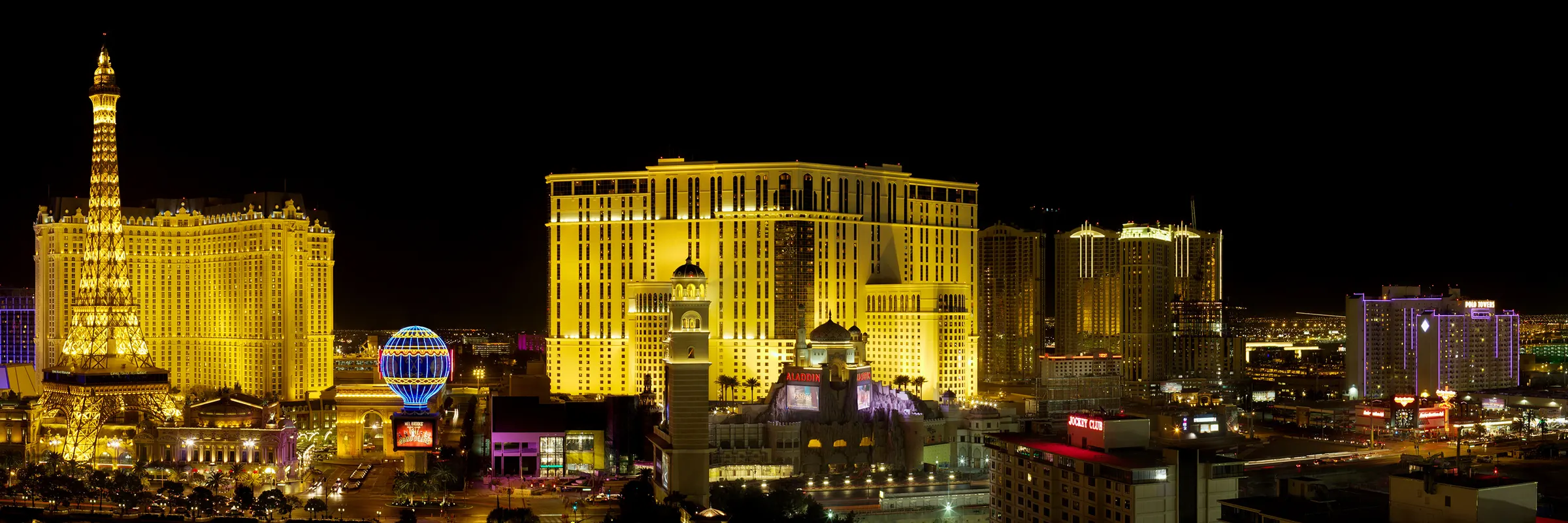
Las Vegas: the Strip at night
Photo: Matthew Field, http://www.photography.mattfield.com · CC BY 2.5
Nevada, United States

Las Vegas: how many days you need and when to go

Las Vegas was a railway stop until Nevada legalised gambling in 1931, and everything since has been built to one specification: keep people inside, awake and spending. That produces a city with no clocks, no straight exits and world-class restaurants, and it also produces the only major American city with a national park's worth of desert an hour in three directions. Three days is the standard trip. What you do with the fourth decides whether you liked it.

Short answers

What people ask before booking

How many days do you need in Las Vegas?

Las Vegas needs three days — the Strip, a night downtown and one show — and a fourth that leaves the city for Red Rock, the Hoover Dam or a long run at the Grand Canyon.

What is the best month to visit Las Vegas?

March and April — Warm days, cool nights, and the desert at its best. October and November — The heat breaks, and the outdoors comes back.

Which months are worth avoiding in Las Vegas?

June, July and August — Desert heat, and the outdoors closes.

How many days Las Vegas needs

Two nights is the minimum that makes sense: one for the Strip and one for downtown, which are genuinely different places. Three is the standard, and it adds a show, a proper meal and time to see the resorts as architecture rather than as obstacles.

The fourth day is the one worth arguing for. It should leave the city entirely — the Hoover Dam, a red sandstone canyon half an hour away, or a longer run at the Grand Canyon — because the desert is the part of this trip most people never see and the part that does not repeat itself. Beyond four days the returns fall off sharply unless you are here to gamble.

The Strip is not in Las Vegas

This is the single most surprising administrative fact about the place, and it explains more than it should. Most of the Strip lies outside the city limits, in unincorporated Clark County — in the townships of Paradise and Winchester — which is why the famous welcome sign stands on land that is not, legally speaking, Las Vegas at all. The arrangement dates from resort owners preferring county taxes and county policing to the city's.

The practical consequence is that the two halves of the visit are run differently and feel different. The Strip is a corridor of private resorts with public pavements between them. Downtown, five kilometres north, is the actual old city: smaller casinos, lower stakes, older buildings and a covered street with a light show over it.

  • The Strip — roughly six and a half kilometres of resorts, and where almost every visitor stays. Grand, exhausting and much longer than it looks.
  • Downtown and Fremont Street — the original city, cheaper in every respect, and where the casino floor still has some grit to it. Do one night here.
  • The Arts District — between the two, and the part of the valley with independent bars, breweries and galleries. The least Las Vegas thing in Las Vegas.
  • Spring Mountain Road — several kilometres of Chinese, Korean, Japanese and Vietnamese restaurants a few minutes west of the Strip. Where the chefs eat on their night off.
  • Off the Strip entirely — Red Rock Canyon, Lake Mead and the Hoover Dam, all within an hour, and none of them resembling anything else on this trip.

Distances, and the thing everyone gets wrong

The map lies here more than in any other city on this site. Two resorts that look adjacent can be a twenty-five minute walk apart, because each one is the size of a small town and the walk includes crossing its entire interior twice. Add the pedestrian bridges — you cannot cross the Strip at street level in most places — and a short hop becomes a serious undertaking.

The buildings are designed to slow you down and it is not an accident. Casino floors have no clocks and no windows, the exits are not on the shortest path, and the route from the door to the lifts goes past the tables. Knowing that is most of the defence.

  • Budget half an hour to get anywhere, even somewhere you can see from where you are standing.
  • The bus along the Strip runs all night and costs a fraction of a taxi. The monorail runs behind the eastern resorts and misses the western ones entirely.
  • Use the free trams between clustered resorts. They are unmarked from the street and they save a great deal of walking.
  • Wear real shoes. Ten to fifteen kilometres a day inside buildings is normal here and takes people by surprise.

Resort fees, and the other charges nobody quotes

The advertised room rate is not what you pay. Almost every resort adds a mandatory daily resort fee on top, charged whether or not you use anything it covers, and it is disclosed at booking rather than included in the headline figure. Many also charge for parking. Neither is optional and neither is negotiable.

The rest of the economics run the same way, and once you see the pattern the city makes sense. Drinks are free while you are gambling and expensive when you are not. The buffet was invented here in 1946 as a loss leader to stop people leaving the building at dinner time. The cheap shrimp cocktail downtown exists for the same reason and has since 1959.

  • Add the resort fee and parking before comparing prices. The cheapest advertised room is frequently not the cheapest room.
  • Tipping is not optional and it is not small. Bartenders, dealers, housekeeping and valets all expect it, per drink, per day, per service.
  • Free drinks come with play, not with presence. Sitting at a machine without playing does not qualify, and the servers know.
  • Midweek is a different city from the weekend. Rooms, shows and restaurants can cost a fraction of what they do on Friday and Saturday.

Rules that catch visitors

Two local rules trip people up regularly, and they point in opposite directions. You may drink alcohol on the street on the Strip, provided it is not in glass — plastic cups are handed over for exactly this — which is unusual in the United States and entirely legal here.

The other one runs the other way. Cannabis is legal to buy in Nevada and illegal to consume almost anywhere you would want to: not on the street, not in the casinos, not in hotel rooms, and not in a car. Licensed consumption lounges and private residences are the exceptions. Buying is easy; using it legally as a visitor is genuinely difficult.

  • Glass on the street is the offence, not the drink. Ask the bar for a plastic cup.
  • Casinos are private property and heavily filmed. Photographing the gaming floor is not allowed and will be stopped.
  • Marriage here needs a licence from the county bureau and no waiting period, which is why the wedding industry exists. It is a legal marriage, not a novelty.
  • Twenty-one is the age for everything, including walking through a gaming floor, and identification is checked far more often than visitors expect.

The desert, and why it is the best day

Las Vegas sits in the Mojave, and the landscape around it is the reason to give the trip a fourth day. Red Rock Canyon is half an hour from the Strip and is a national conservation area of red and cream sandstone cliffs, with a scenic loop you can drive in an afternoon. The Valley of Fire, an hour north-east, is stranger and emptier.

The Hoover Dam and Lake Mead are the other direction, and the dam is worth the trip for what it represents as much as for what it is: the project that brought the workers and the money that made gambling worth legalising in the first place. The Grand Canyon is further than people think — the western rim is a long day and the south rim is longer, and neither is a half-day trip whatever the brochure says.

What to eat in Las Vegas, and where

Las Vegas has no cuisine of its own and has never pretended otherwise. What it has instead is the largest concentration of imported flagship restaurants in the United States, and two formats it genuinely invented. The good news for anyone not on an expense account is that the best cheap food here is nowhere near the Strip.

  • Buffet

    What to order

    The format this city actually invented

    All-you-can-eat, laid out on a counter, at a price designed to lose money. The first one opened here in 1946 with the explicit purpose of stopping gamblers from leaving the building at dinner time, and every buffet in the world descends from that decision. Some of the modern ones are genuinely excellent; all of them are still a loss leader.

    Check it on Wikidata
  • Steakhouse

    What to order

    The casino restaurant as a genre

    Dark wood, red leather, an enormous wine list and a steak that costs what a night in a hotel costs elsewhere. The casino steakhouse is a format as specific to this city as the buffet, built to be somewhere a winner can spend a win. Book it, dress for it, and go before the show rather than after.

    Check it on Wikidata
  • Shrimp cocktail

    What to order

    The dish that explains the whole economy

    Chilled prawns in a glass with tomato sauce, sold downtown for less than a coffee since 1959. It has never made money and was never meant to: it exists to get people through the door of the casino that sells it. It is not good food. It is the clearest possible statement of how this city prices things.

    Check it on Wikidata
  • Las Vegas Strip

    Where to look

    Where the famous restaurants are

    The resort corridor holds outposts of most of the chefs whose names you would recognise, generally inside a hotel and generally at their full price. Lunch menus at these places cost a fraction of dinner for much the same kitchen, which is the single most useful piece of advice about eating on the Strip.

    Check it on Wikidata
  • Fremont Street

    Where to look

    The old city, and the cheaper night

    The original casino district, five kilometres north, under a covered canopy with a light show. Everything costs less here — rooms, drinks, table minimums, food — and the crowd is a mix of visitors and people who live in the valley. One evening here changes what you think the city is.

    Check it on Wikidata
  • Golden Gate Hotel and Casino

    Institution

    The building that pre-dates the whole idea

    The oldest hotel and casino in the city, open on Fremont Street since 1906 — a quarter of a century before gambling was legal in Nevada. It is small, low-ceilinged and the opposite of everything the Strip does, and it still sells the shrimp cocktail that made it famous. Go for the room, not the gambling.

    Check it on Wikidata

When to go, and what each month costs you

This is the Mojave desert, and the year is organised around one fact: for three months of summer the outdoors is genuinely dangerous in the middle of the day, and for the rest of the year it is one of the most pleasant climates in the United States. Everything indoors runs identically all year, so the season decides how much of the desert and the pool you actually get.

  • March and April

    Go now

    Warm days, cool nights, and the desert at its best

    The ideal window: comfortable enough to walk the Strip at midday, cool enough at night for a jacket, and exactly the season to drive out to the canyons. Pools are opening. Prices are high because everyone else has worked this out too.

  • October and November

    Go now

    The heat breaks, and the outdoors comes back

    The other good stretch, and slightly cheaper than spring. Days are warm, evenings are cool, and the desert is at its most comfortable for walking. The best single window if you want both the city and the landscape around it.

  • February

    Worth it, but

    Mild, cheap midweek, and cold after dark

    Pleasant days and genuinely cold nights — the desert loses its heat fast once the sun is down, which surprises people who packed for a hot place. Rooms are cheap on weekdays. Pools are mostly closed.

  • May

    Worth it, but

    Still good, and heating fast

    The first half is comfortable and the second half is a warning. Pools are open and the desert is still walkable in the morning. Plan the outdoor half of the day before eleven and it works.

  • September

    Worth it, but

    Coming down from the peak, and good value

    Still hot, noticeably less so each week, and priced below October. The pools are at their best and the canyons are bearable early in the day. A reasonable compromise if the dates are fixed.

  • December and January

    Worth it, but

    Cold nights, cheap rooms, and two expensive weeks

    The coolest months, with short days and genuinely cold evenings. Rooms are at their cheapest — except around New Year, which is the single most expensive night of the year here, and in early January, when the year's biggest trade shows fill the city. Check the convention calendar before booking.

  • June, July and August

    Think twice

    Desert heat, and the outdoors closes

    Regularly above forty degrees, and the pavement radiates it back until late in the evening. The resorts, the shows and the restaurants are unaffected; the canyons, the walking and the daytime pool are not. This is the season where the fourth day out of the city stops being possible, and the room rates fall to reflect it.

Things that change the trip

  • Add the resort fee and parking before comparing room prices. The advertised rate is never what you pay.
  • Give yourself half an hour to reach anything, even a building you can see. Resorts are the size of towns and you cross them twice.
  • Spend one night downtown. It is the older city, everything costs less, and it is the only way to see what the Strip replaced.
  • Eat lunch at the famous restaurants instead of dinner. Same kitchen, a fraction of the bill.
  • Drive out to a canyon on your last day. Red Rock is half an hour away and it is the only part of this trip that looks like nowhere else.
  • Buying cannabis is legal here and using it almost anywhere you would want to is not. The gap catches visitors constantly.

Plan Las Vegas and the desert around it

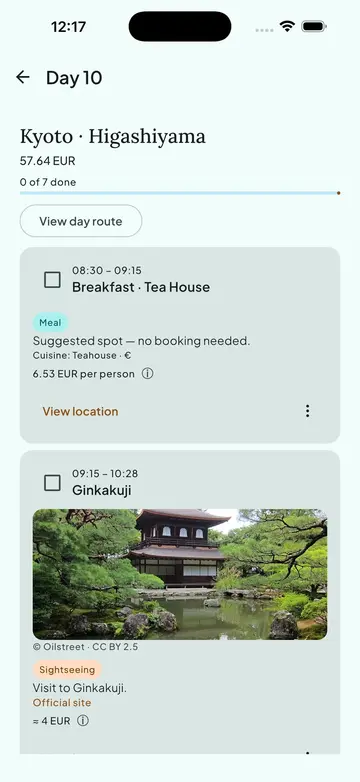
A trip beyond four days, or one that adds the Grand Canyon, Zion, Death Valley or a drive to Los Angeles with the distances between them, is exactly what Premium is for. The free version covers one destination of up to three days.

Destinations