

Skip to content
JoruJoru
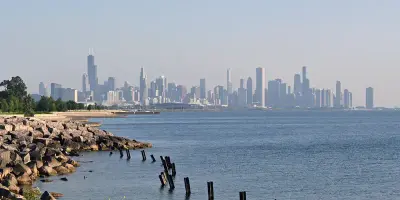
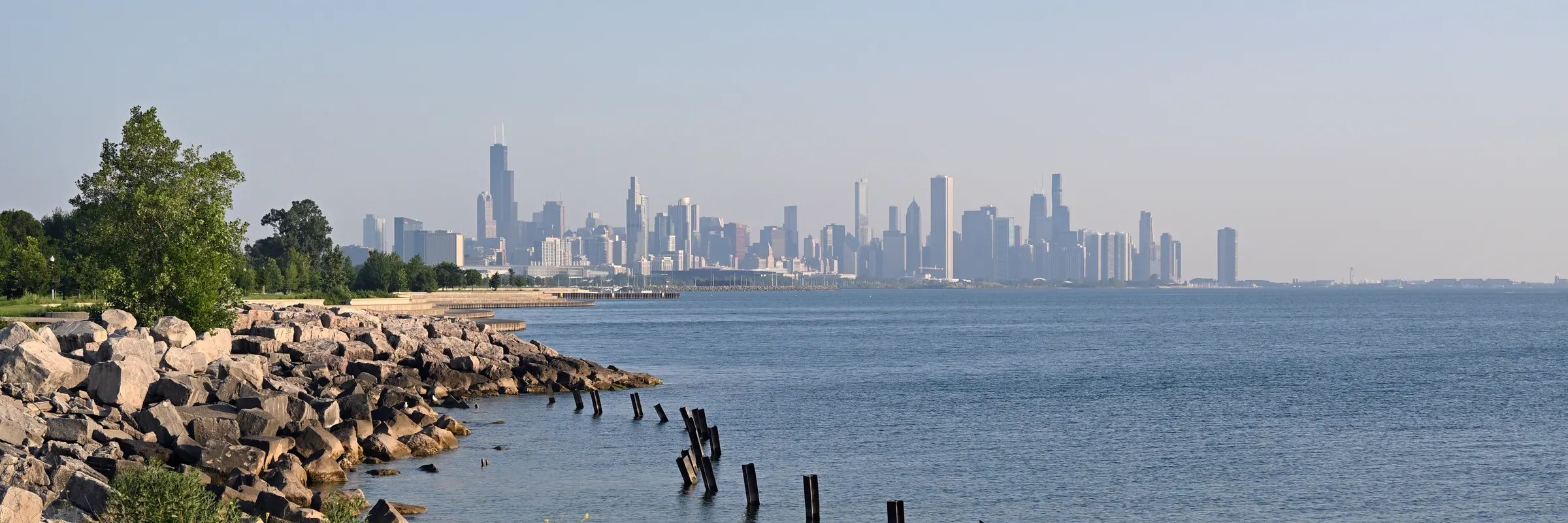
Chicago: the downtown skyline from the lakefront
Photo: DimiTalen · CC0
Illinois, United States

Chicago: how many days you need and the best months to go

Chicago is the most legible big city in America. The streets are a numbered grid, the lake is always east, and the thing it is famous for — the skyscraper — was invented here after the 1871 fire and is still best explained from a boat on the river. It is also a city with a genuinely brutal winter, which is why the same trip costs half as much in February as in September.

Short answers

What people ask before booking

How many days do you need in Chicago?

Chicago needs three days for the Loop, the lakefront, the Art Institute and one architecture boat tour. A fourth is what buys you the neighbourhoods, which is where the city stops being a skyline.

What is the best month to visit Chicago?

September and October — The best weather of the year, and the crowds have gone. May and June — The city comes back outdoors.

Which months are worth avoiding in Chicago?

December to March — Genuinely cold, and the wind is the reason.

How many days Chicago needs

Three days is the honest answer for the centre: the Loop and its architecture, the lakefront, the Art Institute, one boat tour and two or three neighbourhoods. Chicago's core is compact and the grid makes navigating it almost effortless.

A fourth day is what buys you the neighbourhoods properly — Pilsen, Devon Avenue, Bronzeville, Andersonville — which is where the city stops being a skyline and starts being a place people live. Chicago rewards a fourth day more than most American cities, because the neighbourhoods are genuinely distinct rather than variations on a theme.

How the city is arranged

The grid is the key to everything. Addresses count outwards from the corner of State and Madison in eight blocks to the mile, so the number on a street sign tells you exactly how far you are from the centre and in which direction. Once you understand that, you can navigate Chicago without a map.

  • The Loop — the historic centre inside the elevated railway that gives it its name. Skyscrapers, theatres, the Art Institute and Millennium Park at its edge.
  • River North and Near North — hotels, galleries and the Magnificent Mile shopping strip running north from the river. Convenient and the least characterful part of central Chicago.
  • The lakefront — an almost continuous park and path along the water for miles in both directions. This is the city's best feature and it is entirely free.
  • The West Loop and Fulton Market — former meatpacking warehouses now holding the city's most talked-about restaurants. Walking distance from the Loop.
  • The neighbourhoods — Pilsen for Mexican Chicago, Devon Avenue for South Asian Chicago, Bronzeville for Black Chicago's history, Andersonville and Logan Square for the current one. Each is a train ride and each is a different city.

Where to stay, and what proximity to the lake is worth

Chicago's hotel stock is concentrated downtown, which is genuinely the right place to stay for a first visit: the architecture, the museums and the lakefront path are all walkable, and the L radiates outwards from there to everything else.

The thing to check is which side of the river you are on. North of it is hotels and shopping and it empties in the evening; the Loop proper is quiet at night but next to everything by day; the West Loop is where the eating is and is a fifteen-minute walk back.

AreaWho it suitsThe catch
The LoopA first visit. The Art Institute, the park, the river and the architecture on your doorstep.Quiet and a little dead at night — it is an office district after hours.
River NorthRestaurants and bars at street level, and a short walk to both the river and the Mile.The most generic part of the city, and priced as a tourist district.
The West LoopThe best eating in Chicago within a few blocks, and a short walk or a quick train to the Loop.Thin on daytime sights, and hotel prices have caught up with the restaurants.
Near North and Gold CoastLakefront access, beaches in summer and handsome residential streets.Expensive, and further from the West Loop's restaurants than it looks.
Hyde ParkThe university, the Museum of Science and Industry, and a real neighbourhood feel.A long way south; you commute to the centre every day on the train.

Two airports, the L, and how to move

Chicago has two airports and both are connected to the centre by the L, which is unusual in the United States and removes most of the transport problem: O'Hare sits at the end of the Blue Line, Midway at the end of the Orange. The train is slower than a taxi and dramatically cheaper, and it runs into the small hours.

In the city, the L is the backbone. It is elevated in the centre — hence the name — and the ride through the Loop above street level is a sight in itself. Buses fill the gaps the trains do not cover, particularly across the grid rather than along it.

  • A Ventra card or a contactless bank card works on everything. Tap on entry; there is no tap-out and no zone system.
  • The Blue Line runs all night, which is genuinely useful for an early flight out of O'Hare.
  • The lakefront trail runs eleven miles, and renting a bike for a morning is the best way to see the city's shape.
  • Numbered streets tell you the distance: eight blocks to a mile, counted from State and Madison. It is the easiest grid in America to read.

Architecture, and the one tour that is worth booking

The modern skyscraper was developed here after the Great Fire of 1871 destroyed the centre, and the city has been arguing about tall buildings ever since. The architecture boat tour on the river is the single best-value thing to do in Chicago — it explains the whole city in ninety minutes from the only angle that makes sense, and it is why the river is lined with buildings that face the water rather than turn their backs on it.

The buildings themselves are free to look at and many lobbies are open to the public. The observation decks are the expensive version of a view you can get from the lakefront, a bridge or a high bar.

  • Book the river tour in advance in summer and take the earliest or latest departure of the day for the light.
  • The Art Institute is one of the great museums and its Impressionist and American collections are the reason people stay longer than planned.
  • Millennium Park and the bean are free, as is the Lurie Garden behind them, which almost nobody walks into.
  • The Chicago Cultural Center has the largest Tiffany glass dome in the world and charges nothing to walk in and look at it.

How eating works here

Chicago takes food seriously at both ends: it has one of the strongest fine-dining scenes in the country and it also has a set of specific, cheap, defended local dishes that people argue about. The arguing is the point — asking where to get the best Italian beef will get you a real answer and a long explanation.

The practical thing to know is that the famous dishes are neighbourhood food, not downtown food. The versions near the tourist centre exist and are worse. A short train ride improves almost every meal in this city.

  • Deep dish is a tourist dish and locals mostly eat thin, tavern-cut pizza — square slices, cracker-thin. Both are real Chicago; only one gets photographed.
  • Tipping is expected at roughly the American standard, and many restaurants now add a service charge that you should check for before adding more.
  • Reservations for the West Loop restaurants open well in advance and the good ones fill on the day they release.
  • Summer street festivals are a whole eating category — most weekends from June to September, in a different neighbourhood each time.

Where to eat in Chicago, and what to order

Chicago's food is immigrant food that stayed put long enough to become local: Italian, Mexican, Polish, South Asian and Southern, each with a neighbourhood that still cooks it properly. The rule here is to leave downtown. The dishes below are specific, defended and available for very little money in the right place.

  • Chicago-style pizza

    What to order

    The famous one, and what it actually is

    A deep, buttery crust filled with cheese, then toppings, with the sauce on top — closer to a savoury pie than to pizza. It takes forty-five minutes to bake, so order it as you sit down. One is enough for two people, and locals treat it as an occasional thing rather than a weekly one.

    Check it on Wikidata
  • Chicago-style hot dog

    What to order

    Lunch for very little money, done the local way

    An all-beef frankfurter with mustard, onion, relish, tomato, a pickle spear, sport peppers and celery salt on a poppy-seed bun. Asking for ketchup on it is a running joke here and some stands will refuse. Eat it standing up at a counter, which is the format it was designed for.

    Check it on Wikidata
  • Italian beef

    What to order

    The sandwich that is genuinely Chicago's own

    Thin-sliced roast beef in its own gravy, on a long roll, with sweet peppers or spicy giardiniera. Order it dipped, which means the whole roll goes back into the gravy — messy, correct, and the way it is meant to be eaten. Ask for it with both peppers if you cannot decide.

    Check it on Wikidata
  • Pilsen

    Where to look

    Mexican food, in the neighbourhood that cooks it

    A large Mexican neighbourhood south-west of the centre with murals, a free art museum and blocks of taquerías, bakeries and steam-table places. This is where to eat Mexican food in Chicago, not downtown. Go for lunch on a weekend, when the bakeries and the street are both busy.

    Check it on Wikidata
  • Devon Avenue

    Where to look

    South Asian food, in a single stretch of street

    A long avenue on the far north side lined with Indian, Pakistani and Bangladeshi restaurants, sweet shops and grocers, side by side with Jewish bakeries and Russian delis. It is a train ride and it is worth the trip. Sweets and kebabs are the specialities; go hungry and buy from more than one place.

    Check it on Wikidata

When to go, and what each month costs you

Chicago has a genuinely extreme year: hot, humid summers and a winter that is cold enough to reorganise your plans. The thing that decides comfort is not the temperature reading but the wind off the lake, which is why the same number feels different here than it does inland. The upside is that the low season is genuinely cheap and the museums are excellent.

  • September and October

    Go now

    The best weather of the year, and the crowds have gone

    Warm days, cool evenings, low humidity and the lakefront at its most pleasant. The summer festival crowds have left, the cultural season restarts and the trees along the boulevards turn. This is the single best window and it is short.

  • May and June

    Go now

    The city comes back outdoors

    Everything reopens: the beaches, the patios, the boat tours and the first of the street festivals. Warm without August's humidity, and long evenings. Late June can already be hot, but the city is at its most enthusiastic.

  • July and August

    Worth it, but

    Festivals, beaches and real humidity

    The busiest and most alive stretch, with a festival most weekends and the lakefront in full use. The cost is heat and humidity that can be genuinely oppressive, and the highest prices of the year. Air conditioning is universal indoors, which makes the contrast sharp.

  • April and November

    Worth it, but

    Cheap, grey and unpredictable

    Shoulder months that can hand you a beautiful week or a cold, wet one, with no way to know in advance. Prices are noticeably lower and the museums, theatres and restaurants are all fully open. A reasonable gamble if the trip is indoors-weighted.

  • December to March

    Think twice

    Genuinely cold, and the wind is the reason

    Long, cold and often snowy, with wind off the lake that makes exposed streets hard work. The city functions perfectly — the museums, the symphony, the restaurants and the L all run — but the lakefront, the boat tours and the neighbourhoods on foot are effectively closed to you. The prices are the lowest of the year and they are earned.

Things that change the trip

  • Take the architecture boat tour early in the trip. It explains the whole city, and everything you walk past afterwards makes more sense.
  • The grid counts eight blocks to a mile from State and Madison, so a street number is a distance. Learn this on day one and you will stop needing directions.
  • Both airports are on the L. The Blue Line to O'Hare runs all night and costs a fraction of a taxi.
  • Eat the famous dishes in the neighbourhoods, not downtown. A twenty-minute train ride is the difference between the real version and the tourist one.
  • The lakefront trail is free and eleven miles long. Rent a bike for a morning; it is the best value in the city.
  • In winter, plan indoors and dress for wind rather than for temperature. The number on the forecast is not what the street will feel like.

Plan Chicago neighbourhood by neighbourhood

A trip of more than three days, or one that adds Milwaukee, the lakeshore or a longer Midwest loop and the trains between them, is what Premium is for. The free version covers one destination of up to three days.

Destinations