

Skip to content
JoruJoru
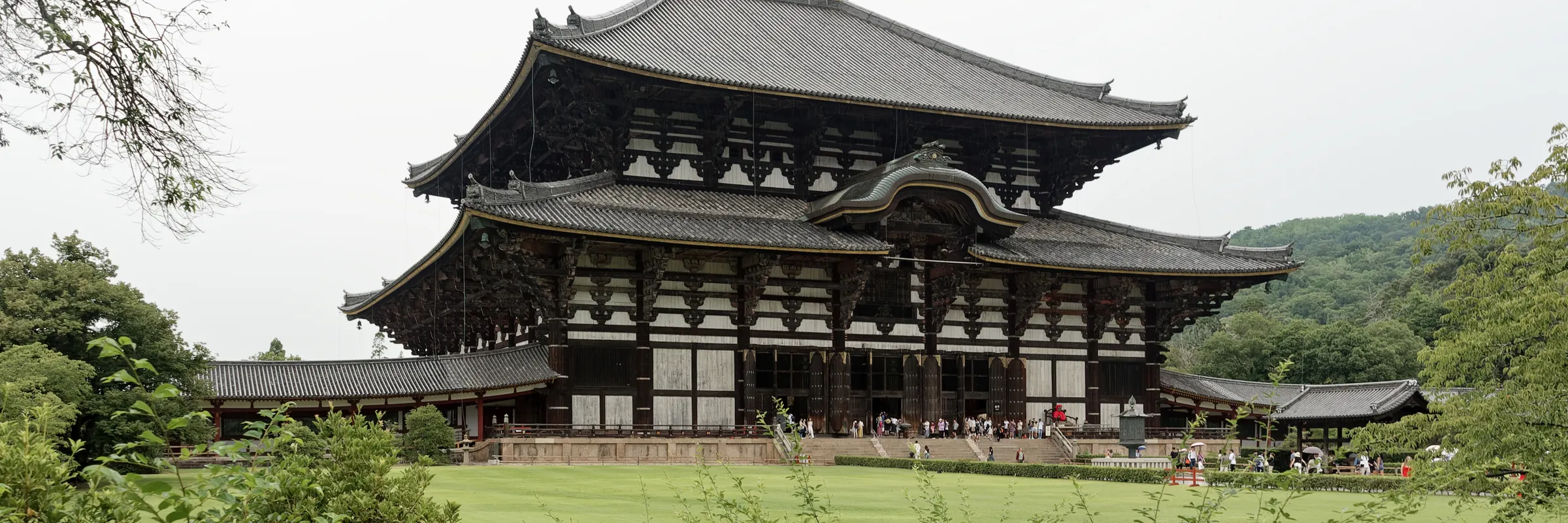
Nara: the Great Buddha Hall of Todai-ji
Photo: Jakub Hałun · CC BY 4.0
Kansai, Japan

Nara: how many days you need and the best months to go

Nara was the capital of Japan from 710 to 784 — the first fixed one, before which the court moved with each emperor — and everything the city is known for was built in those seventy-four years or shortly after. It is forty-five minutes from Kyoto and an hour from Osaka, which is why almost everyone comes for four hours and leaves. One day covers the temples; one night is what turns it into a place. The park empties completely after the last train and the difference is startling.

Short answers

What people ask before booking

How many days do you need in Nara?

Nara needs one day for the temples and the deer park, which sit in a single walkable area. A second night is what turns it from a day trip into a place, because the park empties after the last train.

What is the best month to visit Nara?

March and April — Cherry blossom, and Omizutori in the first half of March. October and November — Autumn colour, dry air, and the deer ceremony.

Which months are worth avoiding in Nara?

June and July — The rainy season, then the heat. August — The hottest month, in a city with no shade.
How many days Nara needs

One day genuinely does cover the essentials, and this is one of the few destinations on this site where that is honest rather than a compromise. Todai-ji, Kasuga Taisha, Kofuku-ji and the deer park sit inside a single walkable area, and a full day at a reasonable pace takes in all of them.

The second day is the argument. Nara's day-trip traffic arrives around ten and is gone by five, and the park in the early morning — mist, deer, no people — is a different experience entirely. Staying overnight also opens the outer temples: Horyu-ji, with the oldest wooden buildings on earth, is a separate half day to the south-west and almost nobody on a day trip gets there.

Todai-ji, and what is inside it

The Great Buddha Hall is the reason most people come. The bronze Buddha inside is about fifteen metres tall and is the largest bronze statue of the Buddha in the world; casting it in the 740s consumed so much of the country's copper that it is generally reckoned to have come close to bankrupting the state.

The hall around it is a reconstruction of 1709, and here is the detail worth carrying: it is about two-thirds the width of the original and is still one of the largest wooden buildings in the world. The eighth-century building was bigger. At the back of the hall, one of the great pillars has a hole through its base the size of the Buddha's nostril, and the tradition is that anyone who can squeeze through it is granted enlightenment. Children go through easily; adults mostly do not.

  • Todai-ji — the Great Buddha Hall and the bronze Buddha. The one unmissable building here.
  • Kasuga Taisha — the shrine at the far end of the park, approached through three thousand stone lanterns under cedar.
  • Kofuku-ji — the five-storey pagoda beside the park, and the museum with the best Buddhist sculpture in Japan.
  • Nara Park — five hundred hectares holding the temples, the deer and a great deal of open ground.
  • Horyu-ji — half an hour out, and the oldest surviving wooden buildings anywhere in the world, from around 700.

The deer, and how they actually behave

About twelve hundred sika deer live free in and around the park. They are wild animals designated a national natural treasure, and they were considered sacred messengers of the Kasuga shrine for most of Japanese history — killing one was a capital offence until 1637.

The famous thing is that they bow. They do, and it is real: they have learned to lower their heads to people holding the special crackers sold by licensed vendors around the park, because that is what gets them fed. What the photographs do not show is what happens after the crackers run out. They will follow you, nudge, and butt. They bite clothing and they will take a paper map or a ticket out of your hand and eat it. Buy the crackers if you want to, feed them fast, then show your empty hands — the palms-up gesture is understood by the deer that hang around the busiest spots. Do not feed them anything else; the park has a persistent problem with plastic bags in deer stomachs.

Older than Kyoto, and why that matters

Nara predates Kyoto as capital by seventy-four years, and the difference is visible. The Nara period was when Japan was absorbing Tang-dynasty China wholesale — the city plan, the Buddhist establishment and much of the architecture came directly from Chang'an — and Nara's temples are noticeably more Chinese and heavier than Kyoto's later, lighter, more distinctly Japanese work.

The capital moved in 784, and the standard explanation is that the Buddhist monasteries here had become too powerful to govern around. That the court left is also why so much survived: Nara stopped being politically important early enough to avoid most of the wars that repeatedly burned Kyoto. Eight sites in Nara are collectively a UNESCO World Heritage listing, which is the highest concentration of them in any Japanese city.

The two things worth timing

Nara's calendar has two events that are worth building a trip around, and both move.

Omizutori, the water-drawing ceremony at Todai-ji, runs for two weeks in March and has been performed every year without interruption since 752 — over twelve hundred consecutive years. On its nights, monks carry enormous burning torches along the balcony of the Nigatsu-do hall and shower sparks over the crowd below. The dates are fixed to the first fortnight of March, but the big nights within it vary; check the temple's own schedule.

The other is the deer antler cutting in October, a ceremony held since the seventeenth century for the practical reason that rutting stags with full antlers in a park full of tourists is a safety problem. It is not gentle to watch and it is not staged for visitors.

Where it fits in a Kansai trip

Nara is forty-five minutes from Kyoto and thirty-five from Osaka on the private Kintetsu line, which drops you closer to the park than the JR station does. If you have a rail pass, check which one it covers, because that detail changes which station you arrive at and how far you then walk.

The usual mistake is slotting Nara between two Kyoto days. The better shape is to sleep here on the way between Kyoto and Osaka, or between Kyoto and Koya-san, the mountain monastery complex two hours south where you can stay in a temple. Nara, Koya-san and Ise are the three places in Kansai that reward a night, and they are the three most people skip.

What to eat in Nara, and where

Nara's food is older than its neighbours' and quieter. Two of its dishes are named after the city or the leaf they are wrapped in, and the region has a claim on the origins of both sake brewing and Japan's thin white noodles.

  • Kakinoha-zushi

    What to order

    The sushi wrapped in a leaf

    Pressed sushi of salted mackerel or salmon, wrapped in a persimmon leaf and left overnight. The leaf is antibacterial and the method exists because Nara is landlocked — this is how sea fish reached the old capital before refrigeration. Eaten cold, unwrapped at the table, and sold in boxes at the station.

    Check it on Wikidata
  • Narazuke

    What to order

    The pickle that carries the city's name

    Vegetables — usually melon or cucumber — cured for months in the lees left over from sake brewing, until they turn dark amber and taste faintly of alcohol. The name means, literally, Nara-pickled, and the technique goes back over a thousand years. Strong, sweet-savoury and served in small slices with rice.

    Check it on Wikidata
  • Somen

    What to order

    The noodles, and where they started

    Very thin white wheat noodles, served cold with a dipping broth in summer and hot in winter. Miwa, in Nara prefecture, is generally credited as the birthplace of these noodles in Japan, and the local ones are still hand-stretched. The summer version, eaten cold, is the one to order here.

    Check it on Wikidata
  • Mochi

    What to order

    The rice cake, and the pounding

    Glutinous rice pounded into a soft cake, filled with sweet bean paste. A shop in central Nara has made its name on the speed of the pounding — two people, one hammer, a call-and-response rhythm, and a crowd — and they do it on the hour in the street. Eat it warm, within minutes.

    Check it on Wikidata
  • Sake

    What to order

    The drink, and the temple that made it

    Rice wine, and Nara has a genuine claim on it: Shoryaku-ji, a temple south of the city, is widely regarded as the birthplace of modern sake brewing techniques in the fifteenth century. Several small breweries in the prefecture still make sake by the old temple method. Ask for a local one rather than a national brand.

    Check it on Wikidata
  • Nara Park

    Where to look

    The park, and what is in it

    Five hundred hectares of open ground holding the major temples, the shrine, the museum and about twelve hundred wild deer. It is free, it is open, and it is the whole city in one place. Best in the hour after dawn, when the deer are still and the day-trip trains have not arrived.

    Check it on Wikidata

When to go, and what each month costs you

Nara has the same climate as Kyoto and Osaka: a wet June, a punishing August and two excellent shoulder seasons. Spring and autumn are the windows, and both are short and busy.

  • March and April

    Go now

    Cherry blossom, and Omizutori in the first half of March

    Mild, bright and the park at its best, with the blossom usually somewhere from late March into the first week of April — a moving target that lasts about a week. Omizutori runs for the first fortnight of March and has done every year since 752. Peak prices, and worth them.

  • October and November

    Go now

    Autumn colour, dry air, and the deer ceremony

    The most reliable window: clear, dry and comfortable, with the maples turning through November and the park at its most photogenic. The antler-cutting ceremony falls in October. The single best time to come, and marginally quieter than spring.

  • May

    Worth it, but

    Green and warm, once Golden Week has passed

    The first week of May is a cluster of national holidays and everything fills; after it, the city is green, warm and quiet. Comfortable walking weather and the rainy season not yet arrived. Good value.

  • September

    Worth it, but

    The heat easing, and typhoon season

    Still warm early on and increasingly pleasant, with the summer crowds gone. September is the peak of typhoon season in western Japan, which can close temples and stop trains for a day. Cheap, green and a slight gamble.

  • December, January and February

    Worth it, but

    Cold, clear and almost empty

    Chilly but rarely severe, with dry sunny days and very few visitors. The park in winter is close to deserted and the deer come much closer. Short daylight and cold mornings are the price; the temples are unaffected.

  • June and July

    Think twice

    The rainy season, then the heat

    The tsuyu runs through June into mid-July: persistent grey rain and high humidity, in a destination that is almost entirely outdoors. Once it lifts, the heat starts. Nara is a park; a park in the rain is a poor day.

  • August

    Think twice

    The hottest month, in a city with no shade

    Hot and very humid, and the walking between temples is long and largely unshaded. The Obon holiday in mid-August fills the whole Kansai region. The one month where the plan itself does not work, rather than merely being uncomfortable.

Things that change the trip

  • Sleep here rather than day-tripping. The park after the last train and before the first one is a completely different place, and it costs one night.
  • Feed the deer fast and then show empty palms. They bow for crackers, and they nudge and bite when the crackers run out.
  • Keep paper out of reach. Deer will take a map, a ticket or a paper bag straight out of your hand and eat it.
  • Go to Horyu-ji if you have a second day. The oldest wooden buildings in the world are half an hour away and almost nobody on a day trip sees them.
  • Check which line your rail pass covers. The Kintetsu station is much closer to the park than the JR one, and they are different companies.
  • Look for the pillar with the hole at the back of the Great Buddha Hall. It is the width of the Buddha's nostril and children go through it all day.

Plan Nara inside a Kansai route

A trip that links Nara with Kyoto, Osaka, Koya-san or Ise, with the trains, the rail pass and the seasons arranged so the good months are not spent queueing, is exactly what Premium is for. The free version covers one destination of up to three days.

Destinations