
Skip to content
JoruJoru
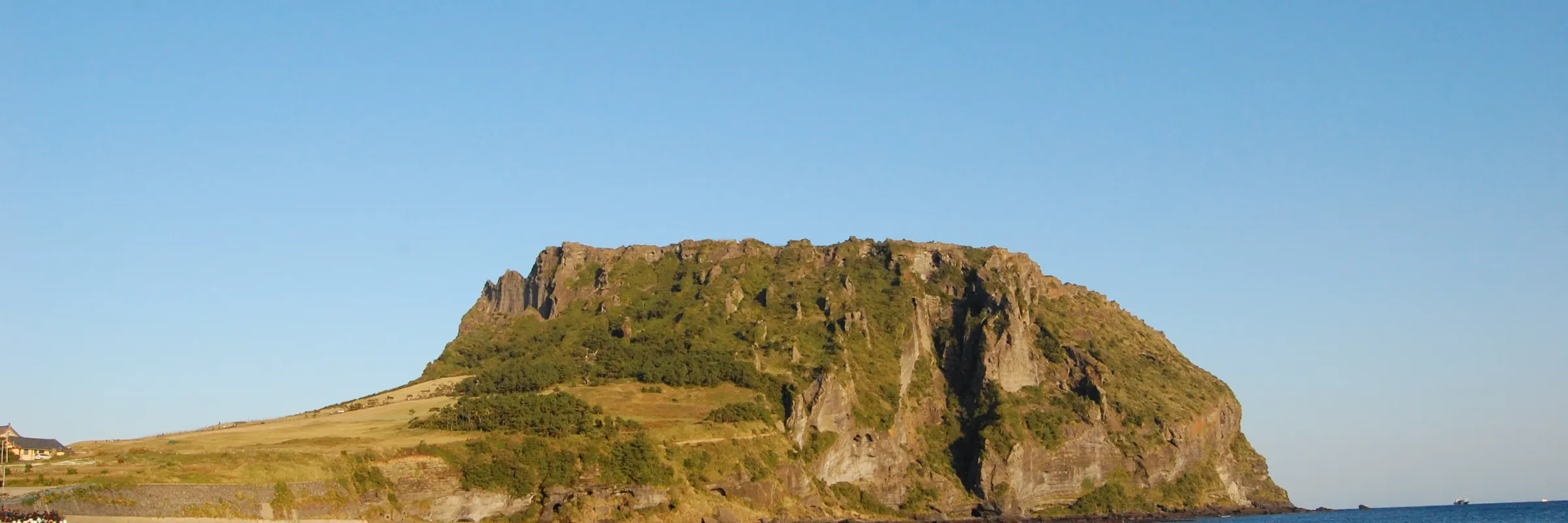
Jeju Island: Seongsan Ilchulbong, the tuff crater rising from the sea

Jeju, South Korea

Jeju Island: how many days you need and the best months to go

Photo: Justin De La Ornellas · CC BY 2.0

Jeju is the island Korea goes to on holiday, an hour's flight from Seoul, and it is a different country from the mainland in its landscape. The whole island is a volcano: the highest mountain in South Korea rises in the middle, hundreds of small cones dot its slopes, and the coast is black basalt, white beaches and cliffs of hexagonal columns. Its villages are walled with stones against the wind, its women dived for shellfish for centuries, and a walking trail now runs around its entire shore. The planning problem is size. Jeju is far bigger than it looks on the map, its two towns are on opposite coasts, and the sights are spread around the edge and up the mountain. It needs a car, or patience with the buses, and at least three days.

Short answers

What people ask before booking

How many days do you need on Jeju Island?

Jeju Island needs three days at a minimum — the east with the sunrise crater and Udo, the south around Seogwipo, and the west or the mountain — and five to climb Hallasan, whose summit trails must be booked. Hire a car, and come in spring or autumn.

What is the best month to visit Jeju Island?

April and May — Yellow fields, cherry blossom and fresh green. September to November — Clear skies and silver grass.

Work out how many hours you will have on Jeju Island on your dates
When to go, and what each month costs you

Jeju is milder than the mainland, with warm, humid summers and cool, windy winters, and wind in every season: the island is known for it. The monsoon brings rain from late June into July, and typhoons pass in late summer. Spring flowers and the clear autumn are the best times.

  1. January: Worth it, but
  2. February: Worth it, but
  3. March: Worth it, but
  4. April: Go now
  5. May: Go now
  6. June: Worth it, but
  7. July: Worth it, but
  8. August: Worth it, but
  9. September: Go now
  10. October: Go now
  11. November: Go now
  12. December: Worth it, but
  • April and May

    Go now

    Yellow fields, cherry blossom and fresh green

    The fields of yellow rapeseed flowers and the cherry blossom of early spring give way to fresh green and mild days. Cherry trees usually bloom at the end of March or early April, and the dates move each year. May is warm and bright, before the rains; school trips and holiday weekends bring crowds.

  • September to November

    Go now

    Clear skies and silver grass

    After the typhoons, the autumn is clear and settled, with silver grass on the volcanic cones and colour on the mountain. The autumn harvest holiday, whose dates move with the lunar calendar, fills flights and hotels, and September can still bring a late typhoon. October and November are the best months to climb Hallasan.

  • June and July

    Worth it, but

    Hydrangeas and the monsoon

    Hydrangeas flower across the island in June, and then the monsoon sets in, with rain on many days and hot, humid air. The beaches open in July, and the summer crowds begin.

  • August

    Worth it, but

    Beach season, crowds and typhoons

    Hot and humid, with the sea at its warmest and the beaches full. This is the peak of the Korean holiday season, with the highest prices, and typhoons can stop flights and ferries for a day or more.

  • December to March

    Worth it, but

    Citrus season, snow on the mountain and wind

    Mild on the coast but grey and very windy, with snow on Hallasan that makes the summit hike a winter climb. It is citrus season, and the island is quiet, except at the lunar new year, whose dates move each year. Camellias flower in winter.

What to pack for Jeju Island, month by month

How many days Jeju needs

Three days is the minimum. One for the east: the crater at Seongsan at sunrise, the island of Udo by ferry, and the coast of the women divers. One for the south around Seogwipo: the waterfalls, the cliffs of basalt columns and the harbour. One for the mountain or the west: a hike on Hallasan, or the beaches and cafés of the west coast.

Five days lets the island set the pace. Climbing to the summit of Hallasan is a full day on its own; a section of the coastal walking trail is another; and Jeju rewards slow days by the sea in a way that a checklist does not. Many visitors split the stay between the north and the south.

How the island is arranged

Jeju is an oval about seventy kilometres long, with the mountain in the centre and roads around the coast and across the slopes. Jeju City, with the airport, is on the north coast; Seogwipo is on the south coast, about an hour apart over the mountain. The east and west are rural, with villages, beaches and small volcanic cones.

  • Jeju City — the airport, the island's main town, the covered market and the hotels of the new town by the airport.
  • The east — Seongsan Ilchulbong, the tuff crater rising from the sea, the ferry to Udo, and the villages of the women divers.
  • Seogwipo and the south — the warmest coast, with waterfalls dropping into the sea, basalt columns and a lively harbour town.
  • The west — long beaches of white sand and turquoise water, cafés in old stone houses, and the tea fields inland.
  • Hallasan — the mountain at the heart of the island, a national park with trails through forest to the crater lake at the summit.

Where to stay, and what each area costs you

The choice is between one base with long drives and two bases with one move. Jeju City has the airport, the most hotels and the best restaurants; Seogwipo is closer to the south coast and the trailheads; the east and west coasts have guesthouses and resort hotels by the sea.

Prices rise in the Korean summer holidays of late July and August, at the long holidays of the lunar new year and the autumn harvest festival, whose dates move with the lunar calendar, and on spring and autumn weekends.

AreaWho it suitsThe catch
Jeju CityShort stays and late flights: the airport, the market, the most restaurants and buses to everywhere.A modern town with little charm, an hour from the south coast and the east.
SeogwipoThe south coast, the waterfalls and the trailheads of the mountain, with a lively harbour and a market.Over an hour from the airport, and a long drive to the west coast beaches.
The west coast (Aewol and Hyeopjae)Beaches, sunsets over the sea and cafés in stone houses, for a slow stay.Spread out and quiet in the evening; you need a car.
The east coast (Seongsan)The crater at sunrise and the ferry to Udo at the door, with quiet villages around.Far from everything else, with few restaurants open at night.

Compare these areas against your priorities

Getting there, and getting around

The air route between Seoul and Jeju is among the busiest in the world, with flights every few minutes from both Seoul airports and from Busan and other Korean cities; there are also international flights from East Asia. Ferries cross from several ports on the south coast of the mainland.

On the island, a hire car makes everything easier. The bus network is extensive and cheap, with express buses across the island and local buses to the villages, but the sights are far apart and services to the coast thin out in the evening.

  • Foreign drivers need an international driving permit of the right kind as well as their licence. Driving is on the right, cameras enforce the speed limits, and the roads are good.
  • Contactless transit cards work on the buses, including the express buses across the island.
  • The ferry to Udo leaves from Seongsan harbour frequently through the day; take a bicycle or a scooter on the small island rather than a car.
  • Taxi tours by the day are a common alternative to driving, with drivers who know the island.

The mountain, the crater and the women divers

Hallasan, the highest mountain in South Korea, is a dormant volcano with a crater lake at its summit. Two trails reach the top, and both need a free reservation made in advance, with a daily limit; the hike is a long day up and down, with cut-off times on the way to make sure everyone is off the mountain before dark. Shorter trails climb through forest to a high plateau without a booking. In winter the upper mountain is under snow, and spikes on your boots are needed.

  • Seongsan Ilchulbong — a tuff crater rising straight from the sea on the east coast, climbed by a stairway in half an hour. Go for sunrise, or late in the day when the groups have left.
  • The women divers — the haenyeo, who free-dive for shellfish and seaweed into old age, a tradition listed by UNESCO. Their museum on the north-east coast explains it, and at Seongsan they perform dives for visitors.
  • Udo — a small island off the east coast, with white sand beaches, peanut fields and a lighthouse on its cliff. A day by bicycle or scooter.
  • The lava tube — Manjanggul, a cave tunnel left by a lava flow, part of the island's World Heritage listing; a section is open to walk.
  • The waterfalls of the south — Jeongbang falls straight into the sea, and Cheonjiyeon is lit in the evening.
  • The coastal trail — the Olle, a walking route around the whole island in more than twenty sections, each a day or half a day long. Pick one by the sea.

How eating works here

Jeju eats from the sea and from its own farms. The island's black pigs, its hairtail fish and the abalone that the divers bring up are the three things to eat, and its citrus fruit, sold everywhere in winter, is a national gift. Korean meals come with a spread of small side dishes that are refilled for free.

Grilled pork is a meal for the evening and for groups, cooked at the table. Many restaurants require at least two portions, and solo diners may find some places will not serve them.

  • The covered market of Jeju City has a night market of food stalls, the easiest place to try many things at once.
  • Seafood restaurants by the harbours sell raw fish by weight; it is served sliced with lettuce, chilli paste and a broth made from what is left.
  • Coffee is a passion on the island: cafés in old stone houses, on cliffs and in tangerine orchards are part of the trip.
  • Tipping is not done.

Where to eat on Jeju Island, and what to order

Jeju's food is simple and its own: black pork grilled at the table, a long silver fish grilled or stewed, and porridge made with the abalone the divers bring up. Add a bowl of pork noodle soup for lunch and the island's citrus as a snack, and you have eaten Jeju.

  • Jeju black pig

    What to order

    Black pork, grilled at the table

    Thick slices of pork from the island's black-haired pigs, with the skin on, grilled at the table over charcoal and dipped in a salty sauce of fermented anchovy. The black pigs are an island breed, and the meat is the reason many Koreans come back. Order for at least two and expect a queue at the known places; a whole street in Jeju City is lined with them.

    Check it on Wikidata
  • Galchi

    What to order

    The long silver fish of the island

    Hairtail, a long, ribbon-like silver fish caught in the waters around the island, served grilled whole, stewed in a spicy broth with radish, or in a clear soup with pumpkin. The grilled version comes in pieces the length of the table and is shared. It is expensive for a fish dish, and it is the island's pride.

    Check it on Wikidata
  • Jeonbok-juk

    What to order

    Abalone porridge for breakfast

    Rice simmered with abalone and its innards, which turn the porridge green, seasoned with sesame oil. It is the island's breakfast and its comfort food, best in the restaurants run by the divers' cooperatives on the coast. Gentle, warming and a good start before a long day.

    Check it on Wikidata
  • Gogi-guksu

    What to order

    Pork noodle soup for lunch

    Thick wheat noodles in a rich pork broth, topped with slices of boiled pork. It was once the dish of island weddings and feasts, and a street of noodle houses in Jeju City is devoted to it. Quick, cheap and filling.

    Check it on Wikidata
  • Hallabong

    What to order

    The island's citrus, in winter

    A large, sweet citrus fruit with a bump at the stem, grown in greenhouses and orchards on the island and sold everywhere in winter and spring. Jeju grows almost all of Korea's citrus, and its fruits are a classic gift to take home. In season, it also appears in juice, ice cream and chocolate.

    Check it on Wikidata
  • Dongmun Market

    Market

    The market and its night stalls

    The oldest permanent market on the island, a maze of covered lanes in the centre of Jeju City selling fish, citrus, dried goods and street food. In the evening a night market of food stalls fills one section, and it is the easiest place to try the island's snacks in one go.

    Check it on Wikidata

Things that change the trip

  1. Hire a car, and check that your licence and international permit are accepted before you travel.
  2. Book the Hallasan summit trail as soon as your dates are fixed; the daily places run out.
  3. Split the stay between Jeju City and Seogwipo, or the east and the west, instead of driving across the island every day.
  4. Go to Seongsan Ilchulbong at sunrise, and to Udo early, before the tour buses.
  5. Check the dates of the lunar holidays before you book: flights and hotels fill for the new year and the autumn harvest festival.
  6. Bring a windproof layer in every season.

Plan Jeju as a loop around the island

A trip of more than three days, or one that joins Jeju with Seoul or Busan and the flights between them, is what Premium is for. The free version covers one destination of up to three days.

Destinations