Skip to content
JoruJoru
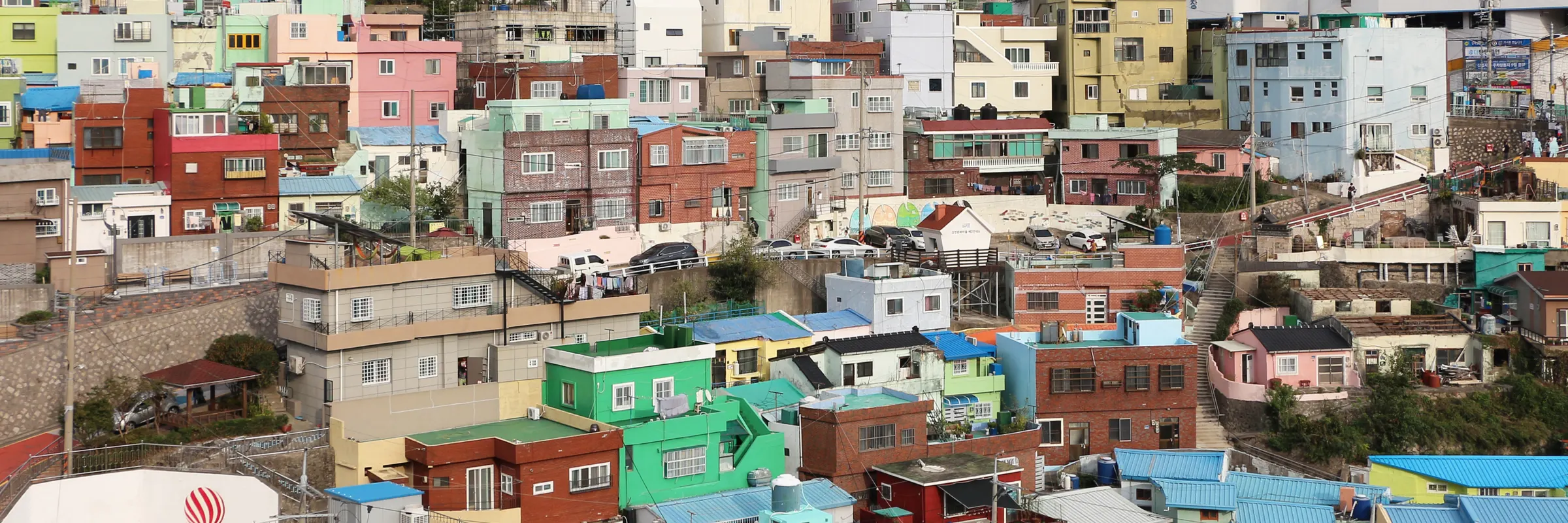
Busan: The painted houses of Gamcheon Culture Village
Photo: Bernard Gagnon · CC0
South Korea

Busan: how many days you need and the best months to go

Busan is Korea's second city, its largest port and the only major city the North never took during the Korean War — which is why more than a million refugees ended up here in 1950 and why the place still tastes and looks the way it does. It is a coastal city of beaches, mountains and markets, and it feels nothing like Seoul: slower, louder, more open, with a dialect Seoulites find funny. Two days covers it. Three is better, and the KTX from Seoul takes under three hours.

Short answers

What people ask before booking

How many days do you need in Busan?

Busan needs two days for the coast and the markets and three to add Gamcheon slowly and the UN cemetery. October is the best month in Korea; July is a genuine month-long rain season and the one to avoid.

What is the best month to visit Busan?

September and October — The clearest, driest stretch of the year. April and May — Blossom, then the best walking weather.

Which months are worth avoiding in Busan?

July — Jangma: a real rain season, not a shower pattern. December, January, February and March — Cold, dry, and a hard wind off the sea.

How many days Busan needs

Two days does the job: one for the coast — Haeundae, Gwangalli and the temple on the sea at Haedong Yonggungsa — and one for the centre, meaning Jagalchi fish market, Gukje market and Gamcheon on the hillside.

Three days is better, and the third is for the two things that are actually specific to Busan: Gamcheon slowly rather than in an hour, and the war layer — the UN Memorial Cemetery, the only United Nations cemetery in the world, and the provisional-capital buildings. Anything beyond three and you should be taking the train to Gyeongju, an hour north, which was the capital of the Silla kingdom for a thousand years and is the best day trip in the country.

Why it feels nothing like Seoul

Busan is a port that grew sideways along a coast and up the sides of mountains, so it has no single centre. There are two downtowns — Seomyeon and Nampo-dong — a beach district that behaves like a third, and a long metro line stitching them together. Nothing is walkable to anything else, and that is the main thing to understand before you book a hotel.

The other difference is temperament. Busan people are famous in Korea for being blunt, loud and quick, the dialect sounds harsh to Seoul ears, and the city trades on the contrast. It is also visibly a working port: the container terminal is one of the busiest in the world, and unlike Seoul the sea is present everywhere — in the markets, on the plates, at the end of most streets.

  • Jagalchi market — Korea's biggest fish market, traditionally run by women. Buy upstairs, eat it downstairs.
  • Gamcheon Culture Village — a hillside of painted houses, built as a refugee settlement. Go early; it is a real neighbourhood.
  • Haeundae and Gwangalli — the two beaches. Haeundae is the famous one; Gwangalli has the bridge and the better bars.
  • Haedong Yonggungsa — a temple built on the rocks at the water's edge, which is rare in Korea. Sunrise if you can.
  • Beomeosa — a 7th-century mountain temple on Geumjeongsan, in forest, twenty minutes from a metro station.

The war, and what it left behind

In 1950 the North Korean advance stopped at the Nakdong River and Busan became the provisional capital of South Korea for most of the war, holding a perimeter that never broke. More than a million refugees arrived in a city that had a few hundred thousand people, and they built upwards on the hillsides because there was nowhere else.

That history is not a museum here; it is the city's shape and its menu. Gamcheon is a refugee settlement that became an arts district. Dwaeji-gukbap, the pork soup Busan is known for, was invented by northern refugees using the parts of the pig that American units did not want. Milmyeon, the wheat noodle dish, exists because the buckwheat for northern-style cold noodles was unavailable and American aid flour was not. Three of the four things you will eat here have the same origin story.

The UN Memorial Cemetery is the physical piece of it. It is the only United Nations cemetery in the world, holding soldiers from eleven countries, and it is quiet, immaculate and free. It takes an hour and it is the single thing that makes the rest of the city legible.

The rain, and the typhoons

Korea has a genuine monsoon, called jangma, and it is not a shower pattern — it is a rain season that sits over the peninsula for several weeks, mostly through July, with days of continuous rain rather than afternoon storms. Busan gets more of it than Seoul because it is on the south coast, and it is the single strongest reason to avoid a month here.

Then comes typhoon season. August and September are when typhoons actually reach the Korean south coast, and Busan is directly exposed: they are not frequent enough to plan around but frequent enough to build a spare day into a trip. The beaches close, the ferries stop and the trains slow down when one lands. The compensation is that October is reliably the best month in Korea: dry, clear, warm enough, and the reason the film festival is scheduled then.

Eating in a port, and how the markets work

Jagalchi is the largest fish market in Korea and has been run by women for generations — the Jagalchi ajumma are an institution, and the market is named in every Korean's mental map. The system is that you buy the fish alive downstairs and carry it upstairs, where a restaurant cooks it or serves it raw for a fee per plate. That is the way to eat here and it is much cheaper than a restaurant doing both ends.

Next to it is Gukje market, which grew out of the same refugee period as a place to sell American surplus and has never really stopped, and BIFF Square, where the street food is. Look for ssiat hotteok — the Busan version of a sweet pancake, split open and filled with seeds and nuts, and genuinely a local invention rather than a national dish sold locally. Eomuk, the fish cake, is the other one: Busan brands it, queues for it and sells it at the station as a souvenir.

Getting there, and the practical bits

The KTX from Seoul takes under three hours and drops you at Busan station in the old centre, near Nampo-dong. Flying is barely faster once you count both airports, and the train is more comfortable. Gimhae airport handles regional flights, including from Japan — Fukuoka is three hours away by ferry, which is a genuinely useful connection.

In the city, the metro covers everything you need and signs are in Korean and English. Buy a rechargeable transit card at any convenience store; it works on metro and buses and in most convenience stores too. Two things to expect: the hillside neighbourhoods involve real stairs, and English is less widely spoken than in Seoul — translation apps are normal here and nobody minds.

What to eat in Busan, and where

Busan food is port food and refugee food, and the two overlap: raw fish, pork soup and noodles invented out of shortage. Almost nothing on this list is eaten the same way in Seoul.

  • Jagalchi Market

    Market

    The market, and how to actually use it

    Korea's biggest fish market, on the water in Nampo-dong, traditionally run by women whose title is part of the local vocabulary. Buy the fish alive on the ground floor and take it upstairs, where a restaurant prepares it for a fee; ordering everything in one place costs far more. Point at what you want; nobody expects Korean.

    Check it on Wikidata
  • Dwaeji-gukbap

    What to order

    The dish the city is known for

    A milky pork-bone broth with rice, served with chives, shrimp paste and a bowl of pepper mix to season yourself. It was invented by refugees from the north during the Korean War using pork parts the American units discarded, and it is now the dish that means Busan to every Korean. Season it hard; it is deliberately plain when it arrives.

    Check it on Wikidata
  • Milmyeon

    What to order

    The noodles that only exist here

    Cold wheat noodles in an icy broth with vinegar and mustard, a Busan invention that copies a northern buckwheat dish using the American aid flour that was actually available. It is the summer dish of the city and barely exists elsewhere in Korea. Order it on the hottest day you have.

    Check it on Wikidata
  • Hotteok

    What to order

    The street snack to look for by name

    A sweet pancake fried on a griddle, and the Busan version is the one to want: split open after cooking and packed with sunflower seeds, pumpkin seeds and nuts. The seeds are the local part — elsewhere in Korea it is filled with syrup alone. BIFF Square in Nampo-dong is where the queues are.

    Check it on Wikidata
  • Eomuk

    What to order

    The thing everyone takes home

    Ground fish shaped and fried, sold on skewers with a cup of the broth, and Busan treats it as a regional product with brands, shops and a queue at the station. This is not the sad supermarket version; a good one is springy and tastes of fish. Buy a box at Busan station on the way out; that is what Koreans do.

    Check it on Wikidata
  • Haeundae

    Where to look

    Where to base yourself for the beach

    The famous beach district, with the sand, the high-rises and the aquarium, twenty minutes by metro from the centre. It behaves like a separate town and it is the right base in summer and the wrong one in winter, when the centre has everything and the beach has wind. Gwangalli, one bay west, has the bridge view and the better bars.

    Check it on Wikidata

When to go, and what each month costs you

Korea has four sharp seasons and Busan adds the sea to all of them. The rain season in July and the typhoons in late summer are the two things that can spoil a trip, and October is the month everything else is measured against.

  • September and October

    Go now

    The clearest, driest stretch of the year

    Dry air, clear skies, warm days and comfortable nights, with the sea still warm enough to swim into September. October is the best month in Korea and everyone knows it, which is why the film festival is scheduled then. Book ahead for the festival week; the rest of the month is calm and perfect.

  • April and May

    Go now

    Blossom, then the best walking weather

    Cherry blossom comes late March into April and the coast road and Dalmaji hill are lined with it; the dates move a week or two each year with the weather, so treat it as a window and not a date. May is the most comfortable month for walking the hillside neighbourhoods. Mild, dry and much quieter than autumn.

  • June

    Worth it, but

    Warm and green, with the rain about to start

    Warm, long days and the beaches not yet open officially, so the coast is calm and cheap. The monsoon usually arrives towards the end of the month and the humidity builds ahead of it. A good bet in the first half, a gamble in the second.

  • November

    Worth it, but

    Cool, clear and empty

    Dry and bright with autumn colour on Geumjeongsan, and prices down from October. It gets cold quickly and the wind off the sea is sharp, so the beaches are over. Excellent for temples, markets and eating; poor for anything involving swimming.

  • August

    Worth it, but

    Beach peak, heat, and the typhoon window

    The beaches are at full capacity — Haeundae in August is a national event — with hot, humid nights and everything open late. It is also when typhoons reach the south coast, and when they do, the beaches close and the trains slow. Build in a spare day and book early.

  • July

    Think twice

    Jangma: a real rain season, not a shower pattern

    The monsoon sits over the peninsula for weeks and Busan gets more of it than Seoul. This is days of continuous rain and near-total humidity, not an afternoon storm you wait out. Cheap and empty for a reason. The markets and the museums still work; nothing else really does.

  • December, January, February and March

    Think twice

    Cold, dry, and a hard wind off the sea

    Busan is the mildest big city in Korea in winter and it is still cold, with a sea wind that makes the coast unpleasant and the hillside stairs icy. March is the tail of it and blossom does not usually arrive until the very end. Cheap, clear and quiet, with the beaches and half the point of the city switched off.

Things that change the trip

  • Buy the fish downstairs at Jagalchi and eat it upstairs. Ordering everything in one place costs far more for the same fish.
  • Go to Gamcheon early. It is a lived-in neighbourhood, not a set, and it is much better before the tour buses.
  • Do not treat July as normal rain. Jangma is a multi-week rain season and it is the one month to avoid outright.
  • Give the UN Memorial Cemetery an hour. It is the only one in the world, and it makes the rest of the city make sense.
  • Base yourself by the beach in summer and in the centre otherwise. Busan has no single downtown and the metro ride between them is long.
  • Take the KTX from Seoul, not the plane. Under three hours, city centre to city centre, and more comfortable at both ends.

Plan Busan and South Korea

A trip that pairs Busan with Seoul, Gyeongju or the island of Jeju — with the train times, the rain season and a spare day for a typhoon built in — is exactly what Premium is for. The free version covers one destination for up to three days.

Destinations