Skip to content
JoruJoru
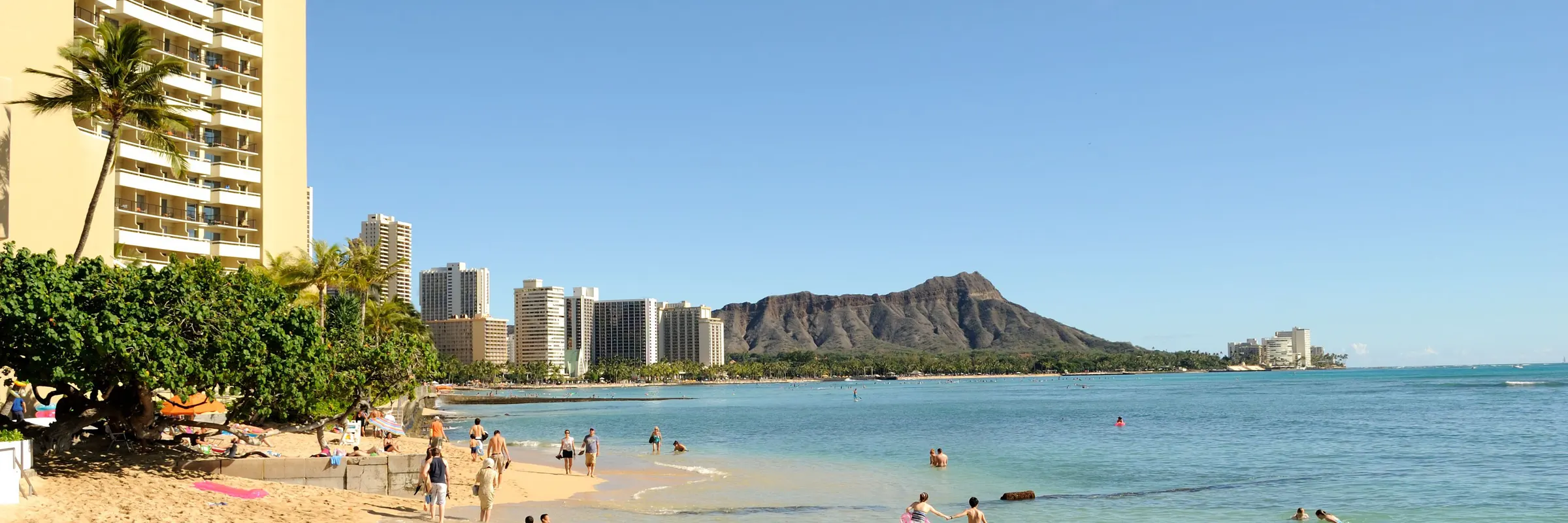
Honolulu: Waikiki beach, with the Diamond Head crater behind
Photo: Daniel Ramirez from Honolulu, USA · CC BY 2.0
Hawaii, United States

Honolulu: how many days you need and the best months to go

Honolulu surprises people by being a city. It is the capital of Hawaii and holds most of the state's population, with rush hours, high-rises and suburbs, and Waikiki — the part everybody pictures — is one neighbourhood of it. The island around it does the rest of the work, and the island has a wet side and a dry side that are only an hour apart. Four days is the floor. A week is the number that actually fits what people come to do.

Short answers

What people ask before booking

How many days do you need in Honolulu?

Honolulu needs four days at a minimum and rewards a week, because the island around it has a wet windward side and a dry leeward one. The surf seasons are opposite by coast: the north shore is huge in winter and flat in summer, while Waikiki is the reverse.

What is the best month to visit Honolulu?

April and May — After the winter crowd, before the summer one. September and October — The warmest water and the quietest island.

Which months are worth avoiding in Honolulu?

July and August — Peak everything, at peak prices. December — The wettest month meets the highest prices.

How many days Honolulu needs

Four days is the minimum that makes sense, and only because of how far away this is from everywhere: two days go to Honolulu itself — Pearl Harbor, the palace and downtown, Diamond Head, Waikiki — and two to the rest of Oahu, which is a different island once you cross the mountains.

A week is the honest answer. It absorbs a lost day to weather, allows a beach day that is only a beach day, and lets you do the north shore and the windward coast without driving both in one push. This is not a city-break destination that fills three days and stops; the flight cost and the flight time both argue for staying longer once you are here.

The wet side and the dry side

This is the single most useful geographic fact about Oahu. The trade winds blow from the northeast almost all year, hit the mountains, and drop their rain on the windward side — the north and east. That coast is green, lush and regularly wet. The leeward side — south and west, where Honolulu and Waikiki are — sits in the rain shadow and is dry and sunny.

So the rain you see in a forecast for the island may not be the rain where you are sleeping. A grey morning in Waikiki and a downpour in Kāneʻohe are routine on the same day, and the practical response is to keep the plan flexible by coast rather than by hour: if the windward side is being rained on, do the city or the dry west, and swap them back the next day. It also explains why the resorts are where they are, and why the beautiful green photographs are taken somewhere else.

  • Waikiki — the famous beach and the hotel district behind it. Small, busy, and genuinely good for a first swim and a beginner surf lesson.
  • Pearl Harbor — the USS Arizona Memorial and the historic sites around it, on a working naval base. Tickets are reserved ahead and bags are restricted.
  • Diamond Head — the tuff cone above Waikiki, with a short steep walk to the rim. Check whether a reservation is required before going.
  • ʻIolani Palace — the residence of the Hawaiian monarchy and the only royal palace on United States soil. The reason the history here is not American history.
  • The north shore — an hour away and a different world: surf towns, shrimp trucks, and in winter the biggest waves in the state.

Which coast has surf, and when

Hawaii's surf seasons run opposite on opposite coasts, and this is the thing that decides where a given trip should point. In winter, roughly November to February, North Pacific storms send huge swell to the north shore — this is when the famous big-wave surfing happens, when the beaches there become dangerous for swimming, and when the crowds go to watch rather than to enter the water.

In summer the north shore goes flat and calm — often glassy enough to swim and snorkel — while the south shore, including Waikiki, gets its own smaller swell from the southern hemisphere. That is why Waikiki is the classic beginner surf spot in summer and a placid swimming beach in winter. Whichever season you come in, one coast is working: the mistake is assuming the island has a single surf season.

What is actually underneath the tourism

Hawaii was an independent kingdom with treaties and embassies until 1893, when the monarchy was overthrown with the involvement of American residents and troops; annexation followed, and statehood only in 1959. ʻIolani Palace, in downtown Honolulu, was a working royal residence with electric light before the White House had it, and the last queen was later imprisoned in a room upstairs.

Knowing that changes what the island looks like. Hawaiian is an official language of the state and place names are not decoration — they describe the land, and the ʻokina and macron in them are letters, not accents. The living culture is not the hotel show: it is language immersion schools, land and water rights disputes, and a sovereignty conversation that has never ended. A visitor does not need a position on it, but should know it is there.

Practical things worth knowing

Hawaii does not observe daylight saving time, so the offset between the islands and the mainland changes twice a year — which matters for booking calls, flights and connections more than people expect. It is also further from a continent than anywhere else on earth with a city this size, and that shows up as long flights in every direction.

Two more. You need a car to see the island and you will regret one in Waikiki, where parking is scarce and charged; the sensible pattern is to use the city bus in town and rent for the days you leave it. And the reef is alive: standing on coral kills it, some sunscreen ingredients are restricted by state law, and the safe move is a rash guard plus a mineral sunscreen bought locally.

What to eat in Honolulu, and where

Hawaii's food is the record of everyone who came to work the plantations — Japanese, Chinese, Filipino, Portuguese, Korean — layered onto Native Hawaiian staples. It is the most genuinely mixed cooking in the United States, and almost none of it is expensive.

  • Cocina hawaiana

    What to order

    The plate that explains the islands

    Hawaii's cooking is the mix itself: raw fish seasoned with soy and sesame, rice under everything, Portuguese sausage at breakfast, Japanese pickles beside Filipino stew. The plate lunch — two scoops of rice, macaroni salad and a main — is the plantation lunch pail turned into a state institution. Eat it from a counter or a truck, not a dining room.

    Check it on Wikidata
  • Loco moco

    What to order

    The local comfort dish

    Rice, a hamburger patty, a fried egg and brown gravy, in that order, invented in Hilo in the 1940s for hungry teenagers. It is not a tourist dish and never was — it is what people eat late, cheaply and often, and every place that serves it has an opinion about the gravy. Order it once and you will understand the local relationship with rice.

    Check it on Wikidata
  • Spam musubi

    What to order

    The snack with the strangest history

    A block of rice with a slice of grilled canned pork on top, bound with a strip of seaweed, sold everywhere including petrol stations. Hawaii eats more of that canned pork per person than any other US state, and the habit dates from the military presence during and after the Second World War. It sounds like a joke until you eat one warm.

    Check it on Wikidata
  • Malasada

    What to order

    The pastry, and the Portugal connection

    A yeasted doughnut without a hole, fried and rolled in sugar, sometimes filled with custard or fruit. Portuguese labourers from Madeira and the Azores brought it in the nineteenth century, along with the sausage at breakfast and the small guitar that became the ukulele. Buy them hot, eat them within the hour, and do not attempt to save one for later.

    Check it on Wikidata
  • Waikiki

    Where to look

    The neighbourhood, and how to use it

    The beach district: two miles of hotels, a canal behind it, and a beach that is smaller than the photographs suggest. Use it as a base rather than a destination — swim early before the crowd, take a surf lesson on the gentle inside break, then leave for the rest of the island during the day. The sunset from the beach wall, however, is not overrated.

    Check it on Wikidata

When to go, and what each month costs you

Hawaii has two seasons rather than four: a drier, warmer one from roughly May to October and a wetter, cooler one from November to April. What actually changes month to month is the crowd, the price and which coast the ocean is working on.

  • April and May

    Go now

    After the winter crowd, before the summer one

    The best window of the year: the rains are easing, the school holidays have not started, and prices sit between the two peaks. The whale season is tailing off in April and gone by late May, and the north shore is calming down enough to swim. Warm, dry, and the island at its least crowded.

  • September and October

    Go now

    The warmest water and the quietest island

    The other shoulder, and the one locals pick. Summer crowds have gone home, the ocean is at its warmest after a season of sun, and the north shore is still flat enough for snorkelling. Hurricane season runs through this period and rarely produces a direct hit, but it is the reason to keep travel insurance and a flexible plan.

  • January, February and March

    Worth it, but

    Whales and giant surf, in the wet season

    The wettest, cloudiest stretch of the year, and also the most spectacular. Humpback whales are in Hawaiian waters from roughly December to April, peaking in these months, and the north shore is running the biggest waves in the state. It is also winter escape season for North America, so hotels are full and expensive. Rain comes in bursts on the windward side and often misses Waikiki entirely.

  • November

    Worth it, but

    The wet season starting, the prices still low

    The transition month: rain becomes more likely, the north shore swell begins to build, and the first whales arrive at the end of it. Prices are at their lowest right up until the holiday period begins, which makes early November one of the best value windows all year. Bring a plan for a grey afternoon.

  • June

    Worth it, but

    Dry and lovely, filling up fast

    Weather is excellent and the summer south swell is starting, which makes Waikiki good for learning to surf. The catch is arithmetic: North American school holidays begin during the month and the island fills accordingly. Book early and it is close to a best window; book late and it is expensive.

  • July and August

    Think twice

    Peak everything, at peak prices

    The weather is genuinely good and that is not the problem. These are the busiest and most expensive months of the year, with families on school holidays, full flights, booked hotels, and queues at every trailhead and beach park. If your dates are fixed to these months, book far ahead and start every day early.

  • December

    Think twice

    The wettest month meets the highest prices

    The worst combination of the year: the heart of the wet season, and the holiday period that makes Hawaii one of the most expensive winter destinations in the United States. The whales arrive and the north shore surf is enormous, which is a real draw, but you are paying peak rates for the highest chance of rain. Come in November or come in April instead.

Things that change the trip

  • Learn the wet side and the dry side. The trade winds rain on the north and east; Honolulu sits in the rain shadow. Swap coasts, don't wait out weather.
  • The surf seasons are opposite by coast. North shore is huge in winter and flat in summer; the south shore, including Waikiki, is the reverse.
  • Give it more than four days. The flight is long from everywhere and a week is what the island actually asks for.
  • Hawaii does not change its clocks. The time difference to the mainland shifts twice a year, which catches people out on connections and calls.
  • Rent a car for island days, not for Waikiki days. Parking in the beach district is scarce and charged, and the city bus is good.
  • Whales are here roughly December to April. If that is the point of the trip, go in January to March and accept the wet season with it.

Plan Honolulu and Oahu

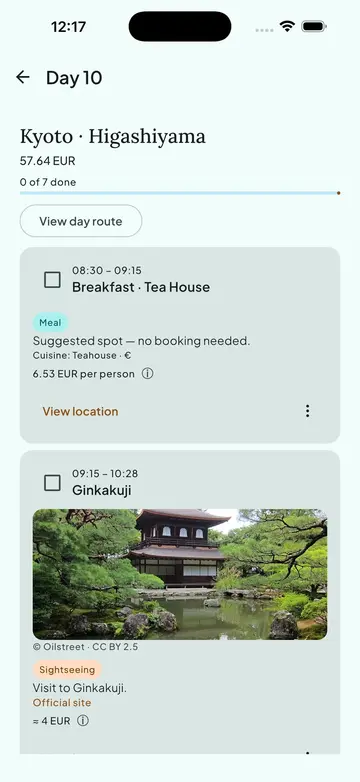
A trip beyond four days, or one that adds a second island — with the coasts, the surf seasons, the whale window and the driving times worked out around it — is exactly what Premium is for. The free version covers one destination for up to three days.

Destinations