Skip to content
JoruJoru
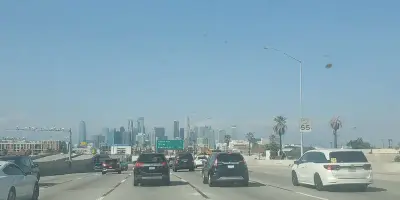
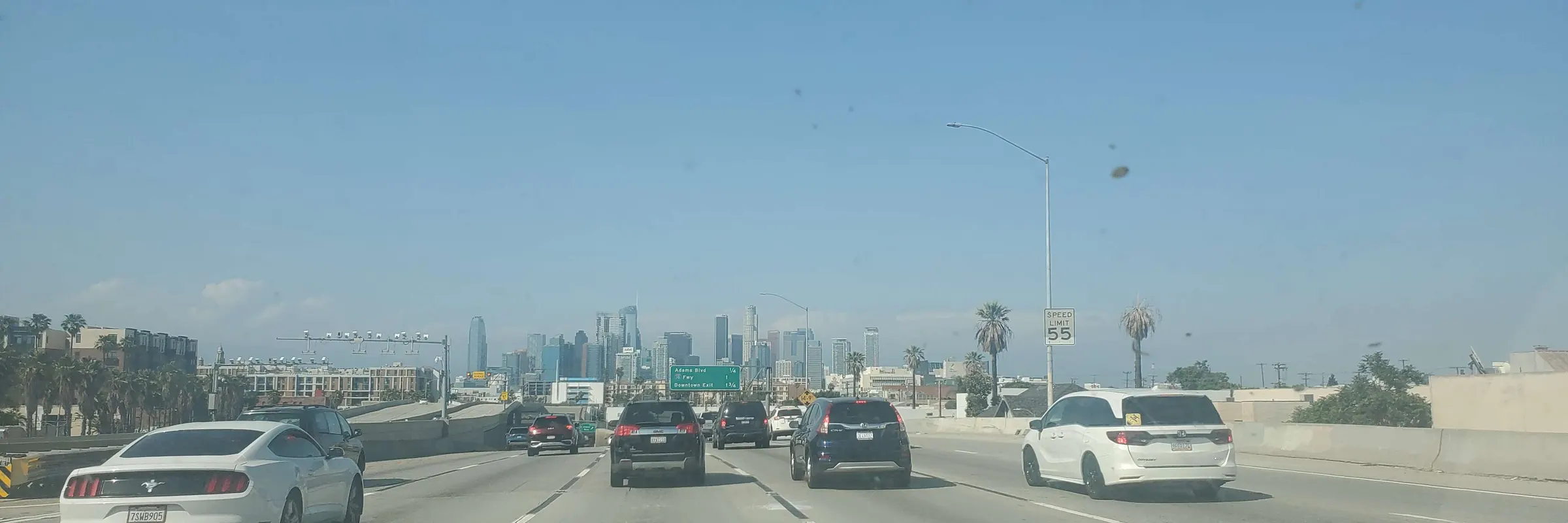
Los Angeles: downtown seen from the Harbor Freeway
Photo: AmeteurAngeleno · CC0
California, United States

Los Angeles: how many days you need and when to go

Los Angeles is the destination people most often come back from disappointed, and the reason is almost always the plan rather than the place. It is a hundred kilometres across, the good things are scattered rather than clustered, and a route that looks reasonable on a map can be three hours of driving. Get the geography right and it becomes what it actually is: the best museum city on the west coast, with a coastline attached.

Short answers

What people ask before booking

How many days do you need in Los Angeles?

Los Angeles needs four days, and they work as four clusters: the west-side museums, downtown, the coast, and the hills. A fifth buys a neighbourhood that is on no list.

What is the best month to visit Los Angeles?

September, October and November — The warmest, clearest stretch of the year. March and April — Green hills, comfortable heat and the wildflowers.

Which months are worth avoiding in Los Angeles?

May and June — Grey mornings on the coast, every day, for weeks.

How many days Los Angeles needs

Four days is the minimum that works, and it works because it is four clusters: one for the museums on the west side, one for downtown, one for the coast, and one for the hills and the studios. One cluster per day is the rule that makes this city function, and breaking it is what produces the trips people describe as having been mostly in a car.

A fifth day buys you a neighbourhood that is not on any list — Boyle Heights, Leimert Park, the San Gabriel Valley for the best Chinese food in the country — or a drive out to the desert or up the coast. Beyond five, you are choosing between day trips rather than seeing more of the city.

How the county is arranged

There is no centre, and looking for one is the first mistake. Los Angeles is a set of separate towns that grew until they touched, each with its own high street, and the empty-feeling stretches between them are where the driving happens. Downtown is a district, not the middle.

  • Downtown — the historic core, the concert hall, the Broad and the Grand Central Market. Denser and more walkable than its reputation, and the hub of the Metro.
  • The west side — Mid-Wilshire, Beverly Hills, Culver City and Santa Monica. The museum corridor runs through it, and it takes the longest to cross at the wrong hour.
  • The coast — Santa Monica, Venice, and up the highway to Malibu. It is genuinely far from downtown: an hour when the road is clear and much more when it is not.
  • Hollywood and the hills — the studios, Griffith Park and the observatory, and the canyons behind. The observatory is free and one of the best things in the city.
  • East and south-east — Boyle Heights, East LA and the San Gabriel Valley. Where the food is, and where most visitors never go.

Where to stay, and the trade-off you are actually making

Because everything is far from everything, where you sleep decides what you see easily and what you see grudgingly. There is no location that is convenient for the coast, the museums and downtown at once, and pretending otherwise is how people end up commuting across the county twice a day.

The honest approach is to pick the half of the city you care about most and accept longer trips to the other. If the beach is the point, stay on the coast; if the museums and the food are the point, stay inland and go to the beach once.

AreaWho it suitsThe catch
Santa MonicaThe beach, the pier, a walkable centre and the Metro line into downtown.Expensive, and everything inland is a long trip from here.
DowntownMuseums, the food hall, the Metro hub and the shortest trips to the east side.Quiet and uneven at night, and a long way from any beach.
Mid-Wilshire and KoreatownCentral by LA standards, on the Metro, and next to the museum row and the best late food.Not a postcard neighbourhood; you are staying somewhere people live.
West HollywoodNightlife, restaurants, walkable blocks and a base between the hills and the west side.No Metro station, so you are driving or paying for rides constantly.
Near LAXAn early flight, and nothing else.It is an airport district. There is no reason to spend a night of a holiday there.

The car, the Metro, and how to read the traffic

Most visitors rent a car and that is still the default, but the Metro is now genuinely useful for a specific set of trips: downtown to Santa Monica, downtown to Hollywood, and the airport connection. It is slower than driving with no traffic and faster than driving with it, which describes most of the day.

The thing to learn is not the map but the clock. Traffic here is a schedule, not an accident: the peaks are long, they run in both directions, and a trip that takes twenty-five minutes at eleven in the morning takes seventy at five in the afternoon. Planning around the hour is what separates a good LA day from a bad one.

  • Park once per cluster and walk. Every additional drive is a parking search at the other end.
  • A TAP card covers the Metro and buses, and the airport now has a rail connection rather than only a shuttle.
  • Ride-hailing is everywhere and adds up fast over four days. For two or more people a rental is usually cheaper.
  • Distances mean nothing without a time of day attached. Check the same route at the hour you will actually travel.

The museums, and the ones that cost nothing

This is the part of Los Angeles that gets undersold. The Getty Center is free — you pay only to park — and it sits on a ridge with a garden and a view over the whole basin. The Broad is free with a timed ticket. Griffith Observatory is free and has the best view of the city and one of the better free planetarium-adjacent experiences anywhere.

The paid ones are worth it too: LACMA for the encyclopaedic collection, the Huntington for the gardens and the library, the Academy Museum for the film history that the studio tours only gesture at.

  • Book the Broad's free timed tickets as soon as your dates are fixed. They release in batches and go quickly.
  • The Getty has a second site, the Villa, on the coast — a Roman villa reconstruction with the antiquities. Also free, also needing a timed reservation.
  • Griffith Observatory is free and busy. Go on a weekday and walk up rather than fighting for the car park.
  • A studio tour is the one paid Hollywood thing worth doing, and the working-lot tours are better than the theme-park version.

How eating works here

Los Angeles is the best eating city in the United States and almost none of it is in the places visitors are sent. The food is in the strip malls, which is a genuine sentence and not a joke: the county's Thai, Korean, Oaxacan, Salvadoran, Armenian and Sichuan cooking is mostly in unglamorous single-storey plazas with a car park in front.

The other thing to know is that this is a city where a taco from a truck and a tasting menu are both taken seriously, and the truck is not the lesser experience. Tipping is expected at the American standard, and many places now add a service charge that is worth checking before you add more.

  • Thai Town, Koreatown, Little Armenia and the San Gabriel Valley are all real districts, not marketing. Each is worth a meal.
  • Taco trucks park in the same spots nightly and the queue at eleven at night is the recommendation.
  • Reservations for the well-known kitchens open a month out and go the day they release.
  • Breakfast is a serious meal here and the queue outside a diner at nine on a Sunday is normal.

Where to eat in Los Angeles, and what to order

LA's food is the food of the people who moved here, cooked for themselves rather than for visitors, and the good version is almost always in a plaza with a car park. The rule is to drive east or into a strip mall. What follows is what is specific to this city rather than generically Californian.

  • Grand Central Market

    Market

    Downtown, everyone wants something different

    A covered market hall trading since 1917, with stalls that range from a century-old lunch counter to newer kitchens with queues. The old stalls and the new ones sit side by side and both are worth it. Go on a weekday at lunch; it is crowded but it moves, and it is the easiest good meal downtown.

    Check it on Wikidata
  • In-N-Out Burger

    Chain

    The chain that is genuinely a local institution

    A regional burger chain that has stayed in the west, makes everything to order and prints Bible verses on the cups. The menu people order from is not the one on the wall — ask for it animal style, which is the long-standing off-menu preparation everyone knows. It is the one fast-food queue worth joining here.

    Check it on Wikidata
  • French dip

    What to order

    The sandwich two downtown institutions still argue over

    Roast beef on a French roll, dipped in the cooking juices. Two downtown restaurants have each claimed to have invented it since around 1908 and the argument has never been settled. Both are still open and both are cheap; pick one, and order it double-dipped if you do not mind the mess.

    Check it on Wikidata
  • Koreatown

    Where to look

    Dinner at midnight, in the district that invented the habit

    The densest Korean neighbourhood outside Korea, where barbecue restaurants and late-night kitchens run well past midnight. This is where the city eats after everywhere else has closed. Barbecue is the obvious order; the stews and the noodle houses are what regulars come for.

    Check it on Wikidata
  • Boyle Heights

    Where to look

    Mexican food, in the neighbourhood that has cooked it longest

    A historically Mexican-American neighbourhood east of downtown, with bakeries, mariachi in the plaza and taquerías that predate the city's food scene by decades. This is the answer to where to eat Mexican food in Los Angeles — not the tourist-facing streets nearer the centre.

    Check it on Wikidata

When to go, and what each month costs you

Los Angeles has a reputation for permanent sunshine that is mostly true and misleading in one specific way. Late spring and early summer bring a coastal marine layer that keeps the beaches and the west side grey and cool until the afternoon — locals call it May Grey and June Gloom, and it is the single most reliable surprise for visitors who booked California for the sun.

  • September, October and November

    Go now

    The warmest, clearest stretch of the year

    The genuine best window: warm sea, clear skies, no marine layer and the crowds gone after the summer. September and October are often hotter than July here, which surprises people. Autumn is also the dry-hot season when wildfire risk peaks inland, which affects air quality some years.

  • March and April

    Go now

    Green hills, comfortable heat and the wildflowers

    The rains have finished, the hills are briefly green rather than brown, and the temperature is ideal for walking. The desert an hour east is at its best. Prices are moderate and the marine layer has not settled in yet.

  • July and August

    Worth it, but

    Hot inland, crowded on the coast

    The summer holidays: full beaches, full attractions and the highest prices. The coast is pleasant and the inland valleys are very hot, which is a bigger gap than visitors expect — thirty minutes of driving can be a different climate. Book the popular things well ahead.

  • December, January and February

    Worth it, but

    The rainy season, which is still mostly dry

    Cooler and the only months with meaningful rain, which arrives in a few big storms rather than steadily. Between them the air is at its clearest of the year and you can see the mountains from the coast. Cheap, quiet, and fine if you are not counting on the beach.

  • May and June

    Think twice

    Grey mornings on the coast, every day, for weeks

    May Grey and June Gloom: a marine layer that sits over the coast and the west side, keeping mornings overcast and cool and often not clearing until mid-afternoon. Inland is sunny at the same time, which catches people out. It is the worst period to book a beach holiday here and the prices do not reflect that.

Things that change the trip

  • One area per day, and park once. This is the single rule that decides whether Los Angeles works for you.
  • Check every route at the hour you will actually travel it, not at the hour you are planning. Traffic here is a timetable.
  • The Getty and the Broad are free, and the Broad needs a timed ticket booked well ahead. Griffith Observatory is free too.
  • Do not book May or June for a beach trip. The coast is grey most mornings and often all day, and it is entirely predictable.
  • Eat in the strip malls and drive east. The best food in the county is in unglamorous plazas, not near the attractions.
  • The coast and downtown are an hour apart in good traffic. Decide which one your trip is really about before booking a hotel.

Plan Los Angeles one cluster at a time

A trip of more than three days, or one that adds San Diego, the desert or the coast road north and the drives between them, is what Premium is for. The free version covers one destination of up to three days.

Destinations