Skip to content
JoruJoru
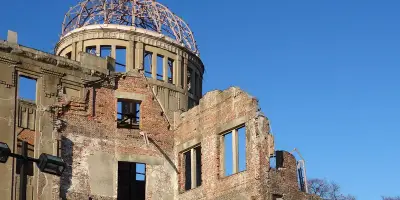
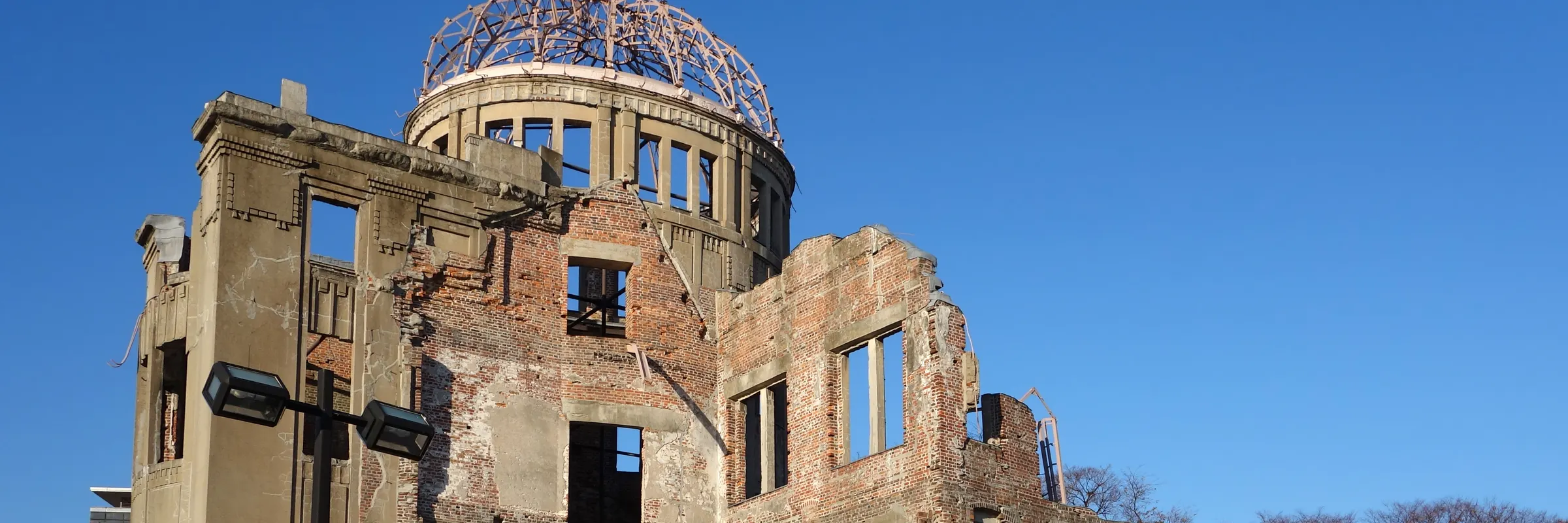
Hiroshima: the Genbaku Dome, left as the bomb left it
Photo: Oilstreet · CC BY 2.5
Chūgoku, Japan

Hiroshima: how many days you need and the best months to go

Hiroshima was destroyed on 6 August 1945 and rebuilt on the same delta, and the city that stands there now is wide, green, flat and easy — a working city of well over a million people that most visitors see for four hours and misjudge. Two days is the honest figure: one for the Peace Memorial Park and the museum, which take a morning and leave a mark, and one for Miyajima across the bay. A third day makes it a place rather than a stop.

Short answers

What people ask before booking

How many days do you need in Hiroshima?

Hiroshima needs two days, not the four hours most people give it: one for the Peace Park and the museum, one for Miyajima across the bay. A third turns it into a city.

What is the best month to visit Hiroshima?

March and April — Cherry blossom, and the best walking weather. October and November — Autumn colour, dry air, and the oysters starting.

Which months are worth avoiding in Hiroshima?

June and July — The rainy season, and then the heat. August — Hottest month, and the anniversary.

How many days Hiroshima needs

Most people give Hiroshima four hours between trains and see the Peace Park and nothing else. Two days is the honest figure. One covers the park, the museum and the castle; the other goes to Miyajima, which is a ferry and a half-hour train from the centre and is a full day if you walk any of it.

A third day is what turns it from a stop into a city: the Shukkei-en garden, the modern art museum on the hill, an evening in the Nagarekawa district, or the run out to Onomichi and the island-hopping cycle route. Hiroshima is a normal, busy Japanese city, and almost nobody stays long enough to notice.

The Peace Park, and how to do it

The park occupies the delta island that was the commercial heart of the city and the area directly beneath the detonation. It holds the Genbaku Dome — the ruin left standing and preserved deliberately, exactly as the blast left it — the cenotaph, the children's monument hung with folded paper cranes, and the Peace Memorial Museum.

The museum is extremely difficult and it is the point of coming. It does not deal in abstractions: it deals in personal objects, in photographs and in the medical consequences, and it is not suitable for young children. Give it two hours and do not schedule anything demanding afterwards. Go in the morning, walk the park afterwards rather than before, and plan a quiet lunch. The park itself is calm, green and full of people going about their day, which is part of what it is for.

Miyajima, and the tide that decides your photograph

The island of Itsukushima, universally called Miyajima, is thirty minutes and a short ferry from central Hiroshima, and its shrine is built out over the water on piles so that at high tide the whole complex appears to float. The great vermilion torii stands offshore, and whether it is standing in water or on sand depends entirely on the tide.

Both are worth seeing and they are different things. At high tide you get the photograph everyone knows; at low tide you can walk out across the flats and stand underneath it. Tide tables are published and the shrine's own site gives them — check them before you choose your ferry, because the tide moves by roughly fifty minutes a day and there is no other way to plan it. Behind the shrine, Mount Misen is a ropeway plus a walk, with wild deer the whole way and macaques at the top.

  • Itsukushima Shrine — the over-water complex, best at high tide, and a World Heritage site since 1996.
  • The torii — offshore and enormous; walkable at low tide, floating at high. Check the tables.
  • Mount Misen — ropeway most of the way and then a genuine climb, with the Inland Sea from the top.
  • Omotesando street — the approach lined with food stalls: grilled oysters, and the maple-leaf cakes made in front of you.
  • Stay the night if you can. The day crowd leaves on the last ferries and the island empties completely.

The city everyone skips

Hiroshima was a castle town from 1589 and a major military port through the modern period, which is why it was a target. The castle was destroyed and rebuilt in concrete in 1958; it is a museum now and the grounds are pleasant. Shukkei-en, the garden beside it, dates to 1620 and is the better visit — a compressed-landscape garden built around a pond, and one of the quietest places in the city.

The living city is south and east of the park. The trams are the point: Hiroshima kept its streetcar network when almost every other Japanese city tore theirs out, and some of the cars running today are survivors from before 1945 that were repaired and put back into service. Riding one is the cheapest history lesson here. Nagarekawa is the eating and drinking district, and it is busy every night of the week.

What to know before the museum

This is the one section of this guide that is a warning rather than a recommendation. The Peace Memorial Museum is designed to be unflinching, and people regularly leave it in tears. It is one of the most important museums in the world and it is not a pleasant hour.

Practical consequences. Do not take young children through the main exhibition. Do not book it for the end of a long travel day. Leave the afternoon loose. And if you are travelling with someone who would rather not, the park, the dome and the cenotaph are outdoors, free and meaningful on their own — the memorial does not require the museum to work.

Getting here, and where it fits

Hiroshima is on the Sanyō Shinkansen, about ninety minutes from Osaka and under two hours from Kyoto, which is why so many people treat it as a stop. It is also the natural gateway to the Setouchi region, and that is the argument for staying.

Two things are within reach and are unlike anything else in Japan. Onomichi, an hour east, is the mainland end of the Shimanami Kaidō — a seventy-kilometre cycle route that crosses six islands of the Inland Sea on bridges built with separate bike lanes, and one of the great rides anywhere. And Naoshima, the contemporary art island, is reachable from the same coast. Neither fits in a day trip from Kyoto; both fit from here.

What to eat in Hiroshima, and where

Hiroshima eats from the Inland Sea and it has one dish that is a genuine local argument with Osaka. The oysters here are a national byword and the pancake is not the one you have had before.

  • Okonomiyaki

    What to order

    The dish, and the difference that matters

    A savoury pancake built in layers on a hot plate — batter, then a mountain of cabbage, then pork, then a nest of fried noodles, then egg — and finished with a sweet-brown sauce. In Osaka the ingredients are mixed into the batter; in Hiroshima they are stacked, and the noodles are the local part. The two cities do not agree about this and neither should you.

    Check it on Wikidata
  • Kaki

    What to order

    The oysters, and the season

    Hiroshima Bay produces a very large share of Japan's farmed oysters, and they are the thing the prefecture is known for nationally. The season is the cold months, roughly October to March, and they are best grilled in the shell on a street stall rather than raw. Miyajima's approach street is full of them.

    Check it on Wikidata
  • Anago

    What to order

    The other fish this city is known for

    Saltwater conger eel, gently grilled and served over rice in a lacquered box — lighter and softer than the freshwater eel served elsewhere in Japan. It is the local speciality on the Miyajima line and has been sold in station lunchboxes here for over a century. Order it once instead of the oysters.

    Check it on Wikidata
  • Tsukemen

    What to order

    The noodles to order in summer

    Ramen served deconstructed: thick noodles in one bowl, a concentrated dipping broth in another, and you dip as you go. It is not a Hiroshima invention but the city has a strong version of it, usually fiercely spicy here. Ordered cold in summer, which is when it makes most sense.

    Check it on Wikidata
  • Momiji manjū

    What to order

    The souvenir cake, made in front of you

    A small maple-leaf-shaped sponge cake filled with sweet bean paste, invented on Miyajima at the start of the twentieth century and now the standard gift from this region. The stalls on the island bake them in front of you and they are entirely different warm, which is the reason to eat one there rather than buy a box at the station.

    Check it on Wikidata

When to go, and what each month costs you

Hiroshima has a humid subtropical climate, and the two things that shape a visit are the June rainy season and the August heat. Spring and autumn are the windows; August is both the hottest month and the one carrying the anniversary.

  • March and April

    Go now

    Cherry blossom, and the best walking weather

    Mild, bright and the whole city outdoors, with the castle grounds and Miyajima among the better blossom spots in western Japan. The bloom is a moving target — usually somewhere from late March into the first days of April — and it lasts about a week. Busy and priced accordingly, and worth it.

  • October and November

    Go now

    Autumn colour, dry air, and the oysters starting

    The most reliable window of the year: clear, dry, comfortable, with the maples on Miyajima turning through November and the oyster season opening. Fewer visitors than spring and better weather than either. The single best time to come.

  • May

    Worth it, but

    Warm and green, before the rain

    Comfortable and quiet once Golden Week has passed — the first week of May is a national holiday cluster and everything fills. After it, the city is green, the weather is good and the rainy season has not yet arrived.

  • September

    Worth it, but

    The heat easing, and typhoon season

    Still warm and increasingly pleasant through the month, with the summer crowds gone. September is the peak of typhoon season in western Japan, which occasionally stops the ferries and the trains for a day. Cheap and green.

  • December, January and February

    Worth it, but

    Cold and clear, and the oysters at their best

    Chilly but rarely severe, with dry sunny days, very few visitors and the oyster season at its peak. Miyajima in winter is close to empty. Short daylight and cold on the ferry are the price.

  • June and July

    Think twice

    The rainy season, and then the heat

    The tsuyu rainy season runs through June into mid-July: persistent grey rain, high humidity and low cloud that removes the Inland Sea views entirely. Once it lifts, the heat begins. The museum and the food are unaffected; everything outdoors is not.

  • August

    Think twice

    Hottest month, and the anniversary

    Hot and very humid, the hardest month to walk around in. The sixth of August is the anniversary of the bombing: the ceremony and the evening lantern floating are moving and the city is fully booked around it. If you come for that, book months ahead; if not, avoid the week.

Things that change the trip

  • Give it two days, not four hours. Almost everyone treats Hiroshima as a stop between trains and misses both the island and the city.
  • Do the museum in the morning and leave the afternoon loose. It is extraordinary and it is genuinely hard going.
  • Check the Miyajima tide tables before choosing your ferry. The torii either floats or stands on sand, and both are worth seeing.
  • Stay the night on Miyajima if you can. The day crowd leaves on the last ferries and the island becomes a different place.
  • Order the pancake with the noodles in it. That layer is the Hiroshima version and the whole argument with Osaka.
  • Ride the trams. Hiroshima kept its streetcars when other cities scrapped theirs, and some of the cars survived 1945 and are still running.

Plan Hiroshima and the Inland Sea

A trip beyond three days, or one that links Hiroshima with Miyajima, Onomichi, the Shimanami cycle route or Naoshima with the trains and the tides arranged around them, is exactly what Premium is for. The free version covers one destination of up to three days.

Destinations