


Skip to content
JoruJoru
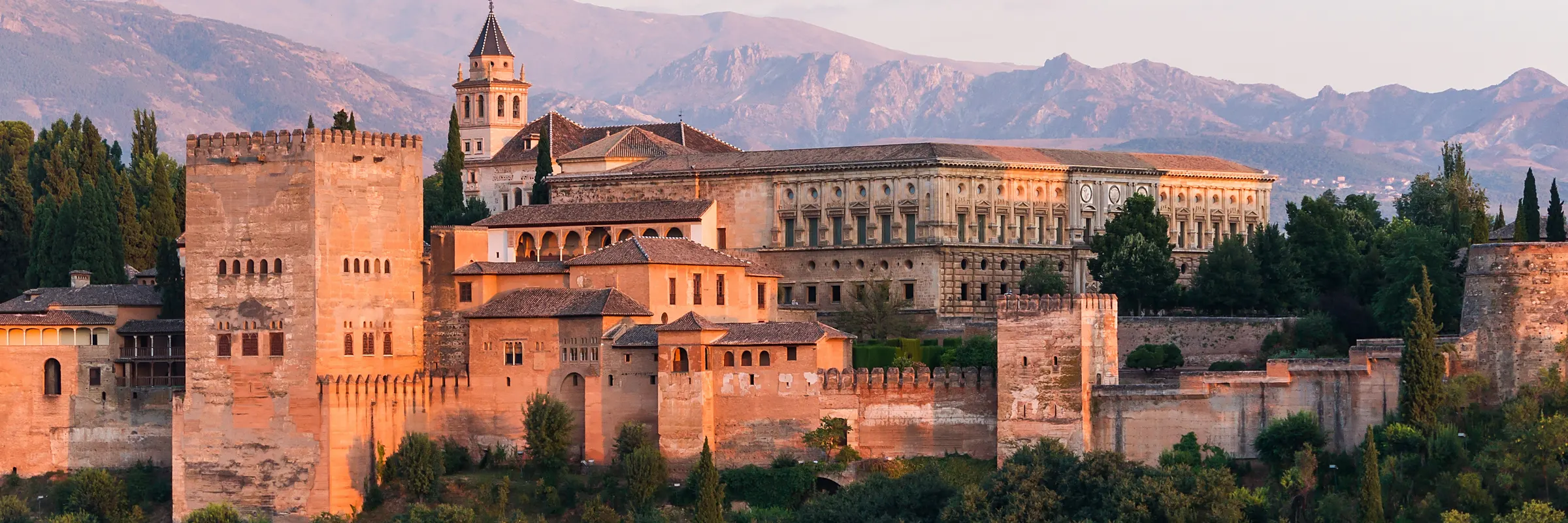
Granada: The Alhambra at dawn, with the Sierra Nevada behind

Andalusia, Spain

Granada: how many days you need and the best months to go

Photo: Jebulon · CC0

Granada was the capital of the last Muslim kingdom on the Iberian peninsula until 1492, and the palace its rulers built on a hill above the city, the Alhambra, is the reason almost everyone comes. It deserves it. But the city is more than its monument: across the valley the white lanes of the Albaicín climb to viewpoints facing the palace, the caves of the Sacromonte still hold flamenco, and the bars below serve a free tapa with every drink, a custom that survives in few other places. The planning problem is a single piece of paper. Entry to the Alhambra is limited, sold by name, with a fixed time for its palaces, and it sells out weeks ahead; without it, a trip to Granada is a trip around the Alhambra rather than into it.

Short answers

What people ask before booking

How many days do you need in Granada?

Granada needs two days: one for the Alhambra — the Nasrid Palaces, the fortress and the gardens of the Generalife — and one for the Albaicín, the Sacromonte and the cathedral, with tapas in the evening. Book the Alhambra weeks ahead: tickets are sold by name, with a fixed time for the palaces.

What is the best month to visit Granada?

April and May — Spring, flowers and snow on the peaks. September and October — The heat breaks, the city returns.

Work out how many hours you will have in Granada on your dates
When to go, and what each month costs you

Granada sits high, at the foot of the Sierra Nevada, so it has hot, dry summers and cold winter nights, with snow on the peaks behind the Alhambra from autumn into spring. Spring and autumn are the best times, and also when the Alhambra tickets go fastest.

  1. January: Worth it, but
  2. February: Worth it, but
  3. March: Worth it, but
  4. April: Go now
  5. May: Go now
  6. June: Worth it, but
  7. July: Worth it, but
  8. August: Worth it, but
  9. September: Go now
  10. October: Go now
  11. November: Worth it, but
  12. December: Worth it, but
  • April and May

    Go now

    Spring, flowers and snow on the peaks

    Mild days, gardens in flower in the Generalife and the Albaicín, and snow still on the Sierra Nevada behind the palaces. Holy Week, in March or April depending on the year, brings processions and the highest prices, and on the third of May the city fills with flower-decked crosses. Book the Alhambra early.

  • September and October

    Go now

    The heat breaks, the city returns

    Warm days that turn mild by October, with clear skies and the city back from its summer holidays. It is the second-busiest season for the Alhambra; the light in the late afternoon over the hills is at its best.

  • June

    Worth it, but

    Long days and the start of the heat

    Warm to hot, with long evenings and the gardens still green. The international festival of music and dance brings concerts to the Alhambra and the Generalife, and the spring fair, whose dates move with Corpus Christi, often falls in this month.

  • July and August

    Worth it, but

    Hot and dry, with cool nights

    Hot afternoons with strong sun on the hills, and cooler nights than the cities of the plain. Visit the Alhambra early or late in the day, and keep the middle of the afternoon for the shade. Many locals leave in August, and some bars close.

  • November to March

    Worth it, but

    Cold nights, snow on the mountains and fewer crowds

    Cool, often sunny days and cold nights, with frost on the coldest and rain spread through the season. Snow covers the Sierra Nevada, and the ski slopes are under an hour away. The Alhambra is easier to book and the city is at its most local; the second of January marks the anniversary of the taking of the city in 1492.

What to pack for Granada, month by month

How many days Granada needs

Two days are the minimum. One for the Alhambra, which takes a long morning or afternoon at least — the palaces, the fortress, the gardens of the Generalife — and the walk down. One for the Albaicín and the Sacromonte, the cathedral and the Royal Chapel, and an evening of tapas or flamenco.

A third day is for what lies around the city: the white villages of the Alpujarra on the southern slopes of the Sierra Nevada, the ski slopes of the same mountains in winter, or the beaches of the coast an hour south. Granada is also a natural stop between Seville, Córdoba and Málaga, all within a few hours.

How the city is arranged, between two hills

Granada lies at the foot of the Sierra Nevada, where two rivers meet. The Alhambra stands on one hill and the Albaicín climbs the one facing it, with the narrow valley of the Darro between them; the modern city spreads out over the plain below.

  • The Alhambra — the palace-fortress and its gardens on the Sabika hill, wooded on its slopes and walled at the top.
  • The Albaicín — the old Moorish quarter on the hill opposite: white houses, walled gardens and lanes up to the viewpoints.
  • The Sacromonte — above the Albaicín, the hillside of cave houses where the Roma community lived and flamenco is still performed.
  • The centre — the cathedral, the Royal Chapel, the old silk market, Plaza Nueva and the busy streets of shops and bars around them.
  • The Realejo — the old Jewish quarter south of the centre, below the Alhambra: a neighbourhood of bars, street art and convents.

Where to stay, and what each area costs you

The centre is flat and practical; the hills are beautiful and steep. The Albaicín and the Alhambra hill give you views and quiet at the cost of cobbled climbs and difficult access for taxis; the centre and the Realejo put the tapas bars at the door.

Prices peak in Holy Week, whose dates move every year, in spring and in the autumn holidays; in winter, rooms are cheaper and the Alhambra is easier to book.

AreaWho it suitsThe catch
The centre, around the cathedralA first visit: the cathedral, Plaza Nueva, the tapas bars and the minibuses up the hills, all on the flat.Busy and noisy around the bars at night, with traffic on the main streets.
The AlbaicínThe view of the Alhambra from a white house or a walled garden, in the most atmospheric lanes of the city.Steep cobbles, cars barely get through, and carrying luggage up is hard work.
The RealejoLocal bars, a short walk to the centre and a direct climb to the Alhambra through the woods.Hilly, and fewer hotels than the centre.
The Alhambra hillWaking up beside the monument, with the gardens and the first entry slot a few steps away.Cut off from the life of the city below, with few restaurants and a steep walk down.
Around the station and Camino de RondaCheaper modern hotels near the train and bus stations.A twenty-minute walk or a bus to the sights, in streets with no character.

Compare these areas against your priorities

Getting there, and up the hills

High-speed trains link Granada with Madrid, and regional trains and buses with Seville, Córdoba and Málaga. Granada's small airport has few routes; many visitors fly into Málaga, an hour and a half away by bus or car.

In the city, you walk and you climb. Small electric minibuses run up to the Alhambra, the Albaicín and the Sacromonte from the centre, which saves the legs on the way up; the walk down is the pleasant half.

  • Do not drive into the centre or the Albaicín. Access is restricted by cameras and fines arrive by post, including to hire cars.
  • The light rail line runs north to south across the modern city; it is useful for the station, not for the sights.
  • A rechargeable travel card brings down the fare for frequent rides on the city buses.
  • Wear shoes with grip: the cobbles of the hills are polished smooth and slippery when wet.

The Alhambra, and how its ticket works

The Alhambra ticket is sold by name, with a fixed half-hour slot for the Nasrid Palaces, the heart of the visit, and staff check the name against your passport or ID at the gate. Arrive late for the slot and you lose it. Buy from the official website only, as soon as your dates are fixed: in spring and autumn tickets go weeks or months ahead. Returned tickets reappear online, and a limited number is sold on the day; resellers without the official code can leave you outside.

  • The Nasrid Palaces — the rooms and courtyards of the sultans, with carved stucco, tiled walls and the Court of the Lions. Your slot decides the rest of the visit, so plan the gardens and the fortress around it.
  • The Generalife — the summer palace and gardens of the sultans, on the slope above, with water running through every terrace.
  • The Alcazaba — the military fortress at the western tip, with the best view over the city from its watchtower.
  • The Mirador de San Nicolás — the viewpoint in the Albaicín facing the Alhambra, with the Sierra Nevada behind it; crowded at sunset, with quieter viewpoints a few lanes higher.
  • The Royal Chapel — the burial chapel of Isabella and Ferdinand, the monarchs who took the city in 1492, next to the cathedral.
  • The Sacromonte — the cave houses, a museum of cave life and flamenco performances in caves in the evening.

How eating works here

In Granada, a drink in a bar comes with a free tapa, and each round brings a different one. It is one of the last cities in Spain where this is still the rule, and a dinner can be made of three or four drinks in two or three bars. The tapa is chosen by the bar, though some let you pick from a list.

Spanish hours apply: lunch from two, dinner from nine at the earliest, and the tapas bars full from eight. The tea shops of the lanes below the Albaicín are a reminder of the city's Moorish past and a good pause in the afternoon.

  • Order drinks, not tapas: the tapa arrives with the drink. A plate from the menu is a separate order.
  • Stand at the bar in the busiest places; tables are often for full meals.
  • The Albaicín has restaurants with Alhambra views; you pay for the view.
  • Tipping is optional: rounding up or leaving small change is enough.

Where to eat in Granada, and what to order

Granada's food comes from the mountains and from its Moorish past: ham cured in the cold air of the Sierra Nevada, broad beans with ham, an omelette made with offal in the Sacromonte, and a small sweet pastry from a town on the plain. Most of it arrives as tapas, free with your drink.

  • Jamón de Trevélez

    What to order

    Ham cured in the mountain air

    Ham from the village of Trevélez in the Alpujarra, one of the highest villages in Spain, cured for months in the cold, dry air of the Sierra Nevada. It is sliced thin and served at room temperature, and the tapas bars of the city serve it with bread or with broad beans. Order a portion to share in a bar that slices it by hand.

    Check it on Wikidata
  • Pionono

    What to order

    The small sweet pastry of the plain

    A small rolled sponge cake soaked in syrup and topped with toasted cream, invented in the town of Santa Fe, on the plain west of Granada, in the late nineteenth century. It is named after a pope, and every pastry shop in the city sells it. One is two bites; buy a box.

    Check it on Wikidata
  • Tortilla del Sacromonte

    What to order

    The omelette of the Sacromonte

    A Spanish omelette made with lamb's brains and other offal, sometimes with peas and ham, from the cave quarter of the Sacromonte. It is the city's most particular dish, and the place to try it is a restaurant on the hill. Less alarming than it sounds, and very much of Granada.

    Check it on Wikidata
  • Habas con jamón

    What to order

    Broad beans with ham

    Young broad beans fried slowly with cubes of cured ham, a dish of the vegetable gardens of the plain. In spring the beans are fresh and tender, and the dish is on almost every menu; in the rest of the year it is made with frozen or dried ones. A common free tapa.

    Check it on Wikidata
  • Té moruno

    What to order

    Mint tea in a tea shop of the lanes

    Green tea with fresh mint, sweetened and poured from high into small glasses, with Moroccan pastries. The tea shops of the lanes below the Albaicín recall the city's Moorish past, with low cushions and coloured lamps. The right pause before climbing the hill at sunset.

    Check it on Wikidata

Things that change the trip

  1. Book the Alhambra first, on the official website, with the names and documents of everyone in your group.
  2. Be at the Nasrid Palaces before your slot: late arrivals are not let in.
  3. Order a drink and wait for the tapa; three bars make a dinner.
  4. Take the minibus up the hills and walk down.
  5. Do not drive into the centre or the Albaicín: cameras fine hire cars.
  6. Watch the sunset from the Albaicín, then walk down to the Darro for the lights of the Alhambra.

Plan Granada with Andalusia

A trip of more than three days, or one that joins Granada, Córdoba, Seville and Málaga with the trains between them, is what Premium is for. The free version covers one destination of up to three days.

Destinations