





Skip to content
JoruJoru
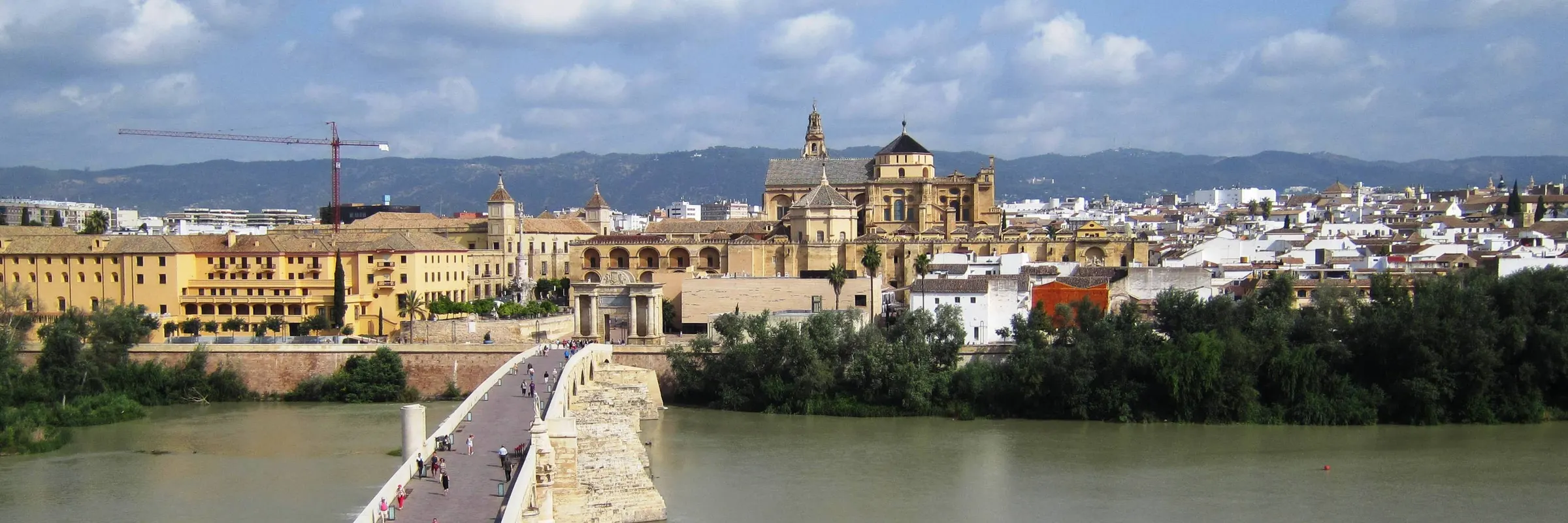
Córdoba: The Roman bridge over the Guadalquivir and the Mosque-Cathedral

Andalusia, Spain

Córdoba: how many days you need and the best months to go

Photo: Martin Furtschegger · CC BY 3.0

A thousand years ago Córdoba was the capital of Muslim Spain and one of the largest and most learned cities in Europe, and its great mosque, begun in the eighth century and enlarged for two hundred years, is still standing, with a Renaissance cathedral built into its centre after the Christian conquest. The rest of the old city is a maze of white lanes, the Jewish quarter where the philosopher Maimonides was born, a Roman bridge over the Guadalquivir and houses built around courtyards full of flowers. It is small, an hour by train from Seville or Málaga, and often visited in a day. The planning problem is the calendar: in July and August Córdoba is one of the hottest cities in Europe, and in May, its best month, the patio festival fills it.

Short answers

What people ask before booking

How many days do you need in Córdoba?

Córdoba needs one full day for the Mosque-Cathedral, the Jewish quarter, the Alcázar and the Roman bridge, and a night or a second day for the lanes at their quietest and the caliph's city of Medina Azahara. Come in spring or autumn: July and August are among the hottest months in Europe.

What is the best month to visit Córdoba?

March to May — Orange blossom, then the month of the patios. October and November — Warm days and quiet lanes.

Which months are worth avoiding in Córdoba?

July and August — Extreme heat.

Work out how many hours you will have in Córdoba on your dates
When to go, and what each month costs you

Córdoba sits in the valley of the Guadalquivir, one of the hottest places in Europe in summer: in July and August afternoons above forty degrees are common. Spring is the time to go, and May is its peak, with the crosses, the patios and the fair; autumn is the second window.

  1. January: Worth it, but
  2. February: Worth it, but
  3. March: Go now
  4. April: Go now
  5. May: Go now
  6. June: Worth it, but
  7. July: Think twice
  8. August: Think twice
  9. September: Worth it, but
  10. October: Go now
  11. November: Go now
  12. December: Worth it, but
  • March to May

    Go now

    Orange blossom, then the month of the patios

    Mild, sunny days and the scent of orange blossom in March and April; Holy Week, whose dates move between March and April, brings processions. May is the city's great month: the crosses at the start of it, the patio festival in the first half and the fair at the end, with prices to match. Book early.

  • October and November

    Go now

    Warm days and quiet lanes

    The heat is gone, the light is golden and the lanes are quieter than in spring. Rain becomes more frequent in November, but sunny days remain the rule.

  • June and September

    Worth it, but

    Hot, with the evenings outdoors

    Already hot or still hot, with long evenings that the city spends outside. Sightsee early, rest in the afternoon, and go out after dark, as the locals do.

  • July and August

    Think twice

    Extreme heat

    Among the hottest months anywhere in Europe, with afternoons that make walking a risk and nights that stay warm. Many locals leave, some bars close, and the patios are bare. If you come, plan everything for the early morning.

  • December to February

    Worth it, but

    Cool, quiet and cheap

    Cool days, cold nights and some rain, with the oranges ripe on the trees. The monuments are at their quietest, and hotels at their cheapest; Christmas brings lights and markets.

What to pack for Córdoba, month by month

How many days Córdoba needs

One full day covers the essentials: the Mosque-Cathedral in the morning, the Jewish quarter and the synagogue, the Alcázar of the Christian kings and its gardens, and the Roman bridge at sunset. The old town is compact and walkable, and the high-speed trains make a day trip from Seville or Madrid easy.

A night changes it. The lanes are at their best in the early morning and the evening, after the day visitors have gone, and the palace-city of Medina Azahara, the ruins of a caliph's capital in the hills outside the town, needs half a day of its own. In May, a second day is for the patios.

How the city is arranged

Córdoba's old town lies on the north bank of the Guadalquivir. The Mosque-Cathedral stands near the river, with the Jewish quarter around it, and the lanes of the old town spread north and east from there to the squares of the modern centre. Across the Roman bridge, a fortified gate tower guards the southern end.

  • The Mosque-Cathedral and the Judería — the great mosque and the old Jewish quarter around it, with the synagogue and the lanes of white houses and flowerpots.
  • The Alcázar and San Basilio — the fortress-palace of the Christian kings with its terraced gardens, and the neighbourhood behind it, famous for its patios.
  • The Roman bridge and the river — the bridge, the gate tower at its far end and the old water mills in the river.
  • The Axerquía — the old town's eastern half, with the arcaded Plaza de la Corredera, Romanesque-Gothic churches and the local life of the old city.
  • The modern centre — the square of Las Tendillas and the shopping streets, where the city works.

Where to stay, and what each area costs you

Most of what a visitor wants is within the old town, so staying inside it is worth it: the morning before the tour groups and the evening after them are the best hours of a visit. The modern centre is cheaper and ten minutes away on foot.

Prices peak through May, for the crosses, the patios and the fair, and rise in Holy Week, whose dates move every year. In July and August they fall, and so does the city's pulse in the afternoon heat.

AreaWho it suitsThe catch
The Judería, around the mosqueWaking up next to the monument, with the lanes, the synagogue and the river on foot.The busiest streets of the city by day, full of souvenir shops, and the dearest rooms.
San Basilio and the AlcázarA quieter old neighbourhood of patios and small houses, by the gardens of the Alcázar.Few hotels, and the patio festival fills the streets in May.
The AxerquíaLocal squares, tapas bars and old churches, ten minutes' walk from the mosque.Fewer sights at the door, and some streets are dull outside the centre.
The modern centre and the stationCheaper hotels near the high-speed trains, a short walk from the old town.Ordinary city streets, without the charm of the lanes.

Compare these areas against your priorities

Getting there, and getting around

Córdoba is on the high-speed line between Madrid and Seville, with frequent trains that reach Seville in under an hour, Madrid in under two and Málaga in about an hour. Its small airport has only a few domestic flights: most visitors fly into Seville or Málaga.

In the old town, you walk. The lanes are narrow and many are closed to cars, and everything a visitor needs is within half an hour on foot from the station.

  • Medina Azahara is eight kilometres west; a tourist bus runs from the centre, and the site's own shuttle climbs from the visitor centre to the ruins.
  • Taxis and city buses cover the modern city and the station.
  • Drivers should leave the car outside the old town: access is restricted and parking near the monuments is scarce.
  • In summer, walk early and late. The lanes hold the heat, and the middle of the day is for the shade.

The Mosque-Cathedral, the patios and the caliph's city

The Mosque-Cathedral is one of the most extraordinary buildings in the world: a forest of more than eight hundred columns joined by red-and-white double arches, built and enlarged by the emirs and caliphs between the eighth and tenth centuries, with a Renaissance cathedral nave rising in its middle from the sixteenth. Go early in the morning, when it is quietest, and look for the prayer niche of the tenth century, covered in gold mosaics. Mass is still celebrated here, and visiting times work around services.

  • The Judería and the synagogue — the lanes of the old Jewish quarter, the small medieval synagogue and the statue of Maimonides.
  • The Alcázar of the Christian Monarchs — a fortress-palace with Roman mosaics inside and long terraced gardens of pools and orange trees.
  • The patios — private courtyards covered in flowerpots, opened to the public in the festival of the first half of May, a tradition listed by UNESCO; a few can be visited all year.
  • Medina Azahara — the ruins of the palace-city that a caliph built in the tenth century in the hills west of the town, a World Heritage Site with a museum at its foot.
  • The Roman bridge — the bridge over the Guadalquivir, with the fortified Calahorra tower at its southern end; best at sunset, looking back at the mosque.
  • The Palacio de Viana — a noble house of a dozen patios and a garden, the best way to see the patios outside May.

How eating works here

Córdoba's cooking is simple and strong: a thick cold tomato soup that was born here, oxtail stew, fried rolls of pork and ham, and the dry wines of the Montilla-Moriles hills to the south. The tapas bars of the old town and the taverns of the Axerquía are where the city eats.

Andalusian hours apply: lunch from two, dinner from nine. In summer the city eats late and outdoors, when the heat breaks.

  • Taverns are an institution here, some centuries old, with barrels of local wine and tiled walls.
  • The local wine is fortified or dry, like sherry, but made from different grapes; ask for a glass of fino from Montilla.
  • Restaurants around the mosque cater to visitors; walk ten minutes into the Axerquía for local prices.
  • Tipping is optional: rounding up is enough.

Where to eat in Córdoba, and what to order

Córdoba gave Spain one of its best-known cold soups, and its taverns serve the rest of the city's classics. Order the cold tomato soup, the fried pork roll and the oxtail, with a glass of the local wine, and eat them in a tavern rather than a restaurant by the mosque.

  • Salmorejo

    What to order

    The cold soup that was born here

    A thick, smooth cold soup of tomato, bread, garlic and olive oil, topped with chopped egg and cured ham. It is Córdoba's own, thicker than gazpacho and eaten with a spoon, and every bar has it. In summer it is the most refreshing thing you can order.

    Check it on Wikidata
  • Flamenquín

    What to order

    A fried roll of pork and ham

    A long roll of pork loin wrapped around cured ham, breaded and deep-fried, served in slices with chips and mayonnaise. It comes from the province of Córdoba and is the city's comfort food; a half portion is plenty.

    Check it on Wikidata
  • Rabo de toro

    What to order

    Oxtail stewed in red wine

    Oxtail braised for hours in red wine with vegetables until it falls from the bone. Córdoba claims it as its own, from the bulls of its ring, and it is a winter dish that appears on menus all year. Order it in a tavern, with bread for the sauce.

    Check it on Wikidata
  • Montilla-Moriles

    What to order

    A glass of the local wine

    The wines of Montilla-Moriles, the hills south of Córdoba, are made like sherry but from Pedro Ximénez grapes, and dry finos are aged naturally without added alcohol. A cold fino is the drink of the city's taverns, with tapas; the sweet Pedro Ximénez is the dessert.

    Check it on Wikidata

Things that change the trip

  1. Visit the Mosque-Cathedral first thing in the morning, before the tour groups.
  2. Stay a night in the old town: the lanes are at their best early and late.
  3. Come in May for the patios, and book months ahead.
  4. Avoid July and August, or plan every outdoor visit for before eleven.
  5. Give half a day to Medina Azahara; it is outside the town and easy to forget.
  6. Eat in the taverns of the Axerquía rather than in the streets around the mosque.

Plan Córdoba with Andalusia

A trip of more than three days, or one that joins Córdoba, Seville, Granada and Málaga with the trains between them, is what Premium is for. The free version covers one destination of up to three days.

Destinations