Skip to content
JoruJoru
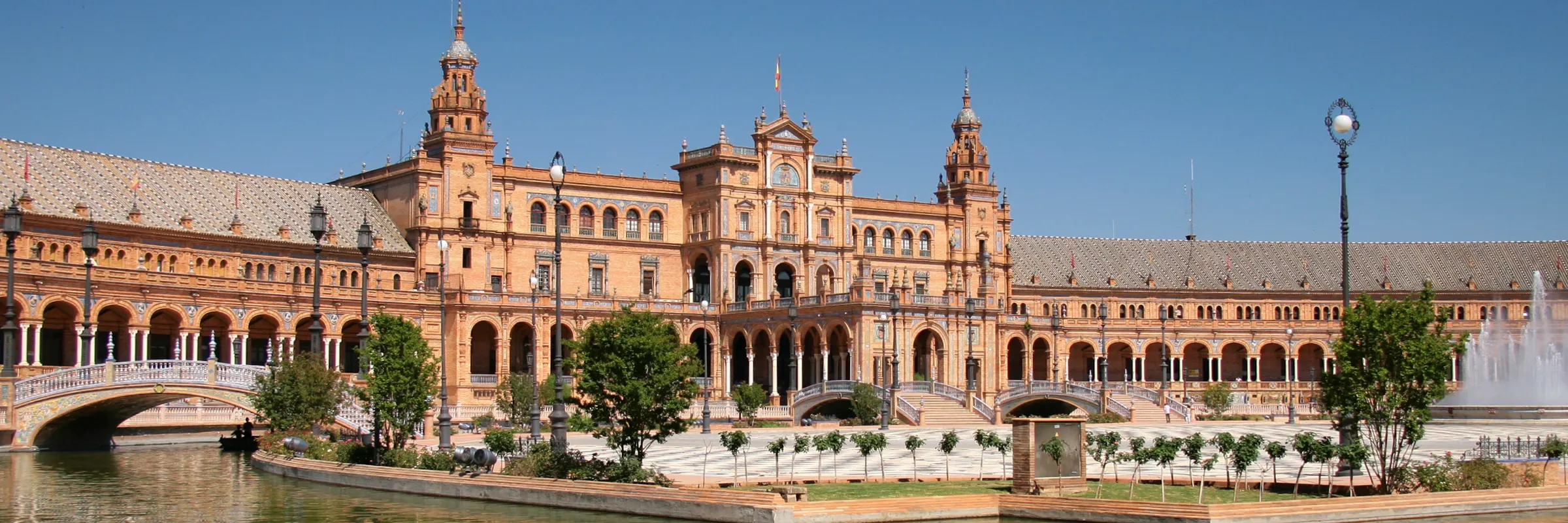
Seville: The Plaza de España, built for the 1929 exposition
Photo: Jorge Franganillo from Barcelona, Spain · CC BY 2.0
Andalusia, Spain

Seville: how many days you need and the best months to go

Seville is flat, compact and easy to walk, which makes it look simple to plan. What complicates it is the clock. For much of the year the middle of the day belongs to the heat, so the city does its living early and late, and a northern European schedule puts you in the sun at the hour everyone else has gone indoors. The other complication is the calendar: Holy Week and the April fair are why many people come, and both work differently for a visitor than the photographs suggest.

Short answers

What people ask before booking

How many days do you need in Seville?

Seville needs two days for the old city — the cathedral, the Alcázar, Santa Cruz and Triana — and a third to see it at the pace the heat allows. Check where Easter falls before booking spring: Holy Week and the April fair move every year, and they change both the price and the character of the trip.

What is the best month to visit Seville?

March — Orange blossom and mild days, before the festivals. October and November — Summer's light without summer's heat.

Which months are worth avoiding in Seville?

July and August — Too hot to use the city by day.

Work out how many hours you will have in Seville on your dates

How many days Seville needs

Two days covers the old city: the cathedral and its tower, the Alcázar, the lanes of Santa Cruz, the Plaza de España and an evening across the water in Triana. That is the trip most people book, and it is enough provided the two big monuments go on different mornings.

The third day is what turns a checklist into a visit: the palaces and museums that have no queue, and an afternoon with nothing in it, which is how the city is meant to be used. A fourth day belongs to Córdoba, under an hour away by high-speed train, and is better spent there than here.

How the city is arranged, and the river that is not one

The old city sits on the east bank of the water and is almost entirely flat. The monuments cluster at its southern end, the shopping streets run north from there, and beyond them the old working quarters stretch up to the Macarena.

The water itself is what most visitors misread. What passes under the Triana bridge is not the Guadalquivir but a closed arm of its old course, sealed by a plug of earth to the north and a lock to the south, while the living river was moved west to stop it flooding the city. That is why the surface is so still, and why people row on it all year.

  • Santa Cruz — the former Jewish quarter, pressed against the Alcázar walls. Whitewashed lanes too narrow for a car, and narrow on purpose: the width is the shade.
  • El Arenal — between the cathedral and the water, with the bullring and the Torre del Oro. The old port district, and the easiest part of the centre to walk.
  • Centro: Alfalfa and La Encarnación — the commercial middle: shopping streets, small squares full of bars, and the giant wooden parasol the city calls Las Setas, the mushrooms.
  • The Alameda and the Macarena — the northern half of the old city. A long tree-lined square that is the centre of the night, with neighbourhood streets and a stretch of the medieval wall around it.
  • Triana — across the bridge. The potters' and flamenco quarter, with its own market and its own processions.

Where to stay, and what the lanes cost you

Almost anywhere inside the old city is within walking distance of everything, so the choice is not about distance. It is about access and noise. The prettiest lanes are closed to traffic, so a taxi leaves you at the edge of the quarter and the suitcase does the last stretch over cobbles; and a city that eats at ten at night is loud under the windows until well after midnight.

In the hot months one more question outranks both: whether the room has air conditioning that works. A top-floor room under a flat roof is a different proposition in July.

AreaWho it suitsThe catch
Santa CruzA first visit. The cathedral and the Alcázar are at the door, and the lanes are the Seville of the photographs.No car reaches most doors, so the bags are carried in. The most touristed streets in the city, and priced accordingly.
El ArenalFlat, central streets between the cathedral and the water, a taxi to the door and old tapas bars on every corner.Fewer small hotels with character than Santa Cruz, and the streets fill on bullfight and procession days.
Centro (Alfalfa and La Encarnación)Shops, a market and bars used by residents, a short walk from the monuments one way and the Alameda the other.The squares fill at night and stay loud until late. Ask for a room on the inner courtyard.
The Alameda and the MacarenaBetter value, the city's nightlife on the square, and a neighbourhood that is not arranged for visitors.The furthest from the cathedral, and the Alameda itself is noisy into the early hours.
TrianaQuieter evenings, a neighbourhood's own bars and market, and the best view of the old city — from across the water.Every day starts and ends with the walk over the bridge, and there are few hotels to choose from.

Compare these areas against your priorities

The airport, the station and getting around

The airport is small, close to the city and has no train. A dedicated airport bus runs into the centre, calling at the main railway station and finishing at the Plaza de Armas bus station by the water. Many visitors do not fly at all: the high-speed line from Madrid ends at Santa Justa station, on the eastern edge of the old city.

Inside the old city you will walk, because nothing else fits in the lanes. The metro is a single line that skirts the southern edge of the centre, and the short tram exists mainly to save a hot walk past the cathedral.

  • Book the Alcázar and the cathedral online, for a timed slot. Both sell out in spring, and the walk-up queue stands in full sun.
  • Go up the Giralda even if you avoid towers. It has ramps instead of stairs — thirty-five of them, built wide enough for a horse — so the climb is a walk.
  • The upper floor of the Alcázar is still a royal residence, used by the Spanish royal family when in Seville. It is visited separately from the rest of the palace, in small numbers.
  • Use the public bikes. The city is flat, the cycle lanes are separated from the traffic, and outside summer it is the fastest way across town.

Day trips, and the one that is not a day trip

Seville is the rail hub of the south, so most of what is worth a day is a short ride away. The exception is Granada. It is far enough that a day return leaves a few rushed hours, and the Alhambra admits visitors by timed ticket that sells out long ahead. It needs a night of its own.

  • Córdoba — the Mosque-Cathedral and the old Jewish quarter, under an hour by high-speed train. The best day trip in Andalusia, and easy without a guide.
  • Itálica — the Roman city where the emperors Trajan and Hadrian were born, just outside Seville by local bus. An amphitheatre and mosaic floors, with almost no shade: a morning visit.
  • Jerez de la Frontera — the sherry bodegas and the royal riding school, an hour south by train. Bodega visits are by reservation.
  • Cádiz — an old port city on a spit of land in the Atlantic, with the sea breeze Seville lacks. A long day by train, and the right one in summer.
  • Carmona — a hilltop town with a Roman necropolis and a view over the plain, a short bus ride east. The easiest half-day.

How eating works here

Seville eats late and in small pieces. Lunch runs from two to four, dinner starts after nine, and between them most kitchens close — the bar stays open for a drink, but the food stops.

A tapa here is not a style of cooking but a size. Most things on the board come as a tapa, a media ración or a ración, and the way to eat is to order two or three small things at the bar, finish them, and order again or move on. A terrace table usually means the larger sizes and a higher price for the same dish, which is normal and is posted.

  • Order at the bar and pay at the end. In some of the oldest bars the tab is still chalked on the counter in front of you.
  • Beer is ordered small and cold. A caña is a short draught glass that is finished before it warms, which is the point of the size.
  • The oranges on the street trees are bitter. They are planted for shade and blossom, and are the kind marmalade is made from. Do not eat one off the tree.
  • Tipping is small change left on the saucer. There is no percentage expectation.

Where to eat in Seville, and what to order

The city's own cooking is bar food: stews reduced until they fit on a small plate, fish fried in olive oil, and cold soups for the hot months. The dish most tied to Seville is spinach stewed with chickpeas and cumin — order it wherever you see it. For the rest, a bar that is crowded at two in the afternoon is the only recommendation that matters.

  • Montadito de pringá

    What to order

    The small sandwich that is Seville's own

    The meats from the day's chickpea stew — pork, chorizo, blood sausage and the fat that binds them — pulled apart and pressed hot into a small toasted roll. It is a leftover turned into the best thing on the board: rich, salty and gone in three bites.

    Check it on Wikidata
  • Pescaíto frito

    What to order

    Fried fish in a paper cone, eaten walking

    Small fish and pieces of marinated dogfish, floured and fried in olive oil, sold by weight from a frying shop. The one to ask for is adobo: dogfish steeped in vinegar, cumin and oregano before it meets the oil. It is at its best within a minute of being fried; a cone carried back to the hotel is a different food.

    Check it on Wikidata
  • Serranito

    What to order

    A cheap, complete lunch between monuments

    A warm roll with grilled pork loin, a slice of cured ham, a fried green pepper and tomato, usually with chips on the side. It was invented in Seville's outer neighbourhoods in the 1970s and is still a working lunch rather than a speciality: filling and cheap.

    Check it on Wikidata
  • Salmorejo

    What to order

    Something cold when it is too hot to eat

    A thick, cold cream of tomato, bread, garlic and olive oil, topped with chopped egg and cured ham. It comes from Córdoba, not Seville, and nobody here minds: through the hot months it is what residents order first. It is denser than gazpacho, and eaten with a spoon.

    Check it on Wikidata
  • Manzanilla

    What to order

    What to drink with all of it

    A pale, bone-dry sherry from Sanlúcar de Barrameda, on the coast downriver, served very cold in a small glass. It is a wine and is drunk like one, with food, not as the sweet aperitif that sherry means abroad. At the April fair it is mixed with lemon soda and ice into rebujito, which goes down far faster than its strength suggests.

    Check it on Wikidata
  • Mercado de Triana

    Market

    A market, and a stool at a counter inside it

    Triana's neighbourhood market, at the foot of the bridge: fish, ham and vegetable stalls, and a few counters that cook what the stalls sell. It stands on the ruins of the castle that was the seat of the Inquisition, excavated when the market was rebuilt. Go in the morning; by mid-afternoon most of the stalls have closed.

    Check it on Wikidata

What a trip to Seville costs, and how to pay there

When to go, and what each month costs you

Seville has the hottest summers of any big city in Europe and winters mild enough to sit outside at midday. The year turns on two things: the heat, and the two spring festivals, which move with Easter. Holy Week is the week before Easter Sunday and the fair generally begins two weeks after it, so between them they can fall anywhere from late March to early May.

  • March

    Go now

    Orange blossom and mild days, before the festivals

    The street trees flower and for two or three weeks the whole centre smells of orange blossom. Showers are common and pass quickly. Check where Easter falls: when Holy Week lands at the end of March, the last days of the month belong to the April window below.

  • October and November

    Go now

    Summer's light without summer's heat

    The heat breaks during October and the city comes back out into the streets. Early October can still be hot in the afternoon; by November the days are mild, the light is low and golden, and prices have fallen with the temperature.

  • April

    Worth it, but

    Holy Week and the fair, both of which move

    The two events the city is known for, and its most expensive weeks. In Holy Week the processions close the centre street by street from the afternoon until dawn, and rooms are booked many months ahead. The fair is largely private: most of the striped tents belong to families, clubs and associations and are entered by invitation, with a few public ones open to anyone. Without an invitation you are watching a party rather than attending one.

  • May and June

    Worth it, but

    Long evenings, and the heat arriving

    May is warm and often lovely, and when Easter is late the fair spills into its first days. June is already hot enough by mid-afternoon to send you indoors.

  • September

    Worth it, but

    Still summer, with fewer people

    The crowds have thinned and the prices have eased, but the heat has not: afternoons stay properly hot through most of the month. It suits people who can plan around the middle of the day.

  • December to February

    Worth it, but

    Mild, bright and quiet, with short days

    The cheapest and least crowded season, with oranges on the trees and, often, sun at midday. It does rain, in bursts, and the evenings are cold. Old houses here are built to shed heat, not to keep it, so a room without proper heating can be colder than the street.

  • July and August

    Think twice

    Too hot to use the city by day

    Afternoon heat that empties the streets. Sightseeing shrinks to the early morning and the hours after sunset, and in August many family bars and restaurants close for their own holidays. If these are your only dates, book a hotel with a pool and treat the afternoon as lost.

What to pack for Seville, month by month

Things that change the trip

  • Adopt the local timetable from the first day. Monuments in the morning, lunch at two, indoors through the afternoon, then out again until midnight.
  • Book the Alcázar and the cathedral online for timed entry, on different mornings. The walk-up queues are long and they stand in the sun.
  • Look up the date of Easter before booking anything in spring. Holy Week and the fair move every year, and they change both the price and the character of the trip.
  • Walk through the lanes, not along the avenues. The old streets are narrow so that the sun never reaches the ground.
  • Do not plan Granada as a day trip. Córdoba fits in a day; the Alhambra needs a night of its own and a ticket bought well ahead.
  • Flamenco comes in two honest forms. A tablao is a ticketed show, reliably good and built for visitors; a peña is a club where it happens when it happens.

Plan Seville around the heat

A trip of more than three days, or one that links Seville with Córdoba, Granada and the trains between them, is what Premium is for. The free version covers one destination of up to three days.

Destinations