Skip to content
JoruJoru
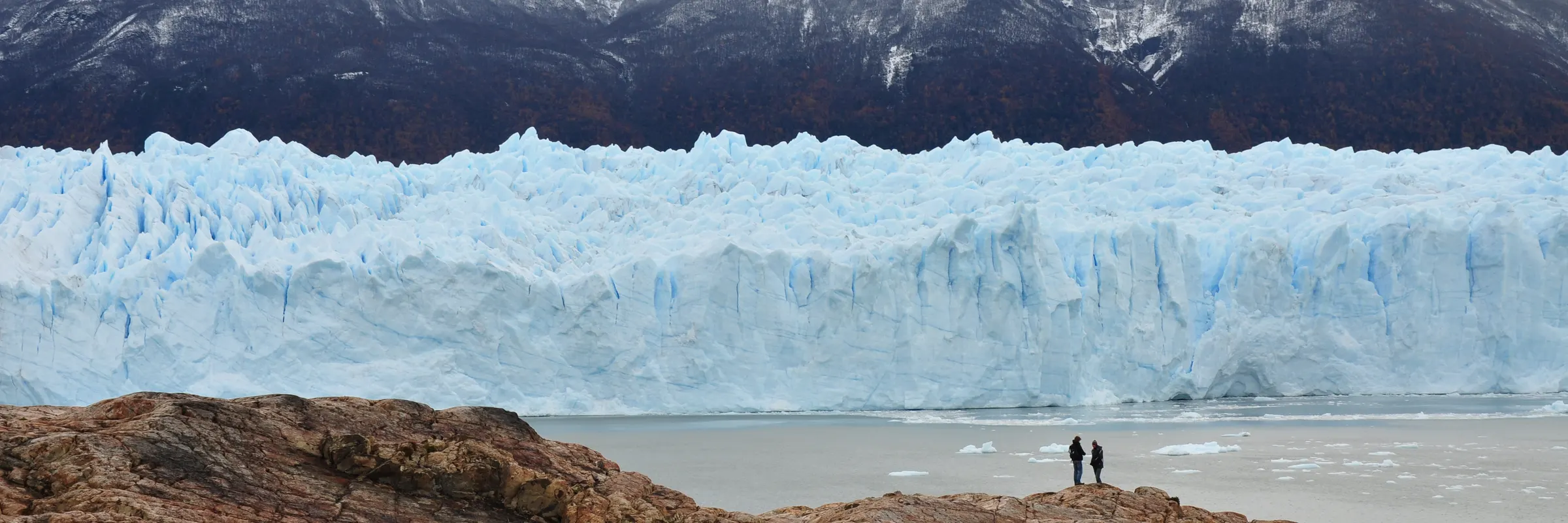
El Calafate: the face of the Perito Moreno glacier
Photo: Jorge Láscar from Australia · CC BY 2.0
Santa Cruz, Argentina

El Calafate: how many days you need and the best months to go

El Calafate exists because of Los Glaciares National Park. It sits on the southern shore of Lago Argentino, has one long main street and about thirty thousand people, and almost nobody comes for the town itself — they come for the Perito Moreno glacier eighty kilometres west, for the boats onto the lake, and increasingly for El Chaltén three hours north. Three days is the honest number: one for the glacier, one for a second excursion, and one for the weather to ruin something.

Short answers

What people ask before booking

How many days do you need in El Calafate?

El Calafate needs two days as a minimum — one at the Perito Moreno glacier and one on Lago Argentino — and three or four is the sensible booking, because Patagonian wind cancels boats with no warning and the spare day is the one you will use.

What is the best month to visit El Calafate?

November and December — Long light, everything open, and it is not yet full. March — The quiet month, with autumn colour.

Which months are worth avoiding in El Calafate?

June, July and August — Winter: short days, closures and a cold walkway. May and September — The two edges of winter.

How many days El Calafate needs

Two days is the minimum that works: a full day at the Perito Moreno glacier and a second for the lake — the boat to the Upsala and Spegazzini glaciers, or the Estancia Cristina day, or the small bird reserve at the edge of town.

Three or four days is the sensible booking, and the reason is the weather. Patagonian wind cancels boats with no notice and no pattern, and a two-day trip with one cancellation loses half of what you came for. The extra day is not for more sights; it is the spare you will probably need.

The glacier, and what makes this one different

Perito Moreno is five kilometres wide and its front wall stands about sixty metres above the water, and what makes it unusual is not the size — Patagonia has bigger — but the access. A system of steel walkways puts you on the hillside directly opposite the face, at several heights, for as long as you want to stand there. Almost no glacier of this scale in the world lets you do that without a guide, a helicopter or a hike.

The other thing that makes it unusual is that it is not retreating like most glaciers — it has stayed roughly in balance for decades, advancing until it touches the opposite shore and dams the arm of the lake behind it. The water rises against the ice, undercuts it, and the dam eventually collapses in a rupture. That event does not happen on a schedule and cannot be booked; it has come round every few years, with long gaps. Turning up hoping for it is not a plan.

  • The walkways — several kilometres of them, on multiple levels. Budget three to four hours; most tours give you far less.
  • The boat to the face — a short crossing that puts you at water level below the wall. It changes the scale completely.
  • Minitrekking — crampons on the ice itself, with guides. Age limits apply and it books out in high season.
  • Lago Argentino boats — the full-day trip to Upsala and Spegazzini, which are bigger than Perito Moreno and only reachable by water.
  • Laguna Nimez — a small reserve on the lakeshore at the edge of town, with flamingos. Free, and the best thing in the town itself.

Calving, and how to actually see it

Blocks the size of buildings break off the front and fall into the lake. The sound arrives after the collapse and it is the part people remember — a crack like artillery, then the wave. It happens several times a day, unpredictably, and there is no viewpoint that guarantees it.

What works is patience, which is why the length of your tour matters more than which tour it is. Stay on the walkways for hours, not minutes, and watch the water at the base rather than the top of the wall — most large falls start there. Afternoon tends to be more active than early morning as the day warms, though this is a tendency and not a rule.

El Chaltén, and whether to add it

Three hours north by road is El Chaltén, a village inside the same national park that exists purely for hiking, under Monte Fitz Roy. It is the trekking capital of Argentina and it is a completely different trip from El Calafate — no glacier walkways, no boats, just trails leaving from the edge of the village with no entrance gate and no fee.

Adding it needs two nights minimum, three to do the two famous day hikes — Laguna de los Tres for Fitz Roy and Laguna Torre for Cerro Torre — with a spare for the wind. Do not attempt it as a day trip from El Calafate: six hours of driving for a walk you will have to cut short. If you only have four days total, stay in El Calafate and do the lake properly.

The wind, and the light

Patagonian wind is the defining fact of the region and it is stronger than visitors expect. It peaks in spring and summer, not winter, which surprises people who assume the warm months are the calm ones. It cancels boats, makes the walkways cold in any month, and on exposed ground it can genuinely knock you off balance.

Dress for it rather than for the temperature: a real windproof layer matters more than a thick one, and gloves and a hat are sensible even in January. The compensation is the light. In December the sky is bright past ten at night, which turns a summer day into something enormously long, and in winter you get around eight hours of daylight and a low sun that makes the ice photograph better than at any other time of year.

Getting there, and the practical bits

El Calafate has its own airport with direct flights from Buenos Aires and Ushuaia, and that is how nearly everyone arrives; the bus from Buenos Aires is around forty hours and makes no sense unless the journey is the point. The national park charges an entrance fee that is separate from any tour price, and foreign visitors pay a higher rate than Argentines.

Two smaller things. Distances here are Patagonian: the glacier is eighty kilometres each way, so a self-drive day is a full day, and fuel stations are far apart on the route to El Chaltén. And Argentine payments are their own subject — cards are accepted in town but cash is still useful, exchange rates have been volatile for years, and it is worth checking how tour operators want to be paid before you book rather than at the counter.

What to eat in El Calafate, and where

This is sheep country, and the food follows: lamb cooked slowly over an open fire is the regional dish and it is genuinely local, not a tourist invention. The berry the town is named after turns up in everything sweet.

  • Cordero patagónico

    What to order

    The one dish to plan a meal around

    A whole lamb splayed on an iron cross and cooked upright beside a wood fire for hours, so the fat renders slowly and the outside crisps. This is the dish of Patagonia and El Calafate does it as well as anywhere, in parrillas that keep the crosses visible behind glass. Order by weight for the table; it is not a single-portion dish.

    Check it on Wikidata
  • Calafate

    What to order

    The berry the town is named after

    A small dark purple berry from a thorny shrub that grows across Patagonia, made into jam, ice cream, liqueur and sauce for the lamb. The local saying is that whoever eats it returns to Patagonia, which is why every shop in town sells it in a jar. Tart rather than sweet on its own.

    Check it on Wikidata
  • Mate cocido

    What to order

    What people are drinking all day

    The same leaf as mate but brewed and drunk from a cup like tea, with milk and sugar if you want them, and without the shared gourd and metal straw. This is the version you can order in a café and drink alone, and it is what gets handed round on cold mornings before an excursion. Bitter, grassy, and stronger than it looks.

    Check it on Wikidata
  • Alfajor

    What to order

    The thing in every kiosk window

    Two soft biscuits with a thick layer of caramelised milk between them, coated in chocolate or rolled in coconut. It is the Argentine snack, sold everywhere from bus stations to bakeries, and the good ones are made locally rather than industrially. One is plenty; take a second for the walkways.

    Check it on Wikidata
  • Glaciar Perito Moreno

    Where to look

    The glacier itself, and how long to stay

    Five kilometres wide, a face about sixty metres above the water, reached by steel walkways on the hillside opposite. It is one of the very few glaciers of this scale you can stand in front of unguided, and it is not retreating the way most are. Give it three to four hours, not one.

    Check it on Wikidata
  • Parque Nacional Los Glaciares

    Where to look

    The park the whole town depends on

    The national park that contains Perito Moreno, the Upsala and Spegazzini glaciers, Lago Argentino and, at its northern end, Monte Fitz Roy above El Chaltén. It is a UNESCO World Heritage site and its ice field is one of the largest outside the poles. The entrance fee is charged separately from any tour.

    Check it on Wikidata

When to go, and what each month costs you

The southern hemisphere inverts everything: December to February is high summer, June to August is winter, and the shoulder months are the best value of the year. The wind is worst in the warm months, which is the opposite of what most people assume.

  • November and December

    Go now

    Long light, everything open, and it is not yet full

    Days that stay bright past ten at night, every excursion running, and the whole park open before the January crowd lands. This is the best combination of daylight and availability in the year. The wind is at its strongest, so pack for it, and book the boats early because operators fill up.

  • March

    Go now

    The quiet month, with autumn colour

    The crowds go home after the first week, prices ease, the wind drops noticeably, and the beech forest around El Chaltén turns red. Everything is still running and there are far fewer people on the walkways. Days are shortening but still generous. If you can only pick one month, pick this one.

  • January and February

    Worth it, but

    Peak season, and it is genuinely peak

    The warmest weather, the longest run of open trails and every service at full capacity — along with Argentine school holidays, the highest prices of the year and boats sold out weeks ahead. Everything works; you just share it. Book accommodation and excursions before you arrive, not on the day.

  • October

    Worth it, but

    Spring opening, cheaper and less certain

    Services come back one by one, the town is quiet and prices are low. Some excursions are not running yet and snow can still close the higher trails around El Chaltén. Fine for the glacier, which works all year, and a gamble on anything else.

  • April

    Worth it, but

    The season closing down

    Autumn colour holds into the first half of the month and the town empties. Boat schedules thin out, some operators shut for the season and daylight is falling fast. Cheap and calm, with a shrinking list of things you can actually do.

  • June, July and August

    Think twice

    Winter: short days, closures and a cold walkway

    Around eight hours of daylight, many operators closed, boats largely suspended and El Chaltén essentially shut. The glacier itself is open all year and the winter light on the ice is the best of the year, but the rest of the trip does not exist. Only for people who want exactly that and nothing else.

  • May and September

    Think twice

    The two edges of winter

    Too late or too early for the full season, with reduced services, cold days and unreliable conditions on the road north. The cheapest weeks of the year and the least to do with them. Skip unless the price is the entire point.

Things that change the trip

  • Give the glacier walkways three to four hours. Calving is unpredictable, and the standard tour slot is too short to see one.
  • Book a spare day. Wind cancels boats with no warning, and a two-day trip with one cancellation loses half the point.
  • Do not do El Chaltén as a day trip. It needs two nights minimum; six hours of driving for a shortened walk is not worth it.
  • Pack a real windproof layer, plus gloves and a hat, even in January. Wind is strongest in summer here, not winter.
  • The park entrance fee is separate from your tour price, and foreign visitors pay more than Argentines. Have it ready at the gate.
  • Ask how tour operators want to be paid before booking. Cards work in town, but cash still matters and rates move.

Plan El Calafate and Patagonia

A trip that combines El Calafate with El Chaltén, Torres del Paine or Ushuaia — with the boat bookings, the driving distances and a spare day for the wind built in — is exactly what Premium is for. The free version covers one destination for up to three days.

Destinations