Skip to content
JoruJoru
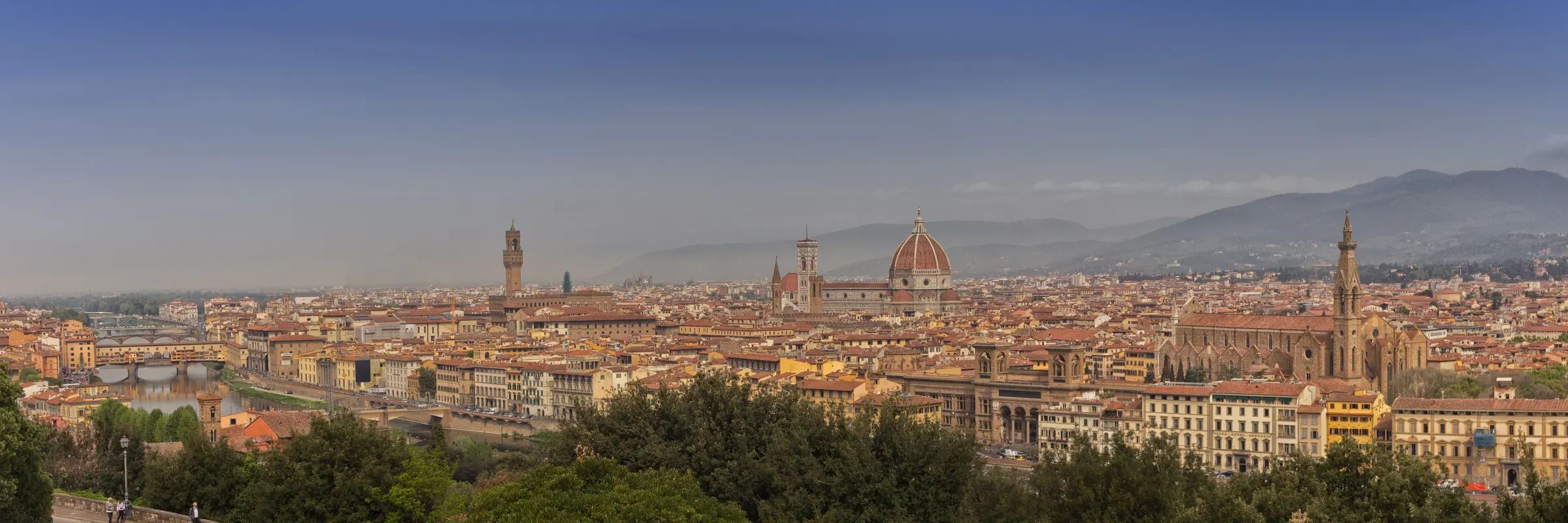
Florence: the city and the Duomo from Piazzale Michelangelo
Photo: Ray in Manila · CC BY 2.0
Tuscany, Italy

Florence: how many days you need and the best months to go

Florence sits in a bowl of hills on the Arno, and its historic centre — a UNESCO World Heritage site since 1982 — is small enough to walk end to end in about half an hour. That compactness is the whole problem and the whole pleasure: everything is close, and so is everyone else. Two days covers the essential city if you have booked. Four lets you see it without queueing for your own trip, and gives one day to Tuscany.

Short answers

What people ask before booking

How many days do you need in Florence?

Florence needs two days if you have booked the Uffizi and the Accademia, three to see it without queueing in your own trip, and a fourth that leaves for Tuscany.

What is the best month to visit Florence?

April and May — Warm, long, and everything open. September and October — The heat gone, the harvest on.

Which months are worth avoiding in Florence?

July and August — Trapped heat, full streets, shut kitchens. December, January and February — Cold, damp and short on daylight.

How many days Florence needs

Two days is the working minimum and it only works if you have reserved. One day for the cathedral complex and the centre, one for the Uffizi and the Accademia, and both of those need a time slot bought in advance rather than a queue on the morning.

Three days is the version that stops feeling like a checklist, because it buys the Oltrarno, the Pitti and Boboli, and an evening when the coach groups have gone. A fourth day leaves the city: Siena, San Gimignano, Lucca and the Chianti hills are all inside an hour or two, and the train to Bologna or Pisa is shorter than that.

Book these two, or do not bother queueing

Two collections here operate on timed entry and are the reason people lose a morning. The Uffizi and the Accademia both take advance reservations, and in high season the walk-up queue can eat several hours — for the Accademia, which is one room and one statue, that is a bad trade.

The cathedral complex works differently: the dome climb is a separate, capped, timed reservation from the cathedral itself, and it sells out first because the staircase can only hold so many people at once. The church floor is free; everything else in the complex is not. Sort all of this before you arrive, because these are the only decisions here that cannot be fixed on the day.

The dome, and why it is the thing to see

Brunelleschi's dome, finished in 1436, is still the largest masonry dome ever built, and it was raised without the wooden centring that every previous dome had needed — nobody had a frame that could span the drum. He built it as two shells with a herringbone brick pattern that let each ring support itself as it closed.

You can climb between those two shells, which is the point: the staircase runs inside the structure and you come out at the lantern with the whole valley below. It is 463 steps, there is no lift, and it is narrow in both directions. If you only do one climb in Florence, do this one and skip the bell tower — though the tower has the better view of the dome itself, which is the honest counter-argument.

The mistake almost everyone makes

The David in the Piazza della Signoria is a copy. It has been since 1873, when the original was moved indoors to protect it; there is a second copy in bronze up at Piazzale Michelangelo. The original is in the Galleria dell'Accademia, and it is worth the ticket for a reason that photographs do not carry: it is over five metres tall, and Michelangelo carved it at twenty-six from a block another sculptor had abandoned.

The rest of the Accademia is small. Go for the David and the unfinished *Prisoners* in the same hall — figures half-emerging from the rock, which teach you more about how he worked than the finished statue does — and then leave. An hour is enough and two is too many, which is exactly why the queue is such a poor use of a morning.

How the crowd actually moves

Florence takes an enormous number of day visitors: coach groups from Rome, cruise passengers bussed in from the port at Livorno, and school parties. They arrive mid-morning and they leave in the late afternoon, and they concentrate on a very short list of streets between the cathedral, the Signoria and the Ponte Vecchio.

That gives you two levers and they are both free. The first is time: before nine and after six the same streets are a different city. The second is distance: the Oltrarno, the south bank, is five minutes from the Ponte Vecchio and carries a fraction of the traffic, because most of the list is on the north side.

  • Start at eight. The centre before the coaches is genuinely quiet, and the light on the river is better anyway.
  • Cross the river. Santo Spirito, San Frediano and the artisan workshops of the Oltrarno are the city that still works for a living.
  • Eat away from the piazzas. A menu in four languages with photographs, on a square with a monument, is the definition of the trap here.
  • Use the evening. Museums close but the city does not, and the day groups are on their buses by then.

The bridge, and the reason it smells of nothing

The Ponte Vecchio has had shops on it since the thirteenth century, and until 1593 they were butchers and tanners, who threw what they did not use into the river. Ferdinando I evicted them by decree and replaced them with goldsmiths, partly for the smell and partly because the Medici corridor ran overhead and he had to walk it.

That corridor is the Vasari Corridor, built in 1565 so the family could cross from the Palazzo Vecchio to the Pitti Palace without touching the street. It is why the bridge has a row of small windows on one side and why the buildings on it look bolted together. It is also the only bridge in Florence the retreating Germans did not blow up in 1944; every other one you cross is a reconstruction.

Stendhal, the wine windows and the small strange things

In 1817 Stendhal came out of Santa Croce and wrote that the concentration of art had left him with palpitations and a fear of falling. A Florentine psychiatrist named the reaction after him in 1979, after seeing enough visitors admitted to the city hospital with the same complaint that it was worth writing up. Whether or not it is a syndrome, the underlying advice is sound: this city is best in short, unhurried doses.

At street level, look for the *buchette del vino* — small arched hatches in the stone walls of palaces, cut in the sixteenth century so noble families could sell wine from their estates directly without a shopfront. There are well over a hundred of them, they were bricked up for generations, and a number have been reopened and are used again. They are the most Florentine thing you can find without a ticket.

What to eat in Florence, and where

Tuscan cooking is peasant food with expensive ingredients: bread, beans, oil and one very large piece of beef. It is deliberately plain and the bread has no salt in it, which surprises people and is not a mistake.

  • Bistecca alla fiorentina

    What to order

    The steak, and how it is ordered

    A thick T-bone from Chianina cattle, grilled over wood, sold by weight and served rare. It is not cooked to order and asking for it well done is refused in the places that care — that is the dish, not an attitude. One is shared between two or three people, and it is the single most expensive thing on most menus here.

    Check it on Wikidata
  • Lampredotto

    What to order

    The sandwich the city actually eats

    The fourth stomach of the cow, simmered for hours with tomato and herbs, chopped and served in a bread roll dipped in the broth, from a cart. It is what Florence has eaten standing up at midday for centuries, it costs a few euros, and the carts are in the markets and on street corners. It is not for everyone and the guide is not going to pretend otherwise.

    Check it on Wikidata
  • Ribollita

    What to order

    What to order when it is cold

    Yesterday's bread, cavolo nero, beans and oil, cooked down and then reboiled — which is what the name means. It exists because Tuscan bread is unsalted and goes stale fast, and the whole regional kitchen is built on not wasting it. Thick enough to stand a spoon in, and better on the second day.

    Check it on Wikidata
  • Mercato Centrale

    Market

    The market, and its two floors

    A cast-iron market hall from 1874, a block from San Lorenzo. The ground floor is the real one — butchers, cheese, tripe stalls and produce, used by people cooking dinner. The upper floor was converted into a food hall and stays open late; it is convenient rather than special. Go downstairs first.

    Check it on Wikidata
  • Gelato

    What to order

    The gelato, and how to spot the bad kind

    Real gelato is churned in small batches and kept in covered metal tins, not piled into fluorescent mountains behind glass. Bright green pistachio and towering mounds are the two reliable warnings: colour that intense and shape that stable both come from stabilisers. Look for muted colours, a short list of flavours and a queue of locals.

    Check it on Wikidata
  • Chianti

    Where to look

    The wine, and the label to look for

    The hills between Florence and Siena, and the reason for the day trip. The black rooster on the neck of the bottle marks Chianti Classico, the historic zone, which is a narrower and stricter thing than plain Chianti — the two names are not interchangeable and the difference is on the label. Worth learning before you buy a case.

    Check it on Wikidata
  • Oltrarno

    Where to look

    The side of the river that still works

    The south bank: workshops for gilding, leather, restoration and framing, alongside Santo Spirito and San Frediano. It is five minutes from the Ponte Vecchio and carries a fraction of the crowd, and it is where to eat and where to spend an evening. The best decision in Florence is to sleep on this side.

    Check it on Wikidata

When to go, and what each month costs you

Florence sits in a river basin ringed by hills, which traps heat in summer and damp in winter. The good months are narrow — spring and early autumn — and the two extremes are genuinely unpleasant rather than merely inconvenient.

  • April and May

    Go now

    Warm, long, and everything open

    The best stretch of the year: mild days, gardens and hills green, and the light that the whole place was built for. Easter moves between late March and late April and it is the single busiest weekend in the city — check where it falls before booking. Prices are high and the museums fill, so reserve.

  • September and October

    Go now

    The heat gone, the harvest on

    September keeps summer warmth without the July weight, and October brings the vendemmia in the hills and the first cool evenings. Fewer school groups, softer light, and the Tuscan day trips at their best. The most comfortable window if you can only pick one.

  • March

    Worth it, but

    Cheap, quiet, and unreliable

    Cold mornings, changeable weather and lower prices, with the museums noticeably emptier. The city works perfectly in the rain because most of what you came for is indoors. Gardens and hill towns are still bare.

  • June

    Worth it, but

    Long evenings, and the heat arriving

    Light until late and the outdoor life starting, but the valley heat builds through the month and the crowd arrives with it. Good if you plan mornings and evenings and treat the afternoon as indoor time.

  • November

    Worth it, but

    Wet, dark and almost empty

    The rainiest month and the quietest, with prices at their lowest and the Uffizi walkable without a reservation on many days. If your trip is mostly museums, this is an underrated month. If it is Tuscany, it is not.

  • July and August

    Think twice

    Trapped heat, full streets, shut kitchens

    The valley holds the heat, the stone radiates it back after dark and the centre is at its most crowded. Many family-run restaurants close for two or three weeks in August. This is the one window where the city is genuinely worse than its reputation, and it is also the most expensive.

  • December, January and February

    Think twice

    Cold, damp and short on daylight

    Grey, chilly and often foggy in the basin, with early dark and the hill towns half-shut. Christmas and New Year are a brief expensive peak inside an otherwise cheap stretch. The art is all still there; the city around it is not doing much.

Things that change the trip

  • Reserve the Uffizi, the Accademia and the dome climb before you fly. They are the only three things here that cannot be fixed on the day.
  • The David in the square is a copy. The original is indoors at the Accademia and has been since 1873.
  • Sleep in the Oltrarno. It is five minutes across the river from everything and carries a fraction of the crowd.
  • Be out by eight or after six. The centre between those hours belongs to the day groups, and it genuinely is a different city outside them.
  • Check where Easter falls. It moves between late March and late April, and it is the busiest weekend of the Florentine year.
  • Skip any restaurant with a photographic menu on a monumental square. That rule alone raises the average meal here more than any list of names.

Plan Florence and Tuscany around it

A trip beyond four days, or one that adds Siena, Lucca, the Chianti hills or a run down to Rome with the trains and reservations arranged around them, is exactly what Premium is for. The free version covers one destination of up to three days.

Destinations