Skip to content
JoruJoru
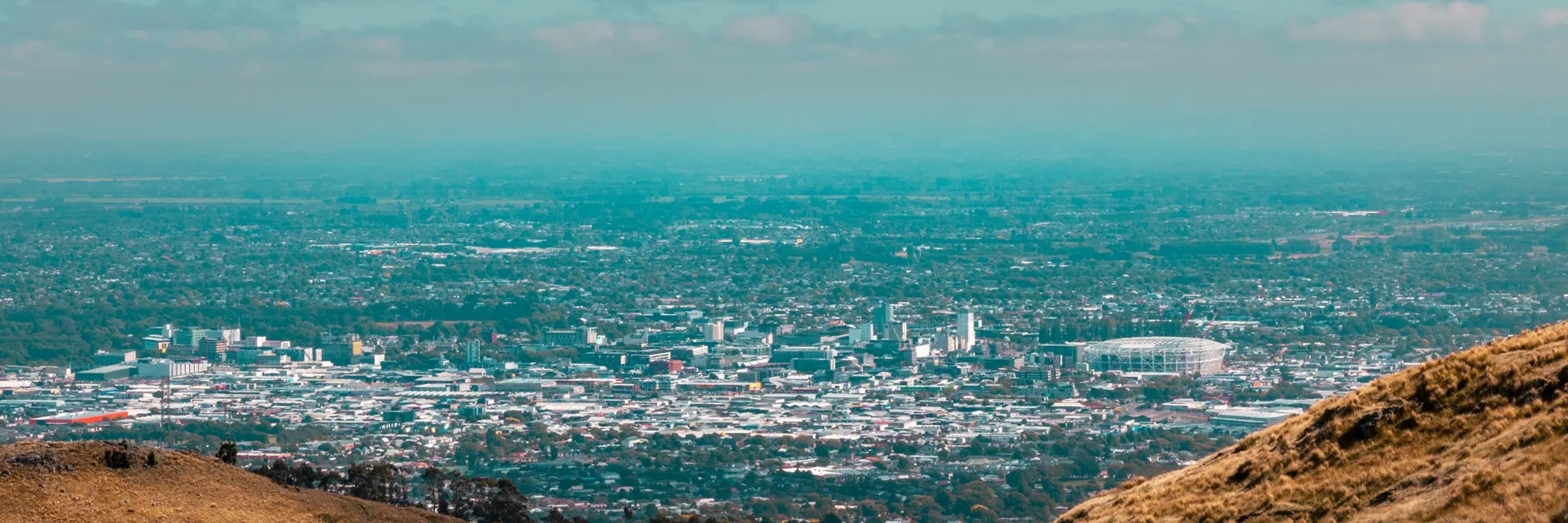
Christchurch: the city and the plains from the Port Hills
Photo: Christchurch City Council · CC BY 4.0
Canterbury, New Zealand

Christchurch: how many days you need and the best months to go

Christchurch is the largest city on New Zealand's South Island, laid out on a plain between the Southern Alps and the Pacific, with a river running through a park in the middle of it. It is also a city that had its centre destroyed by earthquakes in 2010 and 2011 and has spent the years since rebuilding, which makes it unlike any other city in the country to walk around. Two days is enough for the city. Most people are here because of what is within three hours of it.

Short answers

What people ask before booking

How many days do you need in Christchurch?

Christchurch needs two days for the rebuilt centre, the memorials and the park, and a third that leaves the city — Kaikōura, Akaroa and Arthur's Pass are all inside three hours.

What is the best month to visit Christchurch?

December, January and February — Southern summer: long evenings and everything open. March — Summer weather, and the crowd gone home.

Which months are worth avoiding in Christchurch?

May and September — Cold, short days, and nothing in season. June, July and August — Winter: frost, fog and a very quiet city.

How many days Christchurch needs

Two days is the honest figure: one for the centre, the memorials, the museum and the park, and one for the Port Hills, the coast or a gallery afternoon.

The third day should leave the city. Almost everyone here is on their way somewhere — Kaikōura, Arthur's Pass, Akaroa, Tekapo — and Christchurch is a good base rather than a long destination. If your trip has a South Island road journey in it, this is where it starts.

The earthquakes, and the city that was rebuilt

In September 2010 a large earthquake hit near the city and did serious damage. In February 2011 a shallower and much more violent one struck directly beneath it, killed 185 people and destroyed most of the central business district. Well over a thousand buildings in the centre were subsequently demolished, and what you walk through today is a centre that has been rebuilt almost entirely from scratch.

That history is not hidden and should not be skipped. There is a memorial along the river, a museum devoted to the quakes, and an installation of 185 white chairs, one for each person who died. The cathedral in the square was wrecked and its reinstatement has been a long and public argument; a temporary cathedral built of cardboard tubes and timber by the Japanese architect Shigeru Ban has been standing since 2013 and is worth the ten-minute walk.

A flat city with a park in the middle

Christchurch is exceptionally flat, and it is built around Hagley Park — a very large public park immediately west of the centre, with the botanic gardens inside a loop of the river. The park is bigger than the central city it sits beside, which is unusual and is the whole character of the place.

The practical consequence is that this is one of the easiest cities in the country to cycle, and the separated cycleways built during the rebuild are genuinely good. A heritage tram runs a loop through the centre, punts are poled along the river through the gardens, and New Regent Street — a short 1930s row painted in pastel Spanish Mission style — survived and is the prettiest street here.

The door to the South Island

The reason to base yourself here is the range of what is reachable in a morning's drive. Mountains, whales, a French village and one of the darkest night skies in the world are all inside a half-day radius, and they are entirely different from one another.

One of them does not need a car. The train west through Arthur's Pass to the coast is a full day out of the city and back, and it crosses the Southern Alps through country you cannot reach by road.

  • The TranzAlpine train — west across the plains and over the Alps to the west coast. A full day return, and one of the great rail journeys.
  • Kaikōura — under three hours north, where a deep ocean canyon comes close to shore and sperm whales are present all year rather than seasonally.
  • Akaroa — ninety minutes over the hills to a harbour village founded by French settlers in 1840, with the street names to prove it.
  • Arthur's Pass — two hours west, an alpine national park with short walks from the road and keas in the car park.
  • Tekapo and Aoraki — three to four hours inland, inside an international dark sky reserve, with the country's highest mountain behind it.

Banks Peninsula: two volcanoes and a French village

The hills southeast of the city are not hills. Banks Peninsula is the eroded remains of two extinct volcanoes, and the two large harbours cutting into it — Lyttelton and Akaroa — are drowned craters. The road over the Port Hills from the city gives you the whole shape of it in one view.

Akaroa, at the head of the southern harbour, was settled by a French company in 1840 and kept the street names and the story; it is small, pretty and busy in summer. The harbour is also home to Hector's dolphin, the smallest marine dolphin in the world and found nowhere outside New Zealand, which is the honest reason to take a boat rather than a photograph of one.

The nor'wester, and the road to Antarctica

Canterbury has its own wind and it has a name. The nor'wester comes over the Southern Alps, drops its rain on the west coast and arrives here hot, dry and hard, sometimes for days. Locals blame it for headaches and bad temper, the arch of cloud it makes over the mountains is visible from the city, and it is the single most Canterbury weather event there is.

The other thing this city quietly does is Antarctica. Christchurch has been a departure point for Antarctic expeditions since Scott and Shackleton, and since the 1950s the airport has been the base for flights south — the New Zealand, United States and Italian Antarctic programmes all run through here, which is why there is an Antarctic visitor centre by the airport and a penguin in the city's museum.

What to eat in Christchurch, and where

Canterbury food is built on cold water and cold-climate farmland: shellfish, whitebait, lamb and riesling. The best things here are seasonal and local rather than famous, and two of them come from within two hours of the city.

  • Southern rock lobster

    What to order

    The crayfish, and the town named after it

    A rock lobster from the cold water off the east coast, sold cooked and split, most famously at Kaikōura up the coast. The name Kaikōura means, roughly, a meal of crayfish — the town is named for the thing you are ordering. It is expensive everywhere and cheapest from a roadside caravan.

    Check it on Wikidata
  • Whitebait

    What to order

    The fritter that has a season and a price to match

    In New Zealand, whitebait means the juveniles of a handful of native freshwater fish, caught with nets in river mouths during a short regulated season. They are bound in a thin egg batter and fried, and nothing is added because nothing needs to be. It is one of the most expensive things on any menu here and it is genuinely local.

    Check it on Wikidata
  • Green-lipped mussel

    What to order

    The mussel that only grows here

    A large mussel with a green shell edge, native to New Zealand and farmed nowhere else in significant quantity. It is bigger and meatier than a European mussel and is usually served steamed or grilled on the half shell. Cheap, everywhere, and better than it sounds.

    Check it on Wikidata
  • Waipara

    Where to look

    The wine region an hour north

    A small Canterbury wine district on the plains north of the city, best known for riesling and pinot noir grown on limestone soils. It is close enough to be a half-day rather than a trip and quiet compared with the famous regions further north. A good rainy afternoon.

    Check it on Wikidata
  • Banks Peninsula

    Where to look

    The volcanic peninsula, and the harbour village on it

    The eroded remains of two volcanoes southeast of the city, cut by two drowned craters that are now harbours. The village of Akaroa at the head of the southern one was French before it was British and is where people go to eat by the water. Ninety minutes from the centre, and the best day trip that ends in a meal.

    Check it on Wikidata
  • Hokey pokey

    What to order

    The ice cream everyone orders

    Vanilla ice cream with lumps of honeycomb toffee through it, invented in New Zealand and sold in every dairy and petrol station in the country. It is the national flavour in the way that mint chip is not, and it is on the counter of every ice cream shop here. Order it once and you will understand the sample size.

    Check it on Wikidata

When to go, and what each month costs you

Christchurch is drier than most of New Zealand and colder in winter than visitors expect. The good season is genuinely short — roughly December to March — and the shoulders are a gamble rather than a compromise. The mountain trips behind the city narrow the window further.

  • December, January and February

    Go now

    Southern summer: long evenings and everything open

    Warm, dry and light until late, with the park full, the alpine roads open and every day trip running. This is peak season across the whole South Island, so book accommodation and any rental car well ahead — the island runs out of cars before it runs out of rooms.

  • March

    Go now

    Summer weather, and the crowd gone home

    Still warm, noticeably quieter after the first week, and the light turning gold on the plains. The alpine passes are open, the sea is at its warmest of the year and prices ease. The best single month here if you can choose.

  • November

    Worth it, but

    Late spring: green, cheaper, and unreliable

    Long days and gardens at their best, with prices below summer and no crowds. The weather is changeable and the wind can be relentless. Higher alpine walks may still be under snow.

  • April

    Worth it, but

    Autumn colour, and the season closing

    Clear, still mornings and real autumn colour in the park, with cold nights arriving. Some seasonal operators and mountain roads begin to wind down towards the end of the month. Good value and a genuine risk of a wet week.

  • October

    Worth it, but

    Spring, with the wind at its most persistent

    Everything is opening and the city is green, but this is when the nor'wester blows hardest and the plains are at their dustiest. Cheap, quiet, and a coin toss for any outdoor plan.

  • May and September

    Think twice

    Cold, short days, and nothing in season

    Too cold for the coast and the gardens, too early or too late for reliable snow in the mountains, and the day trips run on reduced schedules. Prices are low. There is nothing these months do better than any other, which is the whole argument against them.

  • June, July and August

    Think twice

    Winter: frost, fog and a very quiet city

    Frosty mornings, cold grey days and an early dark, with the city noticeably shut down. The exception is skiing: the Canterbury fields and the passes are the reason some people come in winter, and if that is the trip, this is the season. For the city itself, it is not.

Things that change the trip

  • Give the third day to a drive. Kaikōura, Akaroa and Arthur's Pass are all inside three hours and all better than a third day in the centre.
  • Book a rental car early for summer. The South Island runs out of vehicles in January before it runs out of beds.
  • Go to the earthquake memorial and the museum. They are short, they are the reason the city looks like this, and skipping them misses the place entirely.
  • Cycle. The city is flat, the separated cycleways built during the rebuild are excellent and hiring a bike costs less than parking.
  • Take the train over Arthur's Pass if you have a spare day. It crosses country the road cannot reach and it comes back the same evening.
  • Expect the nor'wester. It is hot, dry and loud, it lasts for days, and it is not a sign that something has gone wrong.

Plan Christchurch and the South Island

A South Island route that starts here and takes in Kaikōura, the passes, Tekapo and Aoraki, with the drives and the seasons arranged properly, is exactly what Premium is for. The free version covers one destination of up to three days.

Destinations