

Skip to content
JoruJoru
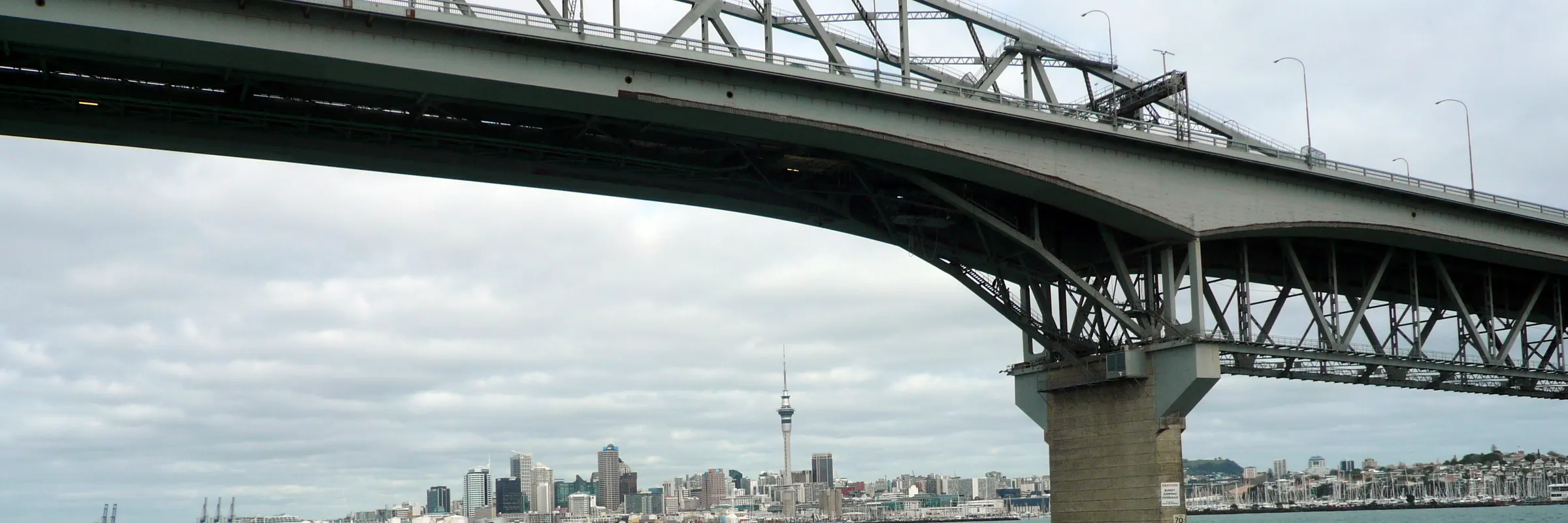
Auckland: the harbour bridge with the Sky Tower behind

New Zealand

Auckland: how many days you need and when to go

Photo: Николай Максимович · CC BY 3.0

Auckland is where almost every New Zealand trip begins, and it is usually given a night and dismissed. The city itself is spread out and unhurried, but the gulf on its doorstep — islands, volcanoes, vineyards, all a short ferry away — is what makes two or three days here worthwhile rather than one.

Short answers

What people ask before booking

How many days do you need in Auckland?

Auckland needs two days as the right minimum — one for the city and its volcanic cones, one for an island in the gulf — and a third for the west coast beaches or the wine region.

What is the best month to visit Auckland?

February and March — The most settled weather of the year. November and December — Late spring, warming and long.

Work out how many hours you will have in Auckland on your dates
When to go, and remember the hemisphere

Subtropical and maritime: mild all year, wetter in winter, and never extreme. The seasons are inverted relative to the northern hemisphere.

  1. January
  2. February: Go now
  3. March: Go now
  4. April: Worth it, but
  5. May: Worth it, but
  6. June: Worth it, but
  7. July: Worth it, but
  8. August: Worth it, but
  9. September
  10. October
  11. November: Go now
  12. December: Go now
  • February and March

    Go now

    The most settled weather of the year

    Late summer: warm, the sea at its warmest, and more reliable than December or January. The domestic holiday rush is over, so it is quieter and cheaper than the peak.

  • November and December

    Go now

    Late spring, warming and long

    Long evenings, comfortable temperatures and the gulf coming into season. Book before the second half of December, when domestic holidays begin.

  • April and May

    Worth it, but

    Autumn: mild, quiet, increasingly wet

    Still pleasant and much cheaper, with more rain arriving. Fine for a city-and-islands trip if you can move a day around.

  • June to August

    Worth it, but

    Winter: wet and windy rather than cold

    Mild by northern standards but persistently wet, and the ferries are less appealing in rough weather. Cheapest time of year, and the city works fine — the gulf less so.

What to pack for Auckland, month by month

How many days Auckland needs

Two days is the right minimum: one for the city and its volcanic cones, one for an island in the gulf. A third opens the west coast beaches or the wine region north of the city.

The city is spread across an isthmus between two harbours, and it is not a walking city in the way Wellington or Melbourne are. Distances are real and a car or the ferries do most of the work.

What is within reach

The gulf is the reason to stay. Everything below is under an hour from the centre.

  • The central city and the waterfront — where the ferries leave from, and a half-day.
  • The volcanic cones — dozens of them across the city, and the best free views anywhere in it.
  • Waiheke — forty minutes by ferry, vineyards and beaches, and the standard day out.
  • Rangitoto and the west coast — a young volcano in the harbour, and black-sand surf beaches on the other side.

Where to stay in a city spread over volcanoes

Auckland is built on some fifty volcanic cones and spread between two harbours, which makes it far more extensive than its population suggests. The centre is compact and walks well, but the real city stretches for kilometres in every direction.

For a two or three day trip, the centre or its immediate neighbourhoods make sense: they are beside the ferry terminal, which is the gateway to the gulf islands, and the buses heading west.

AreaWho it suitsThe catch
Centre (CBD and Viaduct)The best base: beside the ferries, with restaurants on the waterfront.An office and tower district; little charm and some night noise.
PonsonbyThe district with the most atmosphere: wooden villas, good restaurants and cafés.It sits high; you walk down to the centre, and back up on the way home.
ParnellQuiet and smart, beside the museum and the domain.More residential, with less nightlife.
DevonportAcross the harbour, with a ferry and the best views of the city.You depend on the ferry timetable, which is not continuous at night.

Compare these areas against your priorities

Airport to city, and why a car changes the trip

The airport is to the south and has no train: you leave by SkyDrop bus or taxi, and in traffic the journey stretches considerably. It is one of the less impressive connections on this list.

What you actually need to decide, though, is not how to reach the hotel: it is whether to rent a car. Auckland is New Zealand's gateway and almost nobody comes for the city alone. The west coast beaches, the Coromandel peninsula and the caves to the south all need a car, and without one the trip shrinks a great deal.

  • The AT HOP card covers city buses, trains and ferries and works out considerably cheaper than single tickets.
  • Harbour ferries are transport and sightseeing at once: Devonport takes twelve minutes and gives the view of the city from the water.
  • You drive on the left and roads outside the city are narrow and winding. Travel times in New Zealand are always longer than distance suggests.
  • The sun burns enormously. The ozone hole over the southern hemisphere makes the UV index here among the world's highest, even under cloud.

Islands, black sand and day trips

Auckland's appeal is what surrounds it, and there is a geographic difference that surprises people: the west coast beaches have black volcanic sand and heavy surf, and the east coast ones have pale sand and calm water. They are under an hour apart and bear no resemblance to each other.

  • Waiheke — forty minutes by ferry, with vineyards, beaches and restaurants. The easiest trip and the one most people make.
  • Rangitoto — the volcanic cone visible from all over the city, twenty-five minutes by ferry. You climb it in a good hour over lava, with no shade and no water at the top.
  • Piha and Karekare — black sand beaches to the west, inside subtropical rainforest. The currents are genuinely dangerous: you swim between the flags with a lifeguard, or not at all.
  • Coromandel — two hours east, with Cathedral Cove and a beach where you dig a hole in the sand and thermal water comes up. A long day, with a car.
  • Waitomo — the glow-worm caves, two and a half hours south. A full day, usually combined with Hobbiton.
  • Muriwai — a gannet colony on a clifftop an hour west, where thousands nest within a few metres of the path. It is free, it is spectacular, and the birds are only there from roughly spring to early autumn.

Eating in Auckland, and what belongs to this place

Auckland has the largest Polynesian population of any city in the world, and that is the key to its food: here you eat Maori and Pacific Island cooking found nowhere else, alongside a very strong Asian scene from recent decades of migration.

Local produce is excellent and cheap for what it is: lamb, seafood, and a first-rate wine industry at the city's doorstep, on Waiheke and in Kumeu.

  • Hāngī is the Maori method of cooking underground with hot stones. It is offered at cultural experiences rather than in restaurants.
  • The night markets in the southern and western suburbs have the city's best Asian and Polynesian food, for very little.
  • Green-lipped mussels and crayfish are the local seafood; fish and chips is a beach institution.
  • The coffee is excellent, with the same vocabulary as Australia. The flat white is disputed between the two countries.
  • No tipping. Prices are final and include tax, unlike in the United States.

Where to eat in Auckland, dish by dish

Auckland has the largest Polynesian population of any city in the world, and that plus East Asian migration is what the food actually is. The seafood is excellent and the Pacific Island food is something you will not find at home. Practical notes: no tipping, the coffee standard is very high, and the good eating is spread across suburbs rather than concentrated downtown.

  • Ponsonby

    Where to look

    One neighbourhood that covers dinner

    A ridge road west of the centre lined with restaurants, bars and small food halls, and the easiest single decision for an evening. It works because you can walk it and choose late rather than booking in advance. Vietnamese, Italian, Japanese and modern New Zealand cooking within a few hundred metres.

    Check it on Wikidata
  • Flat white

    What to order

    The coffee, which New Zealand also claims to have invented

    Espresso with steamed milk and minimal foam. Both New Zealand and Australia claim it and the argument is unsettled, which is a very Antipodean state of affairs. The standard here is consistently high; a café attached to a roastery is the reliable signal, and they open early.

    Check it on Wikidata
  • Fish and chips

    What to order

    The thing to eat at the beach, done the local way

    Battered fish and chips, wrapped in paper, eaten outdoors. Ask for it with a scoop of chips and eat it at Mission Bay or on the west coast beaches. The local fish to ask for is snapper or hoki; a shop that names the fish on the board rather than saying just fish is the better one.

    Check it on Wikidata
  • Pavlova

    What to order

    The national dessert, and the argument attached

    Meringue, cream and fruit. New Zealand and Australia have disputed its origin for about a century, and the honest position is that the evidence points both ways depending on which archive you read. It is everywhere here in summer, and it is genuinely good when the shell is crisp and the middle is soft.

    Check it on Wikidata

What a trip to Auckland costs, and how to pay there

Things that change the trip

  1. Give it two days and take a ferry. The single most common mistake here is treating Auckland as an airport with a hotel attached.
  2. The volcanic cones are free, spread across the city, and give better views than any paid viewpoint.
  3. Waiheke ferries fill up on summer weekends. Book ahead rather than turning up.
  4. The west coast beaches have strong currents and are genuinely dangerous outside patrolled areas. Swim between the flags.
  5. Domestic holidays run from just before Christmas into late January and change prices and availability across the whole country.

Plan Auckland and the gulf

Two or three days in Auckland is inside the free version. A longer New Zealand route, with the transport between stops, is Premium.

Destinations