
Skip to content
JoruJoru
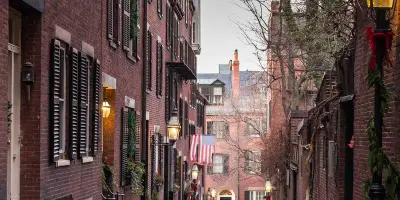
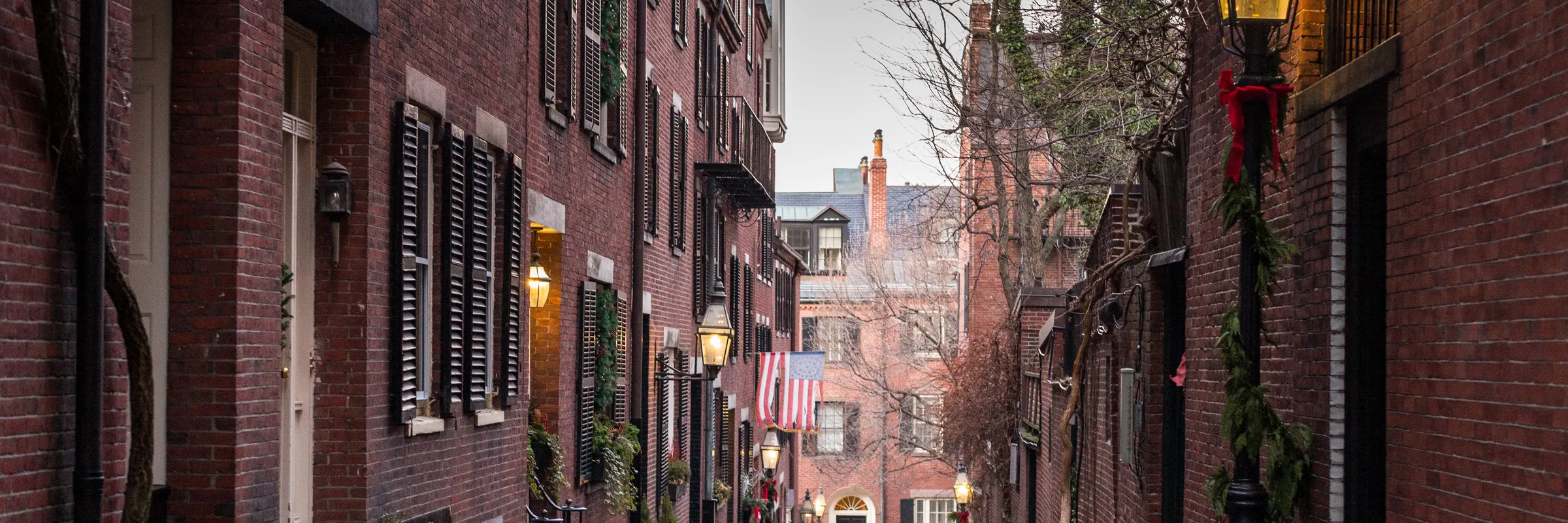
Boston: Acorn Street on Beacon Hill
Photo: R Boed · CC BY 2.0
Massachusetts, United States

Boston: how many days you need and the best months to go

Boston is a city of under seven hundred thousand people in a metropolitan area of millions, and its centre is small enough to walk end to end in an afternoon. The street plan predates the grid entirely — it grew from cow paths and shoreline, and it is the reason driving here is famously awful and walking is unusually good. Three days covers the city and Cambridge across the river. A fourth belongs to the coast or to Concord, and in October to the trees.

Short answers

What people ask before booking

How many days do you need in Boston?

Boston needs three days: the Freedom Trail and the colonial city, the museums and Back Bay, and one for Cambridge. A fourth leaves for the coast, or in October for the trees.

What is the best month to visit Boston?

September and October — Autumn: the colour, the light, and the best weather of the year. May and June — Spring, green and long-lit.

Which months are worth avoiding in Boston?

December and January — Cold, dark, and the first serious snow. February and March — The worst of the winter, with nothing to offset it.

How many days Boston needs

Three days is right. One for the Freedom Trail and the colonial city, one for the museums and the Back Bay, and one for Cambridge — Harvard and MIT are two subway stops apart and are a different city with a different mood.

A fourth day leaves. Concord and Lexington are forty minutes west and are where the revolution actually started; Salem is half an hour north; and Cape Cod, the North Shore and the Berkshires are all reachable. In October that fourth day should be spent looking at trees, which sounds absurd until you have seen it.

The Freedom Trail, and what it actually is

A line of red brick set into the pavement runs four kilometres through the city and connects sixteen sites from the colonial and revolutionary periods. It is free, it is self-guided, and following a stripe on the ground is a far better way to see a city than it has any right to be.

It takes about three hours at a walking pace, or a full day if you stop at everything. The sites are uneven: some are extraordinary — the Old State House, the burying grounds, the USS Constitution — and some are a plaque. The route is the point rather than the checklist, because it takes you through the whole of the old city in the correct order, ending across the river in Charlestown.

  • Old State House — the oldest surviving public building in Boston, with the Massacre site marked in the street outside.
  • Granary Burying Ground — Revere, Hancock, Samuel Adams and the victims of the Massacre, in a small yard among the office blocks.
  • North End — the Italian quarter, the oldest continuously inhabited neighbourhood in the city, and where to eat on the trail.
  • USS Constitution — launched in 1797 and still a commissioned warship, the oldest afloat anywhere. Free to board.
  • Bunker Hill — the monument at the end, with 294 steps and no lift. The view justifies them.

The two great museums, and which to pick

The Museum of Fine Arts is one of the largest in the country and its Egyptian, Japanese and American collections are all first rank. It is a half day minimum and it rewards a plan rather than a wander.

The Isabella Stewart Gardner Museum is smaller, stranger and to many people better: a Venetian-style palace built around a courtyard, filled by one collector and left by her will exactly as she arranged it, which means nothing may be moved or relabelled. In 1990 thirteen works were stolen in the largest art theft in history, and the empty frames still hang where the paintings were, because the will does not allow them to be taken down. They are the most memorable thing in the building.

Cambridge, and why it is a separate day

Across the Charles River, reachable in ten minutes on the red line, Cambridge holds Harvard and MIT and feels like a different city. Harvard was founded in 1636, which makes it older than almost everything else in the country, and its yard is open to walk through. The university museums are excellent and underused — the glass flowers at the natural history museum are a genuine curiosity, a nineteenth-century commission of botanical models made entirely in glass.

MIT, a mile and a half downriver, is architecturally the more interesting campus, with buildings by Aalto, Saarinen and Gehry standing next to each other. Harvard Square and Central Square are where the bookshops and the music are.

Autumn, and the thing New England is actually famous for

New England's autumn colour is not a local exaggeration; it is one of the best displays of it on earth, produced by a particular mix of maple, birch and oak that turns red rather than merely yellow. In Boston itself the peak is usually somewhere in the second half of October, and it moves by a week or two each year with the weather.

It moves geographically as well: colour arrives in northern Vermont and New Hampshire two to three weeks before it reaches the coast. If you are chasing it, drive inland and north. Foliage forecasts are published each year and are approximately reliable. If you are here in October at all, take a day and get out of the city.

The two things that catch visitors out

The first weekend of September is when Boston's students move in. The city has an enormous student population and a large share of leases turn over on the same day — traditionally 1 September — producing a citywide traffic jam of hire vans, streets full of abandoned furniture and hotel prices to match. It is a genuinely bad week to arrive.

The second is winter. Boston gets serious snow, and a nor'easter can drop enough of it to shut the airport and the transit system for a day or two. It is not a mild coastal winter — the wind comes off the Atlantic and the city is cold from December into March. February is the month with the least to recommend it.

What to eat in Boston, and where

Boston eats cold-water seafood and Italian-American food, and the two rarely meet. The lobster and the chowder are the real thing here rather than a tourist invention, and the North End is the other half of the answer.

  • Clam chowder

    What to order

    The soup, and the argument about it

    Clams, potato, onion and cream, thick enough to hold a spoon upright, served with oyster crackers. New England chowder is white and creamy; the Manhattan version is red and tomato-based, and it is genuinely disliked here — a state legislator once proposed a bill to outlaw it. Order it as a cup with something else, not a bowl alone.

    Check it on Wikidata
  • Lobster roll

    What to order

    The lobster, and how it should come

    Lobster meat in a split-top bun, served either cold with mayonnaise or warm with melted butter. Both are correct and people have strong views; the warm buttered version is the older New England style. It is expensive everywhere and it is best from a shack on the coast rather than a restaurant in the centre.

    Check it on Wikidata
  • Union Oyster House

    Institution

    The oldest restaurant in the country

    An oyster house that opened in 1826 and has served continuously ever since, in a building older than that, with the semicircular oyster bar still in use. It is a National Historic Landmark and the oldest continuously operating restaurant in the United States. Sit at the bar rather than in the dining room.

    Check it on Wikidata
  • Boston baked beans

    What to order

    The dish that gave the city its nickname

    Navy beans slow-baked for hours with salt pork and molasses, sweet and dark. The molasses came from the colonial rum trade and the dish gave Boston the name Beantown — a nickname visitors use far more than residents do. Hard to find on a menu now, and worth ordering when you see it.

    Check it on Wikidata
  • Quincy Market

    Market

    The market building, and what it is now

    A granite market hall of 1826 beside Faneuil Hall, which fed the city for a century and a half and was converted in the 1970s into one of the first festival marketplaces. It is a food court in a landmark building rather than a working market, and knowing that in advance is the difference between a nice hour and a disappointment.

    Check it on Wikidata
  • North End

    Where to look

    The neighbourhood to eat in

    The oldest continuously inhabited neighbourhood in Boston and its Italian quarter since the late nineteenth century — narrow streets, no chain restaurants to speak of, and two rival pastry shops on the same block that people genuinely argue about. Eat dinner here and buy a cannoli afterwards.

    Check it on Wikidata

When to go, and what each month costs you

Boston has four sharp seasons and a properly cold winter. Autumn is the best time to be here by a wide margin, spring is short and pretty, and February is the month to skip.

  • September and October

    Go now

    Autumn: the colour, the light, and the best weather of the year

    Warm days, cool nights, clear light and the foliage turning through the second half of October. Avoid the first weekend of September, when the students move in and the whole city is a traffic jam. After that, it is the best month and a half Boston has.

  • May and June

    Go now

    Spring, green and long-lit

    The city comes back outdoors, the Public Garden and the Esplanade fill, and the weather turns reliable. Late April and May bring the marathon and graduation season, both of which fill hotels. Good, and cheaper than the autumn.

  • April

    Worth it, but

    Unreliable, and the marathon

    Cold one week and mild the next, with rain and the last of the winter grit still on the streets. The Boston Marathon falls on Patriots' Day, the third Monday of April, and takes over the city for a weekend. Cheap outside it.

  • July and August

    Worth it, but

    Hot, humid and busy

    Warm and heavily humid, with everything open and the harbour islands, the Esplanade concerts and the Cape all in season. Prices are high and the city is full. It is a good time for the coast and a mediocre one for walking the Freedom Trail.

  • November

    Worth it, but

    Grey, cheap, and the museums empty

    The colour is gone, the cold has arrived and the city is quiet. Hotel prices drop sharply. Everything indoors — and Boston has a great deal indoors — works perfectly. Thanksgiving week is an exception and is busy.

  • December and January

    Think twice

    Cold, dark, and the first serious snow

    Short days and a wind off the Atlantic that makes the temperature feel considerably lower than it reads. December has the holiday lights and the shopping; January has neither. Snowstorms can close the airport and the subway for a day.

  • February and March

    Think twice

    The worst of the winter, with nothing to offset it

    The coldest and snowiest stretch, with grey skies, ice underfoot and none of December's compensations. March is a slow thaw with grit and slush. There is no argument for these months except price, which is the honest reason they are here.

Things that change the trip

  • Walk. Do not drive. The street plan predates the car by two centuries and Boston is one of the very few American cities that works entirely on foot.
  • Follow the Freedom Trail even if history is not your thing. It is free, it is a red line in the pavement, and it routes you through the whole old city.
  • Avoid the first weekend of September. It is when the city's students all move in on the same day, and it is chaos.
  • Go to the Gardner Museum, not only the MFA. The empty frames from the 1990 theft still hang where the paintings were, because the will forbids moving them.
  • If you are here in October, take a day and drive north. The foliage peaks two or three weeks earlier inland than it does on the coast.
  • Eat dinner in the North End. It is on the Freedom Trail, it is the oldest neighbourhood in the city, and it is where the food is.

Plan Boston and New England around it

A trip beyond four days, or one that adds Cape Cod, Salem, the Berkshires or a foliage route north into Vermont and New Hampshire with the season arranged around it, is exactly what Premium is for. The free version covers one destination of up to three days.

Destinations