Skip to content
JoruJoru
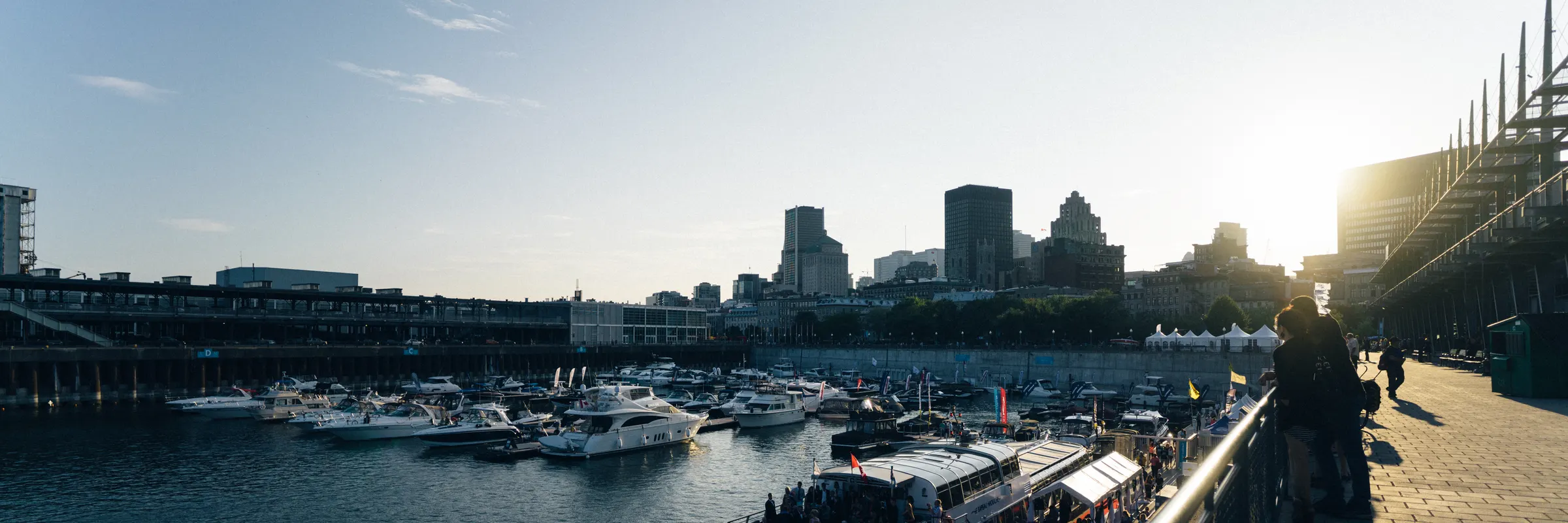
Montreal: the Old Port on the St Lawrence
Photo: Dillan Choiniere dillanchoiniere · CC0
Quebec, Canada

Montreal: how many days you need and the best months to go

Montreal is two cities and they share a calendar rather than a character. From June the whole place moves outdoors — terraces on every street, a festival most weeks, streets closed to cars for the season. From December it goes underground into thirty-odd kilometres of connected passages, because the winter here is genuinely severe. Both versions are worth a trip. Booking one and expecting the other is the mistake.

Short answers

What people ask before booking

How many days do you need in Montreal?

Montreal needs three days for the old town, the mountain and the neighbourhoods below it. Which three matters more than how many: the summer city and the winter city are different trips.

What is the best month to visit Montreal?

June, July and August — The city outdoors, and a festival almost every week. September and October — Autumn colour and the summer crowds gone.

Which months are worth avoiding in Montreal?

December and March — The cold without the compensations. April — Mud season, which locals name and visitors do not expect.

How many days Montreal needs

Three days covers it: one for the old town and the port, one for the mountain and the neighbourhoods below it, and one for the markets and the eating. Montreal is a walkable city in the months when walking is pleasant, and the metro handles the rest.

A fourth day is for Quebec City, three hours east by train or bus and a completely different place — walled, older and more obviously French. In summer the fourth day can also just go to a festival, which is a legitimate way to spend it here in a way it would not be elsewhere.

How the city is arranged

Montreal is an island in the St Lawrence with a small mountain in the middle of it, and everything orients to that hill. Locals use the mountain as north even though it is not, which means the city's north, south, east and west are rotated from the compass and every direction you are given will be in that rotated system.

  • Old Montreal and the Old Port — the seventeenth-century stone streets by the water, with the basilica and the cobbles. Beautiful, touristed, and where the river is.
  • Downtown — the office towers, the museums and the underground network beneath them. Functional rather than charming, and the transport hub.
  • The Plateau and Mile End — the residential heart of the city, with the outdoor spiral staircases, the bagel bakeries and the best eating. This is the Montreal people mean.
  • Mont Royal — the park on the hill, designed by the man who did Central Park, with the lookout over the whole island. Free and the best hour in the city.
  • Little Italy and Jean-Talon — north of the Plateau, with the largest public market in the city and the espresso bars around it.

Where to stay, and the walking radius

The useful question is how much of your trip you want to do on foot, because that changes entirely with the season. In summer, staying in the Plateau or Mile End puts you in the middle of the good part and everything is walkable. In winter, being on the metro matters far more than being in a charming neighbourhood.

Old Montreal is the postcard and it is also the least lived-in part of the city — beautiful, expensive, and quiet in a way that suits some trips and not others.

AreaWho it suitsThe catch
Old MontrealA first visit. Stone streets, the river and the basilica at the door.Touristed and pricey, and thin on ordinary life once the day-trippers leave.
DowntownWinter trips, the museums, and being on the metro and the underground network.An office district; quiet at night and not where the character is.
The PlateauThe best eating and drinking, the spiral staircases and a real neighbourhood.Fewer hotels than apartments, and a walk or a metro ride from the old town.
Mile EndBagels, cafés, bookshops and the least touristed good neighbourhood.Further out, and the metro does not serve it especially well.
Near Jean-TalonThe market, Little Italy and better value than anywhere central.A twenty-minute metro ride from downtown, which matters in January.

The language, and how to get it right

Montreal is the second-largest French-speaking city in the world after Paris, and French is the official language of Quebec — that is a legal fact, not a preference. In practice most people in the tourist-facing centre are bilingual and will switch the moment they hear you struggle. The city is not difficult to visit without French.

What matters is the opening move. Starting in French, even badly, and then asking whether English is possible is received completely differently from starting in English. This is not touchiness; it is a language that has spent three centuries under pressure and the courtesy is noticed.

  • **Open with *bonjour* and it will go well.** Two words of effort changes the temperature of the whole exchange.
  • **The greeting in shops is often *bonjour-hi***, which is an invitation to pick a language. Answer in whichever you want.
  • Signage is in French by law, including menus and street signs, so a few food words go a long way.
  • Quebec French is not Parisian French and locals will tell you so. If you learned French in Europe, expect to work harder for the first day.

The underground city, and what it is actually for

Montreal has around thirty kilometres of connected underground passages linking metro stations, shopping centres, offices, universities and hotels beneath downtown. It is not an attraction and there is nothing to see in it — it is a heated corridor system that exists so that half a million people can get to work in February without going outside.

That said, in deep winter it changes what a day looks like. You can cross a large part of downtown, eat, shop and change metro lines without a coat, which is genuinely useful when the wind makes the street unpleasant.

  • Do not plan a day around it. It is transport infrastructure, not a sight, and it is grim in summer.
  • A metro card covers the whole network, and the metro itself runs on rubber tyres, which makes it quieter than most.
  • Winter walking needs proper boots, not fashion boots. The pavements are salted and slushy for months.
  • In summer, several streets close to cars entirely for the season and become long terraces. Sainte-Catherine and Mont-Royal are the big ones.

How eating works here

Montreal punches far above its size on food, and the reason is layered immigration: a Jewish delicatessen tradition, a large Italian community, a Portuguese one that does the grilled chicken, and Haitian, Lebanese and Vietnamese food that is ordinary here rather than exotic.

The practical points are the Quebec ones. Tipping is expected at around fifteen to twenty per cent, tax is added at the till rather than shown on the menu, and many of the best small restaurants let you bring your own wine — look for *apportez votre vin*, which is a genuine local institution.

  • Bring-your-own-wine restaurants are a real category here and they are marked. Buy the bottle first; the shops close earlier than the kitchens.
  • Brunch is a serious weekend event and the queues outside the known places on a Sunday are long and normal.
  • Taxes are added at the till, so the menu price is not the price. Two taxes, roughly fifteen per cent between them.
  • The markets are year-round, not seasonal. Jean-Talon and Atwater both stay open through the winter.

Where to eat in Montreal, and what to order

Montreal's food is Jewish, French, Portuguese and Québécois at once, and three of its dishes are genuinely local inventions that the rest of the continent copies badly. Eat at least one thing standing up at a counter, and go north of downtown for almost everything below.

  • Poutine

    What to order

    The dish Quebec gave the world, and how to judge one

    Chips with fresh cheese curds and hot gravy poured over, so the curds soften without melting. The curds have to squeak — that is the test, and it means they are fresh that day. It was invented in rural Quebec in the 1950s and everything outside the province is an approximation.

    Check it on Wikidata
  • Montreal-style bagel

    What to order

    The bagel argument, and which side this city is on

    Smaller, denser and sweeter than the New York kind, boiled in honey water and baked in a wood-fired oven. The two famous bakeries in Mile End are open around the clock and have been arguing with each other since the 1950s. Eat one warm from the bag on the pavement; that is the whole experience.

    Check it on Wikidata
  • Montreal smoked meat

    What to order

    The sandwich the city is known for

    Beef brisket cured for over a week, smoked, steamed and hand-sliced onto rye with mustard. Ask for medium-fat, which is what regulars order and what the meat is meant to be. It is close to pastrami and it is not pastrami, and people here will explain the difference at length.

    Check it on Wikidata
  • Schwartz's

    Institution

    The counter where that sandwich is best

    A narrow delicatessen open since 1928, with shared tables, a permanent queue and no reservations. It is a tourist institution and it is also still genuinely good, which is rare. Order the smoked meat, medium-fat, with a pickle and a black cherry soda, and expect to sit next to strangers.

    Check it on Wikidata
  • Marché Jean-Talon

    Market

    The market that runs all year, including February

    The largest public market in the city, in Little Italy, with produce, cheese, meat and prepared food. It stays open through the winter, which is the point — in January it is one of the few places that feels like a summer city. Go on a Saturday morning and eat as you walk.

    Check it on Wikidata
  • Mile End

    Where to look

    The neighbourhood to eat your way across

    A former garment district north of the Plateau, now the densest good eating in the city: the bagel bakeries, the cafés, the Portuguese grills and the small restaurants. This is where to spend an evening, and it is walkable end to end in twenty minutes.

    Check it on Wikidata

When to go, and what each month costs you

Montreal has one of the sharpest seasonal swings of any major city, and the two halves of the year are genuinely different destinations. The summer is a street festival and the winter is severe — regularly below freezing for months, with heavy snow. There is also a fifth season here that locals name and visitors do not expect.

  • June, July and August

    Go now

    The city outdoors, and a festival almost every week

    Warm, long days with the whole city on terraces and several streets closed to cars for the season. The jazz festival, the comedy festival and a dozen others run through these weeks — most of their dates move slightly each year, so check rather than assume. Prices peak and it is worth it.

  • September and October

    Go now

    Autumn colour and the summer crowds gone

    Warm days, cold nights, and the mountain and the Laurentians turning red and gold. The festivals are over, the terraces are still open into September, and prices drop. The best combination of weather and value in the year.

  • May

    Worth it, but

    The city reopens, unevenly

    The terraces come out, the trees come back and the city visibly exhales. It is also unpredictable — May can be fifteen degrees or five — and some seasonal things have not opened yet. Cheap, pleasant and a gamble.

  • November

    Worth it, but

    Grey, cheap and between seasons

    The colour is gone and the snow has not arrived. Dark, damp and the quietest the city gets, with the lowest prices of the year. Everything indoors — museums, restaurants, the underground network — works perfectly.

  • January and February

    Worth it, but

    Genuinely severe, and the city is built for it

    Weeks below freezing, deep snow and short days. The city is completely equipped for this — the metro, the underground network, the winter festivals and the outdoor skating — and a winter trip here is a real and distinctive one. It needs proper boots and a real coat, not a fashionable one.

  • December and March

    Think twice

    The cold without the compensations

    December is dark and increasingly cold before the winter festivals begin, and March is the tail of a long winter when everyone is tired of it. The snow is grey by then. Both work for an indoor trip and neither is the reason to come.

  • April

    Think twice

    Mud season, which locals name and visitors do not expect

    The thaw. The snow melts into grey slush, the ground is wet, the trees are bare and nothing has started growing. Quebecers have a word for it and it is not affectionate. It is the cheapest month and the only one with genuinely nothing to recommend it.

Things that change the trip

  • **Open every exchange with *bonjour*.** Two words of French changes the tone completely, and everyone will switch to English happily afterwards.
  • Decide which Montreal you are booking. The summer city and the winter city are different trips, and the shoulder months are neither.
  • Menu prices are before tax, and tipping is fifteen to twenty per cent on top. Budget about a third more than the printed number.
  • Look for *apportez votre vin* restaurants and buy the bottle beforehand. It is a real local institution and it halves the cost of dinner.
  • Winter needs boots with grip and a proper coat. The city functions perfectly in February; you need to be equipped the way residents are.
  • Quebec City is three hours away and is a completely different place. If you have a fourth day and it is not festival season, use it.

Plan Montreal for the season you booked

A trip of more than three days, or one that adds Quebec City, the Laurentians or Toronto and the trains between them, is what Premium is for. The free version covers one destination of up to three days.

Destinations