Skip to content
JoruJoru
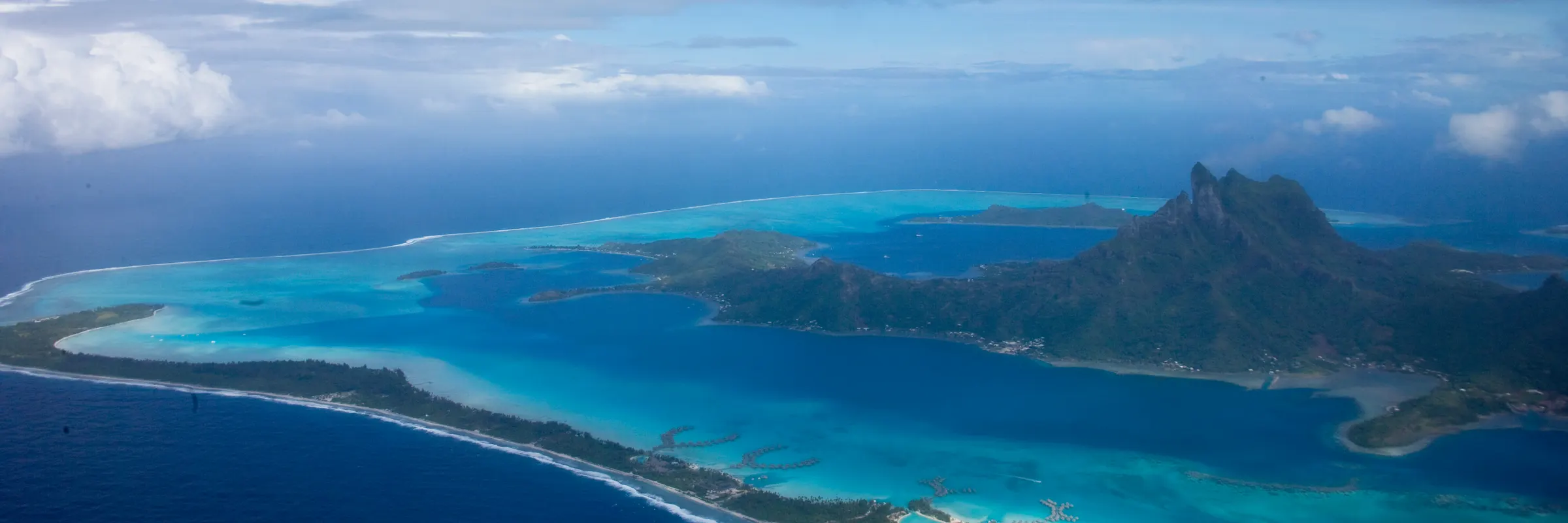
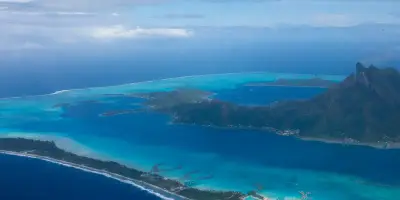
Bora Bora: the lagoon, the motu ring and Mount Otemanu
Photo: The TerraMar Project · CC BY 2.0
French Polynesia

Bora Bora: how many days you need and the best months to go

Bora Bora is what is left of a volcano that has been sinking and eroding for around three million years: a jagged basalt peak, Mount Otemanu, standing in the middle of a shallow lagoon that is ringed by a coral reef and a chain of low sandy islets called *motu*. The lagoon is the destination — not the island, and not the beaches on it. Four to five days is the working figure. It is a long way from everywhere and it is expensive, and both of those are planning facts rather than complaints.

Short answers

What people ask before booking

How many days do you need in Bora Bora?

Bora Bora needs four nights once the flying is counted, and five to seven to use the lagoon properly. Where you sleep — a motu or the main island — matters more than how long.

What is the best month to visit Bora Bora?

May and June — The dry season starting, and the crowd not yet here. September and October — Still dry, still clear, and the crowd gone.

Which months are worth avoiding in Bora Bora?

December and January — Peak humidity and rain, with holiday prices on top. February and March — The heart of the cyclone season.

How many days Bora Bora needs

Four nights is the sensible minimum once the flying is counted: it is a long haul to Tahiti and then a fifty-minute domestic flight, and arriving for two nights wastes most of what you paid for.

Five to seven is the version that works. The lagoon takes two days properly — a full-day boat tour and a day of your own snorkelling — the main island takes one, and the rest is the point of coming. Beyond a week, add another island rather than more days here: Taha'a, Huahine and Moorea are short flights or ferries and are cheaper, greener and less polished.

The motu or the main island, which decides your trip

This is the one big choice. The overwater bungalows are almost all on the motu — the low coral islets on the reef — and reaching them means a boat transfer every time you want to go anywhere. The water there is the water in the photographs and the sunsets face the mountain.

The main island, Vaitape and the coast road, is where Bora Bora actually lives: shops, a supermarket, family-run pensions, restaurants that are not resort restaurants, and prices that are a fraction of the lagoon ones. Staying there costs far less and gives you a real place; staying on a motu gives you the lagoon and a boat timetable. Neither is wrong, and doing three nights of each is the answer more people should take.

  • Matira Beach — the only substantial public beach on the main island, shallow and swimmable, and free.
  • The lagoon tour — a full day by boat: coral gardens, rays and reef sharks, a motu lunch. The one thing to book.
  • Mount Otemanu — 727 metres of vertical basalt. The summit cannot be climbed; the ridge below it can be walked with a guide.
  • The coast road — thirty-two kilometres round the main island, flat, and the best half-day here for the price of a bicycle.
  • The wartime guns — American coastal batteries from 1942 still sitting in the hills, from when the island was a US supply base.

Why it costs what it costs

Bora Bora is among the most expensive destinations in the world and the reasons are structural rather than exploitative. Almost everything on the island is imported by sea from Tahiti, which is itself six thousand kilometres from the nearest continent, and the resorts are small, staff-intensive and built on coral islets with no infrastructure of their own.

The practical consequences. A restaurant meal at a resort is a serious expense; a supermarket in Vaitape is not. Family-run *pensions* on the main island exist and are a fraction of the resort price. The lagoon itself is free — snorkelling from a beach costs nothing, and it is the best thing here. Budget for one guided lagoon day, and then stop paying for the water.

The lagoon, and what is actually in it

The lagoon is shallow, clear and warm, and the reason for the colour is simply white coral sand under a couple of metres of water. It is enclosed almost completely by the reef, with a single navigable pass, which is why it stays calm when the ocean outside is not.

What lives in it is the other half. Blacktip reef sharks and stingrays are common in the shallows and are a standard part of any lagoon tour, along with the coral gardens on the inner reef. Between roughly July and October, humpback whales calve in the deeper water outside the reef and are watched from boats. The manta rays are resident and are the thing serious snorkellers come for.

Getting there, and what it costs you in days

There is no direct international flight. Everything comes through Tahiti — Faa'a airport in Papeete — and then a fifty-minute domestic hop to Bora Bora's airport, which is itself on a motu, so you arrive by boat. Papeete is roughly eight hours from Los Angeles, eight from Auckland and over twenty from Europe.

That geography is why this is not a short trip. Most people spend a night in Tahiti at one end, and many combine Bora Bora with Moorea, thirty minutes away by ferry from Papeete, or with Taha'a and Raiatea. Build the domestic connections into the plan before booking the international leg, because the internal flights are limited and fill in high season.

The other side of the island

Bora Bora has a history that the resorts do not mention, and it is worth a morning. During the Second World War the United States built a supply base here — Operation Bobcat — with several thousand personnel, an airstrip and coastal artillery; the airstrip is still the island's airport and the guns are still in the hills, reachable on foot or by 4x4 tour.

The living culture is the other thing. Polynesian dance and drumming are not a hotel show here; the Heiva festival in July is a serious competition held across French Polynesia, with months of preparation. If your dates fall near it, it is by far the most interesting thing happening on these islands.

What to eat in Bora Bora, and where

Tahitian food is raw fish, coconut and root vegetables, plus a French inheritance that shows up in the bread and the sauces. The resort restaurants are expensive and international; the food worth finding is at the roulottes and the family pensions.

  • ’Ota ’ika

    What to order

    The national dish, and how it differs

    Raw tuna cured briefly in lime juice and then finished in coconut milk with cucumber, tomato and onion. The coconut milk is what separates it from a ceviche — it is milder, richer and served cold in a bowl. It is on every menu on the island and it is the thing to eat first.

    Check it on Wikidata
  • Ahima’a

    What to order

    The earth oven, and when it happens

    Pork, fish, breadfruit and taro wrapped in leaves and cooked for hours in a pit on heated stones, then dug up. It is the same principle as the hāngī in Rotorua, the curanto in Bariloche and the lovo in Fiji — one method, four names, across the Pacific. Traditionally a Sunday meal, and most resorts run one weekly.

    Check it on Wikidata
  • Uru

    What to order

    The starch that grows on a tree

    A large green fruit that is cooked rather than eaten raw, roasted whole in the fire or sliced and fried, and a staple across Polynesia. It is the reason the Bounty was carrying seedlings when the crew mutinied — the British were trying to move it to the Caribbean as cheap food. Dense and mild, closer to bread than to fruit.

    Check it on Wikidata
  • Leche de coco

    What to order

    The ingredient in everything

    Pressed from grated coconut flesh, and the base of most Tahitian cooking — the raw fish, the sauces, the puddings and the vegetables all pass through it. Fresh coconut milk here is a different thing from the tinned version, thinner and much less sweet. Ask for the fish *au lait de coco* and you will get the local answer.

    Check it on Wikidata
  • Vainilla

    What to order

    What the islands next door grow

    Vanilla, grown on the neighbouring island of Taha'a, which is known throughout the region as the vanilla island. The Tahitian variety is a species of its own and is more floral and less sharp than the Madagascan one, and the pods are fatter and softer. Buy it there rather than at the airport.

    Check it on Wikidata

When to go, and what each month costs you

French Polynesia has a dry season and a wet one, and the wet one carries the South Pacific cyclone season. The window is May to October; November to April is a declared cyclone period rather than a forecast, which weighs more than rainfall alone.

  • May and June

    Go now

    The dry season starting, and the crowd not yet here

    Warm, dry, low humidity and the water at its clearest, with the cyclone season formally over. Prices are below the July peak and the lagoon is quiet. The best value window of the year, and the one to take if you can choose freely.

  • September and October

    Go now

    Still dry, still clear, and the crowd gone

    The far end of the dry season: reliable weather, excellent visibility for snorkelling and the northern-hemisphere summer holidays over. October is the last comfortable month before the wet season sets in. Often the cheapest good month here.

  • July and August

    Worth it, but

    The best weather and the fullest island

    Dry, breezy and the coolest part of the year, which is exactly why it is peak season — European and American summer holidays, and the highest prices of the year. The Heiva festival falls in July and is the most interesting cultural event in Polynesia. Book far ahead.

  • April

    Worth it, but

    The wet season ending, and the risk falling

    Rain eases through the month, humidity drops and prices are still low. The cyclone season formally runs to the end of April, so the risk is reduced rather than gone. A reasonable gamble late in the month.

  • November

    Worth it, but

    Hot, humid, cheap, and the season opening

    The wet season begins and the cyclone window opens, though November is historically among its quieter months. Warm sea, low prices and afternoon rain. Worth insuring properly rather than avoiding outright.

  • December and January

    Think twice

    Peak humidity and rain, with holiday prices on top

    Hot, very humid and wet, in the middle of the cyclone season, while Christmas and New Year push prices back up regardless. You pay high-season rates for wet-season weather, which is the worst trade on this calendar.

  • February and March

    Think twice

    The heart of the cyclone season

    The wettest and most humid months and statistically the most active part of the cyclone window. Boat transfers and lagoon tours are cancelled in bad weather. Prices are the lowest of the year, and this is why.

Things that change the trip

  • Split your nights between a motu and the main island. The lagoon is on one side and a real place with real prices is on the other.
  • Book one guided lagoon day and then stop paying for the water. Snorkelling from Matira Beach costs nothing and is the best thing here.
  • Eat at the roulottes and the pensions, not only at the resort. The price difference is enormous and the food is better.
  • Count the flying honestly. Everything routes through Tahiti and then a fifty-minute hop, so four nights is the minimum that makes sense.
  • Do not book November to April without insurance. That is the declared South Pacific cyclone season, not merely the rainy one.
  • Hire a bicycle for the coast road. It is thirty-two kilometres, flat, and the best half-day on the island for almost nothing.

Plan Bora Bora across French Polynesia

A trip that combines Bora Bora with Moorea, Taha'a or Huahine, with the internal flights, the ferries and the season arranged so the transfers do not eat the holiday, is exactly what Premium is for. The free version covers one destination of up to three days.

Destinations