
Skip to content
JoruJoru
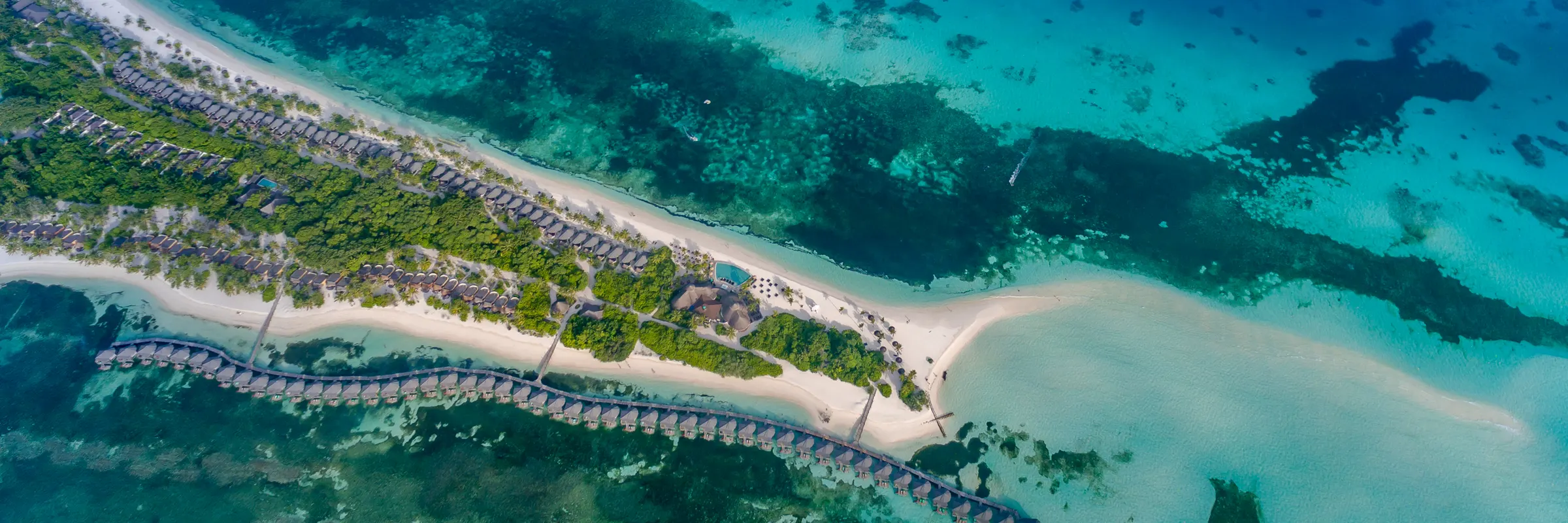
Maldives: A resort island in Lhaviyani Atoll, with its villas over the lagoon
Photo: dronepicr · CC BY 2.0
Indian Ocean

Maldives: how many days you need and the best months to go

The Maldives is sold as a single image: a villa on stilts over a pale lagoon. Behind it is a chain of twenty-six atolls strung across the equator, and a holiday whose shape is fixed by two decisions made before leaving home. The first is the kind of island: a private resort, where the island is the hotel, or an inhabited one, where people live, the rules are those of a Muslim country and a room costs a fraction as much. The second is how far it is from the airport, because here the last leg is a boat or a seaplane, and the seaplanes stop at dusk.

Short answers

What people ask before booking

How many days do you need in the Maldives?

The Maldives needs five nights at a minimum and a week is the normal stay, because the transfer from the airport can take half a day at each end. The reliably dry months are January to March; December carries the highest prices of the year while rain is still common.

What is the best month to visit the Maldives?

January to March — The dry months: calm sea and clear water.

Which months are worth avoiding in the Maldives?

May — The monsoon arriving.

Work out how many hours you will have in the Maldives on your dates

How many days the Maldives needs

Five nights is the practical minimum. The flight is long from almost everywhere, the transfer can take half a day at each end, and the first evening is usually lost to arriving. A week is the normal stay, and it is what resorts and guesthouses price for.

More than a week is better spent in two places than in one — a resort and a local island, or two atolls — because the islands are very small. Many can be walked around in less than half an hour, and what changes from one to the next is the reef, not the land.

How the country is arranged, and why the airport decides

The country is a double chain of atolls running north to south across the equator. Each atoll is a ring of reef around a lagoon, with islands dotted along the ring. About two hundred islands are inhabited and a similar number are resorts; the rest are empty. It is the lowest country on earth: nowhere does the natural ground rise much above two metres.

The airport is on its own island beside the capital, and everything starts there. The atolls around it are reached by speedboat at any hour. The far ones need a seaplane, or a domestic flight followed by a boat. Distance from the airport is the hidden variable in every price and every itinerary.

  • Malé and the airport — the capital, one of the most densely built small islands in the world, joined by a bridge to the airport island and to Hulhumalé, a new town on reclaimed land.
  • The central atolls — North and South Malé: the closest resorts and local islands, a short speedboat ride away. The easiest logistics and the busiest water.
  • Ari and Baa — to the west and north-west, the classic resort atolls, reached by seaplane. South Ari is known for whale sharks, Baa for the bay where manta rays gather.
  • The southern atolls — below the equator and reached by domestic flight: quieter, further and newer to tourism.
  • The local islands — the inhabited ones in any atoll, with guesthouses, cafés, a harbour and a mosque, where the country actually lives.

Where to stay, and the choice between a resort and a local island

A resort here is not a hotel on an island; it is the island. One resort occupies one island, nobody lives there but staff, and everything you eat, drink or do is bought from it. Inside that bubble alcohol and swimwear are unremarkable, and the price reflects all of it.

An inhabited island is the other Maldives. Guesthouses are small and cheap, the reef and the sandbank trips are the same, and the rules are local: no alcohol at all, and swimwear only on the beach set aside for visitors. Elsewhere on the island, shoulders and knees are covered.

AreaWho it suitsThe catch
A resort islandThe image on the brochure: a villa on the beach or over the water, a reef at the door and nothing to organise.Expensive in every detail, because meals, drinks and excursions are bought from the only seller on the island.
A local islandA fraction of the price, the same sea, and a real village with cafés, a harbour and people who live there.No alcohol, modest dress away from the visitors' beach, and simpler rooms.
Malé and HulhumaléA first or last night next to the airport, and the only real town: a fish market, mosques and tea shops.No beach worth the journey. A stopover, not a holiday.
A liveaboard boatDivers. A week moving between the best reefs, several dives a day, and sites no resort reaches.A cabin, not a room; fixed dates and routes; and little to do if you do not dive.
The far atollsFewer boats, emptier reefs and resorts with more space, in the south or the far north.A domestic flight and a boat each way, which adds cost and can use up a day at each end.

Compare these areas against your priorities

The transfer: speedboat, seaplane or domestic flight

Choose the island and the flight together. Seaplanes fly only in daylight, so an international flight that lands late in the afternoon, or leaves early in the morning, forces a night near the airport at one end of the trip. Speedboats to the central atolls run at any hour and avoid the problem entirely.

The transfer is booked through the resort or guesthouse, not separately, and it is charged per person on top of the room. For a far resort it can be a large part of the bill. Ask for the figure before you book, not after.

  • Seaplanes have no fixed timetable. The operator builds each day's schedule around the international arrivals and tells you your slot the day before. Luggage allowances are small.
  • Many resorts keep their own clock, an hour ahead of the capital, to stretch the evening light. Check which time your transfer is quoted in.
  • The public ferries are cheap, slow and do not run on Fridays. Between local islands they are how residents travel; a scheduled speedboat costs more and saves hours.
  • Alcohol cannot be brought into the country. Bags are scanned on arrival, and a bottle from the duty-free shop of another airport is held until you leave.

The reef, the sandbank and the animals

Away from the pool, this is a snorkelling and diving destination, and the house reef is the thing to ask about before booking. A house reef is coral you can swim to from the beach or the jetty. An island with a good one gives you the main activity free, at any hour; an island set in a sandy lagoon is prettier from the air and means a paid boat trip every time you want to see a fish.

  • Manta rays — they gather to feed in a bay in Baa atoll during the south-west monsoon, roughly from June to November. The bay is a protected reserve: snorkelling only, with a guide and a permit.
  • Whale sharks — seen all year along the outer reef of South Ari. Sightings are common, not guaranteed, and boats crowd the animals at busy hours.
  • Sandbanks — the standard half-day trip from any island: a strip of sand in open water, a picnic and no shade at all.
  • Surf — the breaks of the central atolls work from about March to October. It is the one reason to prefer the wet months.
  • Malé — a few hours is enough: the fish market, the old coral-stone mosque and a tea shop. It is the only place in the country that feels like a city.

How eating works here

On a resort you eat what the resort cooks, so the meal plan matters more than the menu. Full board is three meals and no drinks; all-inclusive adds drinks, usually with limits. Compare the two against the price of a bottle of water and a beer on the island's own list, because that is what the cheaper plan really costs.

On local islands the food is Maldivian and cheap, built on three things: tuna, coconut and flatbread. Cafés serve it all day, and the late afternoon belongs to tea and small fried snacks. During Ramadan, which moves through the year, cafés on local islands close in daylight and reopen at sunset; resorts carry on as usual.

  • Resort prices are quoted before tax and service charge, which are added at the end and are not small. Read the small print once.
  • Pork is as absent as alcohol outside the resorts.
  • Tap water is desalinated and is not usually drunk. Guesthouses and resorts supply bottled or filtered water.
  • Friday is the day of rest. On local islands shops close around midday prayers and excursions start late.

What to eat in the Maldives, and where

Maldivian cooking is the food of fishermen on islands where almost nothing grows: tuna in every form, coconut in every form, and chilli, lime and onion to wake them up. Most resort guests never taste it, because buffets cook for the world. It is worth asking the kitchen for a local breakfast once, and worth a meal on a local island if you pass through one.

  • Mas huni

    What to order

    Breakfast, the way the country eats it

    Shredded tuna mixed with grated coconut, onion, chilli and lime, scooped up with warm flatbread and washed down with sweet black tea. It is fresh, sharp and nothing like a hotel breakfast, and it is on the table in homes and cafés before work. Resorts will make it if asked.

    Check it on Wikidata
  • Garudhiya

    What to order

    The plain dish everything else is built around

    A clear broth of tuna, simmered with little more than water and salt, eaten with rice, lime, chilli and raw onion. It is deliberately plain: the seasoning is added at the table. This is an everyday dinner, not restaurant food, and the place to find it is a café on a local island.

    Check it on Wikidata
  • Maldive fish

    What to order

    The ingredient behind the flavour

    Tuna that has been boiled, smoked and dried in the sun until it is as hard as wood, then shaved or pounded into almost every dish. It kept for months without ice, which is why it became the islands' great export, and it is still what gives the cooking its depth. You will taste it long before you see it.

    Check it on Wikidata
  • Gulha

    What to order

    Something small with afternoon tea

    Fried balls of dough the size of a walnut, filled with tuna, coconut, onion and chilli. They belong to a whole family of savoury snacks eaten with tea in the late afternoon, set out on the counter of every café. Point at what looks good; they are sold by the piece and cost almost nothing.

    Check it on Wikidata
  • Malé

    Where to look

    A few hours in the capital, eating

    The capital is where the fishing boats land, and the fish market on the northern waterfront is the liveliest room in the country in the late afternoon, when the day's tuna is carried in and cut to order. Around it are the tea shops where the city eats. It is the easiest place to try all of the above in one stop, between a flight and a boat.

    Check it on Wikidata

When to go, and what each month costs you

The temperature hardly moves all year: warm days, warm nights, warm sea. What changes is the wind and the rain, in two monsoons. The north-east monsoon brings the dry, calm months at the start of the year; the south-west monsoon, from about May to November, brings rain in heavy bursts, wind and a rougher sea. Prices follow the first, and they follow the school holidays of Europe and Asia even more closely than they follow the weather.

  • January to March

    Go now

    The dry months: calm sea and clear water

    The driest and calmest stretch of the year, with long runs of sun and the best visibility underwater. It is also high season: rooms cost the most and the good ones are booked months ahead. If the budget allows only one week at these prices, this is the week to spend it on.

  • April

    Worth it, but

    Hot and still, with the rain starting to build

    The sea is at its calmest and the air at its hottest. Showers become more frequent as the month goes on, and prices begin to fall after Easter, which moves. A good compromise between weather and cost.

  • December

    Worth it, but

    The most expensive weeks, before the weather settles

    Christmas and New Year are the peak of the peak: the highest prices of the year, minimum stays and compulsory gala dinners. The weather is less reliable than the price suggests. The dry season is only arriving, and rain is still common on about half the days of the month.

  • June to August

    Worth it, but

    Monsoon rain, surf and holiday prices

    Rain comes in heavy bursts with sun between them, and the wind raises a swell on the exposed side of each atoll. It is the best time for surf and the start of the manta season, and rooms cost well below winter, though August climbs again with the European holidays.

  • September to November

    Worth it, but

    The cheapest months, and the mantas

    Frequent showers, some grey days in a row and the lowest prices of the year. It is also when the manta rays gather in the greatest numbers, so for snorkellers this window can be the best of all. Seaplane transfers are delayed more often.

  • May

    Think twice

    The monsoon arriving

    The month the south-west monsoon breaks: the most rainy days of the year at the capital, strong wind and a rough sea. Boat trips are cancelled more than in any other month, and there is neither the dry-season weather nor the full low-season discount.

What to pack for the Maldives, month by month

Things that change the trip

  • Book the island and the flight together. If the transfer is a seaplane, land before mid-afternoon and leave after mid-morning, or pay for a night near the airport.
  • Ask what the transfer costs per person before you compare room prices. For a far resort it changes the ranking.
  • Ask whether the island has a house reef you can swim to. It is the difference between snorkelling whenever you like and paying for a boat each time.
  • Work out the meal plan against the island's own drinks list. Full board without drinks is rarely the cheaper option it looks.
  • On a local island, cover shoulders and knees away from the visitors' beach, and do not expect alcohol. These are the rules of the place, not of the guesthouse.
  • Do not trust December to be dry. The settled weather arrives in January; the peak prices arrive two weeks earlier.

Plan the Maldives around the transfer

A trip of more than three days — which the Maldives always is — or one that combines two islands, a stopover and the boats and flights between them, is what Premium is for. The free version covers one destination of up to three days.

Destinations