Skip to content
JoruJoru
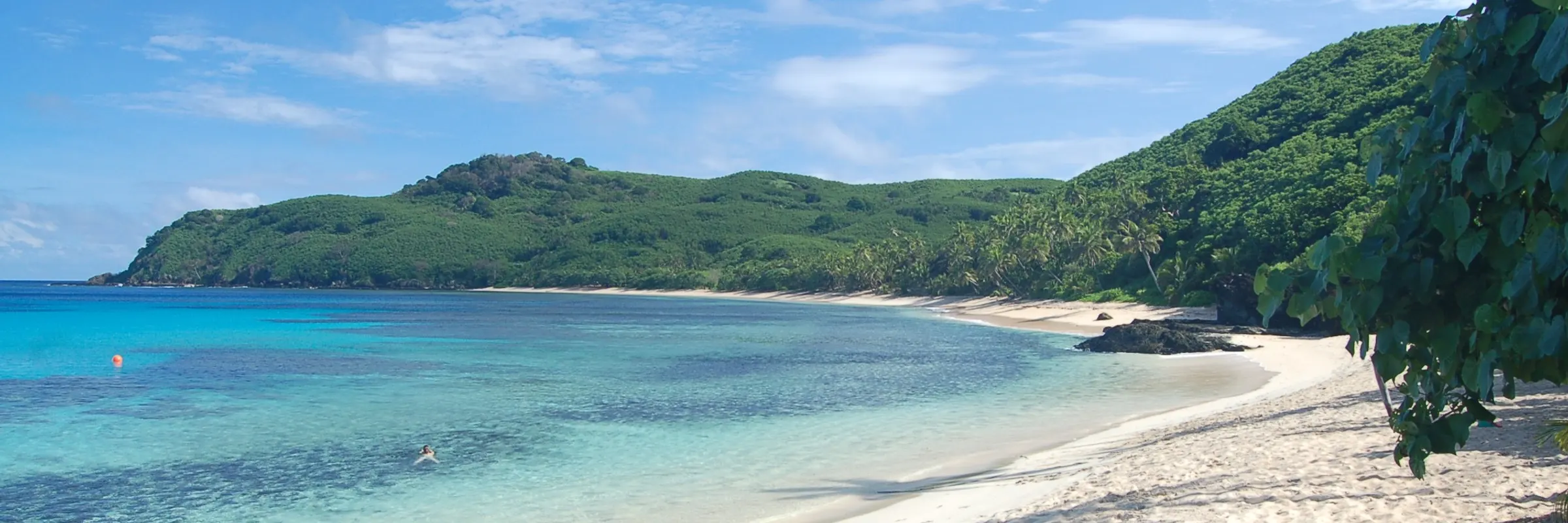
Fiji: a reef bay on Waya, in the Yasawa Islands
Photo: msdstefan · Public domain
South Pacific

Fiji: how many days you need and the best months to go

Fiji is an archipelago of more than three hundred islands, of which about a third are inhabited, spread across an area of ocean larger than most countries. Almost everyone arrives at Nadi on the main island of Viti Levu, and almost nobody should stay there: the trip is decided by which island group you transfer to next, and those transfers take hours rather than minutes. A week is the working figure. Ten days lets you use two island groups instead of one without spending the holiday on boats.

Short answers

What people ask before booking

How many days do you need in Fiji?

Fiji needs six days once you count the boat transfers, and seven to ten to use two island groups. Which group you pick matters more than how long you stay.

What is the best month to visit Fiji?

May and June — The dry season begins, and the crowd has not arrived. September and October — Still dry, still quiet, and warming again.

Which months are worth avoiding in Fiji?

December and January — Peak humidity, peak rain, and holiday prices on top. February and March — The heart of the cyclone season.

How many days Fiji needs

Six days is the realistic minimum once you count the transfers. Fiji is far from everywhere, the flight in is long, and the boat from Nadi to an island is a half-day at each end. A four-night trip spends most of itself in transit.

Seven to ten days is the figure that works: it lets you settle into one island group, and with ten you can add a second without the trip becoming a logistics exercise. Beyond that, the question stops being how long and becomes which islands, which is the real subject of this page.

Which island group, which is the only decision that matters

Fiji is not one destination and choosing wrongly is the most common mistake here. The groups differ in how long the boat takes, what the water is like and who else is there, and the difference between them is far larger than the difference between hotels within one of them.

The two main island groups are reached by a catamaran that leaves Nadi's port and works its way up the chain, dropping people at their island. The further out you go, the longer that boat takes and the fewer other people arrive with you.

  • Mamanuca — the closest chain, half an hour to two hours by boat. Resorts, day trips, and the easiest option with small children.
  • Yasawa — a long volcanic chain further north, two to five hours by boat. Dramatic hills, better beaches, fewer people, less to do at night.
  • Viti Levu — the main island: the airport, the Coral Coast, the highlands and the towns. Where the actual country is, and where most visitors do not go.
  • Vanua Levu and Taveuni — the second and third largest islands, reached by plane. Diving, rainforest and waterfalls; the choice for divers.
  • Kadavu — remote and undeveloped, ringed by the Great Astrolabe Reef. The furthest thing here from a resort holiday.

The transfers, and why they eat days

The catamaran from Nadi runs roughly once or twice daily up the chain and stops at each resort's island in sequence. If your island is at the far end of the Yasawas, that is most of a day on a boat, and the same on the way back. Small resort boats meet the catamaran offshore and take you in, which is part of the charm and part of the time.

Internal flights on small aircraft reach the larger outer islands in under an hour and cost far more. The practical rule is simple: the further out you sleep, the better the water and the more of your holiday you spend getting to it. Plan the transfer days as travel days rather than as beach days, and do not book a flight home on the morning after a distant island.

Two Fijis, and the history behind them

Around a third of the population is of Indian descent, the descendants of indentured labourers brought by the British to work sugar plantations between 1879 and 1916. That history produced a country with two cultures, two religions and two cuisines in daily contact, and it is why the towns of the main island have Hindu temples and mosques alongside Methodist churches.

It also produced a politics that has been fractious for decades — Fiji has had several coups since 1987, largely along these lines. It is not something a visitor encounters on an island, but it is the reason the country you see in a resort and the country described in its own newspapers look so different. Getting off the resort island for a day is the only way to see the second one.

Village etiquette, and the things that are actually rules

Most land in Fiji is owned communally by indigenous villages rather than by individuals, and visiting a village means visiting someone's home. The customs are real and simple, and getting them right is noticed.

Take off your hat and sunglasses when you enter a village; wearing a hat is reserved for the chief. Cover your shoulders and knees — a sulu, the wrapped cloth both men and women wear, solves this and is sold everywhere. Remove your shoes before entering a house. Do not touch anyone's head, including children's. And if you are invited to a kava ceremony, clap once, take the cup, drink it in one, and clap three times: refusing is possible but it is a small rejection of hospitality.

The reef, and what is actually worth doing

Fiji's coral is the point. The country sits inside one of the richest reef systems on earth, with soft corals in colours that look artificial in photographs and are not. Fiji is widely called the soft coral capital of the world, and the diving around Taveuni and the Somosomo Strait is what serious divers come for.

For everyone else, the snorkelling directly off most island beaches is better than the diving in most countries. Beyond the water, the interior of the main island has whitewater on the Navua river, the Sigatoka sand dunes, and highland villages that see almost no visitors — all reachable in a day from the Coral Coast and all a different holiday from the one on the small islands.

What to eat in Fiji, and where

Fijian food is root crops, coconut and fish, and Indo-Fijian food is curry and roti — and after a century they have thoroughly influenced each other. The resort buffet is not the country's cooking, and getting past it takes one deliberate meal.

  • Lovo

    What to order

    The earth oven, and what it is

    Meat, fish and root vegetables wrapped in leaves and cooked for hours in a pit on heated stones, then dug up and served. It is the same principle as the hāngī in Rotorua and the curanto in Bariloche, and it is what a village cooks for an occasion. Most resorts do one weekly; a village version is better.

    Check it on Wikidata
  • Coconut milk

    What to order

    The raw fish dish, and how it differs from ceviche

    Fish cured in lime or lemon juice and then finished in thick coconut milk with chilli, onion and tomato. The coconut milk is what separates it from a Latin American ceviche — it is richer, milder and served cold in a bowl rather than on a plate. The single best thing to order here.

    Check it on Wikidata
  • Taro

    What to order

    The starch everything is built on

    A large starchy root, boiled or roasted, that is the staple of the Pacific and appears with almost every traditional meal. It is denser and less sweet than potato and it is what fills a Fijian plate. The leaves are also cooked, in coconut milk, and are better than the root.

    Check it on Wikidata
  • Kava

    What to order

    The ceremony you will be invited to

    A drink made from the pounded root of a pepper plant, mixed with water and served from a communal wooden bowl. It is mildly sedative, it numbs the lips, and it tastes of earth — and it is the central social institution of the country, not a novelty. Accepting the cup is the polite thing to do.

    Check it on Wikidata
  • Roti

    What to order

    The other half of Fijian food

    A flatbread cooked on a griddle, eaten with curry, and the everyday food of the Indo-Fijian third of the population. Fiji has had an Indian community for well over a century and the curry here is its own thing, not an import. The best cheap meal in the country is a roti parcel from a town market.

    Check it on Wikidata

When to go, and what each month costs you

Fiji has a dry season and a wet one, and the wet one is also the official South Pacific cyclone season. That season runs from November to April and it is a declared window rather than a forecast, which is why it weighs more here than rainfall alone would.

  • May and June

    Go now

    The dry season begins, and the crowd has not arrived

    Warm, dry, low humidity and the water at its clearest, with the cyclone season formally over. Prices are below the July peak and the islands are quiet, because the Australian and New Zealand school holidays have not started. The best value window of the year.

  • September and October

    Go now

    Still dry, still quiet, and warming again

    The other end of the dry season: clear water, reliable weather and the school-holiday crowd gone home. Diving visibility is at its best. October is the last comfortable month before the wet season sets in, and it is often the cheapest good month.

  • July and August

    Worth it, but

    The best weather and the fullest islands

    Dry, sunny and the coolest part of the year, which is why it is peak season: this is winter in Australia and New Zealand and the resorts fill with families. Book far ahead and pay the most. The weather is excellent; the price and the crowd are the cost.

  • April

    Worth it, but

    The wet season ending, and the risk falling

    Rain eases through the month and humidity drops, with the islands green and prices still low. The cyclone season formally runs to the end of April, so the risk is reduced rather than gone. A reasonable gamble late in the month.

  • November

    Worth it, but

    Hot, humid, cheap, and the season opening

    The wet season begins and the cyclone window opens, though November is historically among the quieter months within it. Warm sea, low prices and afternoon rain. Worth insuring properly rather than avoiding outright.

  • December and January

    Think twice

    Peak humidity, peak rain, and holiday prices on top

    Hot, very humid and wet, in the middle of the cyclone season, with Christmas and New Year pushing prices back up regardless. You pay high-season rates for wet-season weather, which is the worst trade on this calendar.

  • February and March

    Think twice

    The heart of the cyclone season

    The wettest and most humid months and statistically the most active part of the cyclone window. Boat transfers are cancelled in bad weather and some outer resorts close entirely. Prices are the lowest of the year, and this is why.

Things that change the trip

  • Do not stay in Nadi. It is the airport town, not the destination, and the trip starts when you get on a boat or a plane out of it.
  • Choose the island group before the resort. Mamanuca is close and easy; the Yasawas are further, better and slower to reach.
  • Count the transfer days as travel days. The catamaran up the Yasawa chain is most of a day each way, and it is not a beach day.
  • Take a sulu and cover shoulders and knees in villages, and remove your hat. These are real customs, not suggestions for tourists.
  • Accept the kava when it is offered, clap once before and three times after, and drink the cup in one. It is the central courtesy here.
  • Leave the island for a day. The main island's towns, temples and highlands are the country that the resort does not show you.

Plan Fiji across its island groups

A trip beyond a week, or one that combines two island groups with the main island, the transfers and the season arranged so you are not spending the holiday on boats, is exactly what Premium is for. The free version covers one destination of up to three days.

Destinations