


Skip to content
JoruJoru
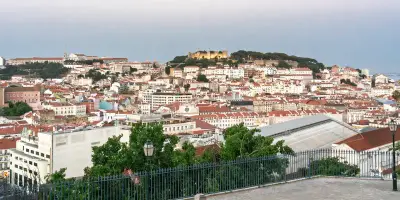
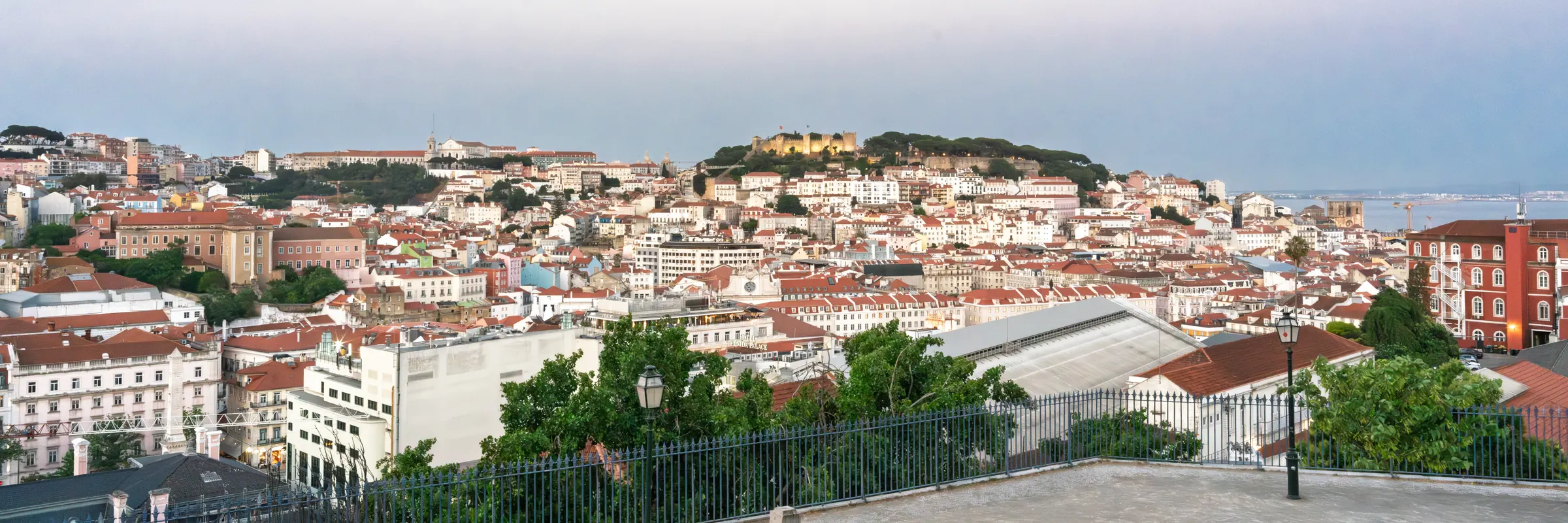
Lisbon: the city from the Senhora do Monte viewpoint at dusk
Photo: Dale Cruse - 10M views from San Francisco, CA, USA · CC BY 4.0
Lisbon Region, Portugal

Lisbon: how many days you need and the best months to go

Lisbon looks compact on a map and is not, because the map is flat and the city is not. Distances here are measured in climbs, which is why the funiculars and the lifts are public transport rather than attractions and why an afternoon disappears faster than you planned. The other thing that catches people is the queueing: the famous tram and the famous custard tarts both have lines that a small amount of planning removes entirely.

Short answers

What people ask before booking

How many days do you need in Lisbon?

Lisbon needs three days for the city — the old quarters, the viewpoints above them, the castle and Belém as its own half-day — and a fourth for Sintra, which does not fit into an afternoon.

What is the best month to visit Lisbon?

April and May — Warm, long days and the hills still walkable. September and October — Summer warmth after the summer leaves.

Which months are worth avoiding in Lisbon?

July and August — Heat, cruise ships and the city half-shut. December to February — Mild and grey, with short days.

How many days Lisbon needs

Three days covers the city itself: the old quarters and the viewpoints above them, the castle, Belém as its own half-day, and one evening that is not spent where the coaches stop. That is a complete first trip and it is what most people book.

The fourth day is for Sintra, which cannot be done properly in an afternoon, or for the coast at Cascais. Lisbon is one of the few European capitals where the standard day trip genuinely needs a whole day — the palaces are spread across a wooded hillside and the buses between them are the bottleneck, not the distance.

How the city is arranged, and why the hills decide it

Lisbon sits on hills above the Tagus, and the arrangement is easier to hold than it looks: a flat grid in the middle, old quarters on the hills either side of it, and the river along the bottom. The flat part is the Baixa, rebuilt on a grid after the 1755 earthquake, and everything interesting is uphill from it in one direction or the other.

This is why planning by distance fails here. Two points four hundred metres apart on a map can be separated by a sixty-metre climb up stepped alleys, and doing that six times in a day is a different day from the one you planned.

  • The Baixa and Chiado — the flat grid and the shopping streets above it. Where you will cross the city, and where the lifts and funiculars start.
  • Alfama — the oldest quarter, on the hill under the castle, and the only part that survived the earthquake largely intact. Lanes too narrow for cars, and easy to get lost in on purpose.
  • Bairro Alto and Príncipe Real — quiet and shuttered by day, the centre of the city's nightlife after dark, with the better independent shops on the streets above.
  • Belém — six kilometres west, with the monastery, the tower, the museums and the original custard tarts. It is a separate outing and not an afternoon add-on.
  • Alcântara and the eastern riverfront — the converted industrial edges, with the LX Factory on one side and the Parque das Nações on the other.

Where to stay, and the question to ask before booking

The useful question in Lisbon is not how central a place is but how far up it is and what you have to climb to reach it. A room three minutes from a metro station can still be a hundred steps above it, which matters on the fourth day and matters a lot with a suitcase.

The second thing to check is noise. Bairro Alto is genuinely loud until very late — that is what it is for — and the streets around the main squares get the sound of every departing group.

AreaWho it suitsThe catch
Baixa and ChiadoA first visit. Flat, central, walkable to almost everything and on the metro.The most touristed streets in the city, and priced accordingly.
AlfamaAtmosphere, the castle above you and the best morning light in Lisbon.Stairs, stairs and no taxi to your door. Not the place for a heavy case.
Príncipe RealQuiet, handsome streets and good food, ten minutes above the centre.That ten minutes is uphill, and hotel stock is thin and expensive.
Avenida da LiberdadeLarger hotels, flat ground, and a straight metro run to the airport.A boulevard rather than a neighbourhood; the character is elsewhere.
Alcântara and LXBetter value, the river, and the converted warehouses at street level.Away from the old quarters, so you commute in every morning.

The airport, the trams, and the queue you can skip

Lisbon's airport is on the metro, which is unusual and removes the whole transfer problem: it is inside the city, and the red line runs from the terminal to a change for the centre. This is the opposite of the situation in most capitals and it is worth knowing before you book a transfer you do not need.

Inside the city, the trams are the thing people get wrong. Tram 28 is a working tram on a normal route, not a tourist ride, and the queue at its Martim Moniz terminus routinely runs to an hour or more. You do not have to join it: board partway along the route, where people get off and there is space, or take tram 12, which loops through the same hill and is nearly always empty by comparison.

  • The funiculars and the Santa Justa lift are public transport and covered by a normal travel pass — buying a separate attraction ticket for the lift is the common mistake.
  • You can walk to the top of the Santa Justa lift for free from the Carmo side, which is the same view without the queue.
  • Get a rechargeable Viva Viagem card at any metro machine. It works on metro, bus, tram and the lifts, and a day pass pays for itself quickly on a hilly day.
  • The ferries across the river are ordinary commuter boats and the cheapest way to see Lisbon from the water.

Day trips, and why Sintra needs the whole day

Everything worth leaving Lisbon for is within an hour, and the trains are frequent and cheap. Sintra is the one that goes wrong — people give it an afternoon, arrive at midday with everyone else, and spend it queueing for a bus up a hill.

  • Sintra — a wooded hillside of palaces and gardens, forty minutes by train. Go on the first trains of the morning and buy palace tickets before you travel; the shuttle bus between the sites is the constraint, and by eleven the queue for it is longer than the walk.
  • Cascais — a seaside town at the end of a coastal railway, thirty-five minutes along the water. The easiest half-day here, and the train ride is half the point.
  • Óbidos — a walled medieval town an hour north by bus. Small enough to see in two hours and much better outside July and August.
  • Setúbal and Arrábida — beaches under a limestone ridge south of the river, and the best swimming near the city. Needs a car or a bus and a plan.
  • Évora — a Roman temple, a walled centre and a bone chapel, an hour and a half inland. The most substantial day trip and the least crowded.

How eating and drinking works here

The thing to understand about a Portuguese table is the couvert: the bread, olives, cheese or sardine paste that arrives before you order anything. It is not free and it is not a scam — it is a charged item you are entitled to refuse, and sending it back is completely normal and slightly expected of locals.

The other structural fact is the rhythm. Lunch is the serious meal and the *prato do dia* at midday is a fraction of the same kitchen's evening price. Dinner starts late by northern European standards, and a restaurant that is empty at seven is not a bad restaurant.

  • Coffee has its own vocabulary. A plain espresso is *um café* or *uma bica*; asking for an americano gets you something different from what you meant.
  • Fado is a listening room, not background music. The good ones ask for quiet during a song, and any place with a sign in four languages and a man outside is not one of them.
  • Grilled sardines are a summer thing, not a year-round dish. They belong to June, and outside those weeks the frozen version is what you get.
  • Tipping is small and optional — rounding up, or a euro or two on a good meal. There is no percentage expectation.

Where to eat in Lisbon, and what to order

Lisbon's food is cheap, salty and built on cod, pork and sugar, and the gap between a good version and a bad one is almost entirely about whether the place is on a tourist route. The rule is to climb. One street up from any square with a view, the same dish costs less and is cooked by someone who will be there next year.

  • Pastel de nata

    What to order

    The pastry, and the argument about where to eat it

    A custard tart in flaky pastry, scorched on top, served warm with cinnamon and icing sugar you add yourself. The Belém bakery makes the original to a recipe it has kept secret since the nineteenth century and there is always a queue. Go anyway once — then eat the neighbourhood version everywhere else, which is very good and takes no queueing.

    Check it on Wikidata
  • Bifana

    What to order

    Lunch standing up, for very little money

    Thin marinated pork in a crusty roll, with mustard or piri-piri added at the counter. It is the workers' lunch and it is served in plain, bright rooms that do nothing else. Ask for it with the sauce from the pan, which is the difference between a good one and a dry one.

    Check it on Wikidata
  • Bacalhau

    What to order

    The national obsession, and how to order it

    Salt cod, soaked and cooked in a hundred documented ways — the Portuguese claim one for every day of the year. It is not fresh fish and is not meant to taste like it. The shredded version with eggs and potato is the gentlest introduction; the roasted-with-olive-oil version is the one to order once you like it.

    Check it on Wikidata
  • Ginjinha

    What to order

    The two-minute drink before dinner

    A sour-cherry liqueur, poured into a tiny glass at a hole-in-the-wall counter and drunk standing on the pavement. Ask whether you want the cherry in it; you will be asked, and the answer is yes. It is a habit rather than a night out — one glass, then dinner.

    Check it on Wikidata
  • Time Out Market Lisboa

    Food hall

    Everyone wants something different and nobody will agree

    Half of a nineteenth-century market hall converted into stalls run by well-known kitchens, with shared tables in the middle. It is busy, it is not cheap, and it solves an argument when a group cannot agree. The other half of the building is still a working produce market and is worth walking through in the morning.

    Check it on Wikidata
  • Belém

    Where to look

    The half-day west, and what to eat while you are there

    The riverside district with the monastery, the tower and the museums, six kilometres from the centre. Treat it as a morning of its own, arrive early, and eat there rather than rushing back. It is where the custard tarts come from and the reason to plan the day around it.

    Check it on Wikidata

When to go, and what each month costs you

Lisbon has more sunshine than almost anywhere in Europe and a summer that is hotter than people expect on a hillside city with no shade. The variable that decides a trip here is not rain but heat and crowding, and the two peak together. The winters are mild, grey and genuinely cheap.

  • April and May

    Go now

    Warm, long days and the hills still walkable

    The best combination the city offers: comfortable temperatures for climbing, long light, and the terraces open without August's crush. Prices are below summer and the day trips are at their most pleasant.

  • September and October

    Go now

    Summer warmth after the summer leaves

    Still warm, still swimmable on the coast, and noticeably emptier once the school holidays end. October brings the first rain but also the clearest light of the year over the river. If you can pick one month, September.

  • June

    Worth it, but

    Hot, busy, and the city's own festival

    Warm rather than punishing, with long evenings. The Festas de Santo António peak on 13 June every year — a fixed date, not a moving one — and for a week the old quarters cook sardines in the street and stay up all night. Wonderful if that is what you came for; unbearable if you wanted quiet, and priced accordingly.

  • March and November

    Worth it, but

    Cheap and unpredictable, in both directions

    Mild shoulder months that can hand you a week of sun or a week of rain. Good value and few queues, and everything indoors is unaffected. Easter moves between March and April and fills the city for a few days when it lands.

  • July and August

    Think twice

    Heat, cruise ships and the city half-shut

    The hottest and busiest weeks of the year, on a city of exposed hills with very little shade. Cruise arrivals concentrate in the old quarters at exactly the wrong hours. Many family restaurants close for their own holidays in August, so the ones left open are the ones aimed at visitors.

  • December to February

    Think twice

    Mild and grey, with short days

    Not cold by European standards, but wet, overcast and dark early, which takes the point out of a city whose best feature is a view. The lowest prices of the year and the museums, markets and fado houses all working normally.

Things that change the trip

  • Plan by viewpoint, not by monument. The miradouros are where the city makes sense, they are free, and stringing three together is a better day than a list of buildings.
  • Board tram 28 partway along its route instead of at the terminus, or take tram 12 through the same hill. The hour-long queue is optional.
  • Get a Viva Viagem card and use the funiculars. They are public transport, they are covered by the pass, and they exist precisely to save you the climb.
  • Go to Sintra on the first train and buy palace tickets in advance. The shuttle bus, not the distance, is what ruins that day.
  • Refuse the couvert if you do not want it. The bread and olives on the table are a charged item and sending them back is normal.
  • Wear shoes with grip. The pavements are polished limestone cobble and they are genuinely slippery in the rain — this is a local complaint, not a visitor one.

Plan Lisbon around the climbs

A trip of more than three days, or one that adds Sintra, the Algarve or Porto and the trains between them, is what Premium is for. The free version covers one destination of up to three days.

Destinations