
Skip to content
JoruJoru
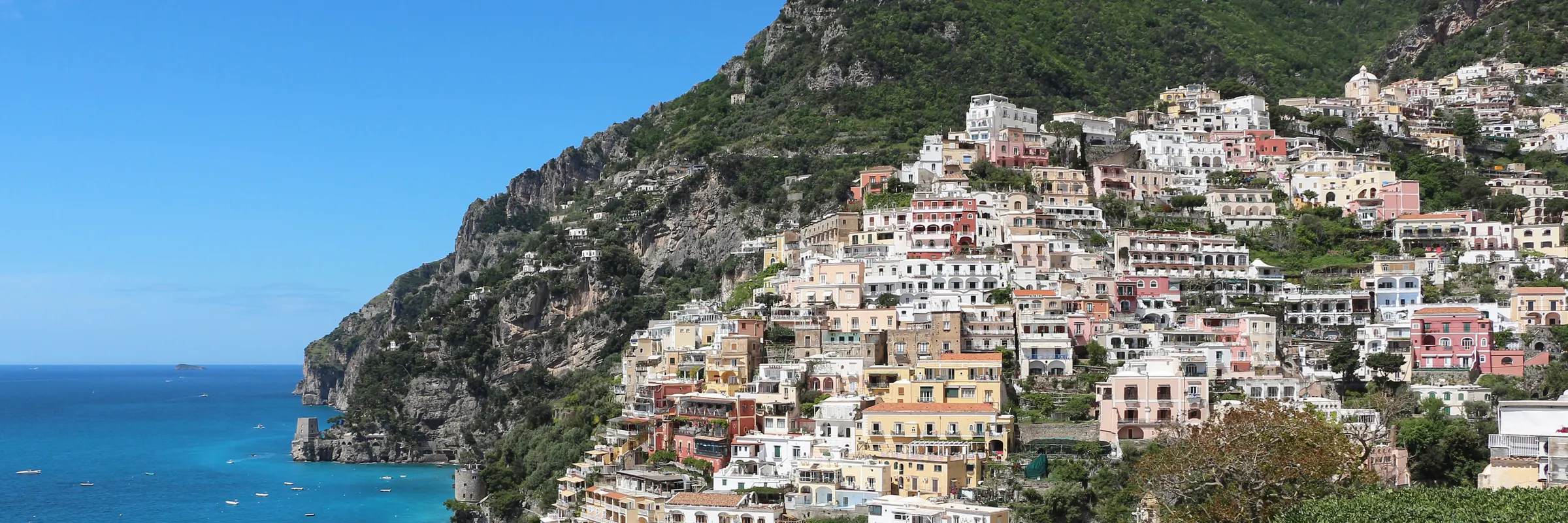
Amalfi Coast: Positano stacked on the cliffs above the sea

Campania, Italy

Amalfi Coast: how many days you need and the best months to go

Photo: Bernard Gagnon · CC BY 4.0

The Amalfi Coast is the southern shore of the Sorrento peninsula, where the mountains drop straight into the Tyrrhenian Sea and a dozen towns cling to the gaps between the cliffs. Positano spills down its ravine in pastel terraces; Amalfi, once a maritime republic that traded across the Mediterranean, keeps its striped cathedral and its paper mills; Ravello looks down on all of it from its gardens high above. Between them, lemon groves on stone terraces, tiny pebble beaches, and footpaths along the mountainside. All of it is joined by one road, carved into the cliffs, narrow and spectacular, which in summer becomes the planning problem. Buses fill, traffic jams, the road is restricted for private cars on the busiest days, and every town is a climb of steps from the sea. Choose one or two bases, use the ferries along the coast whenever they run, and walk.

Short answers

What people ask before booking

How many days do you need on the Amalfi Coast?

The Amalfi Coast needs three days: one for Amalfi and Atrani, one for the gardens of Ravello, and one for Positano and the Path of the Gods along the mountainside. A fourth day adds Capri by boat or a day on a beach. Choose one or two bases and travel along the coast by ferry when the sea allows.

What is the best month to visit the Amalfi Coast?

May and June — Warm, green and in flower. September and October — A warm sea and fewer people.

Work out how many hours you will have on the Amalfi Coast on your dates
When to go, and what each month costs you

The coast has a mild Mediterranean climate: hot, dry summers, mild, wet winters, and long, warm springs and autumns. The season runs from Easter to October, and the months either side of the summer peak are the best.

  1. January: Worth it, but
  2. February: Worth it, but
  3. March: Worth it, but
  4. April: Worth it, but
  5. May: Go now
  6. June: Go now
  7. July: Worth it, but
  8. August: Worth it, but
  9. September: Go now
  10. October: Go now
  11. November: Worth it, but
  12. December: Worth it, but
  • May and June

    Go now

    Warm, green and in flower

    Warm days, the lemon groves in fruit and the gardens of Ravello in flower, with the ferries running and the sea warming. The best time for the Path of the Gods; from late June the summer crowds arrive.

  • September and October

    Go now

    A warm sea and fewer people

    The sea still warm after the summer, the heat easing and the crowds thinning. By late October some hotels and ferries begin to close, and autumn storms can stop the boats.

  • July and August

    Worth it, but

    Hot, packed and dear

    Hot days and warm nights, the beaches and buses full, and the coast road restricted on the busiest days. The Ravello festival brings concerts to the gardens above the sea; book everything well ahead.

  • November to April

    Worth it, but

    Quiet, mild and half closed

    Mild days with rain, few ferries, and many hotels and restaurants closed until Easter. The towns are calm and local, and the walks are good on dry days; Easter, whose date moves every year, reopens the season.

What to pack for the Amalfi Coast, month by month

How many days the Amalfi Coast needs

Three days give the coast its due. One for Amalfi and Atrani, the cathedral and the paper museum, with a boat along the coast. One for Ravello, its villas and gardens above the sea. One for Positano and the Path of the Gods, the footpath along the mountainside from Agerola, with the steps down to the town at the end.

A fourth day adds the sea or the islands: a boat to Capri, a day on a beach, or the fishing village of Cetara and the ceramics of Vietri. Pompeii and Naples are a long day away, and Sorrento is the gateway on the other side of the peninsula.

How the coast is arranged, along one road

The coast runs east from Positano to Vietri sul Mare, the road clinging to the cliffs between them. Positano is at the western end, Amalfi in the middle, Ravello on the mountain above it; Salerno, with the railway, is beyond the eastern end, and Sorrento and Naples lie behind the mountains to the west.

  • Positano — the most famous town, a cascade of houses down a ravine to a beach, with boutiques and steep steps.
  • Praiano and Furore — quieter towns between Positano and Amalfi, with the fjord of Furore below the road.
  • Amalfi and Atrani — the old maritime republic, with its cathedral and its ferries, and the tiny town next door.
  • Ravello — the town high above Amalfi, with the gardens of its villas and the summer music festival.
  • Minori, Maiori and Cetara — the eastern towns, more local, with longer beaches and the anchovy boats of Cetara.

Where to stay, and what each area costs you

Amalfi is the most practical base: the hub of the buses and the ferries, in the middle of the coast. Positano is the most beautiful and the dearest; Ravello the quietest and most romantic, up the mountain; the eastern towns the best value.

Prices peak from June to September and in Easter week; from November to March many hotels close and the ferries stop or run less often. The towns charge a tourist tax per person and per night.

AreaWho it suitsThe catch
PositanoThe view and the glamour: terraces over the sea, the beach, restaurants and shops.The dearest rooms on the coast, crowded, and every walk is up or down steps.
Amalfi and AtraniA practical base: the hub of the ferries and buses, the cathedral and the town's lanes.Packed with day-trippers, and noisy where the buses stop.
RavelloPeace, gardens and views from high above the sea, and concerts in summer.No beach, and a bus or a long walk down to the coast.
PraianoA quieter town between Positano and Amalfi, with sunsets over the sea.Spread along the road, with few restaurants and steps everywhere.
Minori and MaioriLower prices, longer beaches and a more local life at the eastern end.Further from Positano, and less spectacular.

Compare these areas against your priorities

Getting there, and getting around

Naples airport is the usual way in, a drive of an hour and a half to two hours, or a bus or train to Sorrento or Salerno and a ferry or bus from there. Salerno is on the high-speed railway and has its own small airport; from spring to autumn, ferries link it with Amalfi and Positano.

Along the coast, the ferry is the best way to travel when the sea and the season allow: faster than the road, with the view from the water. The blue buses run between the towns all year, slow and crowded in summer.

  • Do not drive in summer if you can avoid it: on the busiest days of the season the coast road is restricted to cars with odd or even number plates, depending on the date, and parking is scarce and very dear.
  • Buy bus tickets before boarding, and expect to stand on summer weekends.
  • Ferries stop in rough seas and in winter; check the timetable the day before.
  • Pack light and wear good shoes: almost every hotel is up or down a flight of steps.

The towns, the path and the lemons

The Path of the Gods is the best way to understand the coast: a footpath along the mountainside from Agerola to above Positano, about three hours, with the whole coast below and Capri on the horizon. It is not difficult but has rough sections; at the end, hundreds of steps lead down to Positano. Walk it in the morning, out of the summer heat.

  • The cathedral of Amalfi — a striped façade at the top of a great stairway, with the Cloister of Paradise beside it.
  • Villa Rufolo and Villa Cimbrone — the gardens of Ravello, with terraces hanging over the sea.
  • The paper museum — an old mill in the valley above Amalfi, where the town's handmade paper is still made.
  • The fjord of Furore — a narrow ravine with a tiny beach under the arch of the road bridge.
  • Capri — the island off the tip of the peninsula, a day trip by ferry from Positano or Amalfi in season.
  • Vietri sul Mare — the eastern gateway, a town of painted ceramics.

How eating works here

The coast lives on the sea and on its lemons: the big, fragrant lemons of its terraces, fresh fish and shellfish, a fish sauce made from anchovies in Cetara, and fresh pasta, with the mozzarella of the plain behind Salerno and the wines of the hills. Restaurants with a view charge for it; the family trattorias up the side streets are better value.

Italian hours apply, later in summer: lunch from one, dinner from half past seven or eight. Book dinner in summer, especially for a table with a view.

  • Fish is often sold by weight: check the price before ordering.
  • Beach clubs rent loungers and umbrellas; the free strips of the beaches are small and crowded.
  • The lemon liqueur is served cold after dinner, and every family has its recipe.
  • A cover charge is often added per person; tipping beyond it is optional.

Where to eat on the Amalfi Coast, and what to order

The Amalfi Coast cooks with lemons and the sea: the big lemons of its terraces, the liqueur made from their peel, an anchovy sauce from Cetara, a thick fresh pasta with seafood, and a lemon cake to finish. Eat fish by the sea, and lemons everywhere.

  • Limone Costa d'Amalfi

    What to order

    The lemons of the terraces

    Large, elongated lemons with thick, fragrant skin and sweet juice, grown on terraces of stone walls under chestnut-pole pergolas. They have a protected name, and they are in everything: salads, pasta, cakes, the liqueur and the soap.

    Check it on Wikidata
  • Limoncello

    What to order

    The lemon liqueur

    A sweet, bright yellow liqueur made by steeping lemon peel in alcohol and adding syrup, served ice-cold in a small glass. It is offered at the end of dinner all along the coast; buy it from a producer, not from the souvenir shops.

    Check it on Wikidata
  • Colatura di alici

    What to order

    The anchovy sauce of Cetara

    An amber fish sauce drawn off anchovies layered with salt in small barrels, in the fishing village of Cetara. A few drops on spaghetti with garlic and oil make the classic dish, a descendant of the fish sauce of the Romans.

    Check it on Wikidata
  • Scialatielli

    What to order

    The fresh pasta with seafood

    Thick, short ribbons of fresh pasta, a little irregular, invented on the coast in the twentieth century. They are served with mixed seafood, clams and mussels, and are the pasta of every coastal restaurant.

    Check it on Wikidata
  • Delizia al limone

    What to order

    The lemon cake

    A small dome of sponge filled and covered with a lemon cream, soaked in lemon syrup. It was created in the 1970s on the Sorrento peninsula, and is the dessert of every pastry shop on the coast.

    Check it on Wikidata

Things that change the trip

  1. Choose one or two bases and move along the coast by ferry when the sea allows.
  2. Leave the car behind in summer, or check the plate restrictions on your dates.
  3. Walk the Path of the Gods in the morning, from Agerola down to Positano.
  4. Go to Ravello in the late afternoon, when the day-trippers have left.
  5. Pack light: every hotel is up or down a flight of steps.
  6. Buy limoncello from a producer, and eat the lemons.

Plan the Amalfi Coast with Naples and the islands

A trip of more than three days, or one that joins the Amalfi Coast with Naples, Pompeii, Sorrento and Capri and the ferries between them, is what Premium is for. The free version covers one destination of up to three days.

Destinations