

Skip to content
JoruJoru
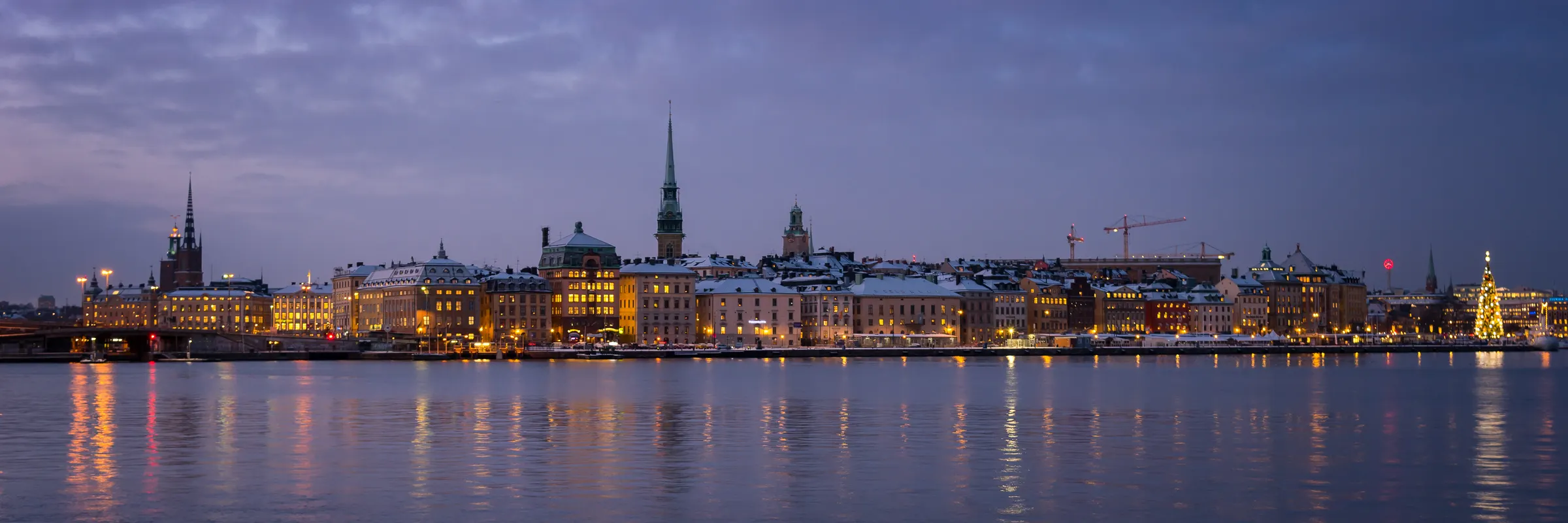
Stockholm: Gamla stan across the water on a winter evening

Stockholm, Sweden

Stockholm: how many days you need and the best months to go

Photo: Julian Herzog · CC BY 4.0

Stockholm stands on fourteen islands where Lake Mälaren drains into the Baltic, joined by dozens of bridges, with water at the end of almost every street. At its heart is Gamla stan, the medieval old town of narrow lanes and ochre merchant houses around the royal palace; to the north lie the modern centre and the elegant boulevards of Östermalm, to the south the cliffs and cafés of Södermalm, and to the east Djurgården, a green island of museums where a warship that sank on its maiden voyage in 1628 now stands almost whole. The city is clean, calm and well run, the water is clean enough to swim in the centre, and beyond the last houses the archipelago begins: tens of thousands of islands, islets and rocks stretching to the open sea, served by boats. The planning problem is the islands and the light. The city is spread across water, so you need to know which island you are going to and how to get there, by metro, tram or ferry; and the seasons are extreme, with nights that never get dark around midsummer and only about six hours of daylight in December. Choose your season first, then your islands.

Short answers

What people ask before booking

How many days do you need in Stockholm?

Stockholm needs three days: one for Gamla stan and the royal palace, one for Djurgården with the Vasa warship and Skansen, and one for Södermalm, Östermalm and the decorated metro stations. A fourth day is for a boat into the archipelago, Drottningholm or Uppsala. Choose the season first: light nights in June, short days in December.

What is the best month to visit Stockholm?

June to August — Light nights and the archipelago.

Work out how many hours you will have in Stockholm on your dates
When to go, and what each month costs you

Stockholm has cold winters and mild summers, with extreme light: nights that never get fully dark around midsummer, and about six hours of daylight in December. The summer is the best season, and the winter has its own beauty.

  1. January: Worth it, but
  2. February: Worth it, but
  3. March: Worth it, but
  4. April: Worth it, but
  5. May: Worth it, but
  6. June: Go now
  7. July: Go now
  8. August: Go now
  9. September: Worth it, but
  10. October: Worth it, but
  11. November: Worth it, but
  12. December: Worth it, but
  • June to August

    Go now

    Light nights and the archipelago

    Mild to warm days, endless evenings, swimming in the city and boats to the islands. Midsummer falls on a Friday between the 19th and 25th of June, a date that moves every year; the city empties as people head for the countryside, and some places close. July is Sweden's holiday month.

  • May and September

    Worth it, but

    Mild and calm

    Cool to mild days, long evenings in May and the first autumn colours in September. Fewer visitors; the boats to the outer islands run less often.

  • October and November

    Worth it, but

    Dark and grey

    Cool, grey days that shorten fast, with rain. The season of museums, cafés and candlelight.

  • December

    Worth it, but

    Christmas, Lucia and the Nobel Prizes

    Cold, dark days lit by Christmas markets in the old town and at Skansen. The Nobel Prizes are awarded on the 10th, and Lucia, the festival of light, is on the 13th, with processions of white-robed singers.

  • January to April

    Worth it, but

    Cold, snow and ice

    Cold days, sometimes snow, and the days lengthening fast after January. In cold winters the lakes and the archipelago freeze for skating; the cream buns of Shrovetide fill the bakeries before Lent, whose date moves every year.

What to pack for Stockholm, month by month

How many days Stockholm needs

Three days cover the city. One for Gamla stan and the palace, with the city hall across the water. One for Djurgården: the warship museum, the open-air museum and the waterfront. One for Södermalm and its viewpoints, Östermalm and its food hall, and the metro stations decorated as art galleries.

The fourth day is for the water or a trip out: a boat into the archipelago, to Vaxholm or further; the royal palace of Drottningholm on Lake Mälaren; or Uppsala, the old university city, and Sigtuna, the oldest town in Sweden.

How the city is arranged, across its islands

The city's islands lie between the lake to the west and the sea to the east. Gamla stan, the old town, is in the middle, with the modern centre of Norrmalm to the north, Södermalm to the south, Östermalm to the north-east and Djurgården to the east; the central station is in Norrmalm, a short walk from the old town.

  • Gamla stan — the medieval old town on its island, with the royal palace, the cathedral and the old square.
  • Norrmalm — the modern centre, with the central station, the shopping streets and the royal garden park.
  • Östermalm — the elegant north-east, with its waterfront boulevard, its covered food hall and its boutiques.
  • Södermalm — the large southern island, with cliffs, viewpoints, cafés, vintage shops and a younger crowd.
  • Djurgården — the green island of parks and museums to the east, with the warship, the open-air museum and an amusement park.
  • Kungsholmen — the western island, with the city hall on the water.

Where to stay, and what each area costs you

Norrmalm, by the central station, is the practical base, with the trains to the airport and the metro at the door; Gamla stan is the most atmospheric, Södermalm the liveliest, and Östermalm the most elegant.

Prices rise for big conferences and events and in summer in the tourist areas; business hotels are often cheaper at weekends and in July, when much of Sweden is on holiday.

AreaWho it suitsThe catch
NorrmalmThe airport train, the metro hub, the shops and the old town a short walk away.Less charm, and busy streets.
Gamla stanMedieval lanes, the palace and the waterfront on your doorstep.Small, dear hotels, tourist restaurants and cobbles for your suitcase.
SödermalmCafés, bars, viewpoints over the water and a local feel, one metro stop from the old town.Steep streets, and further from Djurgården.
ÖstermalmElegant streets, the food hall, the waterfront and a short walk to Djurgården.The dearest area, and quiet at night.

Compare these areas against your priorities

Getting there, and getting around

Arlanda, the main airport, is about forty kilometres north of the city, about twenty minutes from the central station by express train, and longer but cheaper by commuter train or airport bus. Trains run to Gothenburg, Copenhagen and Oslo, and overnight ferries to Helsinki and Tallinn.

The metro, the trams, the buses and some ferries share one ticket, and you can pay by tapping a contactless card or phone. The ferry from the old town's edge to Djurgården is the most pleasant way there.

  • Sweden is almost cashless: cards are accepted everywhere, and some places do not take cash at all.
  • The metro is an art gallery: most of its stations are decorated with paintings, sculptures and rock-cut caves.
  • Boats to the archipelago leave from the quays in the centre, all year to the nearer islands and more often in summer.
  • Wine, spirits and strong beer to take away are sold only in the shops of the state chain, closed on Sundays; bars and restaurants serve as usual.

The old town, the warship and the archipelago

The Vasa is the reason many people come to Stockholm: a great warship of the seventeenth century that sank in the harbour less than half an hour into its maiden voyage in 1628, was raised more than three centuries later and now stands almost entirely original in a museum built around it. It is the most visited museum in Scandinavia; go early or late.

  • Gamla stan — the old square with its coloured houses, the lanes, the cathedral and the royal palace, with the changing of the guard.
  • Skansen — one of the world's oldest open-air museums, with old houses brought from all over Sweden and Nordic animals, on a hill on Djurgården.
  • The city hall — a brick palace on the water, where the Nobel banquet is held, with a golden mosaic hall and a tower.
  • Södermalm's cliffs — the walks along the northern edge of the island, with views over the old town and the water.
  • The archipelago — a boat to Vaxholm or the outer islands, with wooden villages, rocks and swimming in summer.
  • Drottningholm — the royal family's palace on Lake Mälaren, with its gardens and an eighteenth-century theatre, a World Heritage Site reached by boat in summer.

How eating works here

Sweden eats simply and well: meatballs with cream sauce, lingonberries and mashed potatoes, herring pickled in a dozen ways, salmon cured with dill, prawns on toast, and the daily coffee break with a cinnamon or cardamom bun. Summer brings new potatoes and strawberries, August the crayfish parties, and December the Christmas buffet.

Lunch is early, from eleven, and dinner from six. The weekday lunch of the day, with salad, bread and coffee included, is the best value in the city.

  • Fika, the coffee break, is a ritual: coffee and a bun or cake, in a café, at any hour.
  • The Christmas buffet, served from late November, is a feast of herring, ham, meatballs and salmon.
  • The princess cake, a dome of green marzipan over cream and sponge, is in every bakery.
  • Service is included: rounding up is optional.

Where to eat in Stockholm, and what to order

Stockholm eats Swedish classics and the fish of the northern seas: a coffee break with a cinnamon bun, meatballs with lingonberries, pickled herring, salmon cured with dill, and the market hall of Östermalm for all of them.

  • Kanelbulle

    What to order

    Coffee and a cinnamon bun

    A soft, knotted bun of yeast dough rolled with cinnamon, butter and sugar, often spiced with cardamom and topped with pearl sugar. It is the heart of fika, the Swedish coffee break, eaten in the city's cafés at any hour.

    Check it on Wikidata
  • Köttbullar

    What to order

    Swedish meatballs

    Small meatballs of beef and pork, served with a cream sauce, mashed potatoes, lingonberry jam and pickled cucumber. Order them in a traditional restaurant, where they are made by hand.

    Check it on Wikidata
  • Inlagd sill

    What to order

    Pickled herring

    Herring pickled in vinegar with onion, mustard, dill or spices, served with new potatoes, sour cream and chives. It is the dish of midsummer and of the Christmas buffet, eaten all year.

    Check it on Wikidata
  • Gravlax

    What to order

    Salmon cured with dill

    Raw salmon cured with salt, sugar and dill, sliced thin and served with a sweet mustard and dill sauce. The old way of preserving fish, now a Nordic classic, on bread or with potatoes.

    Check it on Wikidata
  • Östermalms saluhall

    Market

    The Östermalm food hall

    A covered market hall of the nineteenth century, with stalls of fish, meat, cheese and game and counters serving Swedish dishes. Come for lunch, when the counters are at their liveliest.

    Check it on Wikidata

Things that change the trip

  1. Choose your season first: light and islands in summer, dark and cosy in winter.
  2. Go to the Vasa museum early or late.
  3. Take the ferry to Djurgården, and a boat into the archipelago.
  4. Pay by card: cash is rarely needed, and sometimes refused.
  5. Eat the weekday lunch of the day for the best value.
  6. Ride the metro to see its decorated stations.

Plan Stockholm with Sweden

A trip of more than three days, or one that joins Stockholm with the archipelago, Uppsala, Gothenburg, Copenhagen or Oslo and the trains and boats between them, is what Premium is for. The free version covers one destination of up to three days.

Destinations