Skip to content
JoruJoru
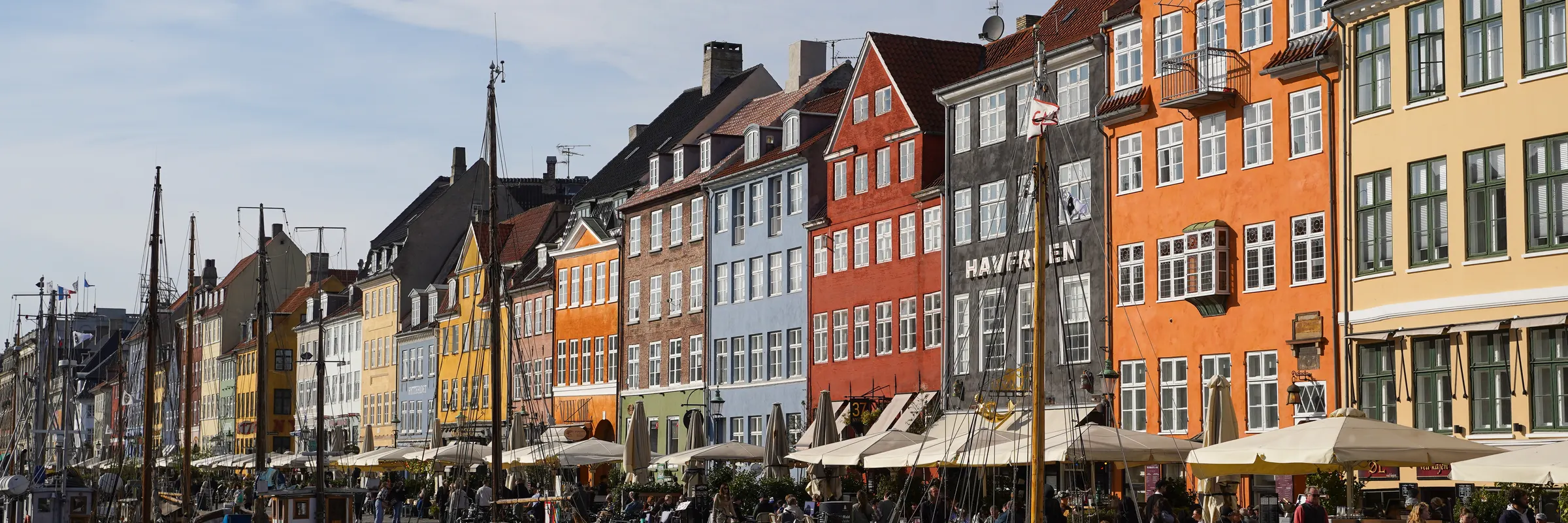
Copenhagen: The painted fronts and wooden boats of Nyhavn
Photo: OleNeitzel · CC BY 4.0
Denmark

Copenhagen: how many days you need and the best months to go

Copenhagen is small, flat and built on water — a set of islands with harbour baths in the middle of the city — and it runs on bicycles to a degree that visitors consistently underestimate. More people commute into the centre by bike than by car, and the infrastructure is built accordingly. Two days covers the sights. Three is the right length, and the month you choose changes the trip more than the number of days: this is a city that lives outdoors in June and indoors in February.

Short answers

What people ask before booking

How many days do you need in Copenhagen?

Copenhagen needs two days for the centre and three to add Christiania, Refshaleøen and the Louisiana museum. Rent a bicycle: it is the transport system here. The month matters most — seventeen hours of light in June, seven in December.

What is the best month to visit Copenhagen?

May and June — Long light, everything open, and not yet full. September — The quiet month, still warm enough.

Which months are worth avoiding in Copenhagen?

January, February, March and November — Dark, wet and windy, with the outdoor city closed.

How many days Copenhagen needs

Two days does the core: Nyhavn and the harbour on one, Christiansborg, the Round Tower and Rosenborg on the other, with Tivoli or a harbour bath in whichever evening the weather allows. The centre is genuinely walkable and the distances are short.

Three days is the right number, and the third is the one that makes it a Copenhagen trip rather than a European city break. It buys Christiania, the free town in a former military barracks; Refshaleøen, the old shipyard turned food and culture district across the water; and either the Louisiana museum of modern art forty minutes north on the coast — one of the best-sited museums in Europe — or a day trip to Malmö, which is in another country and twenty-five minutes away by train.

The bicycle is not a novelty, it is the transport system

Copenhagen has hundreds of kilometres of protected bike lanes, separated from cars by a kerb rather than a painted line, plus bridges built for bicycles only. The city is flat, the distances are short, and cycling is faster than any other way of crossing the centre. Renting one for the whole stay is the single change that most improves a trip here.

It comes with rules that are enforced socially and legally. Ride on the right, signal with your hand — arm out to turn, hand up to stop — and never stop in the lane, because the person behind you is commuting and expects you not to. Lights are mandatory after dark and the fine is real. Turning left is done in two stages: cross straight, stop at the far corner, wait for the light. And if you are walking, look before stepping into a bike lane; it is the most common way for visitors to nearly get hit.

  • Nyhavn — the painted canal fronts and wooden boats. Postcard and tourist trap in equal measure; walk it, eat elsewhere.
  • Christiania — a self-declared free town in a former barracks since 1971, with its own rules and a strict no-photography area.
  • Tivoli — an 1843 pleasure garden in the middle of town, which is why it feels nothing like a modern theme park.
  • Refshaleøen — the old shipyard, now street food, saunas and galleries. Twenty minutes by harbour bus, which is public transport.
  • Louisiana — modern art in a garden over the sound, forty minutes up the coast. Worth a whole day.

The food, and what actually happened here

In 2004 a group of chefs signed a manifesto for a New Nordic cuisine built on seasonality, local produce and old preservation techniques, and the restaurant that came out of it made Copenhagen a place people fly to in order to eat. The lasting effect is not the tasting menus; it is that the ordinary standard of eating in this city rose enormously. Bakeries, wine bars and canteen-style places here are better than in most European capitals.

It is also expensive, and the way around it is structural rather than clever. Lunch is where the value is: many serious kitchens run a lunch menu at a fraction of the evening price. Smørrebrød is a lunch dish, not a dinner one. Street food halls and the hot-dog carts cover the cheap end honestly. And tap water is excellent and free, service is included and tipping is not expected — which surprises visitors from countries where it is.

Hygge, and what it is not

The word gets exported as a design style involving candles and blankets, and that is a marketing flattening of it. Hygge is closer to a deliberate, low-stakes cosiness — a way of making a long dark evening into something people look forward to rather than endure — and it is a response to the climate rather than an aesthetic. Six months of the year here are dark and wet, and the culture built an answer to that.

For a visitor it has one practical consequence. Winter in Copenhagen works if you plan indoors and evenings rather than sights and daylight: long meals, cafés, saunas, Tivoli's Christmas season. A winter trip planned like a summer trip, marching between outdoor attractions in seven hours of grey light, is the version of this city that disappoints people.

The light, and the water

Copenhagen sits at almost 56 degrees north and the day length swings hard. In late June it is light past ten at night and never truly dark; in December the sun sets around half past three. The city empties outdoors in the first case and fills the cafés in the second, and both are real versions of the place.

The water is the other seasonal fact and it is a genuine surprise. The harbour was cleaned up enough to swim in from the early 2000s, and there are now public harbour baths in the middle of the city — free, supervised in season, and used by ordinary people on any warm day. It is the single most Copenhagen thing you can do and it exists for maybe three months of the year.

Practical things worth knowing

Denmark is not in the euro. It uses the Danish krone, the country is close to cashless, and cards work everywhere including on buses and in market stalls; you can complete a trip without touching cash. The metro runs twenty-four hours and reaches the airport in about fifteen minutes.

Two more. English is spoken essentially universally and to a standard that makes attempting Danish unnecessary — though it is appreciated. And the city is safe and orderly in a way that catches people out in one specific respect: pedestrians here wait for the green man even on an empty street, and stepping out against it will get you looked at. It is a small thing that tells you how the place works.

What to eat in Copenhagen, and where

Two layers, and you want both: the old Danish one — open sandwiches, pastry, hot dogs from a cart — and the new one that made this a city people travel to eat in. Lunch is where the value is.

  • Smørrebrød

    What to order

    Lunch, and the dish to order first

    An open sandwich on dense dark rye, built in a fixed order — butter, a main topping of herring, prawn, roast pork or egg, then garnish — and eaten with a knife and fork. It is a lunch dish and ordering it at dinner marks you out, and there is a whole grammar about which toppings go together. Two or three per person is a meal, usually with beer and a shot of aquavit.

    Check it on Wikidata
  • Wienerbrød

    What to order

    The pastry, and the name confusion

    Laminated sweet pastry with a great many butter layers, which the rest of the world calls Danish and the Danes call Viennese bread. The name comes from Austrian bakers brought in during a strike in the 1850s, which is why each country credits the other. The cinnamon-knot version is the one to get, and it must be same-morning.

    Check it on Wikidata
  • Pølsevogn

    Institution

    The cheap thing that is genuinely an institution

    A hot dog cart, licensed and standing on the same street corners since 1921, serving a sausage in a bun with remoulade, raw and fried onion and pickled cucumber. It is the honest cheap meal in a very expensive city, and the vendors have a semi-official status in Danish life. Ask for a ristet hotdog if you want the bun toasted.

    Check it on Wikidata
  • Nueva cocina nordica

    What to order

    Why this city is on the food map at all

    A culinary movement launched by a manifesto signed in 2004 — seasonality, local ingredients, old preservation methods — which turned a city with no gastronomic reputation into a destination. What matters to a visitor is not the famous restaurants but the floor it raised: the bakeries and mid-range kitchens here are better than the price suggests.

    Check it on Wikidata
  • Nyhavn

    Where to look

    Where to look, and what to skip there

    The painted canal frontage with the wooden boats, and the most photographed place in Denmark. The buildings are the point; the restaurants directly on it are not — they are priced for the view. Walk it, then eat one street back, or cross to Refshaleøen where the old shipyard now holds the good food halls.

    Check it on Wikidata

When to go, and what each month costs you

One thing governs this calendar and it is not temperature: daylight, which runs from seventeen hours in June to seven in December. Copenhagen is an outdoor city for about four months and an indoor one for the rest, and both work if you plan for the one you booked.

  • May and June

    Go now

    Long light, everything open, and not yet full

    The best window of the year: light until ten at night, terraces and harbour baths open, and the peak-season crowd still weeks away. June is when the city is most itself — outdoors, on bikes, in the water. It can still be cool and windy, but the days are long enough that it barely matters.

  • September

    Go now

    The quiet month, still warm enough

    The summer crowds go home, prices ease, and the city keeps enough light and warmth to sit outside. The best value of the good months. The harbour is still swimmable at the start and the museums are empty. If you want Copenhagen without the queues, this is it.

  • July and August

    Worth it, but

    Peak season: warmest, busiest, priciest

    The warmest weather and everything running at full tilt, with the harbour baths busy and festivals through both months. It is also when hotels are at their most expensive and Nyhavn is at its least pleasant. Danes take their own holidays in July, so parts of the city quieten while the tourist parts fill.

  • December

    Worth it, but

    Christmas markets and Tivoli, in seven hours of light

    Tivoli's Christmas season is genuinely worth the trip, the markets are good and the whole hygge apparatus makes sense in situ. The sun sets around half past three and it is cold and often wet. Plan evenings and interiors; do not plan a day of walking between outdoor sights.

  • April and October

    Worth it, but

    Shoulder months, cheaper and unreliable

    Fewer people and lower prices, with weather that can give you a bright still day or a week of grey drizzle. April has the light coming back fast, which counts for a lot. Have an indoor plan; the museums here are strong enough to carry a bad afternoon.

  • January, February, March and November

    Think twice

    Dark, wet and windy, with the outdoor city closed

    Seven or eight hours of grey light, cold rain and wind off the sound. The harbour baths, the terraces and the cycling city are all effectively shut, which removes most of what makes this place distinctive. Cheap and empty, and the food and museums are still excellent — but you are visiting a different city.

Things that change the trip

  • Rent a bicycle for the whole stay. It is the transport system here, not a novelty, and the city is flat and short across.
  • Eat lunch at the good restaurants. Many serious kitchens run a lunch menu at a fraction of the evening price.
  • Never stop in a bike lane, and signal with your hand. The person behind you is commuting and the rules are taken seriously.
  • Book winter for evenings and interiors. A December trip planned around outdoor sights runs out of daylight at half past three.
  • Denmark uses the krone, not the euro, and the country is close to cashless — cards work everywhere, including on buses.
  • Swim in the harbour if the month allows. It was cleaned up to be swimmable and the public baths are free.

Plan Copenhagen and Denmark

A trip beyond four days, or one that pairs Copenhagen with Malmö, Aarhus or the coast north of the city — with the daylight, the ferry and train times and the restaurant bookings worked out around it — is exactly what Premium is for. The free version covers one destination for up to three days.

Destinations