


Skip to content
JoruJoru
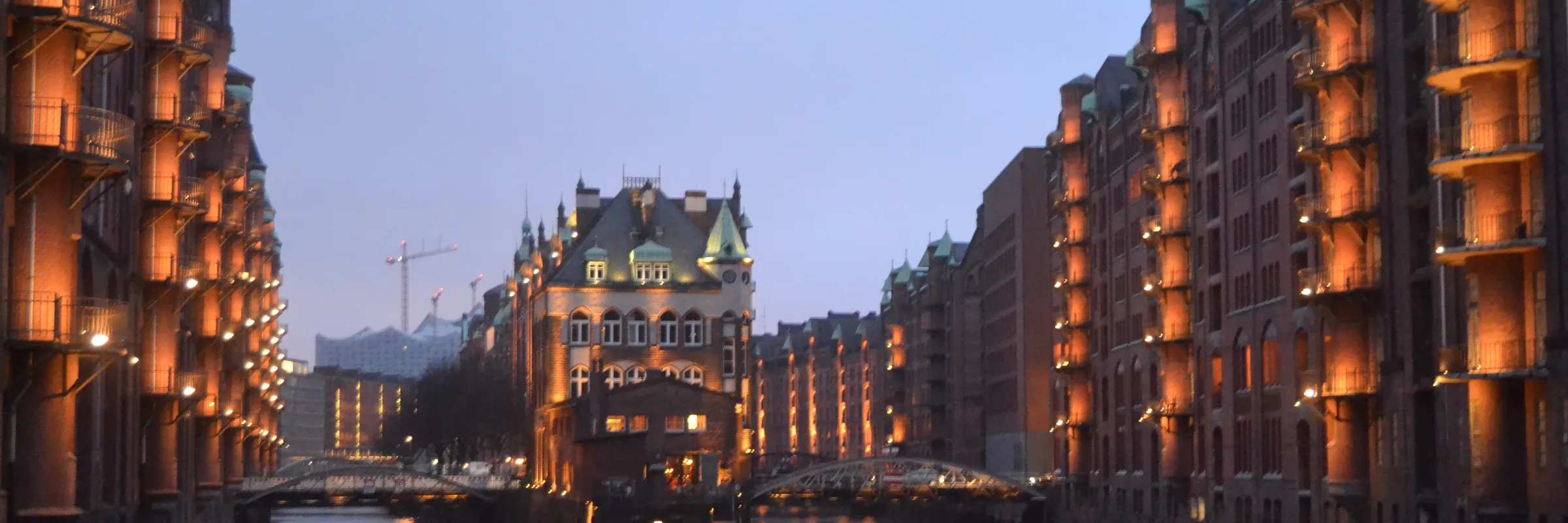
Hamburg: The Speicherstadt warehouses lit at dusk, with the Elbphilharmonie behind

Hamburg, Germany

Hamburg: how many days you need and the best months to go

Photo: Matthias v.d. Elbe · CC BY 3.0

Hamburg is Germany's second city and its gateway to the world, a Hanseatic port that has traded across the oceans for eight centuries and still runs one of the largest harbours in Europe. It is a city of water more than any other in the country: the river Elbe with its container ships and harbour ferries, the canals of the old warehouse district, now a World Heritage Site, and the two Alster lakes in the heart of the town, ringed by white villas and sailing boats. Above the harbour stands the Elbphilharmonie, a concert hall of glass waves on top of an old brick warehouse; around it, the elegant shopping streets of the centre, the alternative quarters of the Schanze and Ottensen, and St. Pauli, where the Beatles learned their trade on the Reeperbahn. The planning problem is weather and spread. Rain comes to Hamburg on many days of the year, in every season, and its sights are spread across districts with very different moods, linked by trains and boats. Pack a raincoat, pick your districts, and use the harbour ferries as part of the sightseeing.

Short answers

What people ask before booking

How many days do you need in Hamburg?

Hamburg needs two days: one for the centre, the Alster lakes, the old warehouse district, the Elbphilharmonie and a harbour ferry, and one for St. Pauli, the Sunday fish market, the Schanze and the Elbe shore. A third day adds the giant model railway, a museum or a concert. Pack a raincoat in every season.

What is the best month to visit Hamburg?

May to September — Long evenings by the water.

Work out how many hours you will have in Hamburg on your dates
When to go, and what each month costs you

Hamburg has a mild, wet maritime climate: cool summers, damp, grey winters, and rain spread through the whole year. Summer is the best season, with long evenings by the water; the city's mood in rain is part of its character.

  1. January: Worth it, but
  2. February: Worth it, but
  3. March: Worth it, but
  4. April: Worth it, but
  5. May: Go now
  6. June: Go now
  7. July: Go now
  8. August: Go now
  9. September: Go now
  10. October: Worth it, but
  11. November: Worth it, but
  12. December: Worth it, but
  • May to September

    Go now

    Long evenings by the water

    Mild to warm days, long northern evenings, beach bars on the Elbe and sailing on the Alster. The harbour's birthday festival in May, whose date moves every year, fills the river with ships; summer showers are frequent but short.

  • October and November

    Worth it, but

    Grey, wet and cultural

    Cool, often wet and windy days, and short afternoons. The season of concerts, theatre and museums, with the winter funfair on the Heiligengeistfeld from November.

  • December

    Worth it, but

    Christmas markets

    Cold, dark days lit by the Christmas markets, the best known by the town hall. Hotels fill on the weekends of Advent; dress for wind and rain.

  • January to April

    Worth it, but

    Cold, grey and quiet

    Cold, grey days with rain or sleet, and the spring funfair from March. The quietest and cheapest months, good for museums, cafés and concerts; spring arrives late in April.

What to pack for Hamburg, month by month

How many days Hamburg needs

Two days cover the city. One for the centre and the harbour: the town hall, the Alster lakes, the old warehouse district and its canals, the Elbphilharmonie and its public plaza, and a harbour ferry from the Landungsbrücken piers. One for St. Pauli and the west: the fish market at dawn on a Sunday, the Reeperbahn, the alternative Schanze quarter and the Elbe beaches towards Övelgönne.

A third day adds a museum and a district: the giant model railway in the warehouse district, the art museum by the station, the shipping and emigration museums, a walk around the outer Alster lake, or a concert in the Elbphilharmonie in the evening.

How the city is arranged, between the lakes and the harbour

The centre lies between the Alster lakes to the north and the Elbe harbour to the south. The main station is on its eastern edge; the old warehouse district and the new HafenCity stretch along the water south of the town hall; St. Pauli and Altona lie west along the river, and the elegant residential districts ring the outer lake.

  • The centre — the town hall, the Jungfernstieg on the inner lake, shopping arcades and the church spires.
  • The Speicherstadt and HafenCity — the brick warehouses on canals, and the new quarter beyond them, with the Elbphilharmonie at its tip.
  • St. Pauli — the Landungsbrücken piers, the Reeperbahn, the fish market and the football club's stadium.
  • The Schanze and Altona — the alternative quarters north-west of St. Pauli, with cafés, bars and the Ottensen lanes, and the Elbe shore below.
  • The Alster — the inner and outer lakes, with promenades, boats and the villas of the wealthy districts around them.

Where to stay, and what each area costs you

The centre and the station area are the practical bases, with trains everywhere; St. Pauli and the Schanze are for nightlife, the Alster districts for calm, and HafenCity for the harbour views.

Prices rise with the big trade fairs and congresses, the harbour's birthday festival in May, whose date moves every year, the summer, and the Christmas markets. The city charges a tax on overnight stays.

AreaWho it suitsThe catch
The centreFirst visits: the town hall, the lakes, shopping and the warehouse district on foot.Quiet in the evening once the shops close, and dear.
St. Georg, by the main stationTrains to everywhere, the outer lake nearby, and a lively, mixed quarter of cafés and bars.The streets right around the station are rough at night.
St. Pauli and the SchanzeNightlife, live music, bars and cheap food, near the harbour piers.Loud at night, and the Reeperbahn is not for everyone.
HafenCityModern hotels on the water, by the Elbphilharmonie and the warehouse district.A new quarter with little life of its own in the evening.
Altona and OttensenA local quarter of lanes, cafés and restaurants, near the Elbe beaches.A train ride from the centre and the station.

Compare these areas against your priorities

Getting there, and getting around

Hamburg's airport is about twenty-five minutes from the centre by suburban train. The main station is one of the busiest in Germany, with fast trains to Berlin in under two hours, to Copenhagen, Amsterdam and the rest of the country.

The metro, the suburban trains and the buses cover the city, and the harbour ferries are part of the same network, with the same tickets. The centre and the warehouse district are best on foot.

  • Take a harbour ferry with an ordinary ticket: the line from the Landungsbrücken along the Elbe is a harbour tour at the price of a bus ride.
  • The Elbphilharmonie plaza charges for entry since October 2026, with a time-slot ticket that can be booked in advance; a concert ticket includes it.
  • Germany's national monthly travel pass covers all local transport, including the ferries.
  • Bring a raincoat: rain comes in every season, often in short showers.

The harbour, the warehouses and the concert hall

The Speicherstadt is the largest warehouse district in the world built on oak piles: red-brick warehouses of the late nineteenth century rising from the canals, with gables, turrets and loading winches, once full of coffee, tea and spices. Together with the office buildings of the Kontorhaus district next to it, including the ship-shaped Chilehaus, it is a World Heritage Site. Walk it at dusk, when the warehouses are lit.

  • The Elbphilharmonie — the concert hall of glass waves on an old warehouse, with a public plaza around the building and the view over the harbour.
  • The fish market — the Sunday market at dawn on the Elbe, with stalls, fish rolls and live music in an old fish auction hall.
  • The Miniatur Wunderland — the largest model railway in the world, in a warehouse of the Speicherstadt; book ahead.
  • The Reeperbahn — the nightlife street of St. Pauli, with the clubs where the Beatles played in the early 1960s.
  • St. Michael's church — the Baroque church with the city's landmark tower and the view over the harbour.
  • Övelgönne and the Elbe beach — a path of old captains' houses and a sandy riverbank where the container ships pass close by.

How eating works here

Hamburg eats from the sea and the north: fish rolls at the harbour, fried plaice, a sailors' hash of corned beef and potatoes with beetroot and a fried egg, and a red fruit pudding with cream. The city also has a rich café culture, with a cinnamon pastry of its own, and every cuisine of a world port.

Lunch from noon and dinner from six or seven. The fish rolls of the Landungsbrücken piers are the classic quick lunch.

  • A fish roll — herring, salmon or fried fish in a bread roll — is the city's street food.
  • The cinnamon pastry is sold in every bakery, best warm in the morning.
  • Tipping: round up or add about a tenth, telling the waiter the total when you pay.
  • Many small places take cards now, but carry some cash for bakeries and market stalls.

Where to eat in Hamburg, and what to order

Hamburg's table is northern and salty: fish rolls at the harbour, the sailors' hash with beetroot, a cinnamon pastry from the bakery, and a red fruit pudding for dessert. On Sunday morning, the fish market.

  • Fischbrötchen

    What to order

    A fish roll at the harbour

    A crusty bread roll filled with pickled herring, smoked salmon, prawns or fried fish, with onions and pickles. It is Hamburg's street food, sold at the stalls on the piers and at the fish market; eat it looking at the ships.

    Check it on Wikidata
  • Labskaus

    What to order

    The sailors' hash

    A purée of corned beef, potatoes and onions, coloured pink with beetroot, served with a fried egg, pickled gherkin and a rolled herring. It was the food of sailors on long voyages, and the traditional restaurants of the harbour still serve it.

    Check it on Wikidata
  • Franzbrötchen

    What to order

    The cinnamon pastry of Hamburg

    A flat, flaky pastry rolled with butter, sugar and cinnamon, pressed into a shape like a squashed croissant. It is the city's own pastry, sold in every bakery from early morning.

    Check it on Wikidata
  • Rote Grütze

    What to order

    The red fruit pudding

    A cold pudding of red berries and cherries thickened into a glossy compote, served with vanilla sauce, cream or milk. It is the dessert of the north, on the menu of every traditional restaurant in summer.

    Check it on Wikidata
  • Altonaer Fischmarkt

    Market

    The fish market at dawn

    The Sunday morning market on the Elbe shore in Altona, with fish, fruit and plants sold by shouting traders, and live music in the old fish auction hall. It opens early in the morning and closes mid-morning; go early, after a night out or after a good sleep.

    Check it on Wikidata

Things that change the trip

  1. Pack a raincoat in every season.
  2. Take the harbour ferry from the Landungsbrücken with an ordinary ticket.
  3. Go to the fish market early on a Sunday, before the crowds and the closing.
  4. Book the model railway and the Elbphilharmonie concerts ahead.
  5. Walk the warehouse district at dusk, when it is lit.
  6. Use Germany's monthly travel pass if you stay several days.

Plan Hamburg with northern Germany

A trip of more than three days, or one that joins Hamburg with Berlin, Lübeck, Copenhagen or the North Sea coast and the trains between them, is what Premium is for. The free version covers one destination of up to three days.

Destinations