Skip to content
JoruJoru
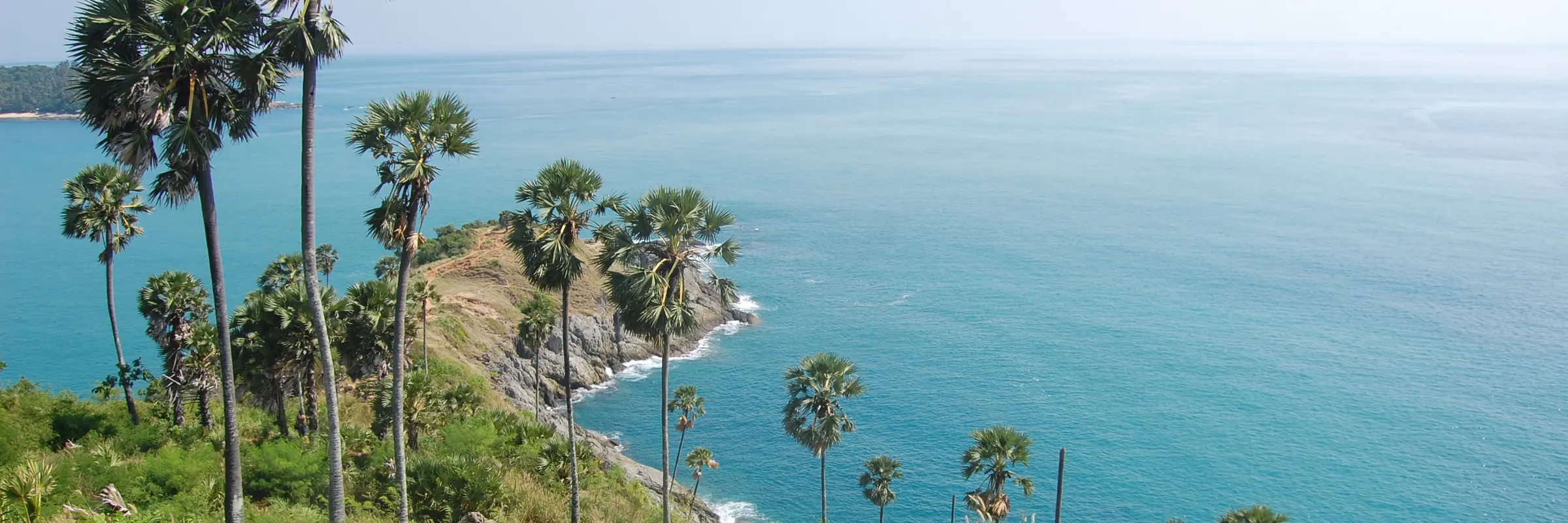
Phuket: Promthep cape, at the southern tip of the island
Photo: edwin.11 · CC BY 2.0
Thailand

Phuket: how many days you need and the best months to go

Phuket is an island the size of Singapore, joined to the mainland by a bridge, and it is not one destination but several. The west coast is the beaches, ranked from Patong at the loud end to Kata and Nai Harn at the quiet one; the east coast is piers and mangroves; and in the middle is a nineteenth-century town built by tin money that almost nobody plans for and everybody likes. Four days is the minimum that justifies the flight. A week is the normal stay.

Short answers

What people ask before booking

How many days do you need in Phuket?

Phuket needs four days minimum and a week is the normal stay, because the island is big and the transfers are long. Its wet season is May to October — the opposite of Ko Samui's, which is the mistake most two-island trips make.

What is the best month to visit Phuket?

December, January and February — Dry season: calm sea, clear skies, peak everything. November — The rains end and the island reopens.

Which months are worth avoiding in Phuket?

May and June — The monsoon arrives, and the sea turns. September and October — The wettest months of the year.

How many days Phuket needs

Four days is the floor: two on a beach, one for the old town and a viewpoint, and one for a boat — Phang Nga bay with its limestone stacks, or the Similan or Phi Phi islands. Less than that and the transfers eat the trip.

A week is what most people actually book and it is the right length, because this is a place to slow down rather than to tick off. It also lets you use Phuket as a base: the Khao Sok rainforest, Krabi and the Railay peninsula are all reachable, and a week comfortably covers the island plus one trip out. What does not work is two nights. The airport is at the far north, the good beaches are an hour south of it, and a short stay is mostly road.

The monsoon that runs the wrong way

This is the single most important planning fact and it is where people go wrong. Thailand has two coasts with opposite rainy seasons. Phuket is on the Andaman side, in the west, and its wet season runs roughly from May to October. Ko Samui and the Gulf coast, on the east, are dry then and wet from October to December.

Copying a Ko Samui calendar onto Phuket produces a trip in the rain, and it is a common mistake for anyone planning a two-island holiday. The corollary is useful: if your dates are fixed in the middle of the Phuket wet season, the answer is not to give up on Thailand but to go to the other coast.

The wet season here is not constant rain — it is heavy afternoon downpours with plenty of sun around them, and the island is green and cheap. What it does affect is the sea: the water gets rough, boat trips are cancelled and some islands close entirely to visitors during the worst months.

  • Patong — the loud one: nightlife, jet skis, and the beach that made Phuket's reputation. Useful to know so you can decide about it.
  • Kata, Karon and Nai Harn — the same west coast, progressively quieter going south. Where most people should actually stay.
  • Phuket Old Town — Sino-Portuguese shophouses in pastel colours, built with tin money in the 1800s. Half a day and the surprise of the trip.
  • Phang Nga bay — limestone towers rising out of shallow green water, an hour north-east by boat. The classic day out.
  • Promthep cape — the southern tip, and where the island goes to watch the sun go down.

The riptides, and the flags

This needs saying plainly: people drown on Phuket's west coast every year, and the cause is almost always the same — swimming during the monsoon months when the sea is rough, and ignoring the flags.

The system is simple. Red flags mean do not enter the water, and they are not a suggestion. They go up when riptides are running, mostly between May and October, and lifeguard cover varies by beach and by season. The currents on this coast are strong enough that being a confident swimmer is not the protection people assume it is.

The practical version: check the flags every time, swim where other people are swimming, and if the flags are red, use the hotel pool. In the dry season the same beaches are calm and safe. It is a seasonal danger, not a permanent one, which is exactly why it catches people out.

The old town nobody plans for

Phuket got rich on tin in the nineteenth century, and the money came with Chinese and Portuguese-influenced architecture from Penang and Malacca. The result is a small grid of two-storey shophouses in pastel colours with shuttered windows and arcaded fronts, restored over the last two decades and now full of cafés, galleries and small hotels.

It takes half a day and it is consistently the part of the trip visitors did not expect to enjoy. The Sunday walking street market is the busiest time to see it, and the Thai Hua museum explains where the money and the buildings came from. If you are staying on a beach, this is worth the drive across the island.

The practical bits nobody mentions

Do not rent a scooter unless you genuinely ride. Phuket's road accident rate is high, the roads are hilly and busy, foreign licences are frequently not valid for local insurance, and hospital bills for a motorbike injury are the most common serious expense visitors here incur. Cars and taxi apps are cheap enough that the risk is not worth it.

Two more. Jet ski and beach-chair scams have a long documented history here — the pattern is damage claimed after the fact — so use operators your hotel vouches for and photograph anything you rent before you take it out. And Thailand's rules on alcohol sales, smoking on beaches and vaping have changed repeatedly in recent years; vaping in particular has been illegal to import or possess and penalties have been real, so check the current position before travelling rather than assuming.

What to eat in Phuket, and where

Southern Thai food is hotter than the rest of the country's, and Phuket's is layered with Chinese and Malay influence from the tin years: the island has dishes you will not find in Bangkok, and breakfast here is not Thai at all.

  • Ensalada de papaya verde

    What to order

    The dish that will be hotter than you expect

    Shredded unripe papaya pounded in a mortar with lime, fish sauce, palm sugar, peanuts and chillies, served cold and eaten with sticky rice. Southern Thai heat is a step above the tourist standard, so say how many chillies you want — and expect the answer to be interpreted generously. It is a whole-meal salad, not a side.

    Check it on Wikidata
  • Tom yum

    What to order

    The soup everyone knows, done properly

    A hot and sour broth of lemongrass, galangal, lime leaf, chilli and prawns, and it is the national dish in the way that pizza is Italy's. The version on the coast uses seafood that came in that morning, which is the difference. Ask for it without coconut milk if you want the clear original.

    Check it on Wikidata
  • Curry massaman

    What to order

    The curry with spices from somewhere else

    A mild, rich curry with cinnamon, cardamom, clove and star anise as well as the usual Thai aromatics, which arrived with Muslim traders by sea. Those spices are not otherwise part of Thai cooking, and southern Thailand is where the dish belongs. It is the gentle one on a menu of hot ones.

    Check it on Wikidata
  • Roti

    What to order

    Breakfast, and it is not Thai

    A flatbread cooked on a griddle and served with a bowl of curry to dip it in, or with condensed milk if you want it sweet. It came with Indian and Malay labourers during the tin-mining years and it is the island's breakfast, sold from carts in the morning. Order it savoury first; it is better than the sweet version.

    Check it on Wikidata
  • Playa de Patong

    Where to look

    The beach to understand before you book

    The busiest beach on the west coast, with the nightlife, the jet skis and the crowds — the one that made the island's name and the one most people picture. Knowing what it is lets you decide deliberately: stay here if you want it, and go three beaches south if you do not.

    Check it on Wikidata

When to go, and what each month costs you

One thing governs this island: the Andaman monsoon, roughly May to October, which is the opposite of the Gulf coast's. Get that right and the rest is a matter of how busy you are willing to be.

  • December, January and February

    Go now

    Dry season: calm sea, clear skies, peak everything

    The best conditions of the year — dry, calm water, every boat running and every island open. It is also high season with the highest prices, and the New Year fortnight is booked out months ahead. February is the sweet spot: the holiday crowd has gone and the weather has not turned.

  • November

    Go now

    The rains end and the island reopens

    The monsoon tails off, the sea settles, boats start running again and the island is green from six months of rain. Prices have not yet climbed to December levels. The best value of the good months, with a small gamble on the first week or two.

  • March

    Worth it, but

    Hot and dry, with the crowd thinning

    Still dry and now properly hot, with the high-season crowd starting to leave and prices easing. The sea is at its calmest and clearest of the year. Hazy skies are possible from regional agricultural burning. A good trade if you tolerate heat.

  • April

    Worth it, but

    The hottest month, and Songkran

    The hottest and most humid stretch before the rains. Songkran, the Thai new year water festival, falls in mid-April — it is a genuine national event, joyful and extremely wet, and it fills the island. Prices spike for it. Fine if you want the festival; punishing heat if you do not.

  • July and August

    Worth it, but

    Wet season, but the European holiday peak

    Rain most days, usually in heavy afternoon bursts with sun around them, and a rough sea. European school holidays push prices up despite the weather, which makes this the poorest value window of the year. Green, cheap in the abstract, and busier than it should be.

  • May and June

    Think twice

    The monsoon arrives, and the sea turns

    The rains start and the Andaman sea gets rough. Red flags go up on the west coast beaches, boat trips start being cancelled and some islands close to visitors. Prices fall sharply and the island is empty and green. Fine for a resort stay; poor for anything involving the water.

  • September and October

    Think twice

    The wettest months of the year

    The peak of the monsoon: the heaviest rain, the roughest sea, the most cancelled boats and the highest drowning risk on the west coast. This is when Ko Samui and the Gulf coast are at their best, which is the useful thing to know if the dates are fixed. Cheapest of the year, for good reason.

Things that change the trip

  • Do not copy a Ko Samui calendar. Phuket's wet season is May to October and the Gulf coast's is the opposite — plan the island to the dates, or the dates to the island.
  • Obey the red flags. Riptides on the west coast kill people every year and being a strong swimmer is not the protection you think.
  • Stay south of Patong unless you want Patong. Kata, Karon and Nai Harn are the same coast, progressively quieter.
  • Give the old town half a day. Sino-Portuguese shophouses built on tin money, and the part of the trip most people did not expect.
  • Do not rent a scooter unless you actually ride. Accident rates are high, foreign licences often void the insurance, and it is the classic expensive mistake here.
  • Check the current rules on vaping before you fly. Thailand's position has changed repeatedly and penalties have been real.

Plan Phuket and southern Thailand

A trip that combines Phuket with Krabi, Khao Sok or the Gulf islands — with the two opposite monsoons, the boat seasons and the transfer times worked out around it — is exactly what Premium is for. The free version covers one destination for up to three days.

Destinations