
Skip to content
JoruJoru
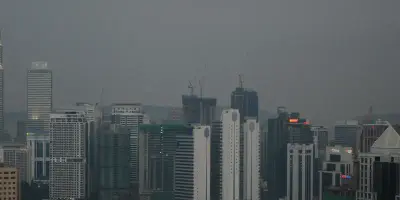
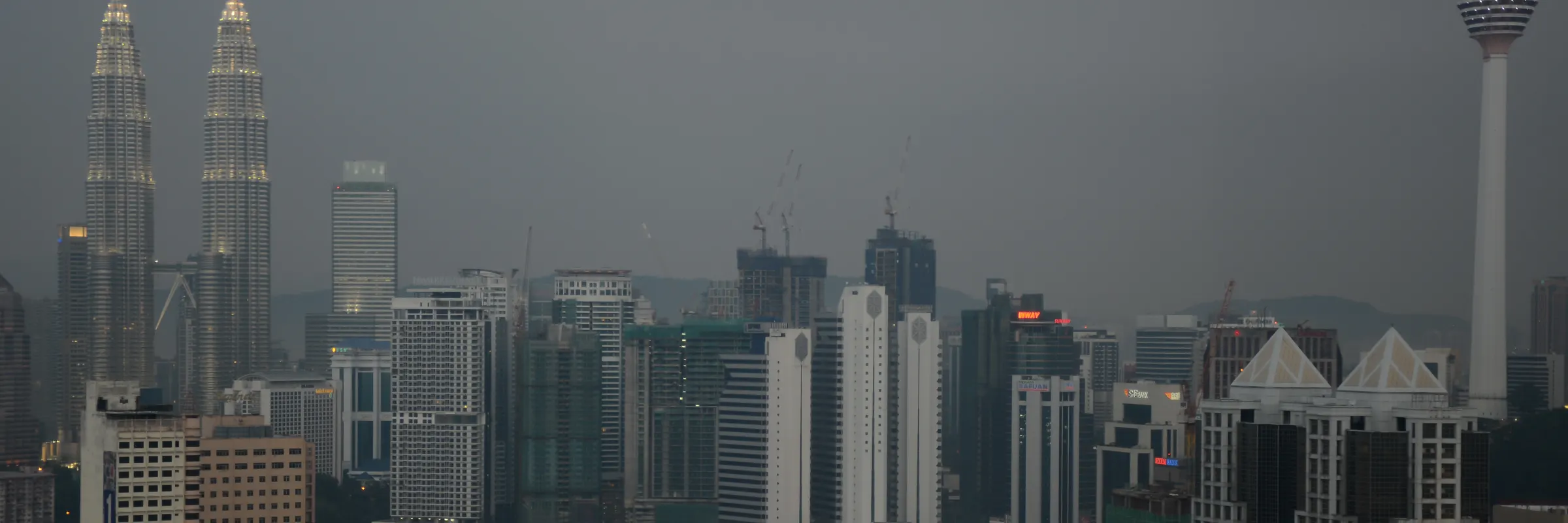
Kuala Lumpur: the skyline at dusk, with the Petronas Towers and the KL Tower
Photo: Jorge Láscar from Melbourne, Australia · CC BY 2.0
Kuala Lumpur, Malaysia

Kuala Lumpur: how many days you need and when to go

Kuala Lumpur means muddy confluence, which is what it was: a camp founded around 1857 where two rivers met and tin was found. It is now a city of towers with a rainforest reserve in the middle of it, and its defining fact is demographic rather than architectural — Malay, Chinese and Indian communities have lived here for generations, which means three cuisines, four religions and a calendar with more public holidays than almost anywhere. Two days covers the city. A third is the caves, the old towns or the highlands.

Short answers

What people ask before booking

How many days do you need in Kuala Lumpur?

Kuala Lumpur needs two days for the towers, the colonial core and an evening of eating, and a third that leaves town for the caves, the old ports or the tea highlands.

What is the best month to visit Kuala Lumpur?

June and July — The driest stretch of the year. January and February — The other dry window, and the festivals.

Which months are worth avoiding in Kuala Lumpur?

April and May — The first monsoon peak, and the most humid weeks. October and November — The wettest months of the year.

How many days Kuala Lumpur needs

Two days is the honest figure for the city itself: the towers and the park beneath them, the colonial core and the mosque, one market and one long evening of eating. Most people passing through Southeast Asia give it exactly this and are right to.

A third day earns its place going out of town. The limestone caves north of the city, the colonial port towns two hours south, or the tea plantations in the highlands are all day trips, and all three are more distinctive than a third day in the centre. Beyond three days you are here for work or for the food, and the food is a legitimate reason.

Three cuisines, four religions, one calendar

Malaysia's population is roughly two-thirds Malay and indigenous, a fifth Chinese and around seven per cent Indian, and in Kuala Lumpur those communities live alongside each other with their own languages, temples and food. The practical consequence for a visitor is the calendar: the country observes Muslim, Chinese, Hindu and Christian holidays, which is why the public holiday list is one of the longest in the world.

That matters for planning in one specific way. Hari Raya, at the end of Ramadan, and Chinese New Year both move every year — the first by about eleven days earlier annually, the second between late January and late February — and around each of them the city empties as people travel home, while transport and accommodation fill. Check both before booking.

  • Ramadan moves about eleven days earlier each year. During it, daytime eating is quieter and the evening markets are extraordinary.
  • Chinese New Year falls between late January and late February and moves; the Chinatown areas shut for several days and the trains sell out.
  • Deepavali and Thaipusam are Hindu festivals with real scale here. Thaipusam at the caves draws enormous crowds and is worth seeing if the dates align.
  • Alcohol is available but taxed heavily, and it is not sold everywhere. This is a Muslim-majority country and the rules vary by state.

How the city is laid out

Kuala Lumpur is not walkable in the way that most Asian capitals are, and it is worth knowing that before you plan a day. The heat, the traffic and the way the city grew around highways mean that two points on a map are frequently connected by a footbridge, a mall and a tunnel rather than by a pavement.

The rail network is the answer. Several lines, an airport express and a driverless loop cover most of what visitors want, and ride-hailing fills the gaps cheaply. The other adaptation is that the malls are genuinely part of the urban fabric here rather than a retail decision: they are air conditioned, they connect to the stations, and people meet in them.

  • KLCC — the twin towers, the park below and the largest mall. The reason most people come and the least representative part of the city.
  • Bukit Bintang — the shopping and eating district next door, with the food street and the night crowds. Where you will end up in the evening.
  • Chinatown and Merdeka Square — the old core: the market street, the temples, the colonial buildings and the confluence the city is named after.
  • Kampung Baru — a Malay village inside the centre, protected since 1900, with wooden houses and the towers directly behind them. The best photograph in the city.
  • Brickfields — the Indian quarter near the main station: temples, sari shops and the banana-leaf restaurants.

The towers, and the thing to do instead

The Petronas Towers were the tallest buildings in the world from 1998 to 2004 and remain the tallest twin towers anywhere. You can go up, and the ticket includes the skybridge between them at the forty-first floor, which is the part worth having. Tickets are timed and sell out; buy ahead.

The better view, though, is of the towers rather than from them. The observation deck on the older communications tower on the hill sees the twin towers in the skyline, which the twin towers themselves cannot. And there is a genuine oddity worth knowing: the hill that tower stands on is a patch of primary rainforest that was never cleared — a reserve inside the city, older than the city, with a canopy walkway through it.

The caves, and the day trip that beats the city

Thirteen kilometres north of the centre, a limestone outcrop holds a series of caves that have been a Hindu shrine since 1890. A statue of Murugan stands at the foot of two hundred and seventy-two painted steps, and the main cave at the top is an enormous chamber open to the sky at one end.

It is reachable by commuter train in half an hour, which makes it the easiest good day trip from any capital in the region. Two warnings: the macaques on the steps are aggressive about food and bags, and during Thaipusam — a Tamil festival that falls in January or February and moves — the site receives well over a million people, which is either the reason to go or the reason to avoid it.

Practical things that catch visitors

The heat here is constant rather than seasonal, and the humidity does not drop. Plan the outdoor half of the day for the morning and treat the middle of the day as indoor time, which is what the malls, the museums and the long lunches are for. The afternoon storm in the wet months is heavy, brief and predictable enough to plan around.

The other thing is the haze. In some years, agricultural fires in Sumatra and Borneo push smoke over the peninsula between roughly July and October, and air quality drops sharply for days or weeks at a time. It is not every year and it is not the whole season, but it is worth checking a live air quality reading before committing to an outdoor plan.

  • Carry a light layer for indoors. The air conditioning here is aggressive and the temperature difference is genuinely large.
  • Use ride-hailing rather than street taxis. The price is agreed in advance and the meter argument disappears.
  • Cover shoulders and knees for the mosques and temples, and expect to remove shoes. Most provide robes at the door.
  • The haze season is roughly July to October in some years, driven by fires elsewhere. Check a live reading rather than assuming.

What to eat in Kuala Lumpur, and where

This is one of the great eating cities and the reason is the mix: Malay, Chinese and Indian cooking have been in the same streets for generations and have borrowed from each other the whole time. The food is cheap, it is eaten in open-fronted shops and hawker centres, and the best of it is not in a restaurant.

  • Nasi lemak

    What to order

    The national dish, eaten at any hour

    Rice cooked in coconut milk with pandan, served with a chilli paste, fried anchovies, peanuts, cucumber and half an egg, wrapped in a banana leaf. It is breakfast, and it is also lunch and a two-in-the-morning meal, and the whole thing turns on the sambal. Everyone has a stall they defend.

    Check it on Wikidata
  • Char kway teow

    What to order

    The wok dish that needs a real fire

    Flat rice noodles fried hard over a very high flame with prawns, egg, bean sprouts and Chinese sausage. The point is the scorch the wok leaves — a smoky note the Cantonese call the breath of the wok — and it cannot be produced on a domestic hob. Order it where the flames are visible from the street.

    Check it on Wikidata
  • Roti canai

    What to order

    The flatbread, and how to order it

    Dough stretched, slapped, folded and griddled until it is layered and crisp, served with a dhal or curry to dip. It came with Indian Muslim migrants and became a national breakfast, sold in open-fronted shops that run from dawn to very late. Ask for it *kosong* — plain — the first time.

    Check it on Wikidata
  • Nasi kandar

    What to order

    The rice stall where you point at everything

    Rice with a choice of curries ladled over it, from Indian Muslim shops that keep a dozen pots going. The name comes from the shoulder pole vendors once used to carry the whole operation, and the correct move is to ask for a mixture of gravies rather than choosing one. Eaten with the right hand, or with a spoon if you prefer.

    Check it on Wikidata
  • Teh tarik

    What to order

    The drink poured through the air

    Strong black tea with condensed milk, poured repeatedly between two vessels held far apart. The pulling cools it, aerates it and builds the foam, and it is a genuine skill rather than a performance for visitors. Order it hot; the iced version is sweeter and less interesting.

    Check it on Wikidata
  • Jalan Alor

    Where to look

    Where the city eats after dark

    A street of open-air stalls and restaurants that sets up in the late afternoon and runs deep into the night. It is the most visitor-heavy food street in the city and still worth it, because the volume keeps everything moving. Walk the whole length before choosing, and eat where the locals queue rather than where the touts call.

    Check it on Wikidata

When to go, and what each month costs you

Kuala Lumpur is two degrees from the equator, so there is no cool season and barely any temperature variation across the year. What changes is the rain, and it changes twice: two monsoons bring two wet peaks with drier stretches between them. Nowhere is dry, and the rain is an afternoon event rather than an all-day one.

  • June and July

    Go now

    The driest stretch of the year

    The clearest window between the two monsoons: fewer storms, more usable afternoons and the best chance of seeing the towers against a sky rather than cloud. Still hot and humid, because it always is. Prices are mid-season.

  • January and February

    Go now

    The other dry window, and the festivals

    Relatively dry and the busiest cultural stretch of the year. Chinese New Year falls between late January and late February and moves annually, and Thaipusam at the caves lands in the same window — both worth planning around, in either direction.

  • March

    Worth it, but

    Warming into the first monsoon

    Still workable, with afternoon storms becoming more frequent through the month. Prices sit below the January peak and the city is quieter. Plan mornings outdoors and the afternoon inside.

  • August and September

    Worth it, but

    Dry-ish, and the haze risk

    Rain is moderate and the days are usable. This is also the window when smoke from fires elsewhere in the region can push air quality down sharply — not every year, and unpredictable when it happens. Check a live reading before booking outdoor plans.

  • December

    Worth it, but

    Wet, busy and expensive

    The tail of the north-east monsoon, with frequent heavy afternoons, combined with the regional holiday season. You get rain and crowds together, which is the worst pairing on this list, though the city functions normally throughout.

  • April and May

    Think twice

    The first monsoon peak, and the most humid weeks

    Heavy storms most afternoons and humidity at its highest. Prices are low and the food is unaffected. What you lose is the ability to plan an afternoon, which in a city where the sights are spread out is most of a day.

  • October and November

    Think twice

    The wettest months of the year

    The second monsoon peak and the heaviest rainfall of the calendar, with flash flooding in parts of the city after a hard storm. It is the cheapest stretch of the year, everything indoors runs normally, and the towers spend a lot of it in cloud.

Things that change the trip

  • Check whether Ramadan or Chinese New Year falls in your dates. Both move every year and both empty the city while filling the trains.
  • Plan the outdoors for the morning. The heat is constant, and in the wet months the afternoon belongs to the storm.
  • Go to the caves by commuter train, half an hour from the centre, and keep food out of sight on the steps because of the macaques.
  • See the towers from the other tower. The best view of the skyline is the one that has the twin towers in it.
  • Take a light layer for indoors. The air conditioning in the malls and trains is genuinely cold.
  • Eat at hawker stalls rather than restaurants. The queue is the review, and the three cuisines are all cheapest at street level.

Plan Kuala Lumpur and what surrounds it

A trip beyond three days, or one that adds Penang, Melaka, the highlands or Singapore with the transport between them, is exactly what Premium is for. The free version covers one destination of up to three days.

Destinations