Skip to content
JoruJoru
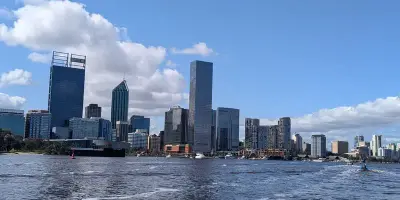
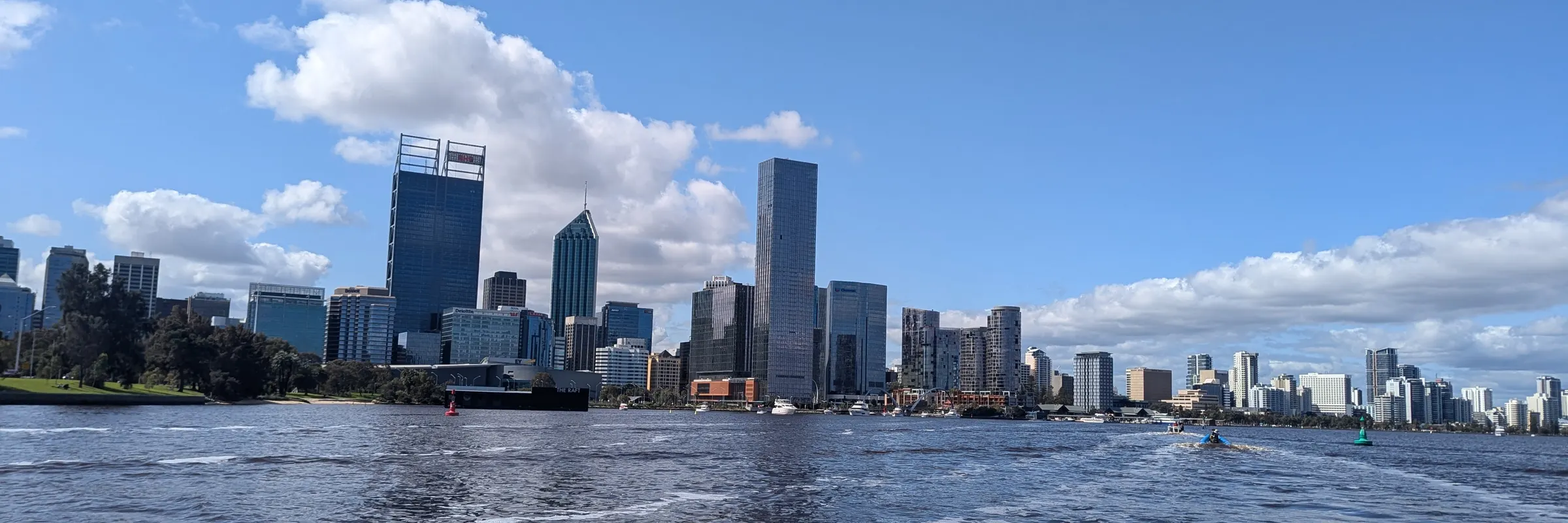
Perth: the skyline from the Swan River
Photo: JamesBromberger · CC BY 4.0
Western Australia, Australia

Perth: how many days you need and the best months to go

Perth is closer to Jakarta than to Sydney, and that isolation explains most of it: nobody passes through on the way to somewhere else, so the people who come have decided to. What they get is the sunniest capital in Australia, a river the city is built around, a car-free island of white beaches half an hour offshore, and a wine region two hundred kilometres south that would be famous anywhere less remote.

Short answers

What people ask before booking

How many days do you need in Perth?

Perth needs three days: one for the centre, Kings Park and the river, one for Fremantle, and one for Rottnest Island. A fourth goes south to Margaret River or east to the Swan Valley.

What is the best month to visit Perth?

September, October and November — Spring, and the wildflowers that are a genuine event. March and April — Autumn: the heat breaks and the sea is still warm.

Which months are worth avoiding in Perth?

June, July and August — Winter: wet, windy and the beaches are over.

How many days Perth needs

Three days covers the city and its immediate surroundings: one for the centre, the park and the river, one for Fremantle, and one for Rottnest Island. That is a complete and unhurried trip, and the three parts are genuinely different from each other.

A fourth day goes south to Margaret River or east to the Swan Valley. Most people who come this far treat Perth as the start of a longer Western Australian trip, which is the right instinct — the state is bigger than most countries and the distances beyond the city are enormous.

How the city is arranged

The Swan River is the organising fact. The city sits on a bend of it about twenty kilometres inland, and Fremantle sits where it meets the sea — they are separate places with separate characters, connected by a train line that takes half an hour.

The other feature is Kings Park, one of the largest inner-city parks in the world, on an escarpment directly above the centre with the view that explains the layout.

  • The CBD and Northbridge — the office grid and the eating-and-drinking quarter immediately north of it, with the museum, the galleries and most of the nightlife.
  • Kings Park — bushland and botanic gardens on the escarpment above the river, larger than Central Park and free. The best hour in the city.
  • Fremantle — the port at the river mouth, with the Victorian streets, the markets, the prison and the breweries. Half an hour by train and worth a full day.
  • Cottesloe and the western beaches — a chain of white-sand Indian Ocean beaches on the train line, facing west, which is why the sunsets here are what they are.
  • Rottnest Island — a car-free island half an hour by ferry, with bays, bicycles and the quokkas. The single best day out.

Where to stay, and the Fremantle question

The real choice is city or port. The CBD is convenient and quiet in the evenings; Fremantle has more character and is half an hour further from everything else. Both are on the same train line, so neither is a mistake — it is a question of what you want to walk out into.

The beaches are the third option and they suit a slower trip: the western suburbs are residential, on the train, and put the Indian Ocean at the end of the street.

AreaWho it suitsThe catch
The CBDA first visit. The free bus network, the train hub, Kings Park and the river on foot.An office district: quiet at night, and the character is a train ride away.
NorthbridgeEating, bars and the museum, all within a few blocks of the centre.Loud at weekends and uneven late at night in a few streets.
FremantleVictorian streets, the markets, the breweries and a real town rather than a district.Half an hour from the city, so you commute if you want both.
Cottesloe and ScarboroughWaking up at the beach, with the train back into town.Residential and quiet; the eating is limited and the city is twenty minutes away.
Near the airportAn early flight and nothing else.There is no reason to spend a night of a holiday there.

The isolation, the wind and the sun

Perth is the most isolated major city in the world — the nearest city of over a million people is around two thousand kilometres away. The practical effects are that flights here are long from almost anywhere, and that the state beyond the city is empty in a way that is genuinely hard to imagine. Driving distances in Western Australia are measured in days rather than hours.

The other daily fact is the wind. In summer a strong sea breeze arrives most afternoons and locals call it the Fremantle Doctor, because it cures the heat: mornings can be very hot and still, and then around midday to early afternoon the wind comes in off the Indian Ocean and drops the temperature noticeably. Plan the beach for the afternoon and the walking for the morning.

  • The free CAT buses circle the CBD and Fremantle and cost nothing, which surprises visitors expecting Australian prices.
  • Trains reach Fremantle, the northern beaches and the airport, and a single card covers everything.
  • A car is only needed for the wine regions and the south, and public transport handles the rest well.
  • The UV here is among the strongest in the world. Sun protection is not optional, and the local advice is not an exaggeration.

Rottnest, the wine and the day trips

Rottnest Island is the day out that justifies the trip. Half an hour by ferry, no cars, and about sixty small bays, most of which you will have to yourself if you cycle past the first two. It is also the home of the quokka, a small marsupial with a face that photographs as if it is smiling, which is why you have seen it.

On land, the Swan Valley starts twenty-five minutes from the centre and is the oldest wine region in the state; Margaret River is three hours south and is the famous one, with the surf, the caves and the tall forests attached.

  • Book the Rottnest ferry ahead in summer and at weekends, and hire a bicycle rather than taking the bus around.
  • Do not touch or feed the quokkas. They are protected, it is fined, and they will approach you anyway.
  • The Swan Valley is a half-day and reachable without a hotel change — the closest wine region to any Australian capital.
  • Margaret River deserves two nights, not a day trip. Three hours each way is a lot of driving for one afternoon.

How eating works here

Western Australia's food is what the ocean and the state produce: rock lobster, freshwater marron, abalone, and beef and wine from the south-west. Perth also eats a lot of South-East Asian food, which follows from the geography — it is closer to Singapore than to Sydney, and the Vietnamese, Malaysian and Chinese communities in Northbridge cook accordingly.

The Australian conventions apply. Tipping is not expected, prices include tax, coffee is taken seriously in ordinary cafés, and bottle shops are separate from supermarkets by law.

  • Cafés open early and close early. Breakfast is a proper meal and a café shutting at two in the afternoon is normal.
  • Most of the rock lobster catch is exported, which is why it costs what it does here even though it is landed up the coast.
  • Public barbecues in the parks are free, and using one at Kings Park at sunset is what residents do.
  • The wine is from Margaret River and the Swan Valley, and the local lists reflect that far more than the eastern states do.

Where to eat in Perth, and what to order

Western Australia produces things the rest of the country does not, and the state is far enough from everywhere that most of it stays here. Order what comes out of this coast and these rivers — and eat once in Northbridge, where the city's Asian communities are.

  • Fremantle Markets

    Market

    The market to eat your way around, in the port town

    A Victorian market hall in Fremantle, trading since 1897, with produce, food stalls and craft under one roof. It runs on weekends and it is the reason to time a Fremantle day for a Friday to Sunday. Eat as you walk rather than sitting down.

    Check it on Wikidata
  • Western rock lobster

    What to order

    The state's most valuable catch, and why it is not cheap

    A clawless rock lobster from the coast north of the city, and the most valuable single-species fishery in the country. Most of it is exported live to Asia, which is why eating it here still costs what it does. Grilled simply with butter is how it is served and how it should be.

    Check it on Wikidata
  • Marron

    What to order

    The freshwater one, which only exists here

    A large freshwater crayfish found only in the south-west of Western Australia, farmed and served in the wine regions. It exists nowhere else on earth, which makes it the most genuinely local thing on any menu in the state. Sweeter and more delicate than the marine lobster.

    Check it on Wikidata
  • Swan Valley

    Where to look

    The wine region you can reach without moving hotel

    The oldest wine region in the state, twenty-five minutes from the centre along the river, with cellar doors, breweries and a chocolate factory strung along one road. It is the closest wine region to any Australian capital city. A half-day, and the drive is short enough that a designated driver is a simple problem.

    Check it on Wikidata
  • Northbridge

    Where to look

    Where to eat at night, and what the geography did to it

    The quarter immediately north of the centre, holding the city's Vietnamese, Malaysian and Chinese restaurants alongside the bars and the museum. Perth is closer to Singapore than to Sydney and it eats like it. This is where to spend an evening and it is walkable end to end.

    Check it on Wikidata

When to go, and what each month costs you

Perth has a Mediterranean climate at the wrong end of the world: hot dry summers, mild wet winters, and more hours of sunshine than any other Australian capital. The rain falls almost entirely between May and August, which makes the seasons unusually clean-cut. They are reversed from the northern hemisphere.

  • September, October and November

    Go now

    Spring, and the wildflowers that are a genuine event

    The best window without argument. Warm, dry, and the state's wildflower season — Western Australia has more wildflower species than anywhere on earth, and from September the bush and the roadsides go colour. The coast is warming and the crowds have not arrived.

  • March and April

    Go now

    Autumn: the heat breaks and the sea is still warm

    The summer heat eases into something comfortable while the Indian Ocean stays warm enough to swim. The best combination for Rottnest and the beaches, with lower prices than the summer peak and a calmer city.

  • December, January and February

    Worth it, but

    Summer: very hot mornings, and the afternoon wind

    Dry, cloudless and genuinely hot — days well into the thirties are routine. The sea breeze in the afternoon is what makes it liveable, and the pattern is reliable enough to plan around. It is also the Australian summer holidays, so prices peak and Rottnest needs booking.

  • May

    Worth it, but

    The rain begins, and the prices fall

    The first proper rain after months without, with mild days between the fronts. Cheap and quiet, and everything in the city works normally. The beaches are done for the year and the wine regions are at their greenest.

  • June, July and August

    Think twice

    Winter: wet, windy and the beaches are over

    Perth's rain falls almost entirely in these three months, arriving as fronts off the Indian Ocean with real wind behind them. It is mild rather than cold, and the city, the museums and the restaurants are unaffected. What closes to you is the reason most people come: the beaches, Rottnest and the outdoor half of the trip.

Things that change the trip

  • Give Rottnest a full day and hire a bicycle. The island is car-free, the bays past the first two are empty, and it is the best day out here.
  • Plan the walking for the morning and the beach for the afternoon in summer. The sea breeze arrives around the middle of the day and changes the temperature noticeably.
  • The CAT buses are free and circle both the city and Fremantle. Visitors expecting Australian transport prices routinely miss them.
  • Come in September or October if you can. The wildflower season is a genuine event and Western Australia has more species of them than anywhere on earth.
  • Take the sun seriously. The UV here is among the strongest in the world and the local advice is not exaggerated.
  • Margaret River needs two nights. Three hours each way is not a day trip, whatever the map suggests.

Plan Perth with the coast in it

A trip of more than three days, or one that adds Margaret River, the north-west or the long drives between them, is what Premium is for. The free version covers one destination of up to three days.

Destinations