




Skip to content
JoruJoru
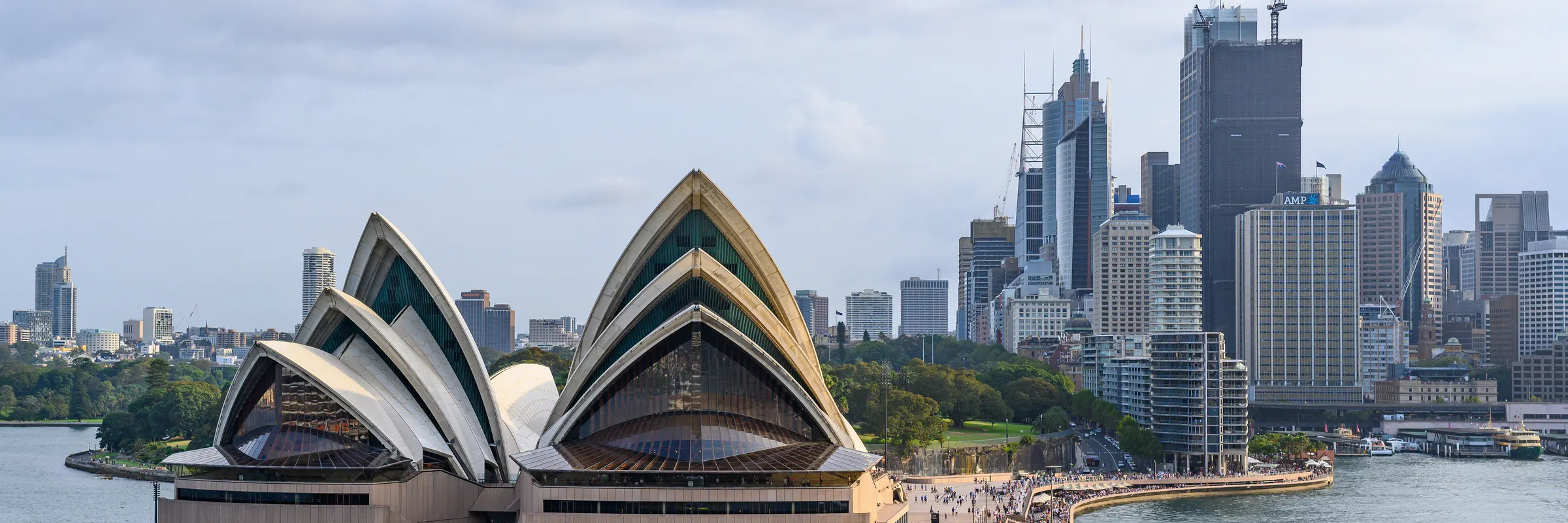
Sydney: the Opera House and the harbour

New South Wales, Australia

Sydney: how many days you need and the best month to go

Photo: Bengt Nyman from Vaxholm, Sweden · CC BY 2.0

Sydney is organised around a harbour, and the single best planning decision here is to treat the ferry network as transport rather than as an excursion. It is cheap, frequent, and it turns the commute between two parts of your day into the thing you remember.

Short answers

What people ask before booking

How many days do you need in Sydney?

Sydney needs four days for the harbour, the beaches and a day out of the city such as the Blue Mountains. A fifth lets you slow down, which this city rewards.

What is the best month to visit Sydney?

March to May — Autumn, and the best conditions of the year. September to November — Spring, warming up and quiet.

Work out how many hours you will have in Sydney on your dates
When to go, and remember the hemisphere

Seasons are inverted: December is high summer and July is winter. Sydney's winter is mild rather than cold, which widens the useful window considerably.

  1. January: Worth it, but
  2. February: Worth it, but
  3. March: Go now
  4. April: Go now
  5. May: Go now
  6. June: Worth it, but
  7. July: Worth it, but
  8. August: Worth it, but
  9. September: Go now
  10. October: Go now
  11. November: Go now
  12. December: Worth it, but
  • March to May

    Go now

    Autumn, and the best conditions of the year

    Warm days, low humidity, the sea still warm from summer, and the holiday crowds gone. The single best window for this city.

  • September to November

    Go now

    Spring, warming up and quiet

    Comfortable and green, with the beaches reopening in earnest towards November. Good value before the summer peak.

  • June to August

    Worth it, but

    Winter, which is mild and often clear

    Cool rather than cold, frequently sunny, and much cheaper. Too cold for comfortable swimming for most people, but the walks and the city work perfectly well. Whale migration passes the coast during these months.

  • December to February

    Worth it, but

    Peak summer: hot, humid, crowded and expensive

    The beaches at their best and everything else at its most expensive. January is the domestic holiday month. Humidity and occasional heatwaves make the non-beach parts of a trip harder work.

What to pack for Sydney, month by month

How many days Sydney needs

Four days covers the harbour, the beaches and a day out of the city — the Blue Mountains being the obvious one. Five lets you slow down, which this city rewards.

Sydney is larger than it feels from the centre. The beaches people picture are a real journey from the harbour, and an itinerary that treats them as adjacent will lose an afternoon to transport.

How the city is arranged

The harbour is the organising feature, with the ocean beaches on a separate axis to the east and north.

  • The harbour and the CBD — the opera house, the bridge, the botanic gardens. All walkable from each other.
  • The eastern beaches — Bondi and the coastal walk south, which is the best walk in the city.
  • Manly and the north — a ferry ride across the harbour, and worth going for the crossing alone.
  • The inner west — Newtown and Surry Hills, where the food and the bars are, away from the postcard.

Where to stay, and a city organised around water

Sydney is built around a vast, deeply indented harbour, so map distances are extremely deceptive: two points that look close can be separated by an arm of the sea. The ferry network solves that and is, besides, the most pleasant way to get around.

The basic choice is between the centre — convenient for the urban side and close to the ferries — and the beaches, which are why many people come and sit a good half hour out.

AreaWho it suitsThe catch
CBD and The RocksThe best all-round base: beside the opera house, the ferry terminal and the trains.Expensive, and at night the financial district empties.
Surry Hills and DarlinghurstWhere the eating and going out actually happens, a walk from the centre.No views or water, and a little noisy at weekends.
BondiBeach, surf and the clifftop walk at the door.Thirty to forty minutes to the centre, and packed in summer.
ManlyBeach with the world's best ferry commute into the centre.You depend on the ferry timetable, which is not continuous overnight.
NewtownBetter prices, alternative atmosphere and very good food.It is inland: neither beach nor harbour.

Compare these areas against your priorities

Airport to city, and the transport not to miss

The airport has a direct train into the centre in about fifteen minutes, one of the fastest connections on this list. It carries an airport station surcharge that makes it considerably dearer than a normal journey, and it is still the sensible choice unless there are four of you, in which case a taxi competes.

In the city, the important thing: ferries are ordinary public transport and cost the same as a bus. The run to Manly passes the opera house and the bridge and is, without exaggeration, one of the best things you can do in Sydney for the price of a single fare.

  • You pay with a contactless bank card on trains, buses, ferries and light rail. Nothing to buy, and there are automatic daily and weekly caps.
  • Sundays have a flat all-day fare across the whole network. That is the day for ferries and long train rides.
  • Australian sun genuinely burns. The UV index is far higher than in Europe and burning within an hour is normal. A hat and sunscreen are not optional here.
  • The Bondi to Coogee walk is a clifftop path of about six kilometres between beaches. It is free and among the best things in the city.

Day trips from Sydney

Sydney has mountains, vineyards and wild beaches within two hours, and commuter trains reach a good number of them. What decides things here is cloud: the Blue Mountains disappear inside one easily, so that is the trip you need to be able to move to the clear day.

  • Blue Mountains — about two hours by train, with sandstone escarpments, eucalyptus forest and the Three Sisters. Katoomba is the base and it works without a car.
  • Manly — not a day trip but a half-hour ferry, and it gives a full afternoon of beach and coastal walking.
  • Royal National Park — the world's second-oldest national park, to the south, with cliffs and coves. Reachable by commuter train.
  • Hunter Valley — the wine region, two hours north. Needs a car or an organised tour.
  • Palm Beach and the northern beaches — a good hour by bus along the coast; it is where a soap opera half of Europe knows is filmed.

Eating in Sydney, and breakfast as an institution

Australia has a coffee and breakfast culture it has exported worldwide, and in Sydney it is at home. Brunch is not a weekend fad: it is a daily and serious meal, with neighbourhood cafés competing on roast quality and plates that would be restaurant food in Europe.

The rest of the scene is shaped by proximity to Asia: Sydney's Vietnamese, Thai, Chinese and Japanese food is excellent and cheap, and there are whole districts devoted to it.

  • Coffee has its own vocabulary: flat white, long black, piccolo. Asking for "a coffee" means nothing here.
  • Many restaurants are BYO — bring your own wine — and charge a small corkage. It is a very Australian custom and saves a lot.
  • Fish and seafood at the fish market are first rate; you buy and eat it there.
  • Cabramatta and Chinatown have the city's best Asian food at very low prices.
  • Tipping is not standard. You round up if the service was good, and that is all: wages here do not depend on it.

Where to eat in Sydney, dish by dish

Sydney's food is Asian-Australian and it is very good — the Cantonese, Vietnamese, Thai and Japanese cooking here is better than in most of Europe. The best of it is not in the harbour postcard area. Two structural things: breakfast is a serious meal here and is often the best value of the day, and there is no tipping culture, so the menu price is the price.

  • Paddy's Markets

    Market

    The cheap market lunch, near the centre

    A long-running market in Haymarket beside Chinatown, with produce downstairs and a food court that is genuinely good. It runs Wednesday to Sunday, not every day. The food court is where to eat if you want a proper cheap lunch within walking distance of the Darling Harbour end of the city.

    Check it on Wikidata
  • Sydney Fish Market

    Market

    Seafood at the source, with a caveat about the move

    One of the largest fish markets in the southern hemisphere, where you buy seafood and eat it at outdoor tables. The market has moved to a new building nearby, so check the current location before setting off rather than relying on an older guide. Gulls are aggressive and will take food off your plate; that part has not changed.

    Check it on Wikidata
  • Flat white

    What to order

    The coffee, which Australia takes seriously

    Espresso with steamed milk and minimal foam, a drink Australia and New Zealand both claim to have invented. Ordering a flat white is the default here rather than a curiosity. Independent cafés strongly outnumber chains, and the standard at an ordinary neighbourhood café is high enough to be startling.

    Check it on Wikidata
  • Fish and chips

    What to order

    The thing to eat at the beach

    Battered fish and chips, eaten outdoors at the coast, and the standard end to a day at Bondi or Manly. Buy it at a shop a street back from the beachfront rather than the ones facing it. Ask for it grilled instead of battered if you want the local health-conscious version, which is a real option here.

    Check it on Wikidata

What a trip to Sydney costs, and how to pay there

Things that change the trip

  1. Use the public ferries, not a harbour cruise. The Manly route in particular gives you the same view for a fraction of the price.
  2. Get a transit card or use a contactless card — the same ticketing covers ferries, trains and buses, with a daily cap.
  3. The Bondi to Coogee coastal walk is the best free thing in the city. Do it early; there is very little shade.
  4. Sun protection here is a practical necessity rather than a precaution. The UV levels are genuinely higher than most visitors expect.
  5. The Blue Mountains are a straightforward train day trip and a complete change of landscape.

Plan Sydney around the harbour

A four-day trip needs Premium; the free version covers one destination for up to three days, with real places from open data either way.

Destinations