


Skip to content
JoruJoru
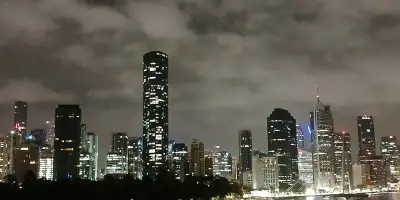
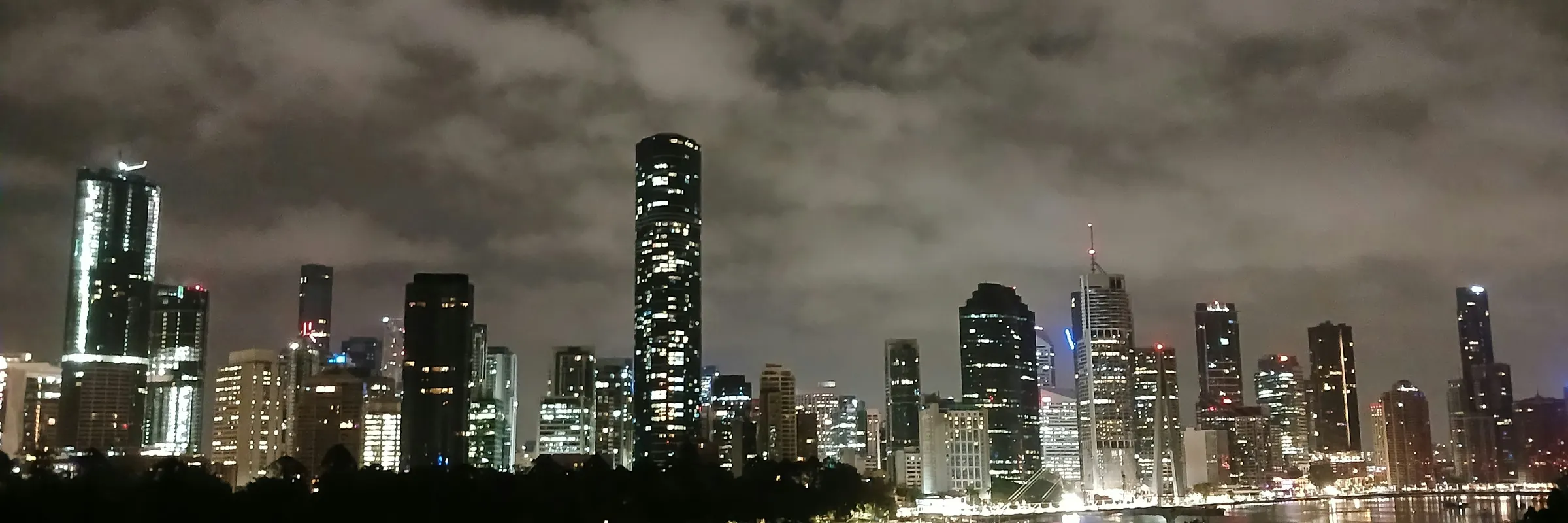
Brisbane: the skyline from Kangaroo Point
Photo: King Eliot · CC0
Queensland, Australia

Brisbane: how many days you need and the best months to go

Brisbane's problem is its neighbours: the Gold Coast is an hour south, the Sunshine Coast an hour north, and most itineraries treat the city as an airport with a river running through it. That is a mistake worth two days. The river is the organising fact here, the ferries that run along it are genuinely the best sightseeing in Australia for the price of a bus fare, and there is a lagoon beach in the middle of the city that costs nothing.

Short answers

What people ask before booking

How many days do you need in Brisbane?

Brisbane needs two days for the river, the South Bank parklands and a neighbourhood. A third goes to the bay islands or the rainforest, and both coasts are ninety minutes by train.

What is the best month to visit Brisbane?

April and May — Autumn: the humidity breaks and the storms stop. August, September and October — Spring: warm, dry and the jacarandas at the end of it.

Which months are worth avoiding in Brisbane?

December to March — Hot, humid, stormy and the domestic holiday peak.

How many days Brisbane needs

Two days covers the city honestly: one for the river, the South Bank parklands and the galleries, and one for a neighbourhood and a lookout. The centre is small, most of it is walkable, and the ferry ties the rest together.

A third day goes to the bay — Moreton or North Stradbroke island — or to the mountains and rainforest an hour west. Brisbane rewards being treated as a base rather than a stopover, and the day trips from here are better than the ones from either coast.

How the city is arranged, and why the river decides it

The Brisbane River loops through the city in tight bends, and almost everything sits on one of them. That is why the ferries work as transport rather than as a novelty: the river is not a barrier here, it is the main road, and crossing it repeatedly is how you get around.

  • The CBD — a small grid inside a river bend, with the shopping mall, the botanic gardens at the tip and the ferry terminals along the edge.
  • South Bank — the opposite bank, with the state gallery and museum, the parklands and the artificial swimming lagoon. The best free thing in the city.
  • Fortitude Valley and New Farm — the nightlife and the eating, a short walk or ferry north of the centre, with the Chinatown mall and the converted powerhouse theatre.
  • West End — the alternative quarter across the river, with the Saturday market, the Greek and Vietnamese food and the least polished street in town.
  • Kangaroo Point and Mount Coot-tha — the cliffs across the river and the lookout to the west. Both give you the skyline, and both are free.

Where to stay, and what the river side buys you

The centre is small enough that almost anywhere central works, and the useful question is which side of the river you want to wake up on. The CBD is convenient and empties at night; South Bank has the parklands and the galleries at street level.

The other consideration is the Valley, which is where the late-night music is and is correspondingly loud at weekends. That is either the reason to stay there or the reason not to.

AreaWho it suitsThe catch
The CBDFirst visit. Ferries, the gardens and the shopping streets on foot.An office district: quiet at night and shut at weekends outside the mall.
South BankThe lagoon, the galleries and the river walk directly outside.Fewer restaurants than it looks, and hotel prices reflect the location.
Fortitude ValleyMusic, bars and the best eating within walking distance.Genuinely loud on Friday and Saturday nights, and rough around the edges late.
New FarmA leafy residential neighbourhood with a ferry terminal and good local restaurants.Twenty minutes from the centre, and quiet in a way that suits some trips and not others.
West EndMarkets, cheaper food and a neighbourhood that is not aimed at visitors.Poorly served by the ferry, so you rely on buses.

The ferries, and the free one

This is the thing to know about Brisbane. The CityHopper is a free ferry that runs between the inner-city terminals all day, and the CityCat is a fast catamaran that runs the length of the river for the price of an ordinary fare. Between them they replace almost every sightseeing cruise on offer, and they are how residents commute.

The rest of the network is straightforward: trains from the airport and out to both coasts, buses for what the river does not reach, and a single card or a contactless bank card for all of it. The airport train is expensive by Australian standards and is still usually the right choice.

  • Ride a CityCat the full length once, ideally in the late afternoon. It is the best-value hour in the city.
  • The CityHopper costs nothing and connects the CBD, South Bank, Kangaroo Point and the Valley.
  • Trains reach both the Gold Coast and the Sunshine Coast in around ninety minutes, which makes day trips from here straightforward.
  • Fares are cheaper off-peak and much cheaper on weekends, which is worth knowing before you plan the airport run.

The bay, the islands and the day trips

Brisbane sits behind Moreton Bay, which is sheltered by two very large sand islands. They are among the biggest sand islands in the world and both are reachable by ferry in well under two hours, which makes them a day trip rather than an expedition.

Inland, the mountains west of the city hold rainforest and the lookout that everyone photographs the skyline from. Both directions are better than the equivalent day trips from the coasts, which is the argument for using Brisbane as the base.

  • North Stradbroke Island — surf beaches, a headland walk with whales passing in season, and freshwater lakes. The easiest island day.
  • Moreton Island — sand dunes you can slide down, a line of shipwrecks to snorkel and no sealed roads at all. Needs a tour or a four-wheel drive.
  • Mount Coot-tha — the lookout fifteen minutes west, with the botanic gardens and rainforest walks below it. Free, and best at dusk.
  • Lamington and the hinterland — proper rainforest an hour and a half south, with walking tracks under the canopy. A full day and worth it.
  • The Gold and Sunshine Coasts — both around ninety minutes by train, which means you can see either without moving hotel.

How eating works here

Brisbane eats outdoors and early, and the subtropical climate is why. The city has a large Vietnamese and Chinese population concentrated around the Valley and Inala, and the seafood is Queensland seafood — different species from the southern states, which is worth knowing when you read a menu.

The practical points are the Australian ones. Tipping is not expected, prices include tax, and the coffee is taken seriously in a way that predates the global wave. A flat white is the default order and the standard is high in ordinary cafés.

  • Cafés open early and close early. Breakfast is a real meal here and a café that shuts at two in the afternoon is normal.
  • Public barbecues in the parks are free and everywhere. Using one is a completely normal Saturday.
  • Sunday markets are an institution — West End, the riverside markets and the Valley — and are where the city socialises.
  • Bottle shops are separate from supermarkets by law here, which catches out visitors buying dinner.

Where to eat in Brisbane, and what to order

Queensland food is not the same as Australian food, and the difference is mostly what comes out of the water and what the climate grows. Order the things that are specific to this state — the local shellfish, the tropical fruit in season — and eat at least once at a market rather than a restaurant.

  • Moreton Bay bug

    What to order

    The local shellfish, and the name that puts people off

    A flat, wide slipper lobster caught in the bay the city sits behind, sweeter and firmer than a prawn. The name is unfortunate and the thing is excellent. Order it grilled and simply dressed; the meat is all in the tail and it is not cheap, but it is the most Queensland thing on any menu.

    Check it on Wikidata
  • Barramundi

    What to order

    The fish to order anywhere in the state

    A large white-fleshed fish found across northern Australia, firm enough to grill without falling apart and mild enough to suit anyone. It is farmed and wild-caught, and the wild version is worth asking about. Grilled with lemon is the standard and is how it is best.

    Check it on Wikidata
  • Meat pie

    What to order

    The cheap thing to eat standing up

    Minced meat and gravy in shortcrust with a puff-pastry lid, sold in bakeries and at every sporting venue. It is eaten from the hand and it will burn your mouth if you rush it. The good ones are from bakeries rather than petrol stations, and the sauce goes on top, not inside.

    Check it on Wikidata
  • Lamington

    What to order

    The cake that was invented in this state

    Sponge cake cut into squares, dipped in chocolate and rolled in desiccated coconut, sometimes with jam or cream through the middle. It was created in Queensland and named after a colonial governor of it, and it is sold in every bakery and at every school fundraiser in the country.

    Check it on Wikidata
  • South Bank Parklands

    Where to look

    Where to eat outdoors, in the middle of the city

    The riverside parkland opposite the centre, with lawns, a rainforest walk, free public barbecues and an artificial swimming lagoon with a sand beach. It costs nothing and the weekend markets run along it. Buy food at the market, use a barbecue, and swim afterwards — the city's own best idea.

    Check it on Wikidata

When to go, and what each month costs you

Brisbane is subtropical, which means the year splits into a warm dry half and a hot wet one rather than into four seasons. The variable that decides a trip is humidity, not temperature: the summer is heavy, sticky and punctuated by violent afternoon storms, and the winter is the reason people move here. The seasons are reversed from the northern hemisphere.

  • April and May

    Go now

    Autumn: the humidity breaks and the storms stop

    The wet season ends, the air dries out and the temperature settles into something close to ideal. Warm enough to swim, cool enough to walk all day. The best window of the year and the shortest, with prices still moderate.

  • August, September and October

    Go now

    Spring: warm, dry and the jacarandas at the end of it

    Long, dry, warm days before the humidity returns, and the best stretch for the bay and the islands. From late October the jacarandas flower purple across the city — the peak moves by a couple of weeks each year, so it is a range rather than a date.

  • June and July

    Worth it, but

    Winter, which is warmer than most European springs

    Dry, sunny and mild by day with genuinely cool nights, and the clearest skies of the year. Swimming in the river lagoon is still comfortable; the ocean is bracing. It is the peak season for domestic visitors escaping the southern winter, so prices rise.

  • November

    Worth it, but

    Warm and building, with the first storms

    Hot days, the jacarandas at their best early in the month, and the afternoon storm season beginning. Still comfortable most of the time and cheaper than the December peak. The bay is warming and the beaches are filling.

  • December to March

    Think twice

    Hot, humid, stormy and the domestic holiday peak

    The wet season: high humidity, violent afternoon storms, and heat that makes walking the city hard. December and January are also the Australian summer holidays, so prices peak while the weather is at its worst. This is also the period when marine stingers are a consideration further north, though not usually in Moreton Bay itself.

Things that change the trip

  • Ride a CityCat the length of the river once, in the late afternoon. It is the best value in the city and it replaces any paid cruise.
  • The CityHopper ferry is free and links the CBD, South Bank, Kangaroo Point and the Valley. Use it instead of walking the bridges.
  • The South Bank lagoon is a free swimming beach in the middle of the city, with lifeguards. Bring something to swim in on your first day.
  • Use Brisbane as a base rather than a stopover. Both coasts are ninety minutes by train and you do not have to move hotel.
  • Plan outdoor things for the morning from December to March. The afternoon storms are reliable and genuinely violent.
  • The sun here is stronger than the temperature suggests, in every month. This is a place where the local sun advice is not an exaggeration.

Plan Brisbane around the river

A trip of more than three days, or one that adds the Gold Coast, the islands or the drive north and the trains between them, is what Premium is for. The free version covers one destination of up to three days.

Destinations