Skip to content
JoruJoru
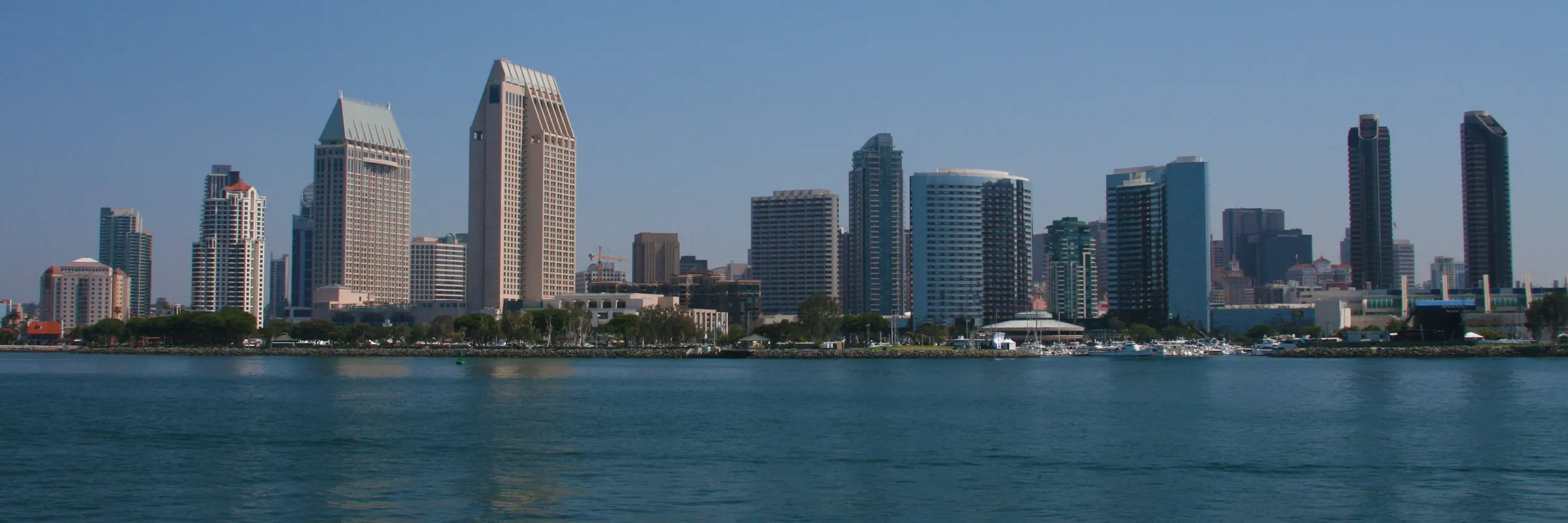
San Diego: The downtown skyline across San Diego Bay
Photo: Kyle Monahan · CC BY 2.0
California, United States

San Diego: how many days you need and the best months to go

San Diego sells itself on perfect weather, and for most of the year it delivers. The catch is the timing: on the coast the cloudiest weeks come in late spring and early summer, exactly when most people expect a beach holiday, and the clearest, warmest ones arrive after the summer crowds have gone home. The second catch is geography. This is less a city than a string of separate places — a downtown, a park, a peninsula, a run of beach towns and a cliff-top village — with a freeway between each.

Short answers

What people ask before booking

How many days do you need in San Diego?

San Diego needs three days — Balboa Park and the zoo, La Jolla, and the harbour with Coronado and a beach — and a fourth for the Safari Park or Tijuana. For beach weather come in September rather than June, when low cloud covers the coast for much of the day.

What is the best month to visit San Diego?

September and October — The real summer, after the crowds leave. April — Green hills, clear days and room to move.

Work out how many hours you will have in San Diego on your dates

How many days San Diego needs

Three days covers the core: one for Balboa Park and the zoo inside it, one for La Jolla and the cliffs at Torrey Pines, and one split between the harbour, Coronado and a beach. That is a complete trip.

The fourth day is for whichever outing you would otherwise drop: the Safari Park in its inland valley, the lighthouse and tide pools at the tip of Point Loma, or a day across the border in Tijuana. The zoo and the Safari Park are two different places an hour apart, and visitors who assume one afternoon covers both lose the afternoon.

How the city is arranged, and why it is not one place

San Diego wraps around a large natural bay, with the airport squeezed between the water and downtown, and then runs north along the ocean as a chain of beach communities. Inland the ground rises into flat-topped mesas cut by canyons, which is why two neighbourhoods that touch on the map can be a long drive apart.

The weather follows the same geography. The coast is cooled, and often clouded, by the ocean; a few kilometres inland the same afternoon is sunnier and noticeably hotter. When the beach is grey, the park and the zoo, on their mesa above downtown, are often in sunshine.

  • Downtown and the harbour — the Victorian blocks of the Gaslamp Quarter, the waterfront with its ship museums, and Little Italy just to the north, under the flight path.
  • Balboa Park — a mesa of museums, gardens and theatres laid out for the exposition of 1915, with the zoo on its northern side.
  • Coronado — the flat, quiet peninsula across the bay, joined to the mainland by a bridge and a long spit of sand, with the great wooden resort hotel of the 1880s.
  • The beaches — Ocean Beach, Mission Beach and Pacific Beach, running north from the river mouth: three boardwalk communities, each with its own temperament.
  • La Jolla — a cliff-top village on a headland to the north, with sea lions on the rocks below it and, beyond it, the reserve at Torrey Pines.

Where to stay, and the choice between a city and a beach

Because the pieces are far apart, where you sleep decides what the trip is. A downtown hotel gives you restaurants on foot, the trolley and a short ride to the park, and makes every beach an excursion. A beach hotel reverses that. Nobody gets both, so choose the half you want at the door and travel to the other.

One detail is worth knowing before you book: the cheapest rooms are the chain hotels of Mission Valley, a freeway corridor inland with a trolley line and no character — a practical base with a car and a poor one without.

AreaWho it suitsThe catch
Downtown and the Gaslamp QuarterA first visit without a car. Restaurants and bars on foot, the trolley, and a short ride to Balboa Park and the harbour.Loud at night at weekends, costly to park, and every beach is a journey. Prices jump when a convention is in town.
Little ItalyThe best streets in the city for eating, a walk from the harbour and downtown, with a neighbourhood's own feel.Directly under the airport approach: the aircraft are low, frequent and start early.
Mission Beach and Pacific BeachThe beach holiday itself: the boardwalk, the surf, rental bikes, and bars a few steps from the sand.Young, loud and late in summer; parking is close to impossible, and it is a drive to everything else.
La JollaCliffs, coves and a village of good restaurants. The prettiest setting in the city, and quiet at night.The most expensive area, a long way by road from downtown, and slow to get in and out of on summer weekends.
CoronadoCalm, flat streets and a wide, gentle beach. The easiest choice with children.A resort apart from the city: expensive, very quiet after dark, and linked by one bridge and a ferry.

Compare these areas against your priorities

The airport, the car question and the trolley

The airport is under five kilometres from downtown, unusually close for a major airport, so the transfer is a short bus or taxi ride and not a decision. There is no rail link to the terminals; a city bus runs to the downtown station, where the trolley, the commuter line and the trains to Los Angeles all meet.

Whether you need a car depends entirely on where you stay. From downtown, the trolley and buses reach Old Town, the border, the park and the university district: a visit built around the centre, the zoo and Coronado works without driving. The beaches, La Jolla, Torrey Pines, Point Loma and the Safari Park are another matter. They can be reached by bus, slowly.

  • The trolley does not go to the beaches, the zoo or the airport. It is a good system for what it serves, and visitors are caught out by what it does not.
  • The ferry to Coronado is public transport, a short crossing from the downtown waterfront, and a better way to arrive than the bridge.
  • The train to Los Angeles runs beside the ocean for much of the way. The track has been closed more than once by coastal erosion further north, so check it is running before you rely on it.
  • Balboa Park is free to enter. The museums and the zoo are ticketed one by one, and the park's own tram from the car parks costs nothing.

Days out: the border, the cliffs and the other zoo

The outings that make a longer stay are all within an hour. The one that needs thought is the border. Tijuana is a trolley ride and a footbridge away, and crossing south takes minutes; coming back north can take hours in the pedestrian line, because that is the direction the checks are in. You need your passport, and whatever let you into the United States must also let you back in.

  • Tijuana — the trolley's southern line ends at the crossing, one of the busiest land borders in the world. People go for the food — the Caesar salad was first made here — and are back by evening.
  • Torrey Pines — a state reserve on the bluffs north of La Jolla, protecting a pine that grows wild almost nowhere else, with short trails down to a long empty beach.
  • Point Loma — the headland that closes the bay, with a national monument at its tip: a nineteenth-century lighthouse, the view back over the whole city, and tide pools that are best in winter, when the low tides fall in daylight.
  • The Safari Park — the zoo's open-range sister, in a valley an hour inland to the north: herds in vast enclosures rather than animals in exhibits. It is hot in summer and needs most of a day.
  • The North County coast — Encinitas, Carlsbad and Oceanside, a string of surf towns on the coastal commuter line.

How eating works here

San Diego's food is the border's food. A short drive from Mexico, the city's everyday meal is the taco shop: a counter, a painted menu, a salsa bar, and burritos the length of a forearm, open late and often all night. This is not Tex-Mex, and it is not the rice-filled burrito of San Francisco — there is no rice inside, and the local inventions involve French fries.

The other local institution is beer. The county has more craft breweries than almost anywhere in the United States, and most run a tasting room rather than a bar: you order at the counter by the small glass, and there may be a food truck outside instead of a kitchen.

  • Tipping is expected: roughly a fifth of the bill at a table, a little at a counter or a tasting room. It is how staff are paid.
  • Dinner is early. Outside downtown, kitchens often close by mid-evening, and a beach community is quiet early on a weekday.
  • The salsa bar is self-service and free, and the pickled carrots and jalapeños on it are part of the meal, not a garnish.

Where to eat in San Diego, and what to order

The things San Diego does better than anywhere else in the country are cheap, casual and eaten with the hands. Its formal restaurants are good; its taco shops are the reason to arrive hungry. The many local shops with a name ending in -berto's descend, by family or by imitation, from a single tortilla business of the 1960s.

  • Fish taco

    What to order

    The dish the city took from Baja and made its own

    A piece of white fish, battered and fried, in a corn tortilla with shredded cabbage, a thin white sauce, salsa and a squeeze of lime. It comes from the coast of Baja California, just to the south, and it was a San Diego student who brought it north and built a chain on it in the 1980s. Judge a place by whether the fish is fried to order.

    Check it on Wikidata
  • California burrito

    What to order

    The local burrito, with the fries inside

    Grilled beef, cheese, guacamole or sour cream and a handful of French fries, rolled in a flour tortilla. No rice, no beans. The fries are not a gimmick; they are the starch, and the whole thing is a San Diego taco-shop invention, built to be a complete meal held in one hand.

    Check it on Wikidata
  • Carne asada fries

    What to order

    The same idea, open, to share late at night

    A tray of French fries buried under grilled beef, melted cheese, guacamole and sour cream, eaten with a fork. It originated here, in the city's Mexican-American taco shops, and it is not a side dish: one order feeds two or three.

    Check it on Wikidata
  • West Coast IPA

    What to order

    The local beer, and how to order it

    A pale, clear, very bitter ale built around American hops — pine and grapefruit rather than malt — and the style this county's breweries made their name on. Ask for a flight: four or five small glasses, which is the sensible approach to beers this strong.

    Check it on Wikidata
  • Little Italy

    Where to look

    A neighbourhood to walk and eat through

    A few blocks north of downtown that were home to the Italian and Portuguese families of the tuna fleet, when this city called itself the tuna capital of the world. The boats are gone and the restaurants remain, joined by many of the city's newer kitchens. Come on the morning of the weekly farmers' market, and stay for lunch; in the evening, book.

    Check it on Wikidata
  • Barrio Logan

    Where to look

    Mexican-American San Diego, with the murals

    The historic heart of the city's Chicano community, south-east of downtown, where the concrete pillars under the bay bridge were painted from the 1970s into the largest collection of outdoor murals in the country. Eat first, then walk to the park under the bridge.

    Check it on Wikidata

When to go, and what each month costs you

San Diego has no bad season, which is why the differences between the months matter more than they would elsewhere: they are the whole choice. The thing nobody expects is the marine layer. In late spring and early summer a deck of low cloud sits over the coast, sometimes until mid-afternoon and sometimes all day, and residents call it May Gray and June Gloom.

  • September and October

    Go now

    The real summer, after the crowds leave

    The clearest skies of the year, the warmest ocean of the year, and beaches that empty the week the schools go back. Hot, dry winds from the desert can blow for a few days at a time in these months, pushing temperatures up sharply and raising the wildfire risk inland; it is the one thing to watch in the forecast.

  • April

    Go now

    Green hills, clear days and room to move

    The winter rain has turned the hillsides green, the days are mild and mostly clear, and the cloud season has not yet begun. The ocean is at its coldest and the spring-break weeks fill the beach communities for a while, but the park, the zoo and the coastal walks are at their best.

  • May and June

    Worth it, but

    The grey months on the coast

    Low cloud covers the shoreline for much of the day, and on some days it does not clear at all. It is not cold and it is not raining; it is simply not the beach holiday of the brochure. Inland it is sunny, so the park, the zoo and the Safari Park are unaffected.

  • July and August

    Worth it, but

    Peak season, with the sun coming back

    The cloud thins as summer goes on — July mornings are often still grey, August is usually clear — and this is when everybody comes: full beaches, full car parks and the highest prices of the year. One week in late July belongs to Comic-Con, which fills every hotel room downtown and for a long way around it.

  • November

    Worth it, but

    Quiet, mild and short of daylight

    Still warm at midday, with the summer visitors gone and prices low. The days are short, the first rain may arrive and the ocean is cooling.

  • December to March

    Worth it, but

    The rainy season, such as it is

    Nearly all the year's rain falls now, in a handful of storms with long clear spells between them. It is mild by day, cool at night, and the cheapest season of the year. Gray whales pass offshore on their migration between Alaska and Baja, and the low tides of winter afternoons uncover the tide pools.

What to pack for San Diego, month by month

Things that change the trip

  • If the beach is the point, come in September, not June. The warmest water and the clearest skies arrive after the school holidays end, and the weeks most people book are the cloudiest of the year.
  • Decide about the car before you book the hotel. Downtown, the park and Coronado work without one; the beaches, La Jolla and everything to the north do not.
  • When the coast is grey, go inland. The cloud usually stops within a few kilometres of the shore, so the zoo, Balboa Park and the Safari Park are in sun on the mornings the beach is not.
  • The Pacific here is cold all year, fed by a current from the north. Swimming is comfortable for a few weeks in late summer, and surfers wear wetsuits in every month.
  • Take your passport to Tijuana and allow hours for the return. Crossing south is quick; the line to come back is not, and it is longest on weekend afternoons.
  • Check the dates of Comic-Con before choosing a week in July. Rooms across the city sell out long in advance.

Plan San Diego around the coast

A trip of more than three days, or one that adds Los Angeles, the desert or Baja and the drives between them, is what Premium is for. The free version covers one destination of up to three days.

Destinations