Skip to content
JoruJoru
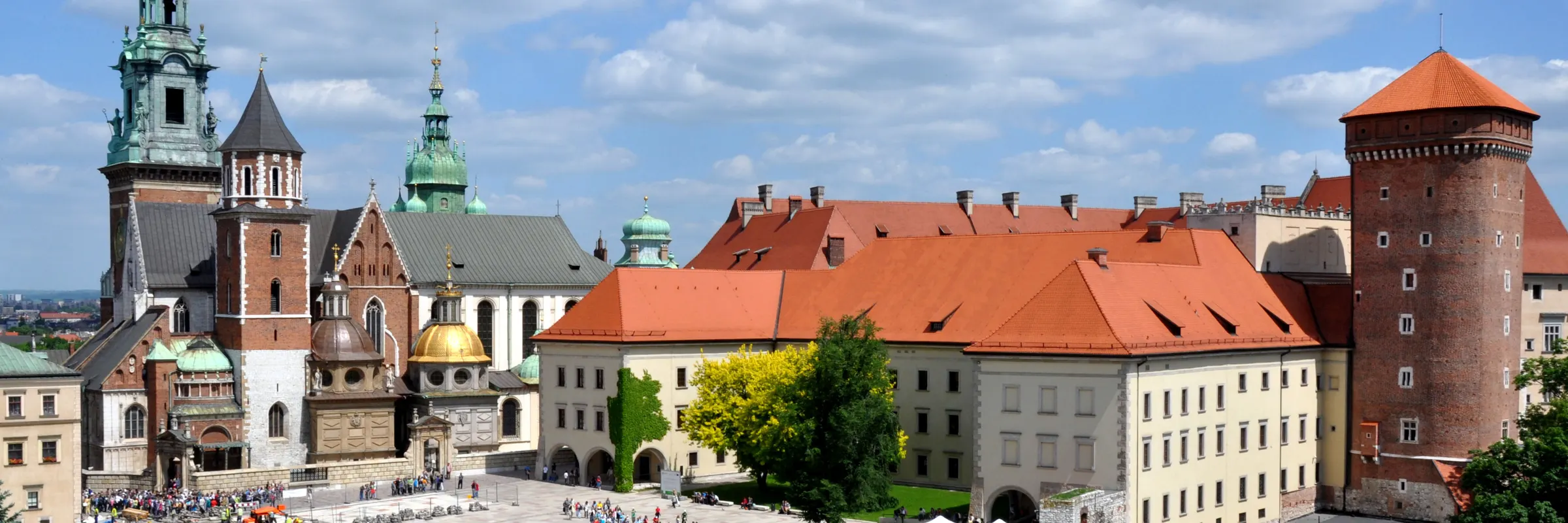
Kraków: Wawel castle and cathedral above the Vistula
Photo: FotoCavallo · CC BY 3.0
Lesser Poland, Poland

Kraków: how many days you need and the best months to go

Kraków was the capital of Poland for over five hundred years and it is the only major Polish city whose historic centre came through the Second World War substantially intact — Warsaw was deliberately razed and rebuilt from paintings. What survived is a walled medieval core around one of the largest market squares in Europe, a royal castle above the Vistula, and a Jewish quarter with a history that the twentieth century did not let it keep. Three days covers the city. A fourth is Auschwitz, and it is not a sightseeing day.

Short answers

What people ask before booking

How many days do you need in Kraków?

Kraków needs two days for the old town and Wawel, a third for Kazimierz and the ghetto ground across the river, and a fourth for Auschwitz — which is a day you leave empty.

What is the best month to visit Kraków?

May and June — Warm, long-lit, and the city outdoors. September — Summer weather without the crowd.

Which months are worth avoiding in Kraków?

November — Grey, damp, and nothing on. January, February and March — Cold, dark, and the worst air in Europe.

How many days Kraków needs

Two days covers the old town and Wawel comfortably — the square, the basilica, the cloth hall, the castle and the cathedral — because the historic core is small and almost entirely walkable inside its ring of park.

The third day is Kazimierz and Podgórze, the Jewish quarter and the ground where the wartime ghetto stood, which are a different city and need their own morning. A fourth day is Auschwitz-Birkenau or the Wieliczka salt mine, and if it is Auschwitz, plan nothing else for that day.

The square, and the trumpet that stops

The Rynek Główny is a square of about forty thousand square metres laid out in 1257, and it is one of the largest medieval squares in Europe. In the middle stands the Sukiennice, the cloth hall, a Renaissance market building that has been a covered trading hall for six hundred years and still is.

Every hour, from the taller tower of St Mary's Basilica on the corner, a trumpeter plays the *hejnał* to the four points of the compass — and every hour the tune breaks off mid-note. The story is that a thirteenth-century watchman was shot in the throat by a Mongol arrow while sounding the alarm. Whether or not that is what happened, the interruption has been played every hour for centuries and it is broadcast on Polish national radio at noon. It is the most reliably strange thing in the city.

Wawel, and what is actually on the hill

Wawel is a limestone outcrop above the Vistula holding the royal castle and the cathedral, and it functions as the national symbol of Poland in a way no single building in most countries does. Polish monarchs were crowned and buried in that cathedral for four centuries, and the crypts hold kings, poets and modern statesmen.

The castle interiors are ticketed by section and separately capped, which catches people out: you cannot simply buy one ticket and wander. The grounds themselves are free and worth an evening. In the cathedral, the Sigismund Bell is rung by hand by a team of a dozen people on the major national holidays, and there is a dragon's den in the rock below with a fire-breathing metal dragon at the exit, which is exactly as odd as it sounds.

  • Rynek Główny — the 1257 square and the cloth hall. The Rynek Underground museum beneath it is the best thing most people skip.
  • St Mary's Basilica — the trumpet, and the Veit Stoss altarpiece, which is the largest Gothic altarpiece in the world.
  • Wawel — castle, cathedral and crypts. Ticketed by section; the grounds are free.
  • Kazimierz — the Jewish quarter, with seven synagogues still standing, and the city's best food and nightlife.
  • Podgórze — across the river: the ghetto square with its empty chairs, the pharmacy museum and Schindler's factory.

Kazimierz and Podgórze, and keeping them straight

These are two different places and visitors routinely confuse them. Kazimierz was the Jewish quarter for five centuries — a separate town until 1800 — and it has seven surviving synagogues, the old cemetery and a dense grid of low buildings that is now the centre of the city's eating and drinking.

Podgórze, across the river, is where the Nazis forced the ghetto in 1941. The ghetto was there, not in Kazimierz. What remains is a fragment of the ghetto wall, the Plac Bohaterów Getta with its installation of seventy empty metal chairs, the pharmacy that operated inside the ghetto and is now a museum, and Oskar Schindler's enamel factory. The factory museum is largely about occupied Kraków rather than the film, and it is very good; book it, because it caps entry.

Auschwitz, and how to do it

Auschwitz-Birkenau is about ninety minutes west of Kraków and roughly half the visitors to this city go. It is a memorial and a museum at the site of the largest of the Nazi extermination camps, where over a million people were murdered, and it is not a day trip in the ordinary sense.

The practicalities matter. Entry is free but requires a booked time slot, and in high season slots go weeks ahead; between roughly mid-morning and mid-afternoon entry is only with an educator, which is the right way to do it anyway. The full visit is two sites — Auschwitz I and Birkenau three kilometres away — and takes at least three and a half hours. Children under fourteen are not recommended. Plan nothing for the evening. People come back quiet, and an itinerary that puts dinner and a bar afterwards has misunderstood the day.

The salt mine, and the winter air

Wieliczka is a working salt mine from the thirteenth century, half an hour from the city, with a tourist route more than a hundred metres underground: chambers, lakes and a full chapel carved out of rock salt, chandeliers included. It was on the very first UNESCO World Heritage list in 1978. It is a good half day and it is genuinely unlike anything else, though it involves eight hundred steps down.

The other thing to know is the air. Kraków sits in a river valley that traps cold air, and in winter the city has some of the worst air pollution in Europe — coal heating in the surrounding region plus an inversion that holds the smog in place. The city has banned solid-fuel heating within its own limits and it has improved, but on a still January day the readings are still bad. If you have asthma or are travelling with small children, that belongs in the decision.

What to eat in Kraków, and where

Polish food is dumplings, soured things and cabbage, and it is much better than its reputation abroad. The two most Kraków-specific items are a protected bread ring and a baguette with mushrooms on it, and both are eaten standing up.

  • Pierogi

    What to order

    The dumplings, and the two kinds

    Half-moon dumplings, boiled or fried, filled with anything from potato and curd cheese to cabbage and mushroom to blueberries. The savoury ones come with fried onion and sour cream; the sweet ones are a summer dish and a different meal. Order a mixed plate the first time and find out which ones you want again.

    Check it on Wikidata
  • Obwarzanek krakowski

    What to order

    The ring sold on every corner

    A braided ring of boiled-then-baked dough, crusty and chewy, sold from blue carts all over the city. It has EU protected geographical status, which means it can only be called this if it is made in and around Kraków — the generic Polish version is a different thing. Poppy seed, salt or sesame. Eat it the day you buy it.

    Check it on Wikidata
  • Zapiekanka

    What to order

    The thing to eat at one in the morning

    Half a baguette baked with mushrooms and cheese and finished with a stripe of ketchup, invented in Poland in the 1970s. The famous ones are sold from a ring of hatches in a round building in Kazimierz that never closes, and it is what the city eats on the way home. It is not refined and that is not the point.

    Check it on Wikidata
  • Bigos

    What to order

    The national dish, and why it improves

    Sauerkraut and fresh cabbage stewed for hours with several meats, sausage, prunes and mushrooms. It is traditionally reheated over several days and genuinely gets better each time, which is why a good one tastes of much more than its parts. A winter dish, and the best argument for coming in the cold.

    Check it on Wikidata
  • Zurek

    What to order

    The sour soup, and the bowl it comes in

    A soup soured with fermented rye flour, with white sausage, potato and half a boiled egg, often served in a hollowed-out round loaf. The sourness is the point and it takes a spoonful to get used to. It is the Easter soup and it is on every menu all year.

    Check it on Wikidata
  • Kazimierz

    Where to look

    The quarter to spend the evening in

    The Jewish quarter for five hundred years and a separate town until 1800, now the densest concentration of bars, restaurants and small music venues in Kraków. Seven synagogues still stand in it, and it holds its history and its nightlife in the same few streets without either cancelling the other.

    Check it on Wikidata

When to go, and what each month costs you

Kraków has a continental climate with real winters and short, warm summers. May, June and September are the window; the winter is cold and the air is genuinely bad, and that last part is a health consideration rather than a comfort one.

  • May and June

    Go now

    Warm, long-lit, and the city outdoors

    The best weeks of the year: mild, green, light until late and the square full of tables. Everything is open and the day trips are comfortable. Prices are high and Auschwitz slots go weeks ahead, so book that part before you book the flight.

  • September

    Go now

    Summer weather without the crowd

    Warm days, cool evenings, the student city coming back to life and the summer visitors gone. Clear light and the last comfortable month for walking. The single best month if you can choose one.

  • July and August

    Worth it, but

    Peak season, warm and full

    Warm to hot and the busiest weeks of the year, with the square at capacity and hotel prices to match. Everything works and the evenings are long. The old town is small enough that the crowd is noticeable in a way it is not in a bigger city.

  • April

    Worth it, but

    Spring arriving, unreliably

    Cold one week and mild the next, with the Planty greening and prices below summer. Easter is a major holiday in Poland and moves between late March and late April; much of the city closes on the Sunday and Monday. Worth checking before booking.

  • October

    Worth it, but

    Autumn colour, and the cold arriving

    Crisp and often clear early in the month, with the Planty ring at its best, and increasingly grey by the end. Prices drop sharply. The smog season has not started yet, which makes this better than any of the winter months.

  • December

    Worth it, but

    Christmas market, cold, and the air turning

    The market on the Rynek is one of the better ones in Europe and the square is genuinely beautiful in it. It is also cold, dark by four, and the start of the smog season. A real reason to come, with a real cost attached.

  • November

    Think twice

    Grey, damp, and nothing on

    The bleakest month: the colour is gone, the Christmas market has not started and the air is beginning to sit in the valley. Prices are at their lowest. There is no argument for it other than that.

  • January, February and March

    Think twice

    Cold, dark, and the worst air in Europe

    Properly cold, with short days and the valley holding the winter smog. On a still January day Kraków has recorded some of the worst air quality of any European city, and if you have asthma or small children that is a reason to pick another month. The museums and the food are unaffected.

Things that change the trip

  • Book Auschwitz before anything else. Entry is free but needs a timed slot, and in summer they go weeks ahead.
  • Leave the Auschwitz day empty. It takes three and a half hours across two sites and it is not a day you follow with dinner plans.
  • Kazimierz was the Jewish quarter; Podgórze was the ghetto. They are on opposite banks and visitors mix them up constantly.
  • Go into the Rynek Underground, beneath the square. It is the medieval market excavated in situ and almost everyone walks over it.
  • Think twice about January and February if you have asthma. The valley traps coal smoke and the readings are among the worst in Europe.
  • Stand in the square on the hour. The trumpet call breaks off mid-note, every hour, and has done for centuries.

Plan Kraków and southern Poland

A trip beyond four days, or one that adds Zakopane, Wrocław, Warsaw or the Tatra mountains with the trains and the Auschwitz booking arranged around them, is exactly what Premium is for. The free version covers one destination of up to three days.

Destinations