





Skip to content
JoruJoru
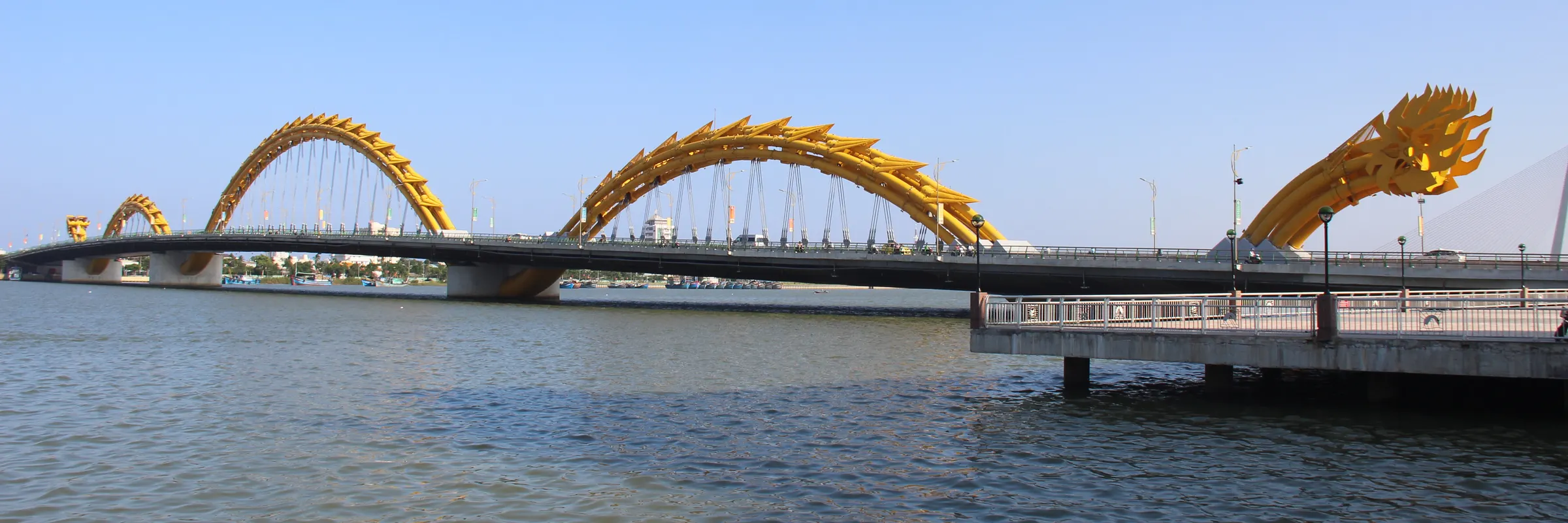
Da Nang: The Dragon Bridge over the Han River

Central Vietnam

Da Nang: how many days you need and the best months to go

Photo: Gary Todd · CC0

Da Nang is the city that Vietnam built for the twenty-first century: a long beach backed by hotels, a river crossed by new bridges, and an airport so close to the centre that some flights land minutes from the sand. Most visitors use it as the arrival point for Hoi An, forty minutes south, and miss a city that is pleasant in its own right, with one of the finest city beaches in the country and a ring of sights in the mountains and on the coast around it. The planning problem is the weather and the base. From autumn into early winter, central Vietnam has its rainy and typhoon season, with floods that can cut the region off for days; and the choice of where to sleep — the beach, the river or Hoi An — decides what kind of trip it is.

Short answers

What people ask before booking

How many days do you need in Da Nang?

Da Nang needs two days for the beach, the Marble Mountains, Son Tra and the river at night, and two more for Ba Na Hills, Hoi An, Hue or the ruins of My Son. Come between February and May; October and November bring typhoons and floods.

What is the best month to visit Da Nang?

February to May — Dry, warm and before the great heat.

Which months are worth avoiding in Da Nang?

October and November — Typhoons and floods.

Work out how many hours you will have in Da Nang on your dates
When to go, and what each month costs you

Da Nang has two seasons: dry and hot from about February to August, and rainy from September to December, with typhoons and floods that can cut off the region. Spring is the best time; October and November are the months to avoid. The sea is calmest and clearest in the dry months.

  1. January: Worth it, but
  2. February: Go now
  3. March: Go now
  4. April: Go now
  5. May: Go now
  6. June: Worth it, but
  7. July: Worth it, but
  8. August: Worth it, but
  9. September: Worth it, but
  10. October: Think twice
  11. November: Think twice
  12. December: Worth it, but
  • February to May

    Go now

    Dry, warm and before the great heat

    The rains end, the sky clears and the sea calms; days are warm and pleasant, getting hot in May. The lunar new year, usually in late January or February, closes many family businesses for several days and fills transport, and its dates move each year. After it, this is the best season for everything.

  • June to August

    Worth it, but

    Hot, sunny and the beach season

    Hot and humid, with long sunny days and the sea at its calmest. This is the Vietnamese holiday season, the beach is full of families and prices peak; the city's international fireworks festival is usually held in early summer. Sightsee early and late, and spend the middle of the day in the water or the shade.

  • September

    Worth it, but

    Hot, with the first storms

    Still hot, with more frequent afternoon storms as the rainy season begins and the first typhoons of the central coast. Prices fall after the summer holidays. Keep plans flexible.

  • October and November

    Think twice

    Typhoons and floods

    The heart of the rainy season, with the heaviest rain of the year and typhoons that can flood the region, close the airport and cut the road to Hoi An and Hue. Hoi An's old town floods most years. Travel is possible between storms, but plans can collapse at short notice.

  • December and January

    Worth it, but

    Cool, grey and still wet

    Cooler, often grey, with rain easing through January; the sea is often too rough to swim. The city is quiet and cheap, and good for the sights rather than the beach.

What to pack for Da Nang, month by month

How many days Da Nang needs

Two days cover the city: the beach in the morning, the Marble Mountains and the peninsula of Son Tra, the river and its bridges at night, the market and the museum of Cham sculpture. Da Nang is easy and spread out, and most of it is reached in a short ride.

Two more days are for what lies around it: the hill station of Ba Na with its bridge held by giant hands, the old town of Hoi An forty minutes south, the imperial city of Hue over the Hai Van Pass, and the Cham temple ruins of My Son in the hills. Each is a full day, and Hoi An deserves nights of its own.

How the city is arranged

Da Nang is split by the Han River. The old centre and the airport are on the west bank; the long beach is on the east, between the river and the sea, joined by a series of bridges. The peninsula of Son Tra closes the bay to the north, and the Marble Mountains rise from the sand to the south, on the road to Hoi An.

  • The west bank — the city centre, the riverside promenade, the markets, the cathedral and the museum of Cham sculpture.
  • The Han River and its bridges — the Dragon Bridge, whose dragon breathes fire and sprays water on weekend nights, and the river at night.
  • My Khe and the east beaches — kilometres of sand backed by hotels, seafood restaurants and the city's newest district.
  • Son Tra — the green peninsula north of the beach: a giant white statue of the goddess of mercy, quiet coves and rare monkeys in the forest.
  • The Marble Mountains — five limestone hills south of the city, riddled with caves and pagodas, with stairs to the top.

Where to stay, and what each area costs you

The beach is where most visitors stay, and it is the right choice for a beach holiday; the west bank is better for the city's life and food; and many people sleep in Hoi An and visit Da Nang from there. The distances are short, and ride-hailing cars make any base work.

Prices rise in the summer holidays, when Vietnamese families fill the beach, around the lunar new year, whose dates move each year, and during the city's international fireworks festival, which is usually held in early summer.

AreaWho it suitsThe catch
My Khe beachA beach holiday: the sand at the door, seafood restaurants and the most hotels, from hostels to towers.A strip of high-rise hotels with little character, and a ride to the old centre.
The west bank and the riverThe city's life: the markets, local restaurants, the bridges at night and the airport close by.No beach, and traffic and noise on the main streets.
The resort coast south of the cityLarge beach resorts between the Marble Mountains and Hoi An, for a stay by the sea.Far from the city's life, and you depend on taxis to go anywhere.
Hoi An as a baseThe old town, its lanterns and its food, with the city and the airport about forty minutes away.Day trips into Da Nang take a ride each way, and the old town is crowded in the evening.

Compare these areas against your priorities

Getting there, and getting around

Da Nang's international airport is in the city, a short ride from the beach and the centre, with flights from all over Vietnam and from several Asian countries. The north–south railway between Hanoi and Ho Chi Minh City stops here; the stretch north to Hue, over the coast and along the sea, is among the most beautiful train rides in the country.

In the city, ride-hailing apps are the easy way to move: cars and motorbike taxis at fixed prices shown in the app, without bargaining. Taxis with meters are also common.

  • Renting a motorbike is common, and traffic is chaotic for anyone who has not ridden in Vietnam; a licence valid in Vietnam and a helmet are required, and travel insurance may not cover you without them.
  • The Hai Van Pass to Hue is a famous ride by motorbike or car; a tunnel takes the main traffic under it, so the pass road itself is quiet.
  • To Hoi An, a ride-hailing car or a taxi takes about forty minutes; buses are slower.
  • Cash is still widely used at markets and small restaurants; cards work in hotels and larger places.

The beach, the mountains and the bridge in the clouds

Ba Na Hills was a French hill station of the colonial era and is now a mountain-top theme park, reached by one of the longest cable cars in the world. Its fame is the Golden Bridge, a walkway held up by two giant hands, made to look like weathered stone, in the clouds. It is crowded and artificial, and on a clear day the views are extraordinary; go early, and check the weather, because cloud often hides everything.

  • My Khe beach — a long, wide beach in the city, at its best early in the morning, when locals swim before work. Lifeguards watch the main sections; the sea can be rough in the rainy season.
  • The Marble Mountains — caves turned into Buddhist shrines, lit by shafts of light from openings in the rock, with stairways or a lift to the top.
  • The museum of Cham sculpture — the world's largest collection of sculpture from the Cham kingdom that ruled the coast for over a thousand years. An hour, and the key to My Son.
  • Son Tra — the peninsula with the great white statue at the Linh Ung pagoda, quiet beaches and forest where endangered langurs live.
  • My Son — the ruined brick temples of the Cham kings in a valley in the hills, a World Heritage Site; go early, before the heat.
  • Hue — the imperial city of the last dynasty, a day trip over the pass or by train, better with a night.

How eating works here

Central Vietnam has its own cooking, spicier than the north and full of herbs and noodles. Da Nang's dishes are noodles with turmeric, fish-cake noodle soup and rice-paper rolls with pork, and the seafood restaurants along the beach, where you choose from the tanks, are part of every visit.

Locals eat breakfast and lunch at small places with plastic stools, and dinner late at the seafood restaurants. The best food is often in the plainest places, where the menu is a single dish.

  • At seafood restaurants, check the price by weight before the fish is cooked, and agree on it.
  • The covered market of the centre sells everything from dried fish to clothes, and its food stalls are a good lunch.
  • Drink bottled water, and choose busy stalls where food turns over fast.
  • Tipping is not expected in local restaurants; in hotels and tourist restaurants a small tip is appreciated.

Where to eat in Da Nang, and what to order

Da Nang's food is the food of central Vietnam: wide rice noodles with turmeric and very little broth, a fish-cake noodle soup, and rolls of rice paper with pork and herbs. Add a seafood dinner on the beach and a coffee with condensed milk, and you have eaten the city.

  • Mì Quảng

    What to order

    The region's noodle dish

    Wide rice noodles coloured with turmeric, served with only a ladle of rich broth, with pork, shrimp, quail eggs, herbs, peanuts and a sesame rice cracker crumbled on top. It comes from Quảng Nam, the old province around Da Nang that is now part of the city, and is eaten at any hour; the city has whole restaurants that serve nothing else.

    Check it on Wikidata
  • Bún chả cá

    What to order

    Fish-cake noodle soup

    Rice vermicelli in a clear, slightly sweet broth with slices of fried and steamed fish cake, pineapple, tomato and greens, with chilli on the side. It is Da Nang's breakfast, and the best places sell nothing but this. Light, fresh and cheap.

    Check it on Wikidata
  • Bánh tráng

    What to order

    Pork rolled in rice paper

    Thin slices of boiled pork rolled at the table in rice paper with herbs, lettuce and green banana, dipped in a pungent fermented anchovy sauce. You roll them yourself, and the sauce is the point; ask for it milder if you are not used to it.

    Check it on Wikidata
  • Bánh xèo

    What to order

    A crisp pancake to roll with herbs

    A crisp rice-flour pancake fried with shrimp, pork and bean sprouts, cut and rolled in rice paper with herbs, then dipped in a peanut and liver sauce. The central version is small and crisp, made in little pans, and it is best straight from the fire at a busy stall.

    Check it on Wikidata

Things that change the trip

  1. Avoid October and November unless your plans can bend: typhoons and floods hit central Vietnam hardest then.
  2. Decide your base by the kind of trip: the beach for the sea, the west bank for the city, Hoi An for the old town.
  3. Go to Ba Na Hills early, and check that the summit is not lost in cloud.
  4. Use ride-hailing apps rather than bargaining with drivers.
  5. Agree the price by weight before a seafood dinner.
  6. Give Hue at least one night: it is too much for a day trip over the pass.

Plan Da Nang with Hoi An and Hue

A trip of more than three days, or one that joins Da Nang, Hoi An, Hue and My Son with the roads and trains between them, is what Premium is for. The free version covers one destination of up to three days.

Destinations