Skip to content
JoruJoru
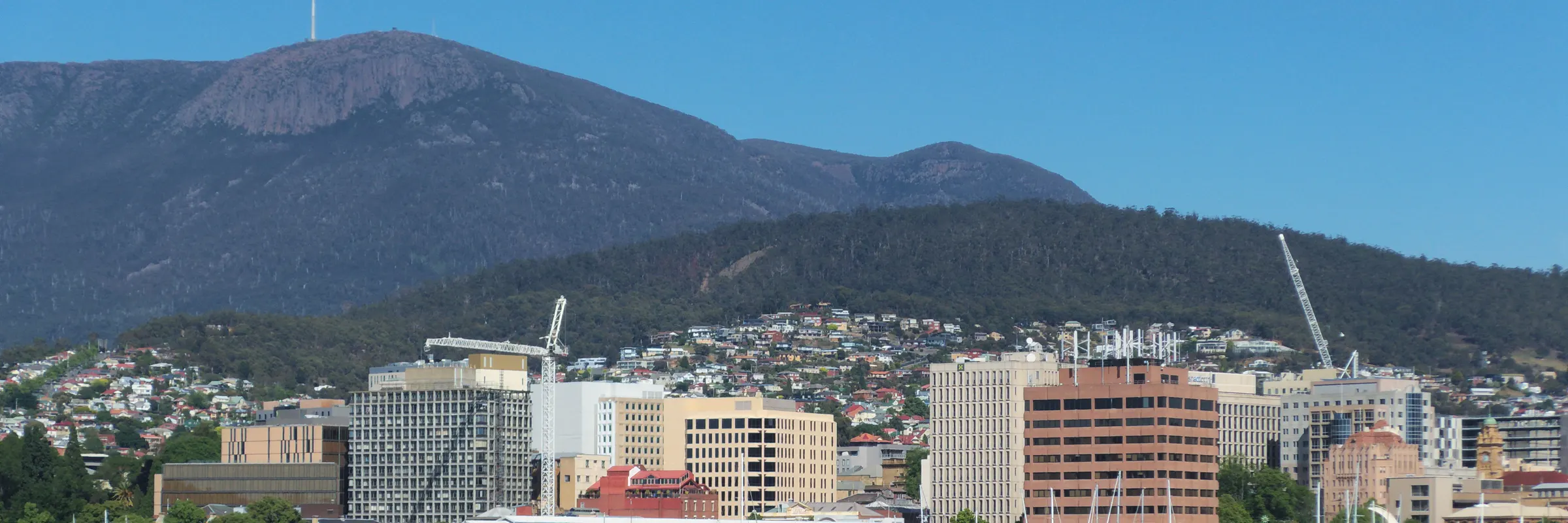
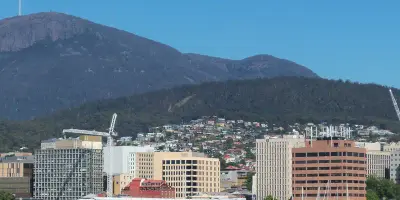
Hobart: the waterfront under kunanyi / Mount Wellington
Photo: Gary Houston · CC0
Tasmania, Australia

Hobart: how many days you need and the best months to go

Hobart was founded in 1804 as a convict settlement, which is why a city of a couple of hundred thousand has Georgian sandstone warehouses along its waterfront. It sits between a deep estuary and a mountain that gets snow in summer, and for most of its history it was where Australia sent people it wanted to forget. In the last twenty years it has become the reason people fly to Tasmania: for a private museum built into a cliff, and for what an island this cold grows. Two days covers the city. A third is the peninsula or the island's produce.

Short answers

What people ask before booking

How many days do you need in Hobart?

Hobart needs two days — one for the waterfront and the mountain, one for the art museum, which takes half a day at minimum — and a third for Port Arthur or the produce valleys.

What is the best month to visit Hobart?

December, January and February — Summer, long evenings, and everything open. March — The best month, quietly.

Which months are worth avoiding in Hobart?

May — The gap between autumn and the festival. July, August, September and October — Winter proper, and a slow spring.

How many days Hobart needs

Two days is the honest figure: one for the waterfront, the old warehouses and the mountain, and one for the art museum, which is a half-day at minimum and a full one if it takes.

The third day leaves the city, and there are two strong options that point in different directions. The Tasman Peninsula and its convict site are ninety minutes south-east; the wine and produce valleys are half an hour north. Beyond three days you are touring Tasmania rather than visiting Hobart, which is what most people should be doing anyway.

The museum built into a cliff

The Museum of Old and New Art opened in 2011 in a suburb north of the city, funded privately by a Tasmanian who made his money on a system for counting cards. It is dug three levels into a sandstone cliff on a peninsula in the river, entered at the top and worked downwards, and its permanent collection runs from Egyptian antiquities to installations that a fair number of visitors find genuinely offensive.

The building is the reason Hobart's tourism roughly doubled in a decade, and it is worth understanding that it is not a conventional art museum. There are no labels on the walls. It is deliberately disorienting. Several works are designed to provoke rather than please. Go by the ferry that runs from the city waterfront, which is part of the experience, and allow more time than you think.

The convict history, and where you actually see it

Around 75,000 convicts were transported to Van Diemen's Land — the island's name until 1856 — and the system left buildings all over the south of Tasmania. Eleven Australian convict sites are collectively inscribed as World Heritage, and several of the most important are within an hour or two of Hobart.

Port Arthur, on the Tasman Peninsula, is the one that matters. It was a secondary punishment station: a prison for men who had already reoffended in the colonies, on a peninsula joined to the mainland by a strip of land narrow enough to guard with dogs. It is a large, beautiful, extremely uncomfortable place, and it takes most of a day with the drive.

  • Port Arthur is ninety minutes each way and deserves four hours on site. It is not an afternoon stop.
  • The site also carries the memory of a mass shooting in 1996, which led directly to Australia's gun laws. There is a memorial; the guides handle it carefully, and so should visitors.
  • In Hobart itself the convict traces are the buildings: the Georgian warehouses on the waterfront, the penitentiary chapel and the barracks were all convict-built.
  • The female factory site in South Hobart is smaller, quieter and tells the part of the story that almost never gets told.

The mountain, and the weather it makes

kunanyi / Mount Wellington rises directly behind the city to roughly 1,270 metres, and there is a sealed road to the summit. The temperature at the top is routinely ten degrees colder than at sea level, and it can snow up there in any month of the year — including January, which catches out visitors who drove up in a t-shirt.

The view from the top takes in the estuary, the peninsula and, on a clear day, most of the south-east of the island. The mountain is also the reason Hobart's weather changes quickly: it interrupts the westerlies, and four seasons in an afternoon is a genuine description rather than a saying.

  • Take a jacket up the mountain in summer. The summit is exposed and it is a different climate from the car park at the bottom.
  • The road closes in snow and ice without much notice, which is most likely in winter but possible year-round.
  • The best time to go up is early, before the cloud that often sits on the summit by midday.
  • There are walking tracks from the city to the mountain, and the Organ Pipes track below the summit is the one worth doing.

Where to stay, and what each area costs you

Hobart is small enough that the choice is between three walkable areas and one that requires a car. The waterfront puts you in the sandstone, the restaurants and the ferry to the museum; Battery Point above it is the oldest residential quarter and the prettiest; North Hobart is a single long street of restaurants and a cinema.

The one genuine warning is the last week of December. The city's yacht race finishes then and the accommodation fills months ahead at prices that bear no relation to the rest of the year.

AreaWho it suitsThe catch
The waterfrontFirst visit. Sandstone warehouses, restaurants, the market and the museum ferry.The most expensive part of town, and it empties on a weeknight.
Battery PointThe oldest streets in the city, cottages, and a ten-minute walk downhill to everything.Steep, quiet and residential; there is very little open in the evening.
North HobartThe restaurant street, cheaper rooms, and where people who live here eat.Twenty-five minutes on foot from the waterfront, or a short bus.
Sandy BayQuiet, on the water, and better value than the centre.Suburban; you will drive or bus in for anything after dark.
Near the museumStaying at the art museum itself, which has its own accommodation.Twenty-five minutes from the city and priced as a destination in itself.

Practical things that catch visitors

The first is the temperature. Tasmania is the coldest state in Australia and Hobart is the second-driest capital, which is a combination most visitors do not expect — people arrive from Sydney in summer clothes and spend the trip buying a jumper. The sun is also fierce despite the cold, because the ozone layer is thin over this latitude.

The second is distance. Tasmania looks small and is not: the roads are narrow, winding and shared with wildlife, and driving times are consistently longer than a map suggests. Dawn and dusk are when animals are on the road, and hitting one is the most common incident visitors have here.

  • Pack for cold and for sun. Both, in every month. The UV here is stronger than the temperature suggests.
  • Avoid driving between dusk and dawn outside the city. The roadkill you see is the reason.
  • Quarantine rules apply on arrival, including on domestic flights from the mainland: no fresh fruit, vegetables or honey.
  • The last week of December is the yacht race, and the city is full, expensive and lively. Book far ahead or avoid it.

What to eat in Hobart, and where

Tasmania's cold is the whole argument for its food. Cold water grows better shellfish, a cool climate makes better sparkling wine, and a short season concentrates fruit — which is why an island of half a million people supplies restaurants across Australia and Japan. Eat the produce; it is the reason to come.

  • Salamanca Place

    Market

    Saturday morning, and the one fixed appointment

    The historic square by the waterfront, lined with Georgian sandstone warehouses built by convict labour, which hosts a large market every Saturday. It is the single best place to eat Tasmanian produce in one morning — cheese, berries, smoked fish, whisky — and it has run in this square for over half a century.

    Check it on Wikidata
  • Pacific oyster

    What to order

    The thing this island does better than anywhere

    Cold-water oysters farmed in the estuaries and bays around the island, harvested year-round and eaten within hours. Cold water grows them slowly, which is what makes them dense and sweet, and Tasmanian ones end up on menus in Sydney and Tokyo. Eat them at the source, unadorned, with nothing but lemon.

    Check it on Wikidata
  • Cascade Brewery

    Institution

    The oldest thing of its kind in the country

    A brewery below the mountain that has operated continuously since 1832, making it the oldest in Australia. The building is a sandstone Georgian pile at the foot of the hill and it looks more like a colonial institution than a factory, which is exactly what it is. Worth the walk out for the building alone.

    Check it on Wikidata
  • Australian whisky

    What to order

    The industry that was illegal until 1992

    Distilling spirits in Tasmania was banned for over a century — a colonial-era law that stood until the 1990s — and since it was overturned the island has produced whiskies that win international awards. The climate does the work: cool, damp air and small barrels mean fast maturation. Several distilleries within an hour of Hobart pour tastings.

    Check it on Wikidata
  • Tasmanian wine

    What to order

    What a cool climate does to a grape

    Tasmania is Australia's coldest wine region and it makes the country's best sparkling wine and its most precise pinot noir, in valleys half an hour north and east of the city. Cool climates ripen slowly, which keeps the acid, and that is why the mainland's big producers buy fruit here for their premium sparkling.

    Check it on Wikidata
  • Bruny Island

    Where to look

    The day trip that is entirely about eating

    An island south of Hobart, reached by a short car ferry, with an oyster farm, a cheese maker, a whisky bar and a fudge shop within a few kilometres of each other. It is a produce trail with beaches and a lighthouse attached, and it is the best single day out from the city if food is why you came.

    Check it on Wikidata

When to go, and what each month costs you

Southern hemisphere: summer runs December to February and winter June to August. Tasmania is colder, wetter and windier than mainland Australia, and Hobart sits in the path of the westerlies, which means the weather here changes faster than anywhere else in the country. The season decides the daylight more than the temperature.

  • December, January and February

    Go now

    Summer, long evenings, and everything open

    Warm without being hot, light until late, and the whole island working. This is when the produce is at its best and the walking is easiest. The last week of December brings the yacht race and a summer festival, and the city fills completely — book months ahead for those dates or plan around them.

  • March

    Go now

    The best month, quietly

    Settled autumn weather, the summer crowds gone, the water still warm enough for the beaches and the light turning. Prices ease off. If you can only pick one month for Hobart, this is it.

  • November

    Worth it, but

    Spring, unreliable, and good value

    Warming up and thoroughly unpredictable — genuinely four seasons in an afternoon. Everything is open, the gardens are at their best and prices sit below December. Take a waterproof and plan flexibly.

  • April

    Worth it, but

    Autumn colour, cold mornings, very few people

    Crisp and clear when it is fine, and the deciduous beech in the highlands turns in late April, which is the one autumn colour event in Australia. Shorter days and cold nights. Cheap and lovely.

  • June

    Worth it, but

    Midwinter, and the reason to come anyway

    Cold, dark and wet — and the month of the winter festival, which fills the city with fire, food and installations around the solstice and is genuinely unlike anything else in Australia. Outside those weeks, June is the quietest and cheapest month here.

  • May

    Think twice

    The gap between autumn and the festival

    Cold, wet, dark early and with none of June's compensations. Prices are at their lowest and the museum, the restaurants and the distilleries all work perfectly well. It is an indoor trip, and Hobart has enough indoors to justify one.

  • July, August, September and October

    Think twice

    Winter proper, and a slow spring

    The coldest and wettest stretch, with snow on the mountain, short days and the roads over the highlands occasionally closed. The city functions normally and it is very cheap. What you lose is the daylight and the walking, which for most people is why they came to Tasmania at all.

Things that change the trip

  • Pack for cold in every month. Tasmania is the coldest state in Australia and the mountain can snow in January.
  • Allow more than half a day for the art museum, and take the ferry from the waterfront rather than driving.
  • Do not drive at dawn or dusk outside the city. That is when the wildlife is on the road, and it is the most common incident here.
  • Go to the Saturday market. It is the fastest way to eat the island's produce and it has been in that square for decades.
  • Avoid the last week of December unless you want the yacht race. The city fills and the prices leave the rest of the year behind.
  • Port Arthur is a full day with the drive, not an afternoon. Four hours on site is the minimum that makes sense.

Plan Hobart and the rest of Tasmania

A trip beyond three days, or one that adds Freycinet, Cradle Mountain or a loop of the island with the driving times between them, is exactly what Premium is for. The free version covers one destination of up to three days.

Destinations