





Skip to content
JoruJoru
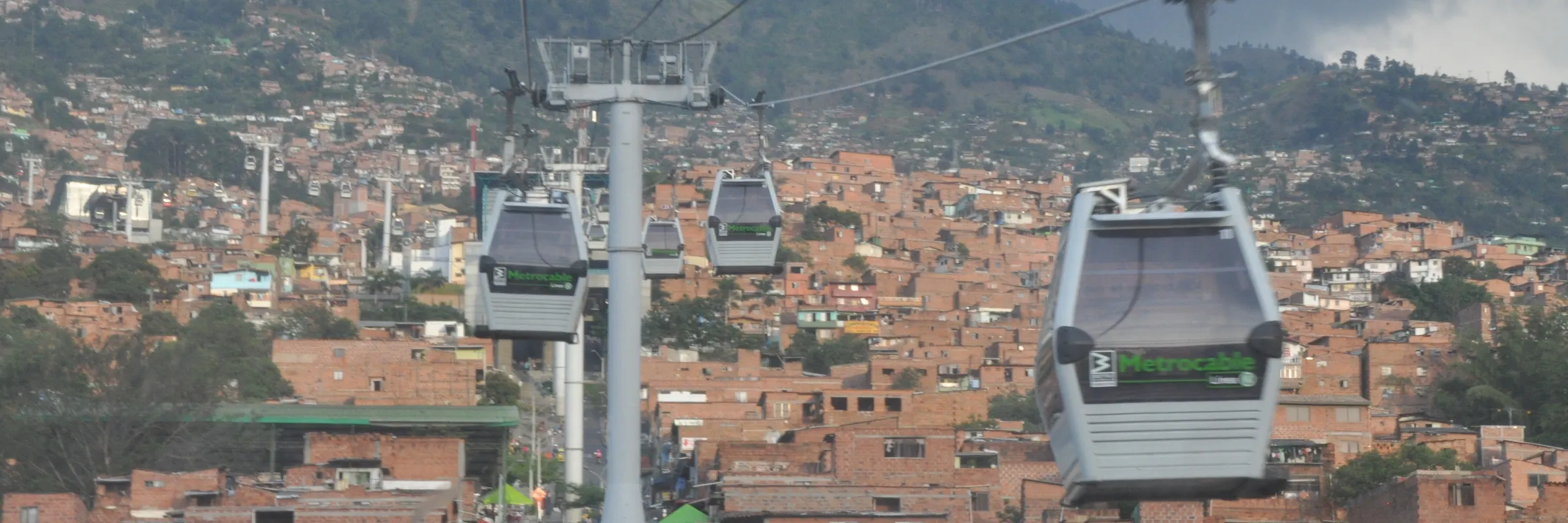
Medellín: the Metrocable over the hillside neighbourhoods
Photo: Jorge Láscar from Australia · CC BY 2.0
Antioquia, Colombia

Medellín: how many days you need and the best months to go

Medellín sits in a steep, narrow valley at around 1,500 metres, which gives it a temperature that hardly varies from January to December — the reason it is called the city of eternal spring. The interesting part is what the city did with its geography: a metro along the valley floor and cable cars running up the hillsides as ordinary public transport, connecting neighbourhoods that used to be cut off from everything.

Short answers

What people ask before booking

How many days do you need in Medellín?

Medellín needs three days: one for the centre and the metro and cable car system, one for Comuna 13 and the hillsides, and one for Guatapé or a coffee farm outside the valley.

What is the best month to visit Medellín?

December, January and February — The driest stretch, and the city at its most festive. June, July and August — The second dry season, quieter than the first.

Which months are worth avoiding in Medellín?

April, May and October — The heaviest rain of the year.

How many days Medellín needs

Three days is the honest figure: one for the centre and the metro-and-cable-car system, one for Comuna 13 and the hillside neighbourhoods, and one for a day trip out of the valley. Medellín is not a monument city — there is no cathedral circuit to work through — and the days here are about how the city works rather than what it has collected.

A fourth day is worth it if you want Guatapé and the rock properly rather than compressed into a rushed morning, or if you are stopping over on the way to the coffee region. Beyond four days, this is a place to live rather than to visit, which is exactly why so many people extend their stay here.

How the city is arranged

The valley runs roughly north to south and everything follows it. The metro is a single line along the valley floor with a branch, and the cable cars climb from it up both sides, so the whole city can be read as one axis with arms. Altitude is the other variable: the higher up the slope you are, the poorer the neighbourhood has historically been and the better the view.

  • El Poblado — the wealthy, green, hilly south-east, with most of the hotels, restaurants and nightlife. Comfortable and the least representative part of the city.
  • Laureles and Estadio — flat, tree-lined, residential and walkable, with bars and cafés that are mostly Colombian rather than foreign. The best compromise between comfort and reality.
  • El Centro — the working downtown, with the Botero sculptures in Plaza Botero, the Antioquia museum and the busiest commerce in the city. Loud, dense, and worth a daytime visit.
  • Comuna 13 — a hillside neighbourhood on the west, reached by metro and outdoor escalators, known for its murals and for a history the guides there explain directly.
  • The hillsides generally — Santo Domingo, La Sierra, Manrique. What the cable cars were built for, and where the view over the valley is.

Where to stay, and the trade-off nobody mentions

Almost every visitor stays in El Poblado, and it is comfortable, safe-feeling and full of restaurants. It is also a bubble: parts of it are more foreign than Colombian, prices there have risen far faster than in the rest of the city, and it is up a steep hill that makes walking harder than the map suggests.

Laureles is the alternative most people wish they had picked: flat, residential, well connected by metro, with the same conveniences at lower prices and a local crowd. The trade-off is fewer high-end hotels and a slightly earlier night.

AreaWho it suitsThe catch
El PobladoFirst visit, comfort, and the widest choice of restaurants and nightlife.Expensive, steep, and the least Colombian part of Medellín.
Laureles and EstadioFlat streets, a local crowd, good cafés and a straight metro ride to everything.Fewer hotels, and it quietens down earlier than Poblado.
EnvigadoA separate town swallowed by the city, with a real plaza and lower prices.Further south; you use the metro every day.
El CentroBeing in the middle of the working city, next to the museums and the plazas.Not where you want to be walking after dark, and the hotel stock reflects that.
Near the metro, anywhereKeeping travel time down without paying Poblado prices.Requires checking the actual walk from the station, which is often uphill.

The metro, the cable cars, and why they matter here

The metro opened in the mid-1990s and Medellín treats it with a pride that surprises visitors: it is clean, people queue, and there is an explicit civic culture around it. The cable cars — the Metrocable — are part of the same system, not a tourist attraction, and they were built to connect hillside neighbourhoods that had been effectively isolated from the city below.

Riding one is both the cheapest sightseeing in Medellín and the clearest explanation of what the city has been trying to do for thirty years. A single ticket takes you up the slope with a view over the whole valley.

  • A Cívica card makes the metro and Metrocable simpler and slightly cheaper than paying per ride.
  • One Metrocable line runs to a park outside the city and is priced separately from the ordinary network — it is the one that is a genuine excursion rather than transport.
  • Taxis are metered and cheap, and the apps here work the way you expect. For hills and late nights they are the sensible option.
  • Buses cover what the metro does not, but the routes are opaque to visitors and the taxi is usually worth the small extra.

Day trips, and the one everyone takes

The valley is surrounded by mountains and small towns, and the standard excursion is genuinely worth it rather than a default. The main constraint is traffic: leaving Medellín on a weekend morning can add an hour in each direction, so an early start changes the day more than the destination does.

  • Guatapé and El Peñol — a bright, painted town beside a reservoir, with a granite monolith you climb by a staircase built into a crack in the rock. Two hours out, and the most photographed thing in Antioquia.
  • Santa Fe de Antioquia — a colonial town at lower altitude, noticeably hotter, with white streets and a famous bridge. A calmer alternative to Guatapé.
  • Jardín — a coffee town three hours south with a plaza that people sit in all day. Better as an overnight than a day trip, and the nicest small town near the city.
  • Parque Arví — cloud forest reachable by the Metrocable line that continues past the city, with marked walking trails. The commute is the attraction.
  • A coffee farm — several working fincas near the city explain the whole process and are a half-day rather than a full one.

How eating works here

Paisa food — the food of Antioquia — is generous, meat-heavy and built for people who worked in the mountains. Portions are large by design and the standard set lunch is the best value in the city: soup, a main with rice and salad, and a juice, served at midday in ordinary restaurants everywhere.

The other structural fact is fruit. Colombia grows fruit that does not travel and that most visitors have never seen, and the juice list in any café is longer and stranger than the menu. Ordering one you do not recognise, in water or in milk, is the standard local move.

  • The set lunch at midday is the cheapest good meal, and it is what most people around you are eating.
  • Coffee culture is newer than you would think. Colombia historically exported its best beans; the speciality cafés that keep them are a recent and now excellent phenomenon.
  • Tipping is usually a voluntary service charge added to the bill and announced verbally. You can decline it.
  • Fruit juice comes in water or milk — you will be asked which, and both are normal.

Where to eat in Medellín, and what to order

Antioquia's cooking is specific and unapologetic: large plates, fried things, corn in several forms and coffee that is finally being kept at home. Eat the set lunch at least twice — it is where the everyday cooking is. What follows is what is local to this region rather than generically Colombian.

  • Bandeja paisa

    What to order

    The regional dish, and what you are getting into

    The plate of Antioquia: beans, rice, minced meat, chorizo, pork belly, fried egg, plantain, avocado and an arepa, all at once. It is enormous and it is meant to be shared or slept off. Order it at midday rather than at night, which is when locals eat it, and do not plan anything strenuous afterwards.

    Check it on Wikidata
  • Arepa

    What to order

    The thing you will be offered everywhere

    A flat corn cake, cooked on a griddle, eaten with everything. The Antioquian version is thin, plain and served as a side, unlike the stuffed versions elsewhere in Colombia. Buy one from a street griddle with cheese on top; it costs almost nothing and is the local breakfast.

    Check it on Wikidata
  • Sancocho

    What to order

    What to order when the bandeja is too much

    A thick soup of meat, plantain, yuca and potato, served with rice and avocado on the side. It is the other regional staple and it is a full meal without being a challenge. Sunday is the traditional day for it and family restaurants make more of it then.

    Check it on Wikidata
  • Café de Colombia

    What to order

    Coffee, and why it used to be bad here

    Colombia exported nearly all of its best beans for decades, so good coffee at home is a recent development. Ask for a filter or pour-over rather than the default sweet black cup, and the difference is immediate. The speciality cafés in Laureles and Poblado buy directly from farms in the region.

    Check it on Wikidata
  • Buñuelo

    What to order

    The bakery item to try once

    A ball of cheese and cornflour, deep-fried, crisp outside and squeaky inside — sold in bakeries all day and eaten in enormous quantities in December. It has to be eaten hot, within minutes; cold it is a different and worse thing.

    Check it on Wikidata
  • Aguardiente

    What to order

    The regional drink, and how it is taken

    An anise spirit that is the drink of Antioquia, sold by the bottle and drunk in small shots, usually shared around a table over several hours. It is not a shot to be knocked back alone; it is a social pace. Sweet and dry versions exist, and the region argues about which is correct.

    Check it on Wikidata

When to go, and what each month costs you

Medellín's temperature barely changes across the year — that is the whole point of the valley's altitude — so the only real variable is rain. There are two wet seasons and two drier ones, and they matter because the city is built on steep slopes where a heavy afternoon downpour genuinely stops a plan.

  • December, January and February

    Go now

    The driest stretch, and the city at its most festive

    The clearest, driest months, with reliable afternoons for the hillsides and the day trips. December brings weeks of Christmas lights along the river that the city takes very seriously. It is also the busiest and priciest window, especially around the holidays.

  • June, July and August

    Go now

    The second dry season, quieter than the first

    The other dry window, with less rain and fewer visitors than December. Early August brings the flower festival, the city's biggest event — its dates move slightly each year — with parades, silleteros and hotel prices to match for about a week.

  • March and November

    Worth it, but

    The edges of the wet seasons

    Transitional months where the mornings are usually clear and the afternoons are not. Perfectly workable if you plan outdoor things before lunch, and noticeably cheaper than the dry windows. Easter week moves between March and April and fills the roads out of the city.

  • September

    Worth it, but

    Wet, cheap and quiet

    The start of the second rainy season, with lower prices and few visitors. The city functions completely; what suffers is the hillside walking and the views from the cable cars, which are the reason to be here.

  • April, May and October

    Think twice

    The heaviest rain of the year

    The wettest months, with afternoon downpours most days and October usually the worst of them. The problem is not comfort but landslides and traffic, which affect the day trips out of the valley more than the city itself. Go if the trip is city-focused; postpone if Guatapé is the point.

Things that change the trip

  • Ride a Metrocable line even if you have no destination. It is public transport, it costs a fare, and it explains the city better than any museum here.
  • Stay in Laureles rather than Poblado if you want lower prices, flat streets and a Colombian crowd. Poblado is comfortable and it is a bubble.
  • Eat the set lunch. Soup, a main and a juice at midday, for a fraction of what the same food costs at night.
  • Plan outdoor things for the morning in the wet months. The rain here is an afternoon habit rather than an all-day event.
  • Leave early for Guatapé. The road out of the valley is slow on weekend mornings and the difference is an hour each way.
  • Ask for a fruit juice you have never heard of, in water or in milk. It is the cheapest genuinely new thing in the city.

Plan Medellín around the valley

A trip of more than three days, or one that adds Guatapé, the coffee region or Cartagena and the buses and flights between them, is what Premium is for. The free version covers one destination of up to three days.

Destinations