
Skip to content
JoruJoru
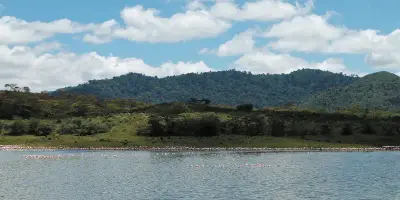
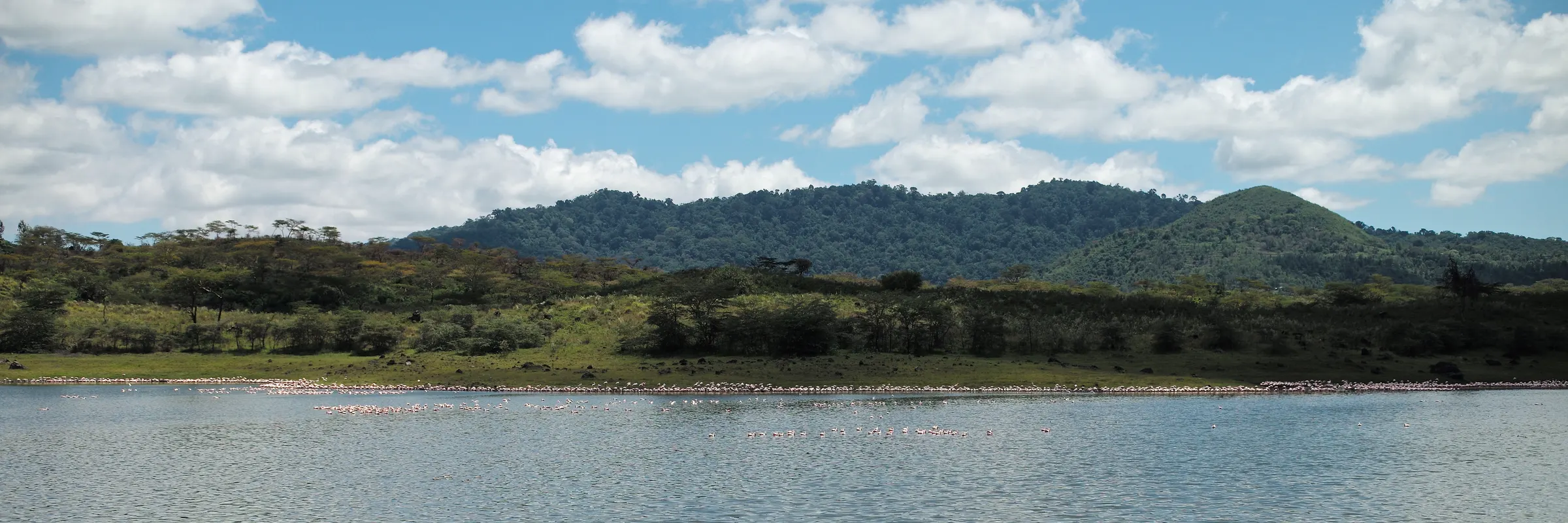
Arusha: flamingos on Momella Lake, in the national park at the city's edge
Photo: Roman Boed · CC BY 2.0
Tanzania

Arusha: how many days you need and the best months to go

Arusha sits at around fourteen hundred metres on the southern slope of Mount Meru, which makes it far cooler than most people expect of northern Tanzania. It is not the destination and does not pretend to be: it is where safaris are organised, staffed, provisioned and paid for, and where you sleep before and after. Two days is the honest figure for the city itself. What you plan around it — four days, or eight — is the actual trip.

Short answers

What people ask before booking

How many days do you need in Arusha?

Arusha needs two days for the city, the market and the park on its doorstep. The safari it exists to organise is four to eight days longer, and that is the trip you are really planning.

What is the best month to visit Arusha?

June to October — The long dry season: animals concentrated, roads open. January and February — The short dry spell, and the calving on the southern plains.

Which months are worth avoiding in Arusha?

March — The long rains starting, and everything slowing down. April and May — The long rains: closed camps and impassable tracks.

How many days Arusha needs, and what it is a base for

Two days covers Arusha properly: the market and the town centre, the coffee farms and villages on the slopes of Meru, and a half day in Arusha National Park, which is twenty-five kilometres away and the one place on the circuit where you are allowed to walk.

The trip you actually came for is four to eight days longer, and it happens elsewhere. A short northern circuit is three days — Tarangire, Ngorongoro and one night in the Serengeti — and it is rushed. Five to seven days is the version that works, and the drives between the parks are long enough to be part of the plan rather than a detail.

The northern circuit, and what each park is for

The four big names are not interchangeable, and choosing between them by name alone is the most common mistake. They differ by landscape, by season and by how far you have to drive, and a good itinerary picks two or three rather than all of them.

Distances are the thing people underestimate. The Serengeti is a full day's drive from Arusha on a road that is only partly paved, which is why many itineraries fly one leg. Everything below is reachable by road, and none of it is quick.

  • Serengeti — vast open plains and the migration. The furthest and the most expensive to reach, and the reason most people come.
  • Ngorongoro — a volcanic caldera with a permanent population of animals inside it, viewed from a rim road high above. Half a day inside, and unmissable.
  • Tarangire — baobabs, elephants and a river that concentrates everything around it in the dry months. Closest to Arusha and often underrated.
  • Lake Manyara — a shallow soda lake under an escarpment, with birds and forest. Small, close, and a good half day rather than a full one.
  • Arusha National Park — Mount Meru, the Momella lakes and flamingos, on the city's doorstep. The one park here where walking safaris with a ranger are permitted.

The migration, and why nobody can give you a date

The wildebeest migration is not an event and does not have a start. It is a continuous circular movement of well over a million animals around the Serengeti ecosystem, following the grass, which follows the rain. It is happening every day of the year; the only question is where.

The broad pattern is stable enough to plan around and the dates are not. Calving happens on the short-grass plains in the south of the ecosystem in the weeks around the turn of January into February, and the river crossings in the north are usually somewhere in the window from July to October. Both move by weeks from year to year with the rains, and any operator who promises you a crossing on a specific date is selling something they do not control.

The city itself: Meru, the clock tower and the tribunals

Mount Meru stands over the city at more than four and a half thousand metres, the second highest mountain in Tanzania, and it is climbable in three to four days — most often as acclimatisation before Kilimanjaro, which is visible from town on a clear morning and is a different trip entirely.

The town is more consequential than it looks. Arusha is the headquarters of the East African Community, it gave its name to the 1967 declaration that set Tanzania's political direction for a generation, and it hosted the international tribunal for Rwanda from 1994. The clock tower in the centre marks a claimed midpoint between Cairo and Cape Town, which is roughly true and entirely characteristic of the place.

How the money works on a safari

The largest single item is not the lodge. Park entry and conservation fees are set by the government, charged per person per day, and are high — they change periodically and any figure written down here would be wrong within a year, which is exactly why this page does not print one. Ask for them itemised before you book.

The rest follows from three choices: whether you sleep inside the park gates or outside them, whether the vehicle is yours or shared, and whether you drive the long legs or fly them. Inside the gates costs more and buys the early morning, which is when animals move. A private vehicle is the upgrade that changes the day most, because it decides who chooses when to stop.

The market, the tanzanite and the pressure

The curio market in the centre of town is intense and the selling is direct — expect to be followed, expect a long negotiation, and expect the first price to bear no relation to the last. It is not dangerous, it is exhausting, and going in with a fixed idea of what you want and what you will pay makes it manageable.

The stone everyone will offer you is tanzanite, and the claim behind it is real: it is mined commercially in one place on earth, the Merelani hills near Arusha, which is why it is scarcer than diamond. That also makes it the single easiest thing in Tanzania to be sold a fake of. Certificates from a street seller mean nothing; buy from an established dealer or do not buy at all.

What to eat in Arusha, and where

Tanzanian food is starch, grilled meat and a small pile of something sharp, and it is far better at a roadside grill than in a lodge buffet. Eat where the town eats at least once, because the safari half of this trip is catered and interchangeable.

  • Nyama choma

    What to order

    The grilled meat, and how it is served

    Meat — usually goat or beef — grilled slowly over charcoal, chopped on a board and eaten with the fingers with salt, chilli and a tomato-and-onion salad. It is the national social meal rather than a dish, ordered by weight and shared, and it takes as long as it takes. The best places are open-air and full of people at the end of the day.

    Check it on Wikidata
  • Ugali

    What to order

    The staple everything is eaten with

    A stiff maize-flour staple, cooked to the point where it holds its shape and is torn off by hand and used to pick up whatever else is on the plate. This is the everyday starch of most of East Africa, plain by design, and it is how the grilled meat and the stews are actually eaten. Do not order it as a side dish; it is the plate.

    Check it on Wikidata
  • Mtori

    What to order

    The dish that is genuinely from these slopes

    A thick soup of green cooking bananas and meat, from the Chagga people of the Kilimanjaro and Meru slopes rather than from the coast. It is a highland dish and you are in the highlands, which makes it the most local thing on any menu here. Usually eaten in the morning, and rich enough to hold a whole day.

    Check it on Wikidata
  • Chipsi mayai

    What to order

    The one everyone eats late

    Chips fried and then set into an omelette in the pan, so it comes out as a single thick round cut into wedges. It is treated as the national street dish of Tanzania, sold everywhere, cheap and served with chilli sauce. It is not refined and it is not trying to be.

    Check it on Wikidata
  • Mandazi

    What to order

    Breakfast, and what to have with the coffee

    A lightly sweet fried dough from the Swahili coast, often with coconut milk and cardamom, somewhere between a doughnut and a bread roll. It is the standard morning thing across East Africa and it goes with the local coffee, which is grown on the slopes you can see from town and is mostly exported.

    Check it on Wikidata

When to go, and what each month costs you

Northern Tanzania has two rainy seasons rather than one, and the difference between them is the difference between a fine trip and a bad one. The long rains close roads and camps; the short rains mostly do not. Everything else is a question of how much you mind sharing a viewpoint.

  • June to October

    Go now

    The long dry season: animals concentrated, roads open

    The reliable window. Water dries up, animals gather at what is left, the grass is short and visibility is at its best, and the tracks are passable everywhere. The river crossings in the northern Serengeti usually fall somewhere in these months — usually, not certainly. It is peak season and prices reflect it.

  • January and February

    Go now

    The short dry spell, and the calving on the southern plains

    A gap between the two rainy seasons, warm and green, with the plains in the south of the Serengeti covered in newborn wildebeest and the predators that follow them. The calving is concentrated in a few weeks around the turn of the month and it moves with the rains. Fewer vehicles than July.

  • December

    Worth it, but

    Green, warm, and busy over the holidays

    The short rains are ending, the country is green and the light is good. Christmas and New Year are a hard peak in price and occupancy with everything booked far ahead. Away from those two weeks it is a good, quiet month.

  • November

    Worth it, but

    The short rains: afternoon storms, few people

    Rain comes in heavy short bursts, usually in the afternoon, and the mornings are often clear. Roads stay passable, camps stay open and prices drop. The short rains are a genuine bargain and the long rains are not, and the two are routinely confused.

  • March

    Think twice

    The long rains starting, and everything slowing down

    Rain becomes persistent rather than occasional as the month goes on, grass grows tall and animals disperse because water is everywhere. Some camps begin to close. Cheap, green and increasingly hard work.

  • April and May

    Think twice

    The long rains: closed camps and impassable tracks

    The wettest weeks of the year. Dirt tracks turn to mud, several seasonal camps shut entirely, and animals are scattered through long grass where you cannot see them. It is the cheapest time to come and the only one this page recommends against, unless you are a birder, in which case it is excellent.

Things that change the trip

  • Do not confuse the two rainy seasons. November's short rains are a bargain; April and May close camps and roads.
  • Ask for park fees itemised before booking. They are the largest part of the bill and they are not the operator's to discount.
  • Walk in Arusha National Park. It is the only park on this circuit where you can get out of the vehicle with a ranger, and it is on the doorstep.
  • Treat any promised migration date with suspicion. The pattern is reliable, the calendar is not, and no operator controls the rain.
  • Sleep inside the park gates for at least one night if you can. The first hour after sunrise is the difference between a good day and an average one.
  • Buy tanzanite from an established dealer or not at all. It is mined in one place on earth and faked in many.

Plan Arusha and the northern circuit

A safari across several parks, with the drives, the flights and the nights inside and outside the gates arranged around the season, is exactly what Premium is for. The free version covers one destination of up to three days.

Destinations