Skip to content
JoruJoru
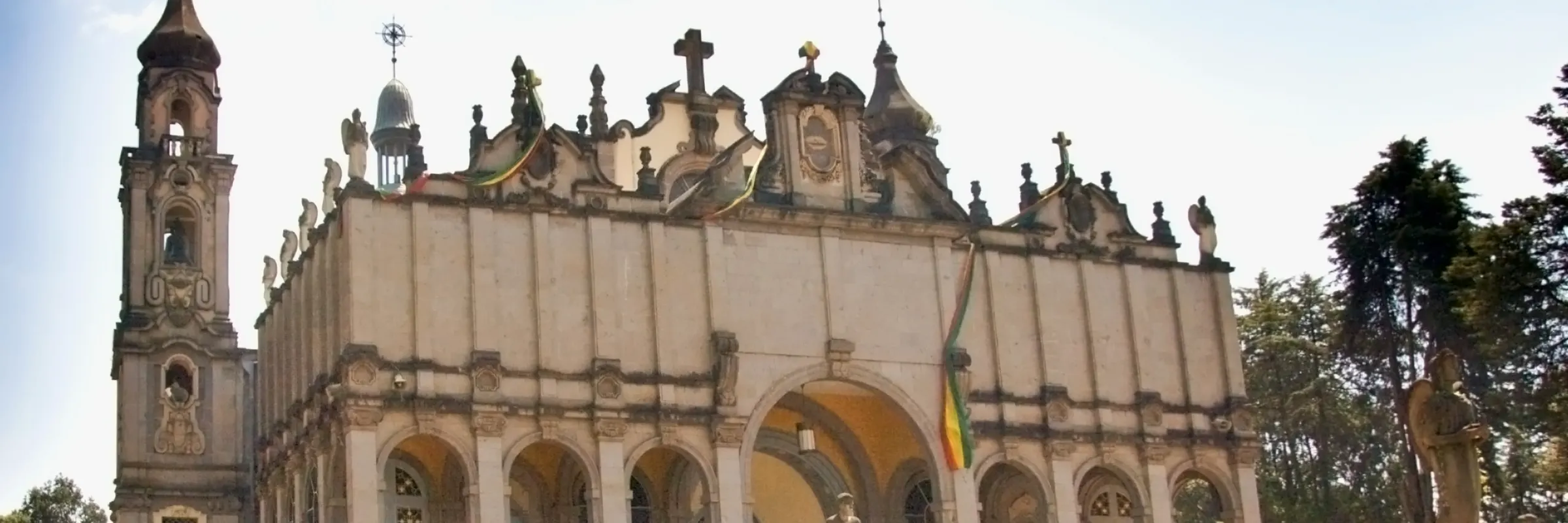
Addis Ababa: Holy Trinity Cathedral, of the Ethiopian Orthodox church
Photo: A. Davey from Where I Live Now: Pacific Northwest · CC BY 2.0
Ethiopia

Addis Ababa: how many days you need and the best months to go

Addis Ababa is the fourth-highest capital in the world, the seat of the African Union, and the front door to a country unlike its neighbours in almost every respect: Ethiopia was never colonised, uses its own calendar and its own clock, has its own alphabet, and has been Christian since the fourth century. The city itself is sprawling, high and hard to read on a first pass. Two days does it properly. Three if you want the museums slowly and a day trip out.

Short answers

What people ask before booking

How many days do you need in Addis Ababa?

Addis needs two days for the museums, the Merkato and Entoto, and three to add a trip out of the city. October and November, right after the long rains, are the best months. Confirm every time you are given: the Ethiopian clock starts at dawn.

What is the best month to visit Addis Ababa?

October and November — Just after the rains: green, clear and dry. January and February — Dry, clear and comfortable.

Which months are worth avoiding in Addis Ababa?

April and May — The short rains, and the heat before the long ones. June, July and August — Kiremt: a genuine rainy season, not a shower pattern.

How many days Addis needs

Two days covers the city: the National Museum with the Lucy fossil and the Ethnological Museum in Haile Selassie's former palace on one, the Merkato, Holy Trinity Cathedral and Mount Entoto on the other, with a coffee ceremony and a night of live azmari music in between.

A third day is for what is around it. Debre Libanos, a monastery in a gorge with a Portuguese-era bridge, is a couple of hours north; the Entoto ridge above the city has forest and viewpoints; and the crater lakes of the Rift Valley run south. Beyond three days, Addis is a hub rather than a destination — the historic north with Lalibela, Gondar and Axum is the reason most people are in the country, and those are flights rather than drives.

The country this city is the capital of

Understanding three facts changes how the whole trip reads. First, Ethiopia was never colonised — it defeated an Italian invasion at Adwa in 1896 and, apart from a five-year occupation in the 1930s, has been continuously independent, which is why the African Union headquarters is here and why the visual culture owes nothing to a European colonial style.

Second, the calendar and the clock are genuinely different. Ethiopia uses its own calendar of thirteen months, and the year runs several years behind the Gregorian one; New Year falls in September. The day is also counted differently: the clock starts at dawn, so what you would call seven in the morning is one o'clock here. Always confirm whether a time is Ethiopian or international, particularly for a car, a flight transfer or a guide.

Third, the Ethiopian Orthodox Church shapes the week. Wednesdays and Fridays are fasting days, when observant people eat no animal products — which is why every restaurant has an excellent vegan option and why a fasting platter is the best thing on many menus. The major fasts run for weeks, and Easter is calculated differently and usually falls after the Western one.

  • National Museum — the fossil known as Lucy, or Dinkinesh, and the collection that explains why this region matters to human origins.
  • Ethnological Museum — inside the emperor's former palace on the university campus, and the best single explanation of the country's peoples.
  • Holy Trinity Cathedral — the Orthodox cathedral where Haile Selassie is buried, and an architectural one-off.
  • Merkato — one of the largest open-air markets in Africa. Go with someone who knows it, and go in the morning.
  • Mount Entoto — the forested ridge above the city, with churches, eucalyptus and the view down over the whole sprawl.

The altitude, and what it does to you

Addis sits at around two thousand four hundred metres, which makes it the fourth-highest capital in the world. That is high enough to affect people on arrival, and it catches out visitors who think of Africa as hot and low. Expect to be short of breath on stairs for a day or two, drink more water than usual, and go easy on alcohol the first night.

The altitude also explains the weather. This is not a hot city — days are mild and nights are properly cold, all year — and a warm layer is essential in every month, which surprises people who packed for the tropics. If you are heading to the Simien mountains afterwards, they go far higher again, and a couple of days here first is useful acclimatisation rather than wasted time.

The rains, and why they are not a shower pattern

Ethiopia has a real rainy season called kiremt, and it is the single most important planning fact here. From roughly June to September it rains hard and often, the country turns green from end to end, and unpaved roads become difficult or impassable. This is not an afternoon storm you wait out; it is a season.

For a city trip it means grey days and mud rather than disaster. For anything beyond the city it can mean cancelled roads and closed trekking routes. October and November, immediately after the rains, are the best months in the country — everything is green, the air is clear and the roads have dried. There is a second, shorter rainy spell called belg around March and April, which is much lighter and far less disruptive.

The coffee, and the ceremony

Coffee comes from Ethiopia — the arabica species originates in the forests of the southwest — and it is not a marketing claim here but the plain agricultural fact. What matters for a visitor is that coffee is served as a ceremony, not as a drink, and being invited to one is a real hospitality.

It takes the better part of an hour. Green beans are washed and roasted in front of you over charcoal, the pan is carried round so everyone can smell the smoke, the beans are ground by hand, and the coffee is brewed in a clay pot called a jebena and poured from a height into small cups. Incense burns throughout, and it is served three times — three rounds, each weaker than the last, and leaving after the first is impolite. Accept it when it is offered, take the time, and do not treat it as a queue for caffeine.

Practical things worth knowing

Bole airport is a major continental hub — Ethiopian Airlines connects most of Africa through here — and many visitors pass through on a layover, which is worth building a day around rather than sitting in the terminal. Visa arrangements have changed repeatedly in recent years, so check the current rules for your nationality shortly before travelling rather than relying on older advice.

Two more. The city is too spread out to walk between sights; ride-hailing apps work and are the simplest way to move. And Ethiopia's regional security situation has varied significantly in recent years and differs sharply by region — Addis itself is generally calm, but check your government's current travel advice for the specific areas you plan to visit, not for the country as a whole. That is genuinely load-bearing advice here in a way it is not for most destinations.

What to eat in Addis Ababa, and where

Ethiopian food is one of the world's genuinely distinct cuisines and it is eaten with the hands from a shared platter: there is no cutlery, the bread is the plate, and the vegan food is not an afterthought but a religious institution.

  • Injera

    What to order

    The thing everything else is served on

    A large, soft, spongy flatbread made from teff — a grain that grows almost nowhere else — fermented for days until sour, and used to line the platter and to pick up everything on it. It is the plate and the cutlery at once, and eating with the right hand only is the norm. The sourness is the point; it takes a meal or two to get used to.

    Check it on Wikidata
  • Doro wat

    What to order

    The national dish, and the one for a celebration

    A slow chicken stew in berbere spice and spiced butter, with a hard-boiled egg in it, and it is what gets cooked when guests come. The berbere blend is the backbone of the whole cuisine and it is warming rather than punishing. Eat it with your hands, wrapped in the bread. It is the dish to order first.

    Check it on Wikidata
  • Kitfo

    What to order

    The dish to decide about in advance

    Minced raw beef, warmed slightly and mixed with spiced butter and chilli, served with cheese and greens. It is genuinely raw and it is a delicacy, ordered for special occasions. You can ask for it lightly cooked, which is normal and not an insult. Only order it in a good restaurant.

    Check it on Wikidata
  • Mercato de Adís Abeba

    Market

    The market, and how to approach it

    One of the largest open-air markets in Africa, spreading across a whole district and selling everything from spices and coffee to recycled metal. It is overwhelming and it is where pickpocketing is a genuine risk: go in the morning, go with a guide the first time, and carry very little.

    Check it on Wikidata
  • Ceremonia del café

    What to order

    The hour-long thing you should not rush

    Green beans roasted over charcoal in front of you, ground by hand, brewed in a clay jebena and poured from a height, with incense burning. It is served three times and leaving after the first round is impolite. Ethiopia is where arabica comes from, and this is the country's central act of hospitality rather than a performance for visitors.

    Check it on Wikidata

When to go, and what each month costs you

The altitude keeps temperature almost constant, so rain is the only real variable: a long, hard rainy season from June to September and a light one around March and April. The two months immediately after the long rains are the best in the country.

  • October and November

    Go now

    Just after the rains: green, clear and dry

    The best window of the year by a wide margin. The rains have stopped, the whole country is green, the air is washed clean and the roads have dried out. Meskel, a major Orthodox festival with bonfires, falls in late September and spills into this window. Book ahead: this is high season and everyone else knows it too.

  • January and February

    Go now

    Dry, clear and comfortable

    The heart of the dry season: reliable weather, cold nights, and the historic north at its most accessible. Ethiopian Christmas falls in early January and Timkat, the Epiphany celebration, in mid-January — the latter is one of the most spectacular religious festivals in Africa and fills Gondar and Lalibela completely. Plan around it either way.

  • December

    Worth it, but

    Dry and busy, with prices rising

    Firmly dry and pleasant, with the international holiday season pushing up flights and hotels towards the end of the month. The dust is beginning to build after two months without rain, which affects the light and the views. Good conditions, ordinary value.

  • March

    Worth it, but

    Warm, dusty, with the short rains starting

    The hottest and dustiest stretch before the belg rains arrive, with hazy views over the city. The short rains usually begin late in the month and are much lighter than the long ones, mostly afternoon showers. Prices are low and it works, with a caveat on visibility.

  • September

    Worth it, but

    The rains end, and the year begins

    The long rains taper off through the month and the country is at its greenest. Ethiopian New Year falls in September and Meskel at the end of it, both major celebrations. The first half can still be very wet and the second is often excellent — a gamble that usually pays off.

  • April and May

    Think twice

    The short rains, and the heat before the long ones

    Warm, damp and increasingly unsettled as the belg rains run and the long rains approach. Easter falls here — the Orthodox date is calculated differently and usually lands after the Western one — and the preceding fast is the longest of the year. Cheap and workable, and not the country at its best.

  • June, July and August

    Think twice

    Kiremt: a genuine rainy season, not a shower pattern

    Heavy, frequent rain for three months, with unpaved roads difficult or impassable and trekking routes closed. A city stay is grey and muddy rather than ruined, but anything beyond Addis becomes unreliable. Cheapest of the year and the landscape is spectacular — from a vehicle, on a paved road, in between downpours.

Things that change the trip

  • Always confirm whether a time is Ethiopian or international. The clock starts at dawn here, so seven in the morning is one o'clock — it matters for cars and flights.
  • Come in October or November if you can. The rains have just ended, the country is green and the roads have dried.
  • Take a warm layer whatever the month. At two thousand four hundred metres the nights are cold all year, and people pack for a tropical Africa that does not exist here.
  • Accept a coffee ceremony and stay for all three rounds. It takes an hour and leaving after the first is impolite.
  • Order a fasting platter on a Wednesday or Friday. The vegan food is a religious institution here, not a compromise, and those are the days it is at its best.
  • Check current travel advice by region rather than for the country. Conditions vary sharply between areas and change.

Plan Addis Ababa and Ethiopia

A trip that uses Addis as the hub for Lalibela, Gondar, the Simien mountains or the Omo valley — with the internal flights, the rainy season and the Ethiopian calendar worked out around it — is exactly what Premium is for. The free version covers one destination for up to three days.

Destinations