

Skip to content
JoruJoru
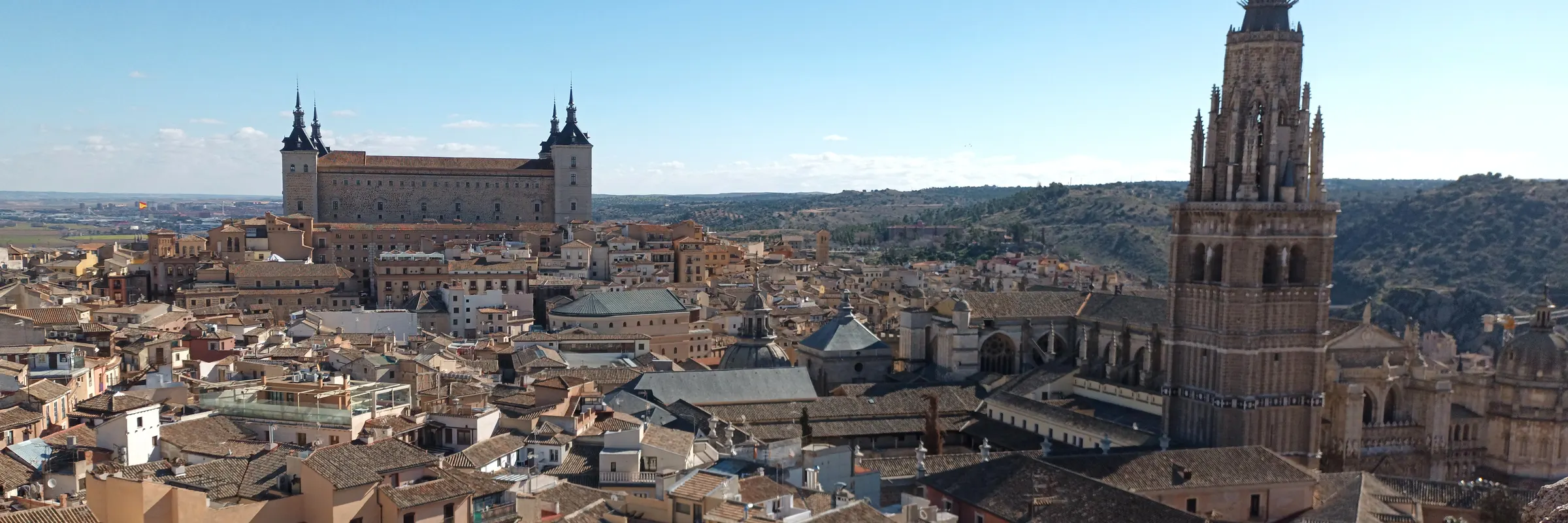
Toledo: The Alcázar and the cathedral tower over the rooftops of the old town

Castile-La Mancha, Spain

Toledo: how many days you need and the best months to go

Photo: Acediscovery · CC BY 4.0

Toledo sits on a rocky hill wrapped on three sides by a deep bend of the river Tagus, and for centuries it was one of the great cities of Spain: the capital of the Visigoths, a Muslim city for nearly four centuries, and after the Christian conquest the seat of the kings of Castile and of the primate of Spain. Christians, Muslims and Jews lived inside its walls together for long periods, and their churches, mosques and synagogues still stand within a few minutes of each other. El Greco painted here for almost the last forty years of his life. The whole hill is a World Heritage Site. Toledo is half an hour from Madrid by high-speed train, which makes it the classic day trip from the capital and also the planning problem: by day its lanes are packed with tour groups, and in the evening, when they leave, it becomes a quiet medieval town that most visitors never see.

Short answers

What people ask before booking

How many days do you need in Toledo?

Toledo needs one full day for the cathedral, El Greco's Burial of the Count of Orgaz, the synagogues and the old mosque, and a night to see the old town empty and the whole city lit from across the river. It is half an hour from Madrid by high-speed train.

What is the best month to visit Toledo?

April to June — Spring, and the feast of Corpus Christi. September and October — Golden light and cooler evenings.

Which months are worth avoiding in Toledo?

July and August — The heat on a steep rock.

Work out how many hours you will have in Toledo on your dates
When to go, and what each month costs you

Toledo has a continental climate: hot, dry summers, cold winters and pleasant springs and autumns. The heat of July and August makes the climbs hard, and the rock stores it into the night. Spring and autumn are the best seasons.

  1. January: Worth it, but
  2. February: Worth it, but
  3. March: Worth it, but
  4. April: Go now
  5. May: Go now
  6. June: Go now
  7. July: Think twice
  8. August: Think twice
  9. September: Go now
  10. October: Go now
  11. November: Worth it, but
  12. December: Worth it, but
  • April to June

    Go now

    Spring, and the feast of Corpus Christi

    Mild to warm days and green banks along the river. Corpus Christi, whose date moves every year between late May and June, is Toledo's great feast, with the streets covered in awnings and the monstrance carried through them; Holy Week, in March or April, comes before. Both fill the city.

  • September and October

    Go now

    Golden light and cooler evenings

    Warm days that cool through October, and the soft light that suits the stone. The best season for the walk along the river and the view at dusk.

  • July and August

    Think twice

    The heat on a steep rock

    Hot, dry afternoons on a steep and sunny hill, with the stone holding the heat into the night. If these are your dates, visit early, rest in the afternoon, and walk the old town in the evening, when it cools and empties.

  • November to March

    Worth it, but

    Cold, clear and quiet

    Cold nights with frost and cool, often sunny days, with the old town at its quietest. The cathedral and the museums are calmer, and hotels cheaper; the evenings are short and the lanes chilly.

What to pack for Toledo, month by month

How many days Toledo needs

One full day covers the essentials: the cathedral, El Greco's great painting in the church of Santo Tomé, the two synagogues of the Jewish quarter, the small mosque of Cristo de la Luz and the monastery of San Juan de los Reyes, with lunch in between. The old town is small but steep, and every visit involves climbing.

A night shows the other Toledo. The lanes empty after the last trains to Madrid, the monuments are lit, and the view of the whole hill from the road across the river at dusk is one of the great views in Spain. With a second day, add the Alcázar's army museum, the El Greco museum and a walk around the river.

How the city is arranged, on a hill in a river

The Tagus wraps the hill of the old town on three sides in a deep gorge; the only open side, to the north, was defended by walls and gates. Inside, the streets are a medieval tangle of lanes and stairways climbing to the cathedral and the Alcázar at the top.

  • The cathedral and the centre — the Gothic cathedral, the town hall and the main square of Zocodover, at the top of the hill.
  • The Alcázar — the square fortress on the highest point, rebuilt after the civil war and now the army museum.
  • The Jewish quarter — the western side of the old town, with the two synagogues, the church of Santo Tomé and the monastery of San Juan de los Reyes.
  • The walls and gates — the northern side, with the Bisagra gate, the old Moorish gate and the small mosque of Cristo de la Luz.
  • The river and the far bank — the gorge of the Tagus, the medieval bridges at each end and the road with the viewpoints facing the city.

Where to stay, and what each area costs you

Stay inside the walls to have the evening, when the old town empties. The hotels outside them are cheaper and easier for cars, and from the viewpoints across the river the whole city is one of the great views of Spain.

Prices rise for Corpus Christi, Toledo's great feast, whose date moves every year between late May and June, in Holy Week and on spring and autumn weekends.

AreaWho it suitsThe catch
Around the cathedral and ZocodoverThe heart of the old town: the monuments, the restaurants and the evening walks on the doorstep.Packed with tour groups by day, and steep lanes with luggage.
The Jewish quarterQuieter lanes near the synagogues and the El Greco museum, a few minutes from the centre.Uphill to everything else, and little open late at night.
Below the walls, by the Bisagra gateEasier for cars and buses, with escalators up into the old town.Outside the old town's atmosphere, along busy roads.
Across the riverHotels with the famous view of the whole city lit up at night.You need a car or a taxi to cross into town.

Compare these areas against your priorities

Getting there, and getting up the hill

High-speed trains reach Toledo from Madrid in about half an hour, and buses run frequently from Madrid. The railway station is a small Neo-Mudéjar jewel below the old town, a twenty-minute walk or a short bus ride from the centre. There is no airport: Madrid's is about an hour and a quarter away.

Toledo is steep. Public escalators climb from the car parks below the walls into the old town, saving a hard walk up; inside, everything is on foot through narrow lanes.

  • Book the return train on busy days: the last trains to Madrid fill with day-trippers.
  • City buses link the station, the escalators and the main square.
  • Do not drive into the old town: access is restricted and the lanes are barely wider than a car.
  • A tourist wristband opens several of the churches and monuments with one ticket; check which ones it includes before buying it.

The cathedral, El Greco and the three cultures

The cathedral is one of the great Gothic churches of Spain, built from the thirteenth century, with a treasury holding a monumental silver-gilt monstrance carried through the streets at Corpus Christi, a sacristy hung with paintings by El Greco, Goya and others, and a Baroque altarpiece lit by a hole in the vault. Give it a couple of hours.

  • The Burial of the Count of Orgaz — El Greco's masterpiece, painted for the small church of Santo Tomé, where it still hangs.
  • The synagogues — Santa María la Blanca, with white horseshoe arches like a mosque, and El Tránsito, with carved Hebrew inscriptions and the museum of Sephardic culture.
  • The mosque of Cristo de la Luz — a tiny mosque of the end of the tenth century, with a vaulted ceiling of interlaced arches.
  • San Juan de los Reyes — the late-Gothic monastery built by the Catholic Monarchs, with a two-storey cloister.
  • The view from across the river — the road along the far bank of the Tagus, with the whole city on its hill; best at dusk.
  • The El Greco museum — the painter's work and world in a reconstructed house and garden of his time.

How eating works here

Toledo eats the food of La Mancha: game, lamb, stews and the sheep's cheese of the plain, with marzipan as the sweet the city has made famous since the convents of the Middle Ages. Restaurants in the old town cater largely to day-trippers at lunch; dinner is calmer.

Spanish hours apply: lunch from two, dinner from nine. The set menu at lunch is the most common way to eat, and the best value.

  • Marzipan is sold by convents and old shops; buy it from a shop that makes its own.
  • Partridge is the local game dish, stewed with wine and vegetables.
  • The sheep's cheese of La Mancha is aged from a few months to more than a year; ask for a taste of the older ones.
  • Tipping is optional: rounding up is enough.

Where to eat in Toledo, and what to order

Toledo's table is the table of La Mancha: a slow vegetable stew, the sheep's cheese of the plain, a meat stew served in a clay dish, and the marzipan that the city's nuns have made for centuries. Eat the stews at lunch, and the marzipan any time.

  • Mazapán de Toledo

    What to order

    The marzipan of the convents

    A paste of ground almonds and sugar, shaped into small figures and baked lightly. Toledo has made it since the Middle Ages, and the city's marzipan has a protected name; the convents and the old shops of the centre sell it. Buy a small box; it is very sweet.

    Check it on Wikidata
  • Pisto manchego

    What to order

    The vegetable stew of La Mancha

    Peppers, onion, courgette and tomato cooked slowly in olive oil until soft and sweet, often served with a fried egg on top. It is the vegetable dish of La Mancha, a cousin of the French ratatouille, eaten as a starter or as a light lunch with bread.

    Check it on Wikidata
  • Queso manchego

    What to order

    The sheep's cheese of La Mancha

    A hard cheese of Manchega sheep's milk, with the pattern of a woven mould on its rind, aged from a few months to more than a year. It is the cheese of the plain south of Toledo, sold in every shop and served as a starter; the older, the stronger.

    Check it on Wikidata
  • Carcamusas

    What to order

    The meat stew in a clay dish

    Small pieces of beef or pork stewed in tomato with peas and a little chilli, served bubbling in a clay dish. A dish of the old taverns of Toledo, usually ordered as a tapa or a starter to share.

    Check it on Wikidata

Things that change the trip

  1. Stay a night inside the walls: the old town is a different place after the day-trippers leave.
  2. Book the return train to Madrid on busy days.
  3. Use the escalators from below the walls instead of climbing the road.
  4. Go to the road across the river at dusk for the view of the whole city.
  5. Start at the cathedral early, before the tour groups.
  6. Wear comfortable shoes with grip: the lanes are steep and polished.

Plan Toledo with Madrid

A trip of more than three days, or one that joins Toledo, Madrid, Segovia or Córdoba with the trains between them, is what Premium is for. The free version covers one destination of up to three days.

Destinations