Skip to content
JoruJoru
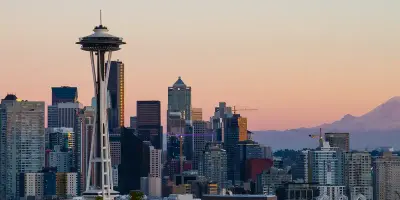
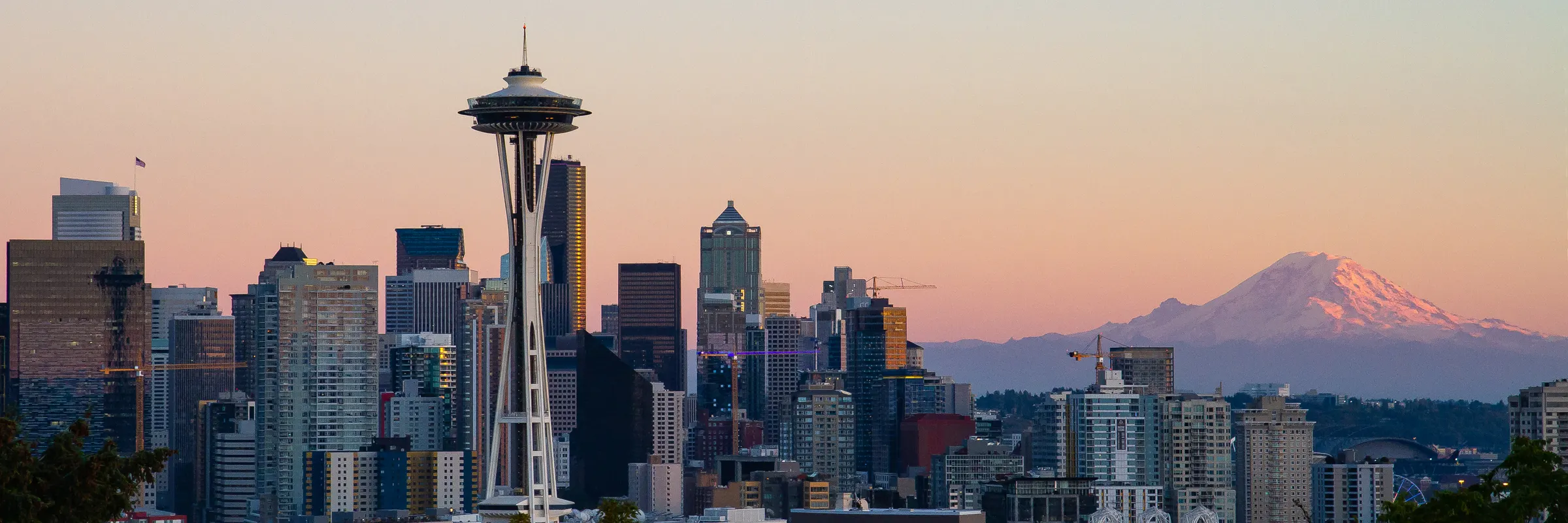
Seattle: the skyline from Kerry Park, with Mount Rainier behind
Photo: CommunistSquared · CC0
Washington, United States

Seattle: how many days you need and the best months to go

Seattle sits on a narrow isthmus between Puget Sound and Lake Washington, with the Olympic mountains to the west and the Cascades to the east, and a fourteen-thousand-foot volcano visible from downtown on a clear day. The famous rain is real but misunderstood: it rains on many days and does not rain much, and the summers are among the driest and most pleasant in the country. Three days covers the city. A fourth belongs to a mountain or an island, and both are close.

Short answers

What people ask before booking

How many days do you need in Seattle?

Seattle needs three days — the waterfront and the market, a museum and a neighbourhood, and one spent on a ferry — and a fourth for a mountain, because three national parks are within two hours.

What is the best month to visit Seattle?

July and August — The dry season, and the reason people move here. September — Summer conditions, fewer people.

Which months are worth avoiding in Seattle?

November, December and January — Dark by mid-afternoon, and overcast most days. February, March and April — Still grey, warming slowly.

How many days Seattle needs

Three days is the working figure: one for the waterfront, the market and the older centre, one for a museum and a neighbourhood, and one on the water — a ferry across the sound is the cheapest good thing in the city.

The fourth day leaves. Mount Rainier is about two hours south, the Olympic peninsula is a ferry and a drive west, and the North Cascades are two hours east — three national parks from one city, which almost nowhere else in the country manages. If you have four days, one of them should be a mountain.

The rain, and the thing everyone gets wrong

Seattle's reputation is for rain, and the statistic that explains it is not the one people assume. The city gets rain on a very large number of days per year and a relatively modest total volume — less annual rainfall than New York, Houston or Miami, spread across far more days. It is drizzle rather than downpour, and it comes with cloud.

The consequence for a visitor is that an umbrella is less useful than a hood, and that the real variable is light rather than water. From roughly November to March the sky is overcast most days and it gets dark by mid-afternoon in December; from July to September it barely rains at all and the evenings run until ten. Those are two different cities and the difference is the single most important planning fact here.

How the city is arranged

Downtown sits on the water and the rest of the city climbs away from it in every direction, which means hills. Seattle is genuinely steep in places — steep enough that some pavements have steps in them — and a walk that looks flat on a map often is not.

The good news is that the transport works. A light rail line runs from the airport through downtown to the university, the buses are frequent, and the ferries are part of the public system rather than a tourist product.

  • Downtown and the waterfront — the market, the aquarium, the ferry terminal and the newer waterfront park. Where most visitors start.
  • Pioneer Square — the oldest part of the city, rebuilt in brick after the 1889 fire, with the galleries and the underground tour.
  • Capitol Hill — the bars, the restaurants and the nightlife, up the hill east of downtown. Where the evening happens.
  • Ballard — a former Scandinavian fishing town swallowed by the city, with the locks, the Sunday market and the best breweries.
  • Fremont and Wallingford — north of the ship canal: small shops, the troll under the bridge and a slower pace.

The market, and what it actually is

Pike Place Market opened in 1907 so that farmers could sell directly to the public rather than through middlemen, and that is still legally what it is: a public market where the stallholders must be the people who made or grew what they are selling. It is not a food hall with a farmers' theme.

It is also extremely crowded between about ten and four. The fish-throwing is at one stall and is a genuine piece of showmanship rather than a civic tradition. Go early, walk down through the lower levels where the odd small shops are, and come back another morning for the produce rather than the photographs.

Coffee, and why it started here

The chain that made espresso a global habit opened in this market in 1971, and the city's coffee culture is genuinely older and deeper than that one company. The reason usually given is the weather: nine months of grey and damp made a warm indoor ritual valuable, and the port made green coffee easy to land.

What matters for a visit is that the good coffee here is not at the famous storefront. Seattle has a dense layer of independent roasters, most of them small, most of them within a few blocks of each other in the northern neighbourhoods. Ordering is straightforward and the coffee is served hotter and less sweet than the international version of the same drinks.

Water, mountains and the ferries

The state ferry system is the largest in the United States, and it is public transport rather than a cruise. A walk-on foot passenger fare across the sound costs a few dollars and buys forty minutes of open water with the city behind you and the Olympic mountains ahead, which is the best value in the region by a wide margin.

Behind that, the mountains. Mount Rainier is an active volcano and the most glaciated peak in the contiguous United States; it is visible from the city on clear days, and locals say *the mountain is out* when it is. The road up to its subalpine meadows is closed by snow for much of the year and the wildflower season is short and specific — late July into August — which is worth knowing before planning around it.

  • Walk on to a ferry rather than driving one. Foot passengers pay a fraction and skip the vehicle queue entirely.
  • Mount Rainier's high roads open late. Snow closes them into June or July in a heavy year; check before driving up.
  • The wildflower meadows peak from late July into August, and that window moves with the snowpack.
  • Clear days are the ones to use. When the mountain is visible, drop the indoor plan and go outside.

What to eat in Seattle, and where

Seattle eats what comes out of the cold water in front of it, plus a large Asian influence that is genuinely local rather than imported. The best food here is fish that was alive that morning, and the second best is a dish that exists nowhere else in the country.

  • Pike Place Market

    Market

    The public market, and what it legally is

    A public market opened in 1907 so that farmers could sell directly to the public. The rule is still that stallholders must have made or grown what they sell, which is why it is a working market rather than a food court. Crowded from mid-morning; go at opening and use the lower levels.

    Check it on Wikidata
  • Dungeness crab

    What to order

    The local crab, and the season

    A sweet, meaty crab from the cold water of the Pacific northwest, sold cooked and cracked. The fishery is regulated by season and area, which is why availability changes through the year and why the good version is a seasonal pleasure rather than a menu fixture. Eat it plain with butter and lemon.

    Check it on Wikidata
  • Geoduck

    What to order

    The clam that looks alarming

    An enormous burrowing clam, native to this coast, that can live for over a century and buries itself a metre deep. It is the largest burrowing clam in the world and it looks like nothing you want to eat, and then it is served raw as sashimi and is clean, crisp and sweet. Most of the harvest is exported to Asia.

    Check it on Wikidata
  • Salmon

    What to order

    The fish this coast is built on

    Pacific salmon, of which five species run these rivers, each with its own season and character. The runs are the ecological and cultural backbone of the region and have been for thousands of years. Cooked over an alder plank is the traditional preparation, and it is worth ordering that way once.

    Check it on Wikidata
  • Teriyaki

    What to order

    The dish that only exists in this city

    Grilled meat in a sweet soy glaze with rice and a small salad, sold from hundreds of small shops across the metropolitan area. Seattle-style teriyaki was developed by Japanese and later Korean immigrants here in the 1970s and 80s and is genuinely local — it is not the Japanese dish, it is cheaper and sweeter, and the city eats a great deal of it.

    Check it on Wikidata
  • Third wave coffee

    What to order

    The coffee, and where the good version is

    The movement that treats coffee like wine — single origin, light roast, named farms — and which Seattle helped create. The famous chain started in the market in 1971; the coffee worth crossing town for is at the independent roasters, most of them small and clustered in the northern neighbourhoods. Order it black the first time.

    Check it on Wikidata
  • Ballard

    Where to look

    The old fishing town inside the city

    A formerly Scandinavian fishing settlement annexed by Seattle in 1907, now the district with the locks, the Sunday farmers' market and the highest concentration of breweries in the city. It still has the maritime industry and the Nordic museum to prove where it came from. The best neighbourhood afternoon here.

    Check it on Wikidata

When to go, and what each month costs you

Seattle has a mild oceanic climate and an unusually sharp seasonal split. Summer here is dry, warm and long-lit — genuinely one of the best climates in the country for three months — and the other nine are grey. Almost every planning decision follows from that one line.

  • July and August

    Go now

    The dry season, and the reason people move here

    Warm, dry and light until nearly ten in the evening, with the mountains open and the water usable. This is the driest part of the year, not the wettest — a fact that surprises almost everyone. It is peak season and priced accordingly, and it is worth it.

  • September

    Go now

    Summer conditions, fewer people

    Warm days, cool nights, the crowds gone after the first week and the light turning. The mountain roads are still open and the wildflowers are finishing. The best single month if you can pick one.

  • June

    Worth it, but

    Long days, and the grey that hangs on

    The days are the longest of the year and the cloud often does not clear until late in the month — a local pattern with a name. Warm enough, unreliable, and cheaper than July. The mountain roads may still be closed by snow.

  • May

    Worth it, but

    Spring, green, and still damp

    Mild and mostly pleasant, with the city at its greenest and the rain easing. Lower prices than summer and everything open. The high country is still under snow.

  • October

    Worth it, but

    Autumn colour, and the rain returning

    Crisp and clear early in the month and increasingly wet by the end. Prices fall and the city is quiet. A reasonable trade if you plan for indoor afternoons.

  • November, December and January

    Think twice

    Dark by mid-afternoon, and overcast most days

    The wettest and darkest stretch, with sunset before half past four in December and weeks of unbroken cloud. The museums, the coffee, the food and the music all work perfectly. What you lose is the daylight and the mountains, which is most of the reason to come here.

  • February, March and April

    Think twice

    Still grey, warming slowly

    The rain eases and the cloud does not, with slow improvement through the period. Prices are at their lowest, the cherry blossom at the university is genuinely worth seeing in late March, and the mountains remain shut. An indoor trip with one good weekend in it.

Things that change the trip

  • Come in summer if you can. July to September is dry, warm and light until ten, and it is the opposite of the city's reputation.
  • Walk on to a ferry as a foot passenger. It costs a few dollars, takes forty minutes and is the best value in the region.
  • Go to the market at opening. By mid-morning it is impassable, and the good part is the lower levels rather than the fish stall.
  • Check the mountain roads before driving to Rainier. Snow keeps the high country shut into June or July in a heavy year.
  • Drink the coffee at an independent roaster. The famous storefront is a landmark; the coffee worth crossing town for is elsewhere.
  • Bring a hood rather than an umbrella. The rain here is persistent drizzle, and nobody local carries one.

Plan Seattle and the mountains around it

A trip beyond four days, or one that adds Rainier, the Olympic peninsula, Vancouver or Portland with the drives and ferries between them, is exactly what Premium is for. The free version covers one destination of up to three days.

Destinations