Skip to content
JoruJoru
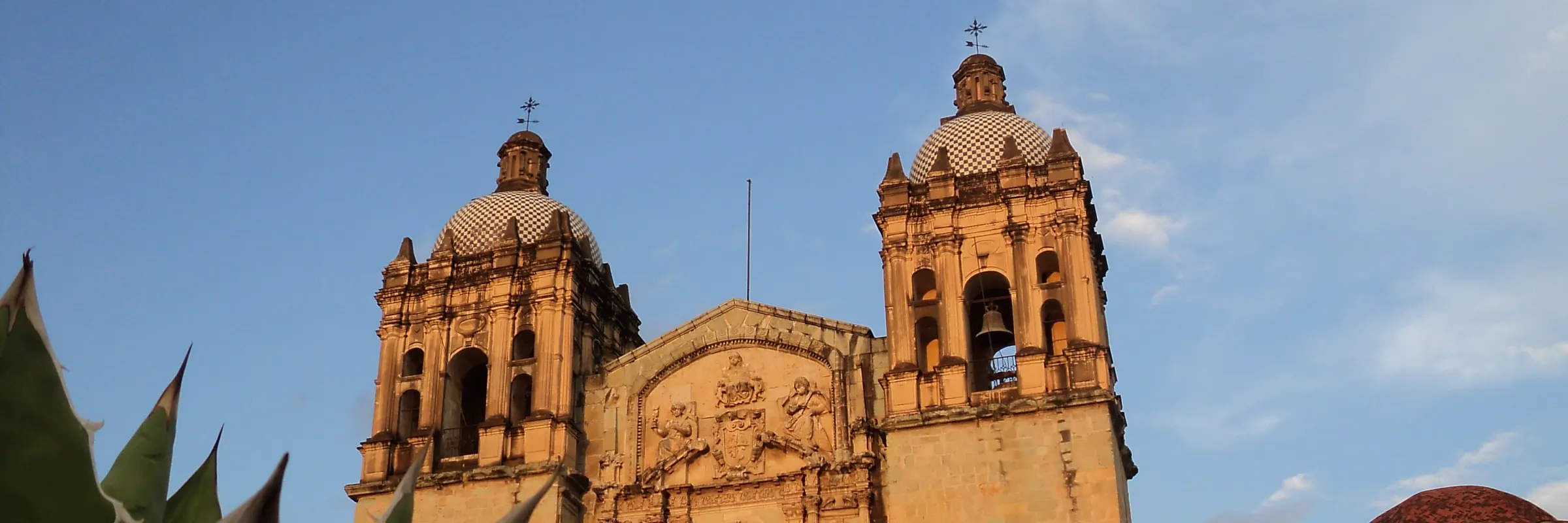
Oaxaca: The church of Santo Domingo de Guzmán in the evening light
Photo: slevinr · CC BY 3.0
Oaxaca, Mexico

Oaxaca: how many days you need and the best months to go

Oaxaca is small, walkable and set in a valley a mile above the sea, and in an ordinary week it is one of the easiest cities in Mexico to visit. Two things complicate it. The first is the calendar: the Day of the Dead and the July dance festival fill every room months ahead, and both are worth the trouble only if you plan for them. The second is that half of what people come for is not in the city at all but in the ruins, markets and workshops of the valley around it, each on its own road and its own day of the week.

Short answers

What people ask before booking

How many days do you need in Oaxaca?

Oaxaca needs three days at a minimum — the city, the ruins of Monte Albán and one day in the valley — and five to see the weaving, pottery and mezcal villages without rushing. Book many months ahead for the Day of the Dead at the start of November and for the two festival Mondays in late July.

What is the best month to visit Oaxaca?

November — Dry, green and mild, once the festival has passed. January and February — Clear, dry days and cold nights.

Which months are worth avoiding in Oaxaca?

April and May — The hottest and haziest weeks, before the rain.

Work out how many hours you will have in Oaxaca on your dates

How many days Oaxaca needs

Three days is the minimum: a day and a half for the city — the churches, the markets, the museum in the old monastery — a morning for the ruins on the mountain above it, and a day in the valley. That covers the outline and leaves the food half tasted.

Five is better, because the valley is not one outing but three: east to the weavers, the mineral springs and the mezcal distilleries; south to the potters and woodcarvers; and whichever town has its market that day. The city rewards an unplanned day more than most, and it is the day people cut.

How the city is arranged, and the valley around it

The centre is a grid of low buildings in pale green stone, a few blocks in each direction from a main square shaded by old laurels. A pedestrian street runs north from the square to the great church and former monastery of Santo Domingo, and most of what a visitor wants in the city is on or near that line.

The city sits where three valleys meet, at about 1,550 metres. The altitude makes the climate: warm in the sun all year, cold at night in winter, and with a sun strong enough to burn in January. Monte Albán, the ancient Zapotec capital, stands on a levelled mountaintop directly above the modern city.

  • The centre — the main square, the cathedral, the pedestrian street and Santo Domingo, with the museums, galleries and most restaurants.
  • The markets — two covered markets side by side a block south of the square, and beyond them the sprawling wholesale market where the valley shops.
  • Jalatlaco — a former village a few blocks east of the centre, with cobbled streets, painted houses and cafés.
  • Xochimilco — the old weavers' quarter to the north, under the arches of a colonial aqueduct, quiet and partly uphill.
  • Reforma — the modern residential district further north: wide streets, restaurants used by residents, and nothing colonial.

Where to stay, and how much noise you want

The centre is small, and all but one of the options below is a walk from the main square, so the choice is mostly about noise. Oaxaca celebrates loudly and often: brass bands, processions, and fireworks that go off before dawn on saints' days. In the blocks around the square and the pedestrian street this is constant; a few streets out it fades.

Old houses here are built around a courtyard, and the best small hotels are those houses. Ask for a room at the back. In the cold months ask about heating too: most buildings have none.

AreaWho it suitsThe catch
Around Santo DomingoA first visit. The prettiest streets, the best restaurants and the museum are at the door, on flat ground.The most expensive rooms in the city, and the evening crowd on the pedestrian street.
The main square and the marketsCheaper rooms in the middle of everything, with the markets and the food stalls a block away.Noisy from early morning until late, and the streets south of the markets are rough at night.
JalatlacoQuiet cobbled streets, cafés and small guesthouses, a short walk east of the centre.Few rooms, booked early, and little open late at night.
XochimilcoThe calmest of the old quarters, with a neighbourhood feel and the arches of the aqueduct.Uphill from the centre, and a longer walk back after dinner.
ReformaModern hotels, parking and everyday restaurants, at lower prices than the centre.A taxi ride from everything you came to see, and none of the old city's character.

Compare these areas against your priorities

The airport, the buses and getting around the valley

The airport is small and a short drive south of the city. City taxis do not pick up there: at the exit you buy a ticket at a booth, either for a shared van that drops each passenger at their door or for a private car. Most visitors arrive from Mexico City, by a short flight or a first-class bus of six or seven hours.

The centre is walked. The valley is the question. Tours cover the standard circuits in a day each; shared taxis and second-class buses leave from the edge of the centre for every village, cheaply and without a timetable; and a driver hired for the day costs more and lets you stop where you like.

  • The coast is not a day trip. The beaches of the state are across a mountain range, several hours by road or a short flight away. Treat them as a second destination.
  • Protests are part of the city's routine. The teachers' union has occupied the main square for weeks at a time almost every year since the late 1980s, usually from May, and blockades can close a highway or the airport road for some hours. It is rarely dangerous and often inconvenient.
  • Carry small notes and coins. Markets, shared taxis and village workshops deal in cash, and change for a large note is a real problem.
  • Do not drink the tap water, and go gently with raw salads at street stalls for the first days.

The valley: ruins, markets and workshops

Almost everything worth leaving the city for is within an hour or so, and the villages are specialists: one weaves, one carves, one makes black pottery, one distils. Plan by the day of the week, because each town has its market on a fixed day and is a different place on the other six.

  • Monte Albán — the Zapotec capital, founded about five centuries before our era, with a view over all three valleys. Go when it opens: there is no shade, and by late morning the coaches have arrived.
  • The Tule tree and Mitla — east along one road: a cypress with the stoutest trunk of any tree in the world, and a ruined palace whose walls are covered in geometric stone mosaic.
  • Hierve el Agua — mineral springs on a cliff edge that have built white stone curtains like frozen waterfalls, with pools to swim in. The road is long, and the site has been closed at times by local disputes; check before setting out.
  • Teotitlán del Valle — the weaving village: wool rugs made on wooden looms and coloured with cochineal, indigo and plants. Workshops show the dyes and expect you to look, not necessarily to buy.
  • The Sunday market at Tlacolula — the largest in the valley, where people from the hill villages come down to trade. Go early.

How eating works here

Oaxaca is where Mexicans themselves go to eat, and the food is built on maize, chillies, chocolate and smoke. The main meal is in mid-afternoon, and many traditional kitchens serve nothing else. Evenings belong to the street: charcoal grills on corners, and the large toasted tortilla that is the city's own late supper.

The markets are restaurants as much as shops. In the covered market south of the square there is an aisle of charcoal grills where you choose raw meat at a stall, hand it over, and it is grilled while you find a bench; the tortillas, salsas and grilled onions are bought from the women walking the aisle. It is smoky, crowded and the best cheap meal in the city.

  • Mezcal is sipped slowly, not shot. It comes with slices of orange and a salt ground with chilli, and a good bar pours small tastes before you choose.
  • Chocolate here is a drink, ground to order with sugar, cinnamon and almonds in shops near the markets, and beaten with hot water or milk.
  • Breakfast is serious: maize cakes from a griddle, eggs, beans, and hot chocolate with egg bread, in the markets from early morning.
  • Tipping is expected in restaurants, a tenth of the bill or a little more. Not at market stalls.

Where to eat in Oaxaca, and what to order

The state calls itself the land of the seven moles, and the number is a way of saying that the cooking has more depth than one visit can cover. The best of it is in markets and family kitchens, not in the restaurants with tasting menus, good as those are.

  • Mole

    What to order

    The dish the city is known for, in more than one colour

    A thick sauce of dried chillies, seeds, nuts, spices and, in the darkest version, chocolate, served over chicken or turkey with rice. The black one can have more than thirty ingredients and tastes of none of them in particular. Order a tasting of several where it is offered, or the black one first and the yellow or the red the next day.

    Check it on Wikidata
  • Tlayuda

    What to order

    A late supper from a charcoal grill

    A very large, thin tortilla, toasted until it is half crisp, spread with pork fat and black beans, covered with the local string cheese and a strip of grilled meat, and folded over the coals. It is street food and night food: the stands set up at dusk and the good ones have a queue. One is enough for two people who have eaten lunch.

    Check it on Wikidata
  • Chapulines

    What to order

    The snack that tests your nerve

    Small grasshoppers toasted on a clay griddle with garlic, lime and salt, sold by the scoop from baskets in every market. They taste of lime and salt and crunch like toasted seeds, and they are eaten the way peanuts are, with a drink, or scattered over other dishes. Start with the smallest ones, which are the mildest.

    Check it on Wikidata
  • Mezcal

    What to order

    What to drink, and how

    A spirit distilled from the roasted heart of the agave; most of the country's supply is made in this state. The hearts are cooked in earth pits over wood, which is where the smoke comes from. Ask which plant it is made from: the common cultivated agave is the place to start, and the wild ones cost more for a reason. Small producers sell in the villages east of the city.

    Check it on Wikidata
  • Tejate

    What to order

    A cold drink older than the Spanish

    A cool, pale drink of ground maize, cacao, the toasted seed of a tropical fruit and a scented flower, mixed by hand in wide clay bowls until a foam rises to the top. It looks unpromising and tastes of chocolate and nuts. It is sold from painted gourds in the markets, in the middle of the day.

    Check it on Wikidata
  • Tlacolula

    Market

    A market worth a Sunday

    The market town east of the city, which on Sundays fills its streets with traders from the surrounding hills. Come for the pit-roasted goat and lamb, sold by weight with the broth on the side, and for the bread, the chocolate and the crowd. It is a working market first and a sight second, so ask before photographing anyone.

    Check it on Wikidata

When to go, and what each month costs you

Oaxaca has a dry season and a wet one, and at this altitude neither is extreme. From November to February it hardly rains at all; from June to September it rains on about half the days, usually in the afternoon. What moves the price is not the weather but two festivals: the Day of the Dead, on fixed dates at the turn of October and November, and the July dance festival on its two Mondays.

  • November

    Go now

    Dry, green and mild, once the festival has passed

    The rains have just ended, the hills are still green and the days are warm and clear. The first two days of the month are the Day of the Dead, with the build-up in the last days of October: the city is full, prices are at their highest and rooms are booked many months ahead. From the first week onwards it is the best month of the year.

  • January and February

    Go now

    Clear, dry days and cold nights

    Blue skies almost every day, warm afternoons and the fewest visitors of the dry season. Nights are cold and most rooms are unheated. The valley is brown rather than green, which suits the ruins.

  • October

    Worth it, but

    The last rains, and the build-up to the Day of the Dead

    Showers thin out through the month and the countryside is at its greenest. The last week belongs to the festival: altars go up, the markets fill with marigolds, and prices rise day by day. Come early in the month for calm, or late and booked far ahead for the event.

  • December

    Worth it, but

    Dry and festive, and full at the end

    Dry, sunny days and cold nights. The second half of the month is a run of celebrations — processions, and a night of carved radishes on the 23rd, a fixed date — and Mexican families travel from Christmas to the new year, so the city is busy and rooms cost more.

  • June to September

    Worth it, but

    Afternoon rain, green valleys and the July festival

    Mornings are usually clear and the rain arrives in the afternoon, heavily and briefly. The valleys are at their best and prices are low, except around the two Mondays after 16 July, when the Guelaguetza brings dancers from every region of the state and the city sells out.

  • March

    Worth it, but

    Dry, warm and turning dusty

    The heat is building and the land is dry, but mornings and evenings are pleasant. Holy Week moves between March and April and fills the city with Mexican visitors for a week or more.

  • April and May

    Think twice

    The hottest and haziest weeks, before the rain

    The hottest part of the year, before the rains break: afternoons are hard work, the valley is brown and the air is hazy with dust. May is also when the annual teachers' protest usually begins, with a camp in the main square and road blockades. Nothing is closed, but it is the least rewarding time to come.

What to pack for Oaxaca, month by month

Things that change the trip

  • Book many months ahead for the Day of the Dead, or do not come that week. The same goes, on a smaller scale, for the two festival Mondays in July.
  • Go to Monte Albán at opening and carry water and a hat. The site is a bare mountaintop, and the light is best early.
  • Plan the valley by market day. Sunday is Tlacolula; other towns have other days, and a village on its market day is a different place.
  • Bring a layer for the evening all year, and a warm one in winter. The days are warm and the nights are not.
  • Ask about protests before an early transfer. A blockade on the airport road is resolved in hours, not minutes.
  • Buy textiles and carvings from the workshop that made them. The work is explained, the price is fair, and bargaining hard over handwork is not the custom.

Plan Oaxaca around the valley

A trip of more than three days, or one that adds Mexico City, the coast or Chiapas and the roads between them, is what Premium is for. The free version covers one destination of up to three days.

Destinations