Skip to content
JoruJoru
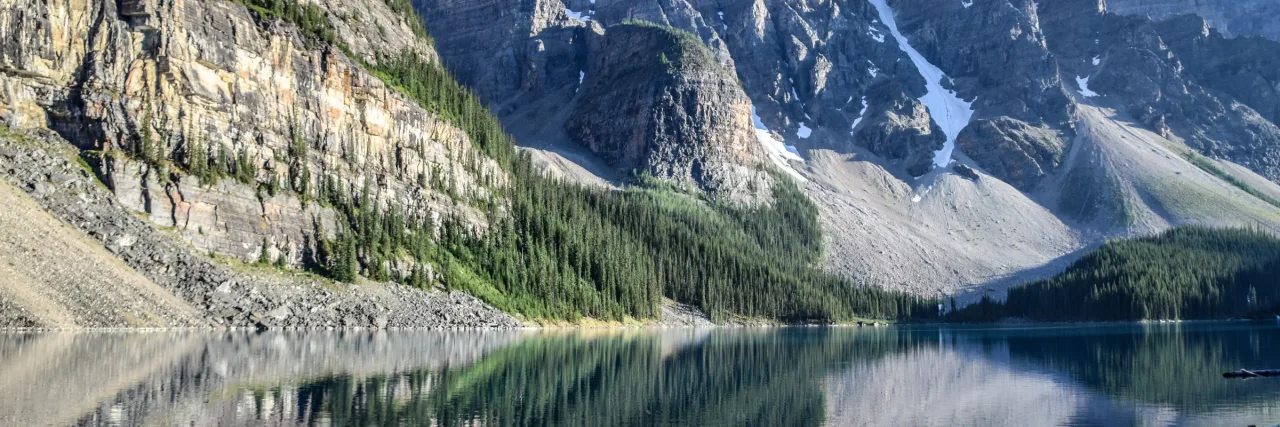
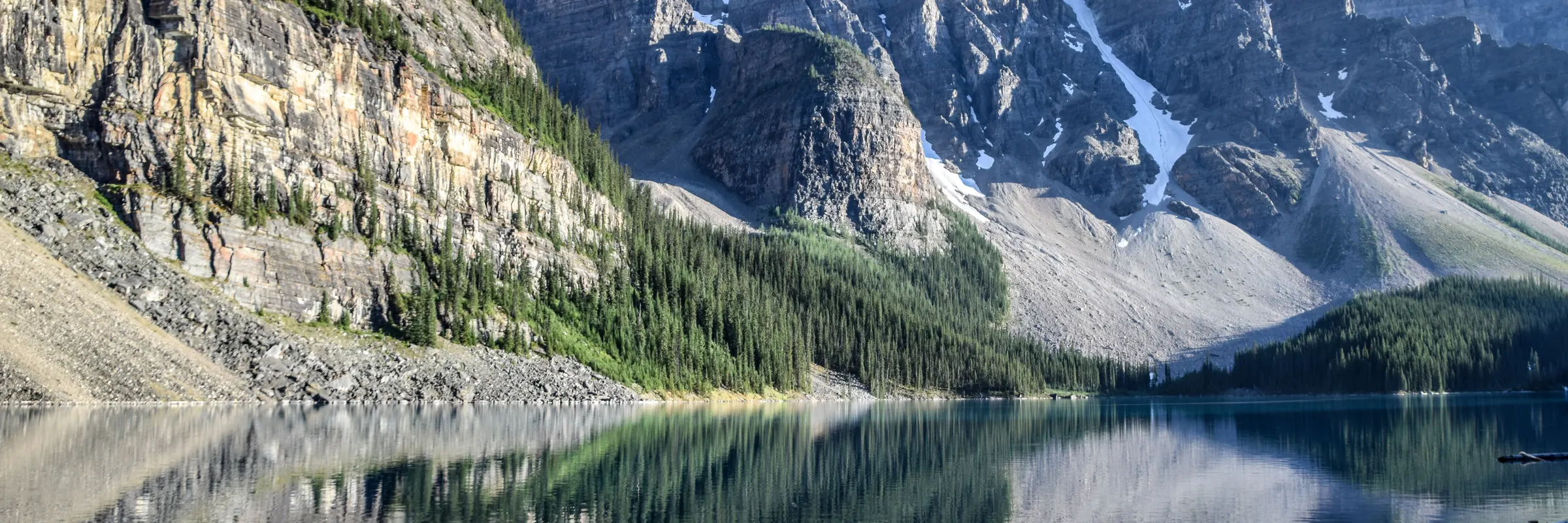
Banff: Moraine Lake and the Valley of the Ten Peaks
Photo: Terry Ott · CC BY 2.0
Alberta, Canada

Banff: how many days you need and the best months to go

Banff National Park was founded in 1885 and is the oldest in Canada, covering six and a half thousand square kilometres of the Rocky Mountains. Inside it sits a town of about eight thousand people that exists to service the park — you visit the park, not the town — plus two famous lakes, a road that runs 230 kilometres north through the mountains, and a great deal of wildlife with right of way. Three days is the working figure. Five lets you add Jasper, and which months you pick changes the trip completely.

Short answers

What people ask before booking

How many days do you need in Banff?

Banff needs three days for the two famous lakes, the town and one real hike, and five to add the Icefields Parkway to Jasper. The lakes are frozen from November into late June, so the turquoise window is late June to early October.

What is the best month to visit Banff?

July and August — Everything open, the lakes thawed, and the most people. January, February and March — Ski season, frozen waterfalls and an empty town. September — Larch season, thin crowds and clear air.

Which months are worth avoiding in Banff?

April and May — Frozen lakes and no skiing — the worst combination here. November — Between everything.

How many days Banff needs

Three days covers the core: one for Lake Louise and Moraine Lake, one for the town, the gondola and the Vermilion Lakes, and one for a proper walk or the Icefields Parkway as far as Peyto Lake.

Five days is what the region actually deserves. That buys the full Icefields Parkway to Jasper — 230 kilometres of it, and one of the great drives anywhere — plus Yoho across the provincial border in British Columbia, which has Emerald Lake and a waterfall taller than any in Banff and a fraction of the visitors.

The thing that catches everybody out

The road to Moraine Lake is closed to private vehicles. Permanently, all year, since 2023. The car park was too small for the demand and people were parking dangerously along the access road; Parks Canada solved it by removing private cars entirely.

You get there by the Parks Canada shuttle, a commercial shuttle, a guided tour or a taxi, and the Parks Canada shuttles are booked online and release in advance — they sell out in minutes in summer. Lake Louise still has a car park but it fills before dawn in peak season and then closes. Plan both of these before you plan anything else in the park; a Banff itinerary that assumes you will drive up and park is an itinerary that fails on the first morning.

Why the lakes are that colour, and when they are not

The colour is not a filter and it is not mineral dye. Glaciers grind the bedrock beneath them into an extremely fine powder — rock flour — which the meltwater carries into the lakes, where it stays suspended and scatters the blue-green end of the light. That is the whole mechanism.

The consequence is seasonal and almost nobody mentions it. The lakes are frozen and snow-covered from roughly November into June, and Moraine Lake in particular often does not fully thaw until the end of June. In April and May you can drive to a famous turquoise lake and find a white plain. If the photograph is the reason for the trip, the window is roughly late June to early October, and that is much narrower than the season the hotels sell.

  • Lake Louise — the hotel, the canoes and the walk along the shore to the Plain of Six Glaciers teahouse.
  • Moraine Lake — the one on the old twenty-dollar note. Shuttle or tour only; no private cars.
  • Icefields Parkway — 230 kilometres to Jasper past Peyto Lake and the Columbia Icefield. A full day each way.
  • Johnston Canyon — a catwalk bolted into a gorge to two waterfalls. Busy by nine; excellent in winter as an ice walk.
  • Banff Gondola and the Hot Springs — the town's two easy wins, and both work in any weather.

Two seasons, and they are different trips

Banff runs two distinct high seasons with a dead zone between them, and treating it as one destination is the second most common planning error here.

July and August are the lakes, the hikes and the high roads, with everything open, long daylight and the largest crowds and prices of the year. January to March is skiing — three resorts on one lift pass, plus ice walks, frozen waterfalls and the Lake Louise surface turned into a skating rink. Both are excellent. What does not work is April, May and November, when the lakes are still frozen but the ski season is over or not started, the high trails are under snow, and a good part of the park is simply between states.

The wildlife, and the rules that are not suggestions

The park holds grizzly and black bears, elk, wolves, cougars and bighorn sheep, and they are genuinely wild rather than habituated. Elk are the animal that actually injures people here — a bull in the September rut or a cow with a calf in spring will charge, and they are often standing on the golf course or beside the road in town.

The rules are simple and legally enforced. Stay a hundred metres from bears and thirty from elk. Carry bear spray on any trail and know how to use it — renting it is normal here. Never leave food, or anything that smells, in an unattended car or on a picnic table; Parks Canada closes trails when a bear starts associating people with food, and the bear usually loses that story. If a trail has a group-access restriction posted, it means a bear is on it and four people minimum is the rule.

The park pass, and the two things people forget

Every vehicle stopping inside the park needs a Parks Canada pass, bought at the gate or in advance, and it is checked. The town of Banff is inside the park boundary, so this applies from the moment you leave the highway.

The second is altitude and weather. The town sits at about fourteen hundred metres and the parkway climbs well above two thousand; snow on the Icefields Parkway in June or September is normal, not exceptional, and the road closes for it. Check conditions the morning you drive rather than the week before. And Calgary airport is ninety minutes east, which makes this one of the most accessible mountain destinations in the world — most people arrive with a rental car and that is the right call.

What to eat in Banff, and where

Banff is a resort town and prices reflect that, so eat accordingly: the good things here are Canadian rather than local, and the one genuinely regional item is a flatbread with a history worth knowing.

  • Poutine

    What to order

    What to eat after a day on the mountain

    Chips with fresh cheese curds and hot gravy poured over so the curds go soft but keep their squeak. It is from Quebec, not Alberta, and it is on every menu in Banff because it is exactly the right thing after eight hours in the cold. Order it as a side to share, not as a meal.

    Check it on Wikidata
  • Bannock

    What to order

    The flatbread, and where it comes from

    A dense pan-fried or baked flatbread, served with soup or with jam and honey. Its ancestry is Scottish, brought by fur traders, and it was adopted into First Nations cooking across the prairies — the version sold here comes out of that history rather than the Scottish one. Indigenous-run kitchens in the region serve it best.

    Check it on Wikidata
  • Nanaimo bar

    What to order

    The bar that is not from here at all

    A no-bake slice of crumb base, custard filling and chocolate on top, from Nanaimo on Vancouver Island. It is a Canadian institution and it is in every café in the Rockies, and the good ones are made in-house rather than bought in. Very sweet; one is enough for two people.

    Check it on Wikidata
  • Maple syrup

    What to order

    The syrup, and what to do with it

    Boiled-down maple sap, which takes about forty litres of sap to make one of syrup. Canada produces the large majority of the world's supply, almost all of it in Quebec, and the grading you see on the tin refers to colour and strength rather than quality. Buy the darker one; it tastes of more.

    Check it on Wikidata
  • Lake Louise

    Where to look

    The lake, and how to reach it

    The turquoise lake with the hotel on it, the canoe dock and the shoreline path to a teahouse under six glaciers. The car park fills before dawn in summer and then closes for the day — take the shuttle, or arrive before six. The colour comes from glacial rock flour suspended in the water.

    Check it on Wikidata

When to go, and what each month costs you

Banff has two high seasons and two genuinely poor ones. Summer is the lakes and the trails; deep winter is skiing; and the shoulders are the months when the lakes are frozen and the lifts are shut. Which one you book decides what the trip is.

  • July and August

    Go now

    Everything open, the lakes thawed, and the most people

    The full park: lakes at their colour, all trails clear, the Icefields Parkway open end to end and daylight until ten. It is also the busiest and most expensive stretch of the year, with lake shuttles booked out and accommodation at a premium. Worth it, but book months ahead.

  • January, February and March

    Go now

    Ski season, frozen waterfalls and an empty town

    Three ski areas on one pass, ice walks in Johnston Canyon, the frozen surface of Lake Louise as a skating rink and hot springs in the snow. A completely different holiday from the summer one and a much cheaper one. Cold — genuinely cold — and short days.

  • September

    Go now

    Larch season, thin crowds and clear air

    The best-value window of the year: the lakes are still open, the crowds thin after the first week and the alpine larches turn gold for about two weeks in the second half of the month. The elk rut is on, which is why the wildlife rules matter more now. First snow can arrive at altitude.

  • June

    Worth it, but

    The thaw, and the lakes not quite ready

    Green, long-lit and much quieter than July, with waterfalls at full volume from the melt. Moraine Lake often does not fully thaw until the end of the month and the high trails are still under snow. Cheaper, and a gamble on exactly what you came for.

  • December

    Worth it, but

    Snow arriving, and the holiday peak

    The ski season opens and the town looks the way the postcards do, but conditions are not yet reliable and Christmas and New Year push prices to summer levels. Short days. Good if you want the look rather than the skiing.

  • October

    Worth it, but

    The season closing, quiet and cheap

    The larches are gone, the lakes begin to freeze and much of the tourist infrastructure winds down. Prices are low and the park is empty. The Icefields Parkway is still open but can close on any given day for snow.

  • April and May

    Think twice

    Frozen lakes and no skiing — the worst combination here

    The ski season ends and the summer one has not started. The lakes are still frozen and white, the high trails are under snow and the famous photographs are simply not available. Cheap, and the reason it is cheap is that there is very little you came for.

  • November

    Think twice

    Between everything

    Too late for autumn and too early for reliable snow, with the lakes frozen, the trails muddy or icy and the lifts mostly not yet running. The lowest prices of the year and the least to do. Skip it unless the price is the entire point.

Things that change the trip

  • You cannot drive to Moraine Lake. Private vehicles have been banned since 2023; book the Parks Canada shuttle the moment reservations open.
  • The lakes are frozen from November into June. If the turquoise is the reason you are coming, the window is roughly late June to early October.
  • Buy the Parks Canada pass. It is required for every vehicle stopping in the park, the town is inside the boundary, and it is checked.
  • Carry bear spray on the trails and stay thirty metres from elk. The elk are the ones that actually injure people, especially in the September rut.
  • Check the Icefields Parkway the morning you drive it. Snow closes it in June and September, and that is normal rather than unusual.
  • Cross into Yoho for a day. Emerald Lake and Takakkaw Falls are twenty minutes past the provincial border and carry a fraction of the crowd.

Plan Banff and the Canadian Rockies

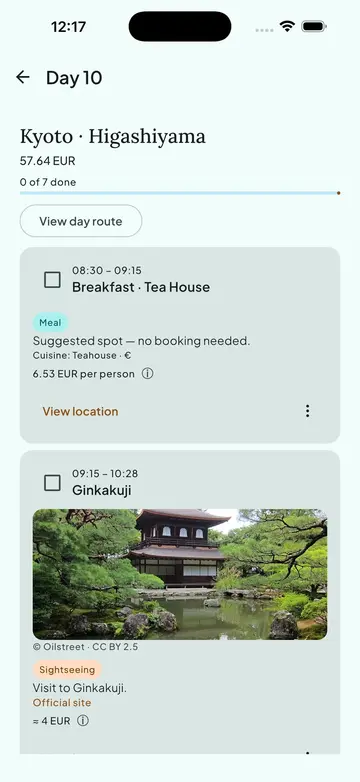
A trip beyond five days, or one that links Banff with Jasper, Yoho or a full Icefields Parkway route, with the shuttle bookings and the thaw dates arranged around it, is exactly what Premium is for. The free version covers one destination of up to three days.

Destinations