



Skip to content
JoruJoru
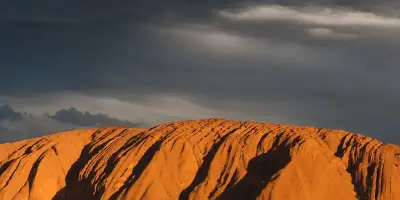
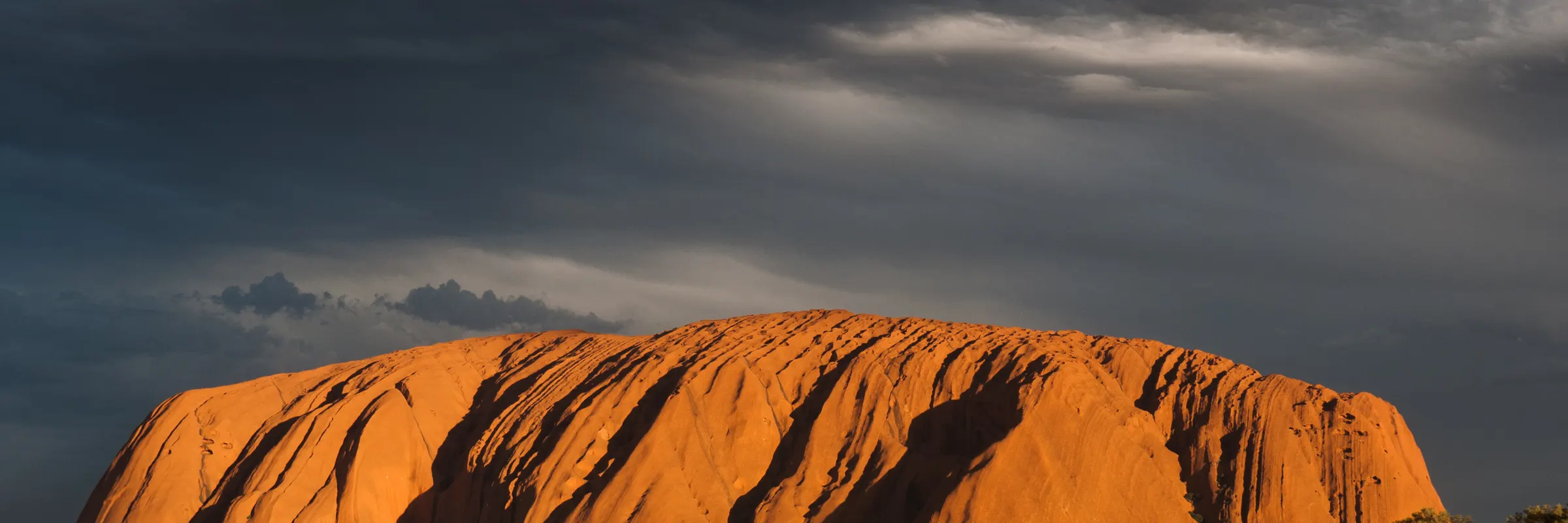
Uluru: the rock at sunset
Photo: Weyf · CC0
Northern Territory, Australia

Uluru: how many days you need, and the rules that apply

Uluru is not a viewpoint with a rock in it. It is a living sacred site for the Aṉangu, the traditional owners of this land, and since 2019 the park they co-manage has been run on their terms: the climb is closed, several places around the base cannot be photographed, and the point of coming is to walk around the base rather than to conquer anything.

Short answers

What people ask before booking

How many days do you need in Uluru?

Uluru needs two days — one for the base walk and a sunset, one for Kata Tjuta — and a third for Kings Canyon. The climb closed permanently in 2019 and the ten-kilometre base walk is what you came for.

What is the best month to visit Uluru?

May to August — The season, and the only comfortable walking weather. April and September — The shoulders, with most of the good weather.

Which months are worth avoiding in Uluru?

November to March — Heat that closes the walks, and the flies at their worst.

How many days Uluru needs

Two days is the honest answer: one for the base walk and a sunset, one for Kata Tjuta. A third adds Kings Canyon, which is three hours away and one of the best walks in central Australia.

Do not come for a single night. The rock changes colour completely between dawn, midday and dusk, and a trip that arrives at four and leaves at nine the next morning sees one version of it. The flights are long and expensive enough that the extra night is the cheapest part of the trip.

How the place is arranged

There is one town, one park and long distances between everything. The town is Yulara, built specifically to house visitors outside the park boundary, and it is where every hotel, shop and restaurant is. The park entrance is about twenty minutes away.

  • Uluru itself — a sandstone monolith rising abruptly from flat desert. The base walk is around ten kilometres on a flat, well-made path and takes three to four hours. It is the single best thing to do here and most visitors skip it.
  • Kata Tjuta — a group of thirty-six domed rock formations about forty minutes west, and taller than Uluru. The Valley of the Winds walk is the better hike of the two sites and it is genuinely strenuous.
  • The Cultural Centre — inside the park, run with the Aṉangu, and the place to understand what you are looking at before you look at it. Go here first, not last.
  • Yulara — the resort town: hotels at several price points, a campground, a small supermarket and a handful of restaurants. There is nothing else within hundreds of kilometres.
  • Kings Canyon — three hours north-east, technically a separate destination, with a rim walk that many people rate above both sites here.

The rules, and why they are not negotiable

The climb closed permanently on 26 October 2019. The Aṉangu had asked for it to stop since the park was returned to them in 1985, because under Tjukurpa — their law and belief — the route up is a sacred path and climbing it is not something visitors should do. The gate is gone and the chain has been removed; this is not a discouragement, it is closed.

Some sites around the base cannot be photographed, and these are marked with signs on the path. The reason is specific rather than decorative: the rock features at those places carry knowledge that is restricted to particular people under Tjukurpa, and an image of them lets someone see what they should not. At those signs you can photograph plants, animals and your companions — just not the rock.

  • Go to the Cultural Centre before you walk the base. Everything above makes more sense afterwards, and it is run with the traditional owners rather than about them.
  • Do not take rocks or sand. The park receives returned pieces in the post regularly, often with letters of apology.
  • The no-photography signs are on the path and easy to follow. Nobody expects you to know in advance; they expect you to read the sign.
  • Drone flying is restricted in the park, which surprises people who packed one for exactly this.

Getting there, and getting around

Uluru has its own airport at Yulara with direct flights from several Australian cities, and that is how almost everyone arrives. Driving from Alice Springs takes around five hours across genuinely empty country. There is no train and no scheduled public bus of any use.

Once here, there is no way to get between sites without a car or a tour. Yulara runs a free shuttle around the resort and the park is twenty minutes away by road; the base of Uluru to Kata Tjuta is another forty. Hiring a car is the difference between seeing this place on your own schedule and seeing it on someone else's.

  • Fuel up in Yulara. The next fuel is a very long way in every direction, and this is not a place to test it.
  • Carry far more water than seems reasonable — the official advice is a litre per hour of walking in warm weather, and it is not cautious advice.
  • Some walks close by mid-morning when the forecast is hot. This is enforced rather than advisory, and it is why an early start is not optional in summer.
  • Bring a fly net. Between roughly September and April the flies are relentless, and every visitor who did not bring one ends up buying one in the shop.

What to actually do, in order

The mistake here is treating Uluru as a photograph you collect at sunset. The rock rewards time spent close to it: from the sunset viewing area it is a shape, and from the base path it is a wall of hollows, caves, waterholes and paintings.

  • The full base walk — around ten kilometres, flat, and the reason to come. Start at first light, both for the temperature and because the light on the west face at dawn is the best of the day.
  • The Valley of the Winds at Kata Tjuta — harder, longer and less visited than anything at Uluru. Closes early on hot days.
  • Sunset and sunrise viewing areas — there are designated car parks for both at each site, and they are busy. The sunrise viewing area faces Uluru with Kata Tjuta behind you, which catches people out.
  • A guided walk with an Aṉangu guide — available through the park and the operators, and the difference between looking at a rock and understanding what is on it.
  • Kings Canyon — if you have a third day and a car, the Rim Walk is a six-kilometre loop that starts with a steep climb and is worth every step.

How eating works here

Everything is in Yulara and everything is expensive, because every item is trucked hundreds of kilometres. The resort has restaurants at several levels, a supermarket, and a couple of casual places. There is no town outside it and no cheaper alternative down the road.

Self-catering is a real strategy here. The supermarket in Yulara sells normal groceries at elevated prices, and many rooms have a fridge. Buying breakfast and lunch supplies saves a meaningful amount over three days without costing you anything you came for.

  • Book dinner in advance, especially the outdoor dining experiences, which sell out well ahead in high season.
  • Take food and water with you on every walk. There is nothing at the base of Uluru and nothing at Kata Tjuta.
  • Australian rules apply: no tipping, no service charge, and the menu price is the price.
  • Alcohol is sold under local restrictions and is generally available to resort guests rather than freely. This is normal in the Northern Territory and is not aimed at visitors.

What to eat at Uluru, and what to expect

This is the shortest food section on this site, and honestly so: there is one town, a handful of restaurants and a supermarket. What makes it worth a section is the one genuinely local thing — native Australian ingredients, which are more available here than almost anywhere, and which the Aṉangu have used for tens of thousands of years.

  • Bush tucker

    What to order

    The ingredients that belong to this place

    Native Australian foods — quandong, wattleseed, desert lime, bush tomato, kutjera — appear on menus here and in the Cultural Centre shop. This is one of the few places where they are not a novelty on a menu but a food tradition tens of thousands of years old. The restaurants that treat them as ingredients rather than as a gimmick are the ones worth booking.

    Check it on Wikidata
  • Yulara

    Where to look

    Understanding that there is only one town

    Yulara is a purpose-built resort town outside the park, and it holds every hotel, restaurant, shop and fuel pump for hundreds of kilometres. Everything is trucked in and priced accordingly, which is a fact rather than a complaint. The supermarket is the answer to breakfast and lunch; the restaurants are for dinner.

    Check it on Wikidata
  • Barramundi

    What to order

    The Australian default, done in the desert

    A firm white-fleshed fish from northern Australia, grilled and served simply, and the most reliable main course at this end of the country. It travels a very long way to get here, which is true of everything on the plate. Order it when the alternative is a steak you could get anywhere.

    Check it on Wikidata
  • Flat white

    What to order

    The coffee standard, which survives even here

    Espresso with steamed milk and minimal foam. Australia takes café coffee seriously all the way into the desert, and Yulara does it properly. The cafés open very early for the sunrise crowd, which is exactly when you need them.

    Check it on Wikidata

When to go, and what each month costs you

This is a desert in the middle of a continent, and the year splits cleanly. The winter is comfortable and cold at night; the summer is dangerous. The southern hemisphere inversion applies, so the good months here are the European summer.

  • May to August

    Go now

    The season, and the only comfortable walking weather

    Warm days, clear skies and low humidity, with all the walks open all day. Nights fall below freezing regularly, which surprises people who packed for a desert and not for a desert winter. This is peak season and it is worth the prices.

  • April and September

    Go now

    The shoulders, with most of the good weather

    Warm rather than hot, quieter and cheaper than the peak. September brings wildflowers after rain and also brings the flies back, which is the trade.

  • October

    Worth it, but

    Warming fast, and the walks start closing

    Still workable early in the day and increasingly hot by afternoon. Walk closures on hot days begin in earnest around now, so an early start stops being optional. Prices are lower and the crowds are thinner.

  • November to March

    Think twice

    Heat that closes the walks, and the flies at their worst

    Extreme heat in the middle of the day, with the longer walks routinely closed from mid-morning when the forecast is high. The flies are at their most relentless, and the rock is at its least approachable. It is the cheapest time and the reason is not a secret.

Things that change the trip

  • The climb has been closed since 2019 and the base walk is the point. Ten flat kilometres, three to four hours, and far better than any viewing platform.
  • Respect the no-photography signs around the base. They mark places whose imagery is restricted under Tjukurpa; you can photograph plants, animals and people there, just not the rock.
  • Go to the Cultural Centre before you walk, not after. It is run with the traditional owners and it changes what you see.
  • Bring a fly net between September and April. Everyone who does not ends up buying one, and the flies are worse than any description of them.
  • Stay two nights minimum. The rock at dawn and the rock at dusk are two different places, and a one-night trip sees one.
  • Nights in winter go below freezing. Pack for a desert and for a cold one, which is not the same packing list.

Plan Uluru around the walks and the season

A trip of more than three days, or one that adds Kings Canyon or Alice Springs and the driving between them, is what Premium is for. The free version covers one destination of up to three days.

Destinations