Skip to content
JoruJoru
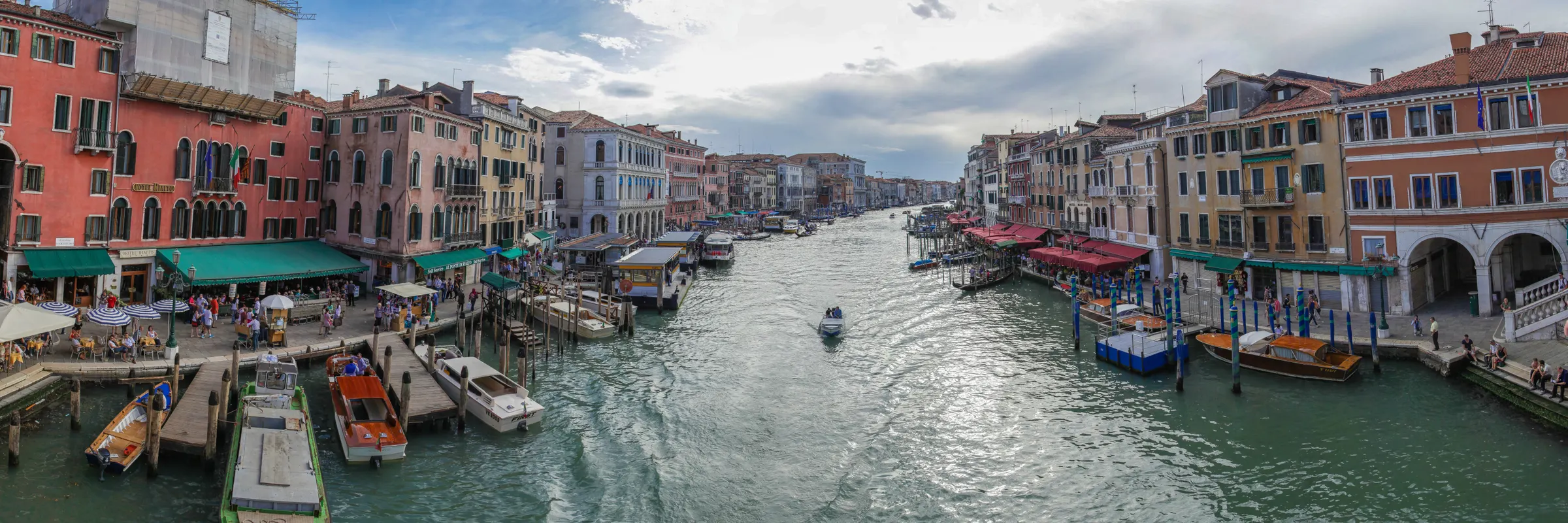
Venice: the Grand Canal from the Rialto bridge
Photo: Grand Parc - Bordeaux, France · CC BY 2.0
Veneto, Italy

Venice: how many days you need and the best months to go

Venice is a hundred and eighteen islands connected by four hundred bridges, and every single thing in it arrived by boat. That includes the rubbish, the post, the ambulances and the building materials, which is why everything costs more and why the city feels like it is running on a different operating system. The other number that matters is the population: fewer than fifty thousand people live in the historic centre, down from about a hundred and seventy thousand in 1950. Two days is enough. Staying the night is what makes them worth it.

Short answers

What people ask before booking

How many days do you need in Venice?

Venice needs two days for the city and a third for the lagoon islands, but what matters more than the number is that at least one day ends with you still there at night.

What is the best month to visit Venice?

April and May — Mild, long days, before the summer peak. September — Summer warmth without August.

Which months are worth avoiding in Venice?

July and August — Hot, humid, and the peak of the crowds. November and December — The wettest months, and the highest tides.

How many days Venice needs

Two days is the honest figure for the city itself: one for the central axis — the basilica, the palace, the Rialto — and one for a museum and a district that is not on the route between them. Venice is small; you can cross it on foot in about an hour.

The third day goes to the lagoon: the glass island, the coloured one and the abandoned one, which are a boat ride apart and a completely different experience. What matters far more than the number of days is that at least one of them ends with you still here at night, which is covered below and is the single most useful thing on this page.

Why staying the night changes the city

Venice receives an enormous number of visitors who never sleep in it — arriving by coach, cruise ship or train in the morning and leaving in the late afternoon. The practical effect is that between roughly ten and five the central route is close to impassable, and after seven in the evening the same streets are quiet enough to hear your own footsteps.

That is the whole trick and it costs nothing to use. Do the famous things early or late, spend the middle of the day in a museum or on a boat or eating a long lunch, and walk the city in the evening when it belongs to the people who live here. A hotel inside the historic centre is more expensive than one on the mainland, and it buys you a different city.

The day-tripper fee, and what it actually is

Since 2024 Venice charges an access fee to visitors who arrive for the day without staying overnight. It applies on a set list of busy days, mostly spring and summer weekends and holidays, and it is paid online in advance in exchange for a QR code that is checked at the main entry points.

The rules that matter: anyone staying in accommodation inside the city is exempt — you register and receive an exemption code — as are residents, workers, students and children under a certain age. The scheme's dates, price and boundaries have changed every year since it started, so the one reliable instruction is to check the official municipal site in the month you travel rather than trusting anything written earlier, including this.

  • Staying the night exempts you, but you still have to register and carry the code.
  • It applies only on designated days, which are published in advance for each year.
  • It covers the historic centre, not the whole lagoon; the outer islands are treated differently.
  • Check the official site the month you go. This is the part of any Venice guide that goes out of date fastest.

How the city is arranged

Venice is divided into six districts — *sestieri* — and the Grand Canal snakes through the middle of them in a reversed S. There are only four bridges across it in the whole city, which is the single fact that most changes how you walk: two points that face each other across the water can be twenty minutes apart on foot.

The addresses do not help. Venetian house numbers run by district rather than by street, so a single number can be anywhere within a whole quarter. Navigate by landmark and by bridge, and accept that getting lost here is normal and mostly pleasant.

  • San Marco — the basilica, the palace, the square and almost every visitor. Spectacular, and the most expensive place to do anything.
  • Cannaregio — the northern district, with the world's first Jewish ghetto, the canal-side bars and the highest concentration of people who live here. The best evening in Venice.
  • Dorsoduro — the university quarter across the Grand Canal: the two big modern-art museums, the long southern promenade and a calmer pace.
  • Castello — east of San Marco and immediately quieter, with the shipyard, the gardens and the biennale pavilions.
  • The lagoon islands — the glass island, the coloured fishing island and the abandoned one, forty minutes out by public boat and worth a full day.

Boats, and the two things nobody explains

The public transport here is a boat network, and it is expensive per ride and cheap by the day. A single ticket costs several times what a bus costs anywhere else in Italy, so if you are taking more than two trips a day, the timed pass pays for itself immediately.

The other thing is the gondola versus the *traghetto*. A gondola ride is a fixed-price private hire, set by the city, charged per boat rather than per person and unavoidably expensive. A traghetto is a stripped-down gondola that ferries people straight across the Grand Canal at points where there is no bridge, costs almost nothing, takes two minutes and is used by residents standing up. It is not a substitute for the ride, but it is the cheapest gondola you will ever be in.

  • Buy a timed pass for the water buses if you are making more than a couple of trips a day.
  • Gondola prices are set by the city and vary by time of day. They are per boat, so the cost divides between up to five people.
  • The traghetto crossings cost almost nothing and are the residents' way over the Grand Canal.
  • Bring shoes you can walk in. Venice is bridges, and every bridge is steps.

Acqua alta, and what it means for a trip

Venice floods. High tides push water into the lowest parts of the city — St Mark's Square first, because it is the lowest point — most often between October and January, and when it happens the city puts out raised walkways and everyone continues as normal in rubber boots.

Since 2020 a system of mobile barriers at the lagoon's three inlets has been raised for the higher tides, which has cut the number of serious floods substantially. It does not stop the smaller ones, and the barriers are not raised for every event. If you travel in the autumn, download the city's tide forecast app, keep a pair of waterproof shoes, and understand that this is an inconvenience rather than an emergency.

What to eat in Venice, and where

Venetian food is lagoon food — fish, rice, salt, vinegar — and it is nothing like the Italian food most people arrive expecting. The rule that saves a trip: eat standing up at a wine bar rather than sitting down on a main route. The bars serve the local food and the restaurants with photographed menus serve the opposite.

  • Cicchetti

    What to order

    The format that makes Venice cheap

    Small plates eaten standing at a counter with a glass of wine — a slice of bread with salt cod whipped to a cream, half a boiled egg with anchovy, fried vegetables, a meatball. You order two or three, drink a small glass, and move to the next bar, which is what a Venetian evening actually is. Cheaper and better than any sit-down meal on the tourist route.

    Check it on Wikidata
  • Bacaro

    Institution

    The kind of place to look for

    The traditional Venetian wine bar: a counter, a few stools, a glass case of small plates and wine by the small glass. It is a category rather than an address — the good ones are on side canals in Cannaregio and Castello, they are full at seven in the evening, and they have no menu in four languages outside.

    Check it on Wikidata
  • Risotto

    What to order

    The dish this region actually eats

    Rice cooked slowly in stock until creamy, which in the Veneto is more everyday than pasta. The Venetian version is looser than elsewhere — it should ripple on the plate — and the local ones use cuttlefish ink, lagoon fish or spring peas. If it arrives stiff enough to hold a shape, it was made in advance.

    Check it on Wikidata
  • Sarde in saor

    What to order

    The dish that explains the whole cuisine

    Fried sardines layered with onions cooked slowly in vinegar, with pine nuts and raisins, then left for a day or two before eating. It was invented to preserve fish on ships without refrigeration, and the sweet-sour combination came home with the spice trade. It is served cold, and it is the most Venetian thing on any menu.

    Check it on Wikidata
  • Spritz

    What to order

    The drink to order before dinner

    Prosecco, a bitter red aperitif and soda, over ice with an olive or an orange slice. It is a Veneto invention and the default early-evening drink, and locals order it by naming which bitter they want, because there are two and they are noticeably different in strength.

    Check it on Wikidata
  • Mercato di Rialto

    Market

    The market that has been there a thousand years

    The produce and fish market beside the Rialto bridge, trading on the same spot since roughly the eleventh century. The fish hall is the reason to come and it closes by early afternoon and does not open on Mondays, because the boats do not go out on Sunday. Go early; it is a working market, not an attraction.

    Check it on Wikidata
  • Cannaregio

    Where to look

    Where to eat away from the crowd

    The northern district, running along the canal from the station towards the Rialto, and the part of the city with the most people who actually live here. The bars along the Fondamenta della Misericordia fill with locals in the evening, and the prices are half what they are around San Marco.

    Check it on Wikidata

When to go, and what each month costs you

Venice has a humid continental climate — cold damp winters, hot humid summers — and a visitor calendar that matters more than the weather. Two things dominate: the crowds, which peak from Easter to September, and the tides, which peak from October to January. The best months avoid both.

  • April and May

    Go now

    Mild, long days, before the summer peak

    The best window: warm enough to sit outside, cool enough to walk all day, and the light on the water at its best. Easter moves between late March and late April and fills the city completely when it lands. Book well ahead and expect company.

  • September

    Go now

    Summer warmth without August

    Warm days, cooler evenings, the water still pleasant and the crowds thinning after the first week. The film festival takes over the Lido at the start of the month, which affects the island rather than the city. The single best month if you only get one.

  • October

    Worth it, but

    Quieter and cheaper, with the tides starting

    Fewer visitors, lower prices and pleasant walking weather, with the high-tide season beginning towards the end of the month. Take waterproof shoes and check the tide forecast. A good trade for most people.

  • March and June

    Worth it, but

    The edges of the good season

    March is cool and can be wet, with the city noticeably emptier; June is warm and already busy, with the crowds building through the month. Both work. June gets long evenings and March gets space.

  • January and February

    Worth it, but

    Cold, foggy, empty — and then Carnival

    The quietest and cheapest weeks of the year, with fog on the lagoon that is genuinely beautiful, and a real chance of high water. Carnival runs for about two weeks ending the day before Ash Wednesday, which moves between early February and early March, and during it the city is as full as in August.

  • July and August

    Think twice

    Hot, humid, and the peak of the crowds

    The hottest and most crowded weeks, with humidity that sits on the canals and queues at every major sight. Prices are at their highest and the day-tripper fee applies on most of these days. It is the version of Venice everyone complains about, and it is avoidable.

  • November and December

    Think twice

    The wettest months, and the highest tides

    Cold, damp and the peak of the acqua alta season, with short days and frequent grey. The city is cheap and quiet and the museums are empty, which is a real argument. What you lose is the outdoors, and in a city you experience by walking that is most of it.

Things that change the trip

  • Stay the night inside the historic centre. After seven in the evening it becomes a different city, and that is the whole point of coming.
  • Check the day-tripper fee on the official municipal site in the month you travel. The rules have changed every year since 2024.
  • Eat standing at a wine bar rather than sitting on a main route. The small plates are the local food and cost a fraction of a restaurant.
  • Buy a timed water-bus pass if you are making more than two trips a day. Single tickets are expensive on purpose.
  • There are only four bridges over the Grand Canal. Two points facing each other can be twenty minutes apart, and the traghetto crossings cost almost nothing.
  • In autumn, download the tide forecast and pack waterproof shoes. High water is an inconvenience, not an emergency.

Plan Venice and the lagoon around it

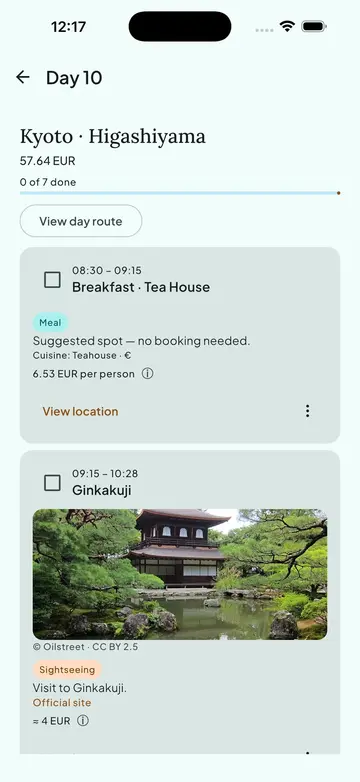
A trip beyond three days, or one that adds Verona, the Dolomites or Florence with the trains between them, is exactly what Premium is for. The free version covers one destination of up to three days.

Destinations